Fed’s Musalem Wants ‘Several’ Hikes Before Spring, but Note His Record
The St. Louis Fed president today gave the most aggressive guidance yet on how far and how fast the Fed needs to go. But he doesn’t vote until 2028, most of the FOMC is not on board, and the last time he staked out an outlier position he pivoted quickly.
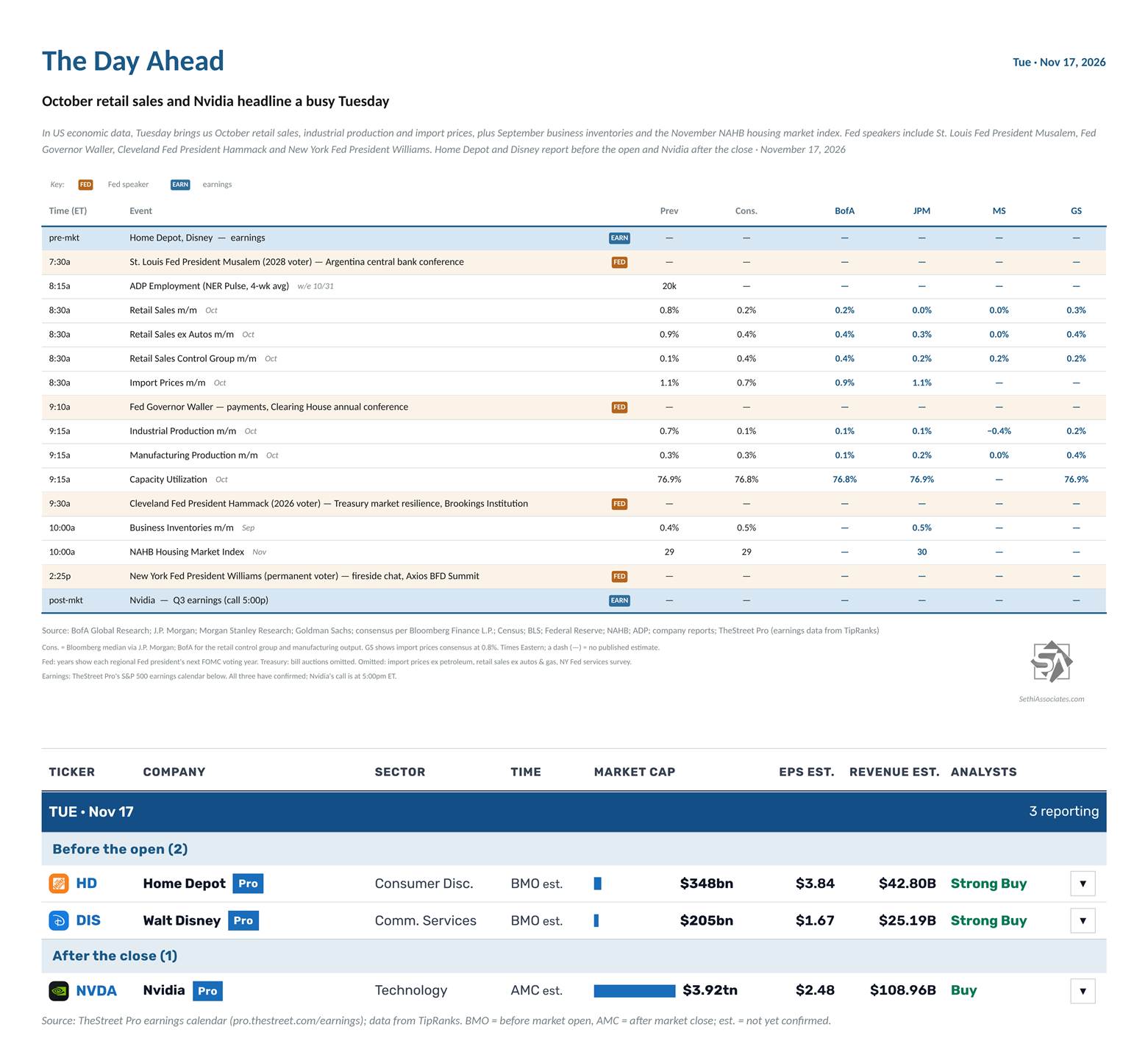
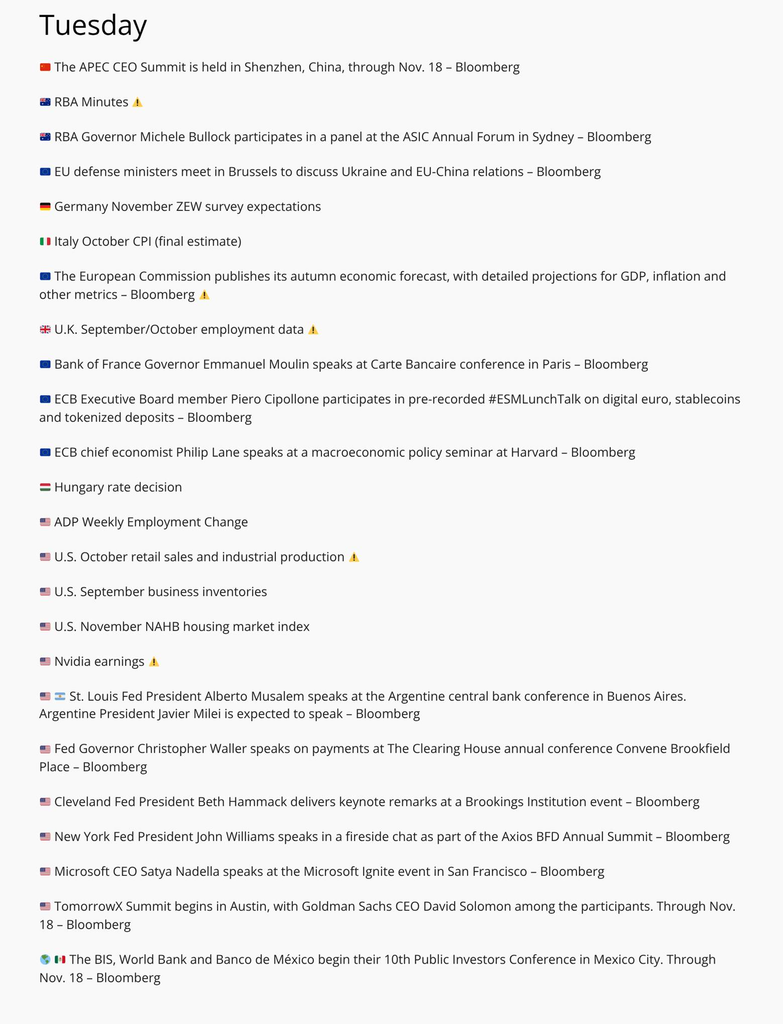
St. Louis Fed President Alberto Musalem on Tuesday gave the most aggressive guidance yet from a Fed official on how far and how fast he sees the Fed needing to go. In a speech in Buenos Aires, he said “the economy will likely require several interest rate increases before the spring of 2027,” starting “soon.” (emphasis added).
His math works out to roughly one hike per meeting. Musalem argues the inflation-adjusted, or real, fed funds rate is “at the lower end of the 1% to 1.5% range,” making it accommodative. He wants it “solidly between 2% and 2.5%.” By spring. That’s a rise of 1 to 1.5 percentage points, and “the nominal policy rate may need to do most of the work.” Only three Fed meetings fall before spring: December 8–9, January 26–27 and March 16–17. So “several” hikes means at least one at each.
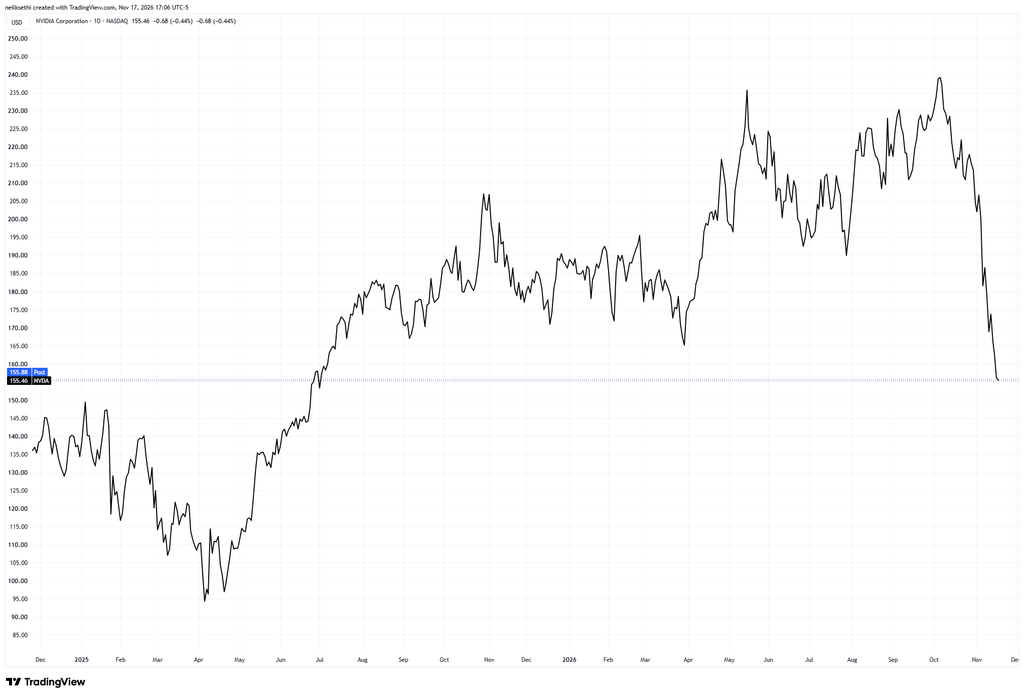
That’s faster and further than markets. Futures price quarter-point hikes in just December and January and one more by June (see AI Stocks Drag the S&P 500 Back Toward the November 5th Lows).
Musalem says policy “is not yet restraining inflation,” and he agrees with Chair Kevin Warsh’s description of the September hike as “removing a dose of accommodation.” He’s “not overly concerned” by the recent tightening in financial conditions, which he says was smaller than after Liberation Day or the start of the Middle East conflict. That’s in contrast to San Francisco’s Mary Daly and Vice Chair for Supervision Michelle Bowman, who see tighter conditions as a reason to go slower. He said October CPI and PPI suggest October PCE inflation “could be 3.8% and 3.2%” for headline and core. And long-term inflation expectations are anchored “because markets expect that the FOMC will raise its policy rate within the next few months,” so “moving sooner… has a better chance of succeeding.”
But note he’s done this before. This isn’t the first time Musalem has staked out a very hawkish position. In June 2024, in his first policy speech as St. Louis Fed president, he said rate cuts could take “months, and more likely quarters.” Eight weeks later, he said “the time may be nearing” for one, and the Fed cut by half a point that September. He’s left himself room this time too. He sees “an unlikely but still plausible scenario in which additional policy firming will not be required,” which could happen if energy and shipping costs fall, productivity picks up, or AI spending or wealth-driven consumer spending slows.
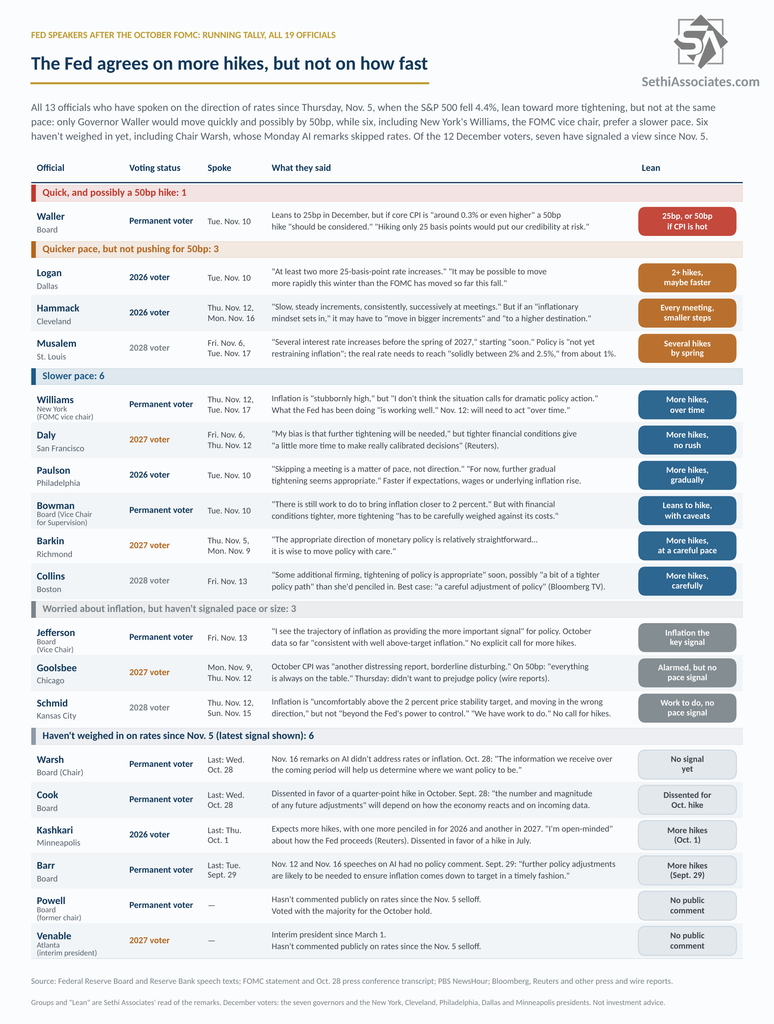
He joins Governor Christopher Waller, Dallas’ Lorie Logan and Cleveland’s Beth Hammack in calling for a faster pace, but notably, he doesn’t have a vote until 2028.
The FOMC’s vice chair isn’t on board. New York Fed President John Williams said Tuesday that “inflation is stubbornly high and we need to get it down.” But asked about a half-point hike, he said “I don’t think the situation calls for dramatic action,” and he described October’s hot CPI as a “continuation,” not a “broadening,” of price pressure from tariffs and energy.”
Hammack, also speaking Tuesday, is closer, wanting a hike at every meeting, although prefers “slow, steady increments.” But she told Bloomberg TV on Monday that if an “inflationary mindset sets in,” the Fed may have to “move in bigger increments” and “to a higher destination.” All 13 officials who’ve spoken on rates since the November 5 selloff lean toward more hikes; the disagreement is over pace and destination.
What to do with it: December looks close to settled after October’s hot core CPI, so the debate is how fast the Fed moves in early 2027. Musalem’s call is a warning that the market’s path could move higher. But his history and lack of a vote means the markets will mostly ignore him. Watch the five December voters who haven’t weighed in on rates yet: Warsh, Governors Lisa Cook, Michael Barr and Jerome Powell, and Minneapolis’ Neel Kashkari. Unless they side with the hawks, the market’s current path probably holds. If they lean toward Musalem or Waller expect more pressure on the 2-year Treasury yield, which jumped the most since 2024 last week, and on rate-sensitive stocks.
Conversation 0 Comments
One ongoing discussion across all days. Everyone can read; sign in to take part.
Your voice matters. Discussions are moderated for civility. Read our guidelines .
Log in to join the conversation