Is Nvidia’s Open Checkbook Closing?
Wall Street is focused on who runs Nvidia, but that might not matter for the bigger question of whether the company keeps writing checks.
You've reached your free article limit
You've read 0 of 1 free Pro articles.

Nvidia (NVDA) is lower in early trading heading into its fiscal third-quarter report Tuesday, Nov. 17, after a weekend that made the fight over who runs the company louder (more below). But the bigger issue for the rest of the AI trade may not be who wins that fight. Nvidia’s days of bankrolling its own customers look numbered, with a pullback that started before Jensen Huang resigned last week.
That’s the takeaway from a Wall Street Journal report this morning and a UBS note discussed by ZeroHedge last week. Last month, at a conference in Berlin, Huang told the CEOs of neoclouds (the newer cloud companies that buy Nvidia chips and rent out the computing power) that they would need upfront payments from their own customers to get allocations of Nvidia’s GPUs. Interim CEO Colette Kress, who as finance chief had pushed back on some of the company’s biggest deals, is expected to rein things in further.
The Checkbook Was Already Closing
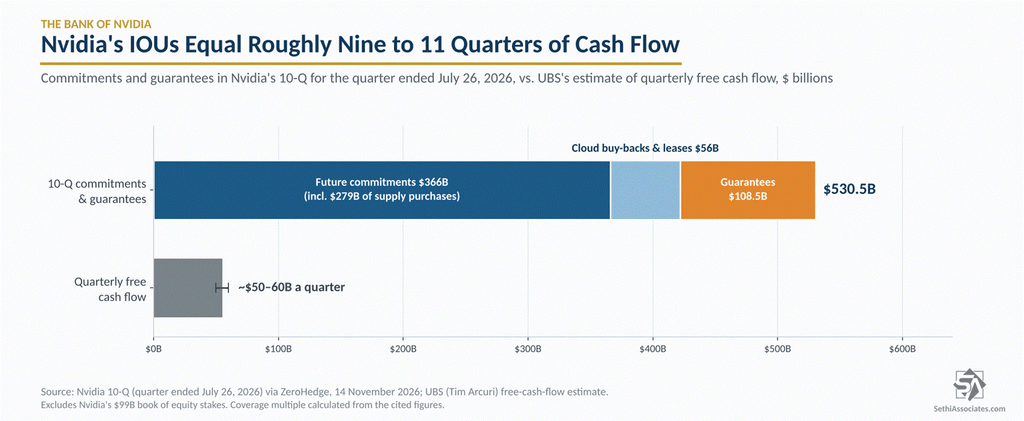
Nvidia spent the past year acting as the AI economy’s lender of last resort. Its July quarterly filing showed $530.5 billion of commitments and guarantees, on top of a $99 billion portfolio of equity stakes, according to a ZeroHedge tally. UBS analyst Tim Arcuri estimates Nvidia generates $50 billion to $60 billion of free cash flow a quarter, so those IOUs alone equal roughly nine to 11 quarters of cash flow.
Nvidia has also taken part in 129 venture capital deals this year, or a massive 27% of total global venture deal value, up from 49 deals in all of 2023, according to PitchBook data cited by the WSJ. Some deals are now in limbo, including a licensing offer to Reflection AI and an investment in Thinking Machines Lab, and U.K. neocloud Nscale is still negotiating backing for a $45 billion data center it is building for Anthropic.
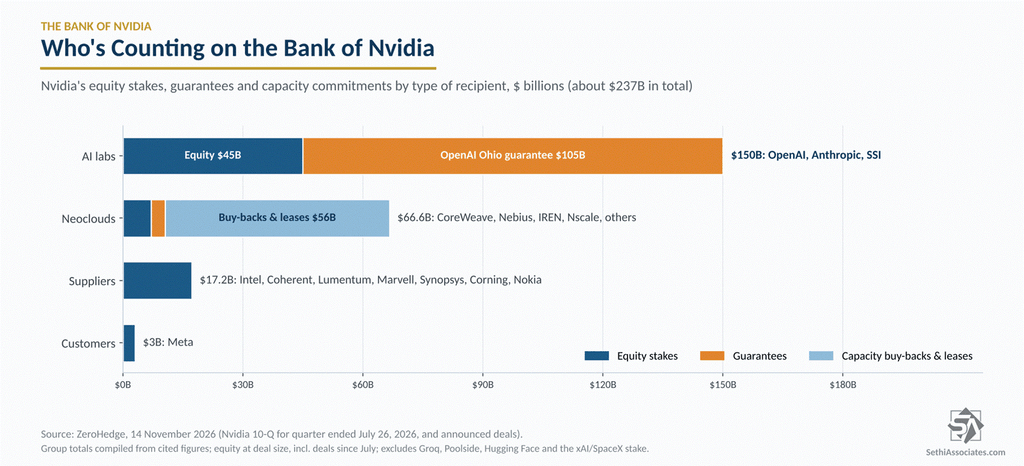
Arcuri estimates that even a temporary pause in Nvidia’s dealmaking could pull $50 billion or more out of the AI ecosystem. Kress’ track record points in that direction. According to the WSJ, Kress was the executive asking how Nvidia should value its guarantees and what return they earned, and she grew skeptical of the scale of the company’s backstop for OpenAI’s data center campus in Ohio. Nvidia cut that commitment from a reported $250 billion to the $105 billion it eventually filed. Later in August, Nvidia paused some of its credit-support deals with cloud providers and began requiring executive-team and board sign-off on each one. And even a Huang return wouldn’t necessarily reopen the checkbook, as he’s the one who started closing it.
Why Credit Is the Pressure Point
For cash-burning AI labs and heavily indebted neoclouds, access to Nvidia’s funding and top-tier credit rating is extremely valuable. Without that backing, they borrow on their own credit, and the timing is bad. While investment-grade corporate bonds pay just 0.89 percentage point more than Treasurys, near the tightest since at least 2013, the riskiest CCC-rated junk bonds hit a spread of 13.56 points on October 23, the widest since the summer of 2020. And the Fed is turning increasingly hawkish, with BofA now expecting rate hikes at the next three meetings.
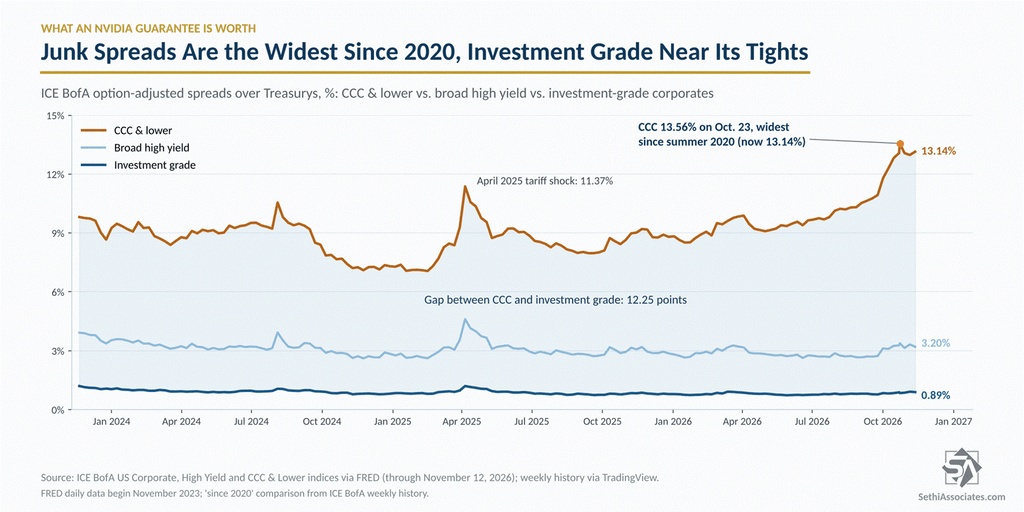
Take away Nvidia’s guarantee, and some deals get a lot more expensive while others may not get done at all. CoreWeave (CRWV) fell 11% the day Huang resigned, the same day it was marketing a loan of more than $4 billion that it hoped to place as investment grade, with Nvidia as the presumed guarantor, according to ZeroHedge.
What to Watch Tuesday
Eleven analysts have cut Nvidia from Buy to Hold in the past week, including Truist’s William Stein, who slashed his price target to $174 from $346. Goldman Sachs kept its Buy rating but trimmed its target to $220 from $300. But the third-quarter numbers aren’t the issue; expectations are for another blowout report. Revenue is forecast at $108.7 billion, up 91% year-over-year, and adjusted earnings at $2.47 a share, according to TipRanks. For the current quarter, analysts are looking for about $125 billion in sales.
Don’t expect Kress to say much about strategy on the call. She’s been in the job less than a week, with a CEO search underway and Washington asking questions, so “existing commitments will be honored” is likely about as far as she goes.
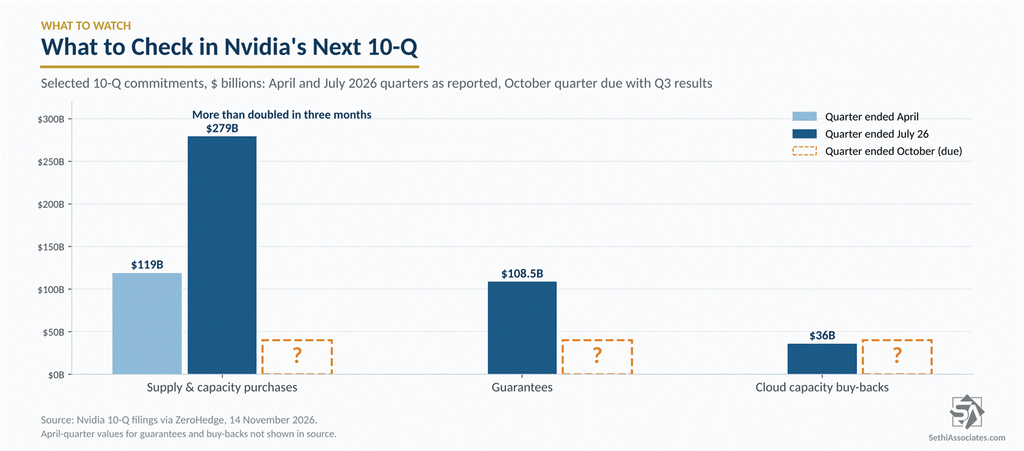
The better read will come from the quarterly filing, which updates Nvidia’s guarantees and commitments through late October. In July, guarantees stood at $108.5 billion and agreements to buy back computing capacity from AI cloud providers at $36 billion. If those flattened or fell, the pullback was well underway before Huang left. Supply commitments, which more than doubled to $279 billion in the three months through July, are the other number to watch. The most telling reaction may come not from Nvidia’s shares but from CoreWeave, Nebius (NBIS) and IREN (IREN), and from their bonds.
A Comeback Campaign Meets Washington
Another development worth a mention: Over the weekend, the Financial Times reported that Huang has discussed returning as CEO with confidants, while allies organize a lobbying effort aimed at the board and the White House. Elon Musk and Epic Games CEO Tim Sweeney have backed a public letter calling for his return, and Nvidia shareholders Brad Gerstner of Altimeter Capital and Gavin Baker of Atreides Management urged the board to keep “all options on the table.”
Treasury Secretary Scott Bessent pushed the other way, though. On Fox News on Sunday, he said the board should look outside the company for its next leader and that he wants to know whether Nvidia ignored warning signs that shell companies, many of them in Singapore, were funneling its chips to China. That moves the focus from Huang’s personal conduct to export controls and legal risk, which also clouds the path for an insider to take the reins. The FT also reported that the board has approached Arm Holdings CEO Rene Haas, though Nvidia says no formal search has started.
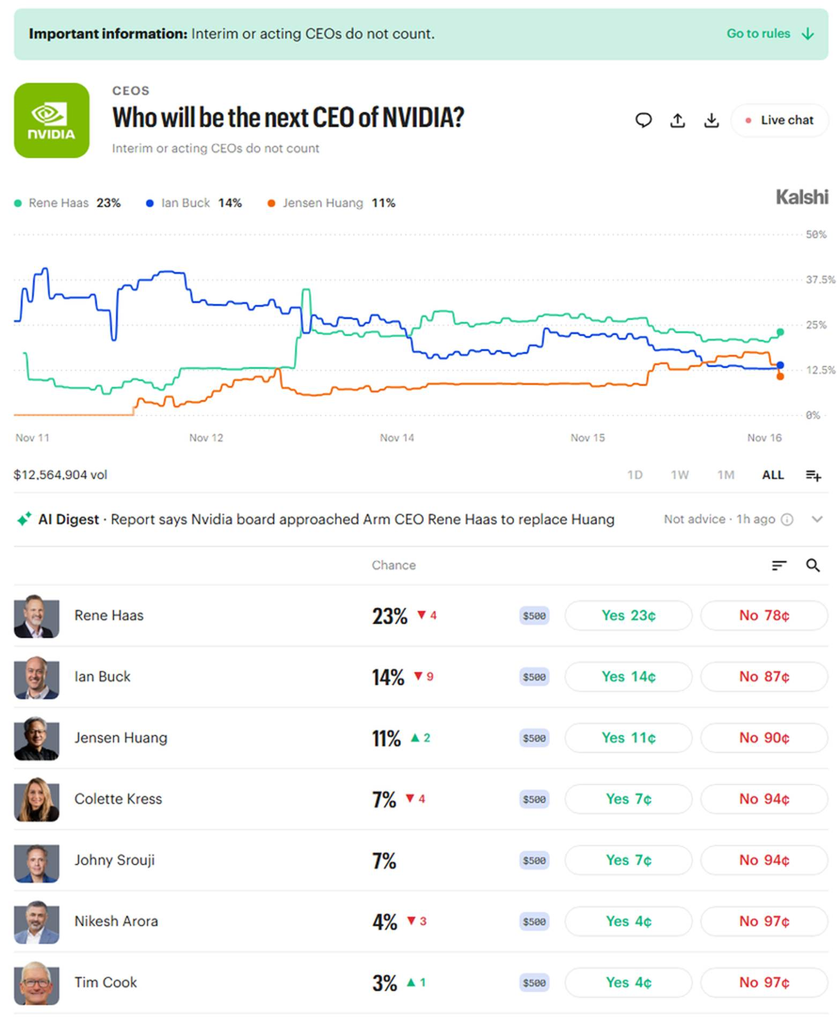
Prediction markets put Huang’s odds of returning as CEO at about 1 in 9. On Kalshi, he’s at 11% in the market on Nvidia’s next permanent CEO, behind Haas at 23% and Nvidia’s own Ian Buck at 14%. Interim CEOs don’t count, which helps explain why Kress is at just 7%. On Polymarket, bettors see a better than 50% chance the pick comes from outside the company.
For more on the initial reaction, see The Bounce Stalls as Nvidia Ousts Huang and Yields Jump, and for how rival chipmakers traded, see Nvidia’s Loss Has Been Its Rivals’ Gain, Until Friday.