Chip Selloff Keeps a Lid on Indices Despite Another Day of Broader Gains
Eight of 11 sectors rose and the Dow Jones Industrial Average gained for a third straight day, but another selloff in chipmakers kept the S&P 500 little changed and the Nasdaq in the red on the lightest volume of the year.
You've reached your free article limit
You've read 0 of 1 free Pro articles.
Quick Summary
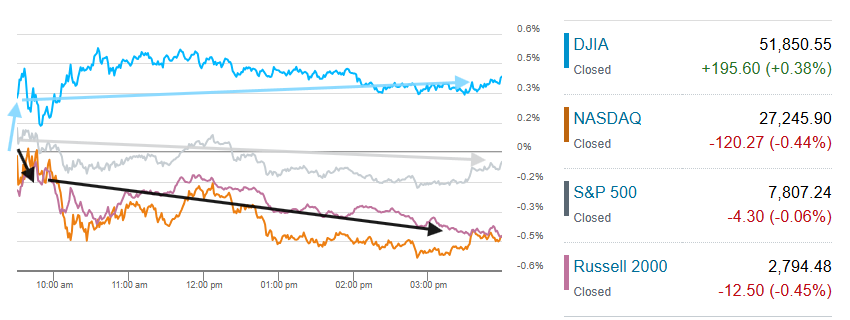
- Breadth continued to expand, but another day of relative weakness in Tech, led by another selloff in chipmakers, today on fears of Chinese competition, left the S&P 500 little changed on the session and the Nasdaq in the red for the third session in four. Only the Dow Jones Industrial Average made headway.
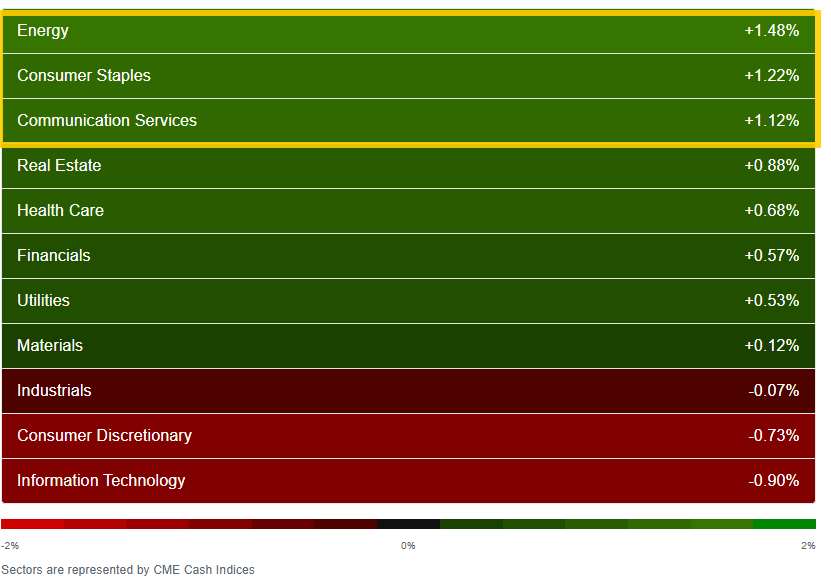
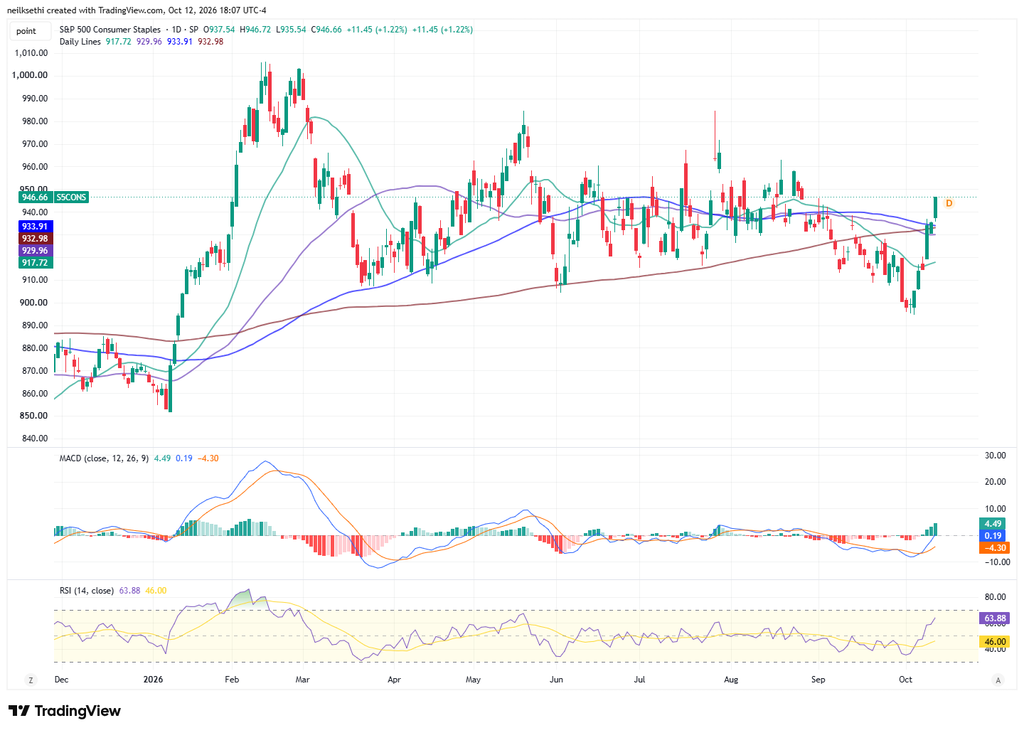
- Communications was this time the only megacap-growth sector near the top, on gains in Meta Platforms (META) and a partial rebound in the wireless carriers. Tech (-0.9%), Consumer Discretionary (-0.7%), and Industrials were the only decliners. Staples extended its October gain to about 5%.
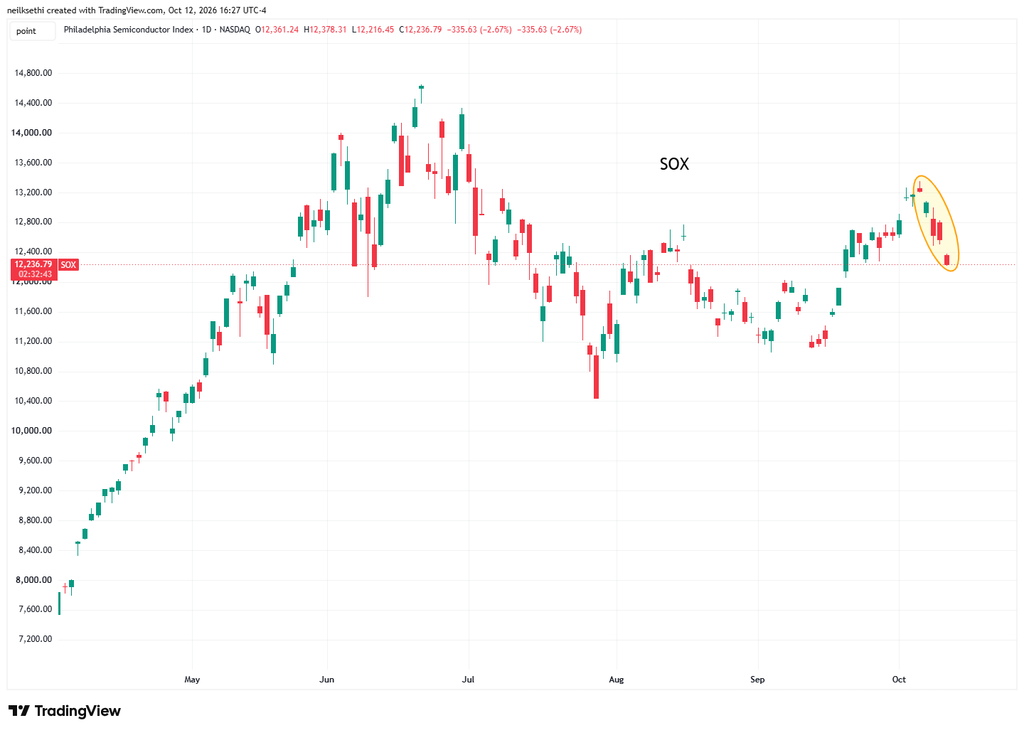
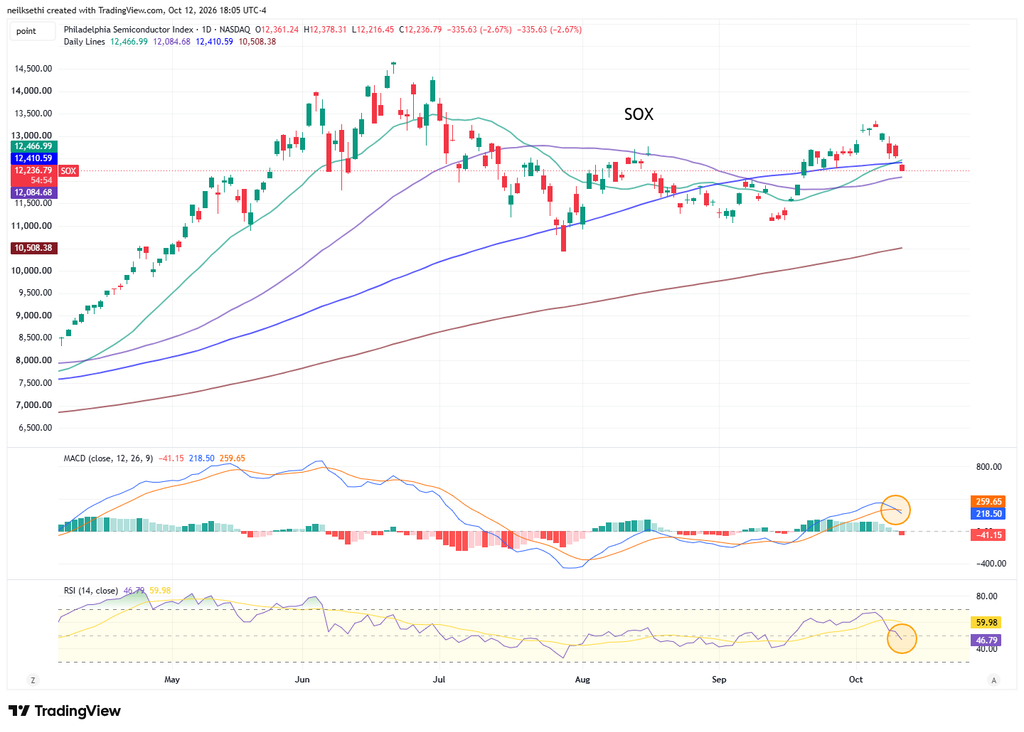
- The Tech weakness was in large part due to a fourth straight loss for the PHLX Semiconductor Index (SOX) which fell 2.7%. A major catalyst was a report that China’s CXMT is moving into next-generation memory chips.
- The Dow Jones Industrial Average, though, rose 0.4% for a third straight gain, helped by a 2% rise in Salesforce (CRM) after a double upgrade at BofA. The S&P 500 finished essentially flat (-0.1%), the Nasdaq fell 0.4%, and the Russell 2000 lost 0.5%. Per Bloomberg, US stock volume was the lightest of the year on the Columbus Day holiday, with the Treasury cash market closed.
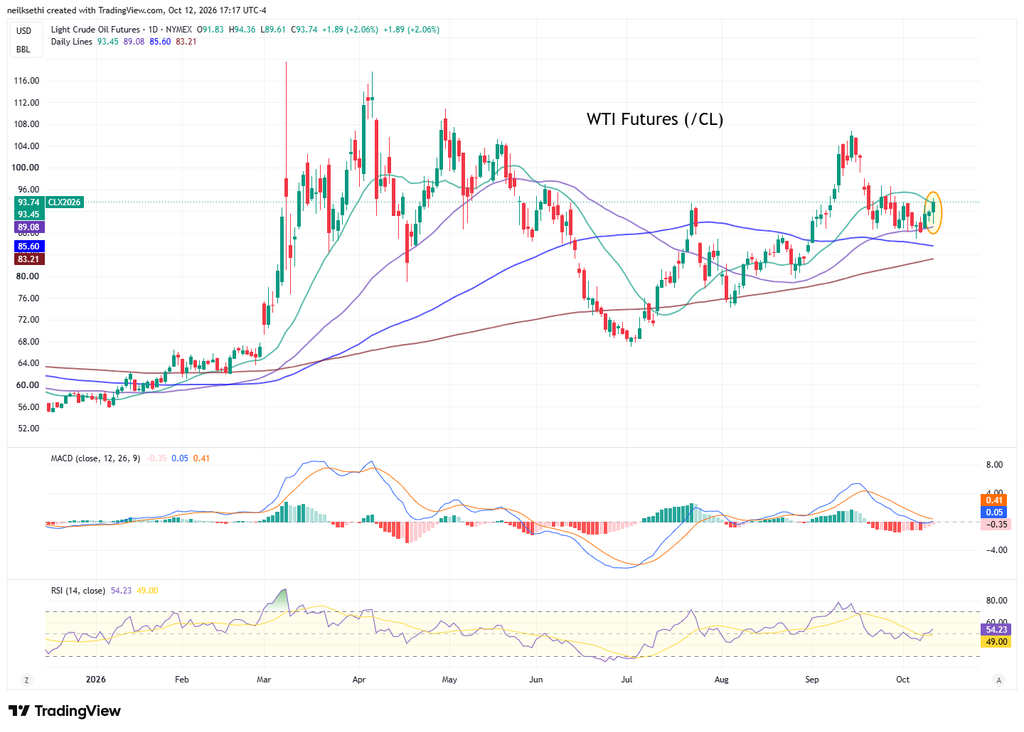
- Oil rose to a 2-week high, with WTI up 2.0% to about $94 and Brent up 1.8% to $106.65. Russia and Ukraine each struck energy targets hours after President Trump declared an “energy ceasefire.” Trump also said he’s considering joining Saudi Arabia’s fight against the Houthis after a deadly attack on Riyadh’s airport.
- Q3 earnings season kicks off Tuesday with the big banks. September CPI follows Wednesday, PPI and retail sales Thursday, and Fed Chair Warsh speaks Thursday night.
Market Commentary
Equities:
- “US equities are primed to make fresh highs this week as financials kick off third-quarter earnings season. Rising rates are placing a higher hurdle that most stocks are failing to clear, yet robust tech results should keep headline index momentum intact.” — David Savage, Bloomberg Macro Squawk
- “That breadth story is what everyone wants to point to as a reason to be bearish,” Garrett Melson, a portfolio strategist at Natixis Investment Managers Solutions, told MarketWatch. Yet it isn’t the ‘panacea for calling tops or corrections that people like to think it is,’ he said. “That’s the dynamic you are seeing play out now,” Melson said. “Every year, we have this freak-out about breadth, but the correction that’s supposed to go along with it doesn’t happen.”
- “The narrower the market is, the more susceptible it is to a problem where one thing goes wrong,” said Ross Mayfield, an investment strategy analyst at Baird, warning that investors shouldn’t overlook a “tepid” consumer spending story. “Then the market falls.”
- “It’s not make-or-break, but it is ‘show me’ and the rally needs a confirmation, because the bar has been raised,” said Violeta Todorova, senior research analyst at Leverage Shares. “Normally companies get to step over a lowered bar. This time they have to jump a higher one.”
- “Growth has been powerful enough to keep valuations in check and allow investors to look past higher yields, interest rates, and inflation,” said Bret Kenwell at eToro. “Another strong quarter could reinforce the bull narrative intact into year-end, while a disappointment could catalyze a broader pullback.”
- “Investors have kind of narrowed in on some of the important aspects,” said Brian Leonard, portfolio manager of Keeley Gabelli Small Cap Dividend Fund (KSDIX). “Can this company withstand what’s happening? Pass along, continue to grow margins, and the future is going to be better than the most recent past.”
- “Double-digit earnings growth has so far helped offset the negative impact of higher rates,” said Vincent Juvyns, chief investment strategist at ING in Brussels. “The earnings season will be important in determining whether the bull market has further room to run.”
- “The big banks tend to set the stage for the rest of earnings season largely since their performance reveals how the underlying economy is doing, and a strong economy is the key to a healthy earnings season,” said Clark Bellin at Bellwether Wealth.
- “It’s going to be all on earnings,” Tim Holland, chief investment officer at Orion, said to CNBC. He added that even if this week’s inflation prints are hotter than expected, the market is going to regard them as “not enough to derail” the Federal Reserve, which is largely expected to keep interest rates steady at its next meeting, per the CME FedWatch tool. “Something will upend this bull market at some point, but I think the most important thing going on right now is the AI capex buildout,” he said.
Fed:
- “The risk to the CPI report is asymmetric, as a hotter print could signal that the Fed may need to pick up the pace of tightening, while a weaker, or at consensus print continues to feed into the Fed exercising caution going forward,” said Molly Brooks, US rates strategist at TD Securities. “This will be the last week before blackout period, so Fedspeak post CPI” will help markets have “less uncertainty” about the outcome of the next meeting, said Brooks. She said, “Warsh is likely to continue to shy away from forward guidance, which the market is expecting.”
- “The contrast between a fuel-driven headline acceleration and a softer underlying core print will clearly be important for the Fed, particularly given recent messaging that further tightening may be needed but is not urgent,” noted Jim Reid, global head of macro research at Deutsche Bank AG.
Stock and Sector Breakdown:
Sector breadth remained solid again with 8 of 11 sectors higher (just Wednesday and Thursday last week have had fewer than that — 3 and 6 respectively — over the past six sessions). Three sectors again finished over 1%, with again just one megacap growth sector at the top of the leaderboard (today Communications — there hasn’t been more than one of Consumer Discretionary, Communications, and/or Tech in the top four in those six sessions).
Like Thursday though where Tech dragged the index lower, it did so again Monday -0.9%. Consumer Discretionary and Industrials also finished in the red. The gain in staples as a reminder comes after its second-best week since 2022. The sector is up around 5% this month.
[chart uses futures prices]
The PHLX Semiconductor Index (SOX) fell 2.7%, its fourth straight losing session, led by memory makers with Micron (MU) falling 3.9% and SanDisk (SNDK) losing 6.0% amid concerns about growing competition from China and whether the memory industry’s huge rally has left stocks vulnerable to further selling. Chinese memory chipmaker ChangXin Memory Technologies, known as CXMT, has made progress developing advanced 4F² memory-cell technology, potentially allowing manufacturers to store more data in smaller spaces. The development has raised concerns about future competition for established memory producers. The weakness was despite Micron saying that its board of directors has increased the company’s current share repurchase program to $35.16 billion, the largest buyback authorization in the company’s history.
The selling also extended to other areas tied to the AI infrastructure buildout, including Lumentum (LITE) -9.8%, Ciena (CIEN) -10%, and Coherent (COHR) -7.9%, the S&P 500’s three worst performers. Weakness in data center power-related names Bloom Energy (BE) -6.5% and Generac (GNRC) -2.9%, also weighed on the industrials sector.
Other megacaps, though, outperformed. Apple (AAPL) +1.3% advanced on reports that the consumer electronics company is receiving strong orders for its new foldable iPhone called the “Duo.” Meta Platforms (META) +3.4% was a standout after CEO Mark Zuckerberg told The Financial Times that the social media giant has caught up with its AI rivals in the “frontier” AI model race. Zuckerberg’s comments came as Meta introduced its Muse Wonder “frontier” AI model series on Monday. It kicked things off with Muse Wonder and Muse Wonder Full, describing them as “our most capable models to date.”
Amazon (AMZN) though declined over 1% following a Wall Street Journal report that the company is in talks to acquire AI startup Decart for around $7 billion. Founded in 2023, San Francisco-based Decart makes software that helps developers switch between different AI chips. This gives developers more flexibility when choosing hardware for their AI workloads.
Salesforce (CRM) in contrast was up over 2% after receiving a rare double upgrade from Bank of America with analyst Tal Liani saying his previous concerns that artificial intelligence (AI) would disrupt the cloud software company have subsided. Liani raised his rating on Salesforce’s stock to Buy from Sell previously. The analyst also lifted his price target to $285 from $160.
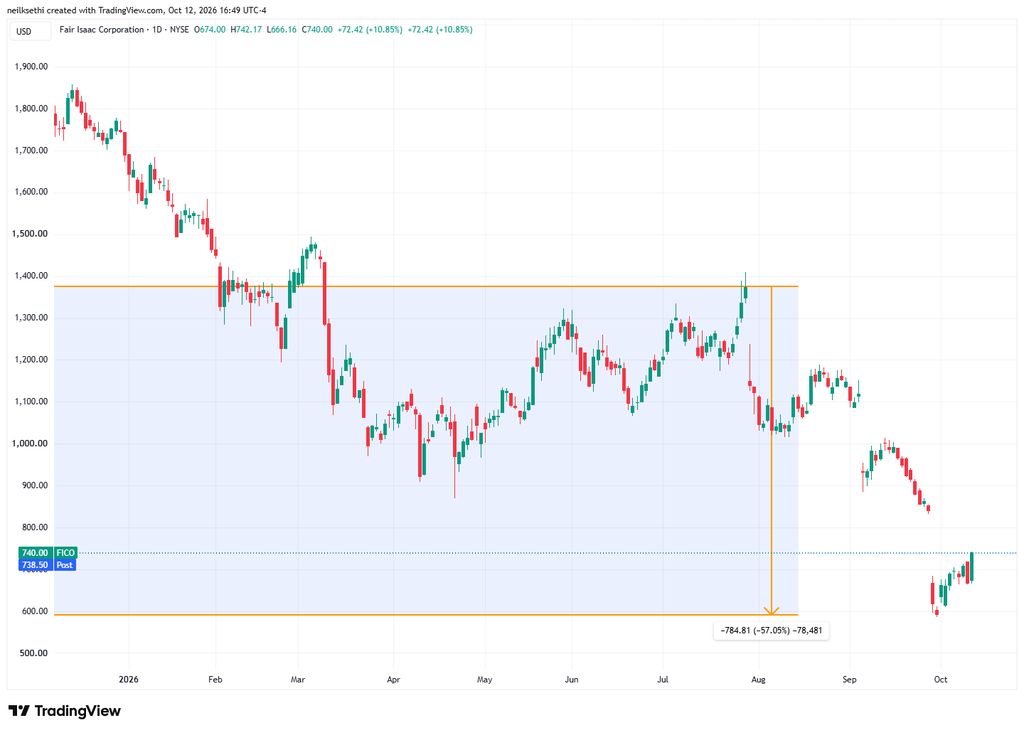
The top performer in the S&P 500 was Fair Isaac Corporation (FICO), which continued its rebound over the past week, adding nearly 11%, as it recovers from a series of drops that cut its share price by more than half since the end of July.
Outside the S&P 500, shares of Bumble (BMBL) soared 49% after the WSJ reported the company is in advanced talks to be taken private by Ithaca Holdings for around $1B.
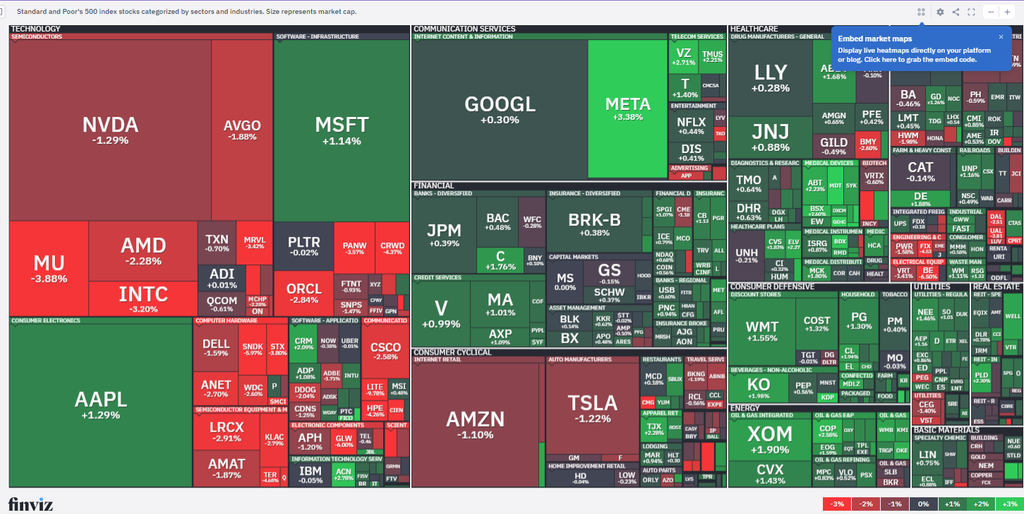
The solid sector breadth was also not reflected in the number of large SPX winners (up over 3%) which came in at just 10 from ~35 Friday, ~40 Thursday, while the number of large losers (down over 3%) came in at ~20 . As mentioned previously, both of these metrics have remained very (extremely?) subdued since the start of August rarely getting above 50 and only once above 100. Very unusual compared to the past couple of years.
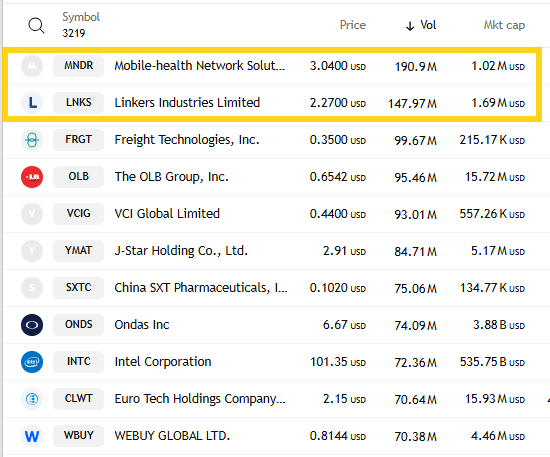
Meanwhile speculation on the Nasdaq was as light as I’ve seen it with just two stocks trading over 100 million shares and none over 200 million.
Some other stock-specific commentary from TheStreet Pro:
- Chris Versace –
- Bob Lang – Chart of the Day: Will Earnings Change the Game for Morgan Stanley?
- James “Rev Shark” DePorre – Amid the Biotech Madness, I Spotted an Opening in a Promising Small-Cap
- Bob Byrne – AI Data Center Stocks Could Bounce Hard. Here’s What Would Make It Last
A Look At The Charts
Note on all charts the colored lines are moving averages (the average price over the lookback period — days on the daily charts, weeks on the weekly charts):
20 = green
50 = purple
100 = blue
200 = brownException is monthly charts where blue is 10-month moving average and brown is 20-month moving average.
MACD = Moving average convergence/divergence line, a measure of momentum that compares longer term and shorter term momentum to gauge if a move is strengthening or weakening. This is probably my favorite individual indicator.
RSI = Relative Strength Index (basically what it sounds like) = measures the strength of the move comparing gains to losses over the given lookback window (I use the standard 14 periods).
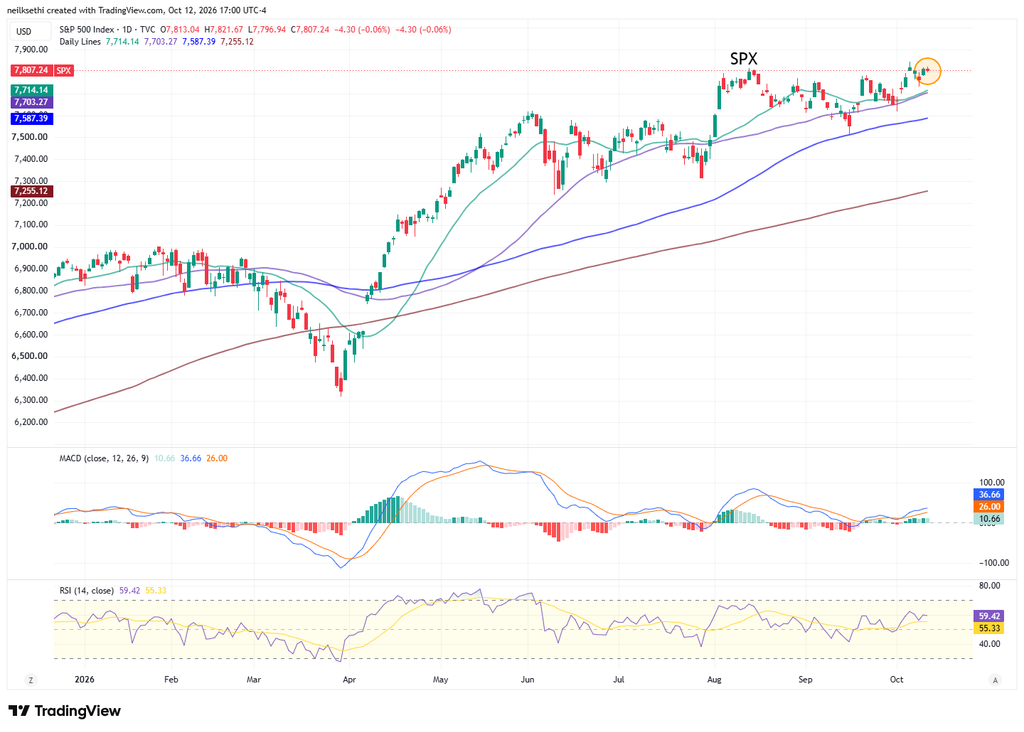
SPX remains just under its all-time high. The daily MACD and RSI also remain positive, and it is above all moving averages I track.
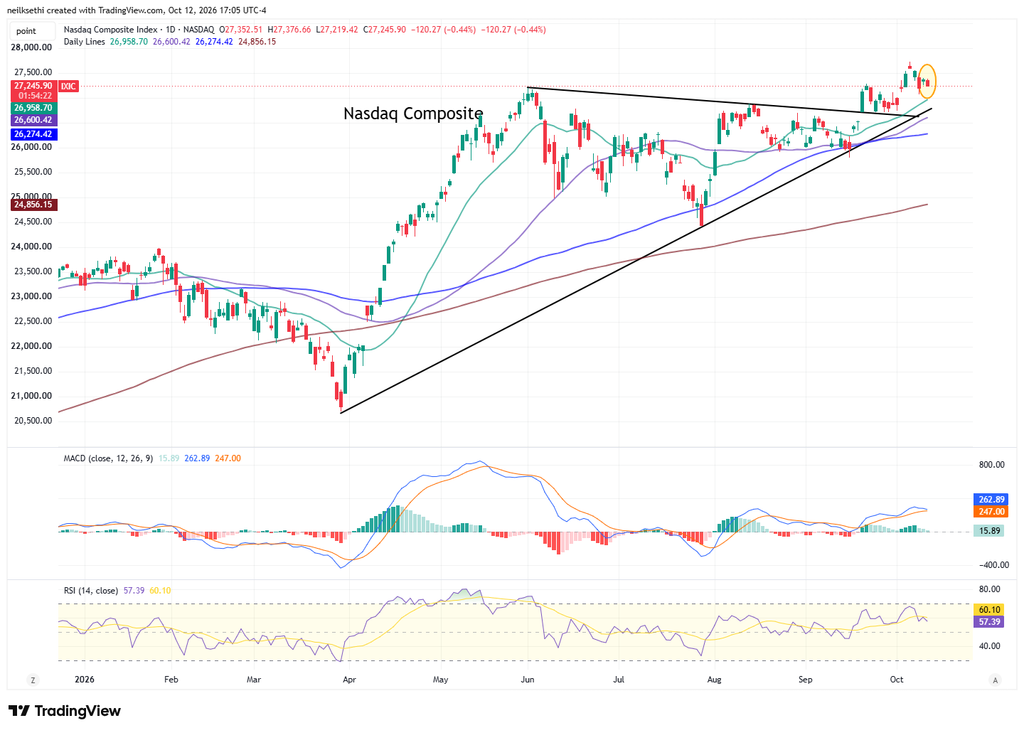
Nasdaq Composite a similar story although a little further from its all-time high, and its chart is no longer superior to the SPX.
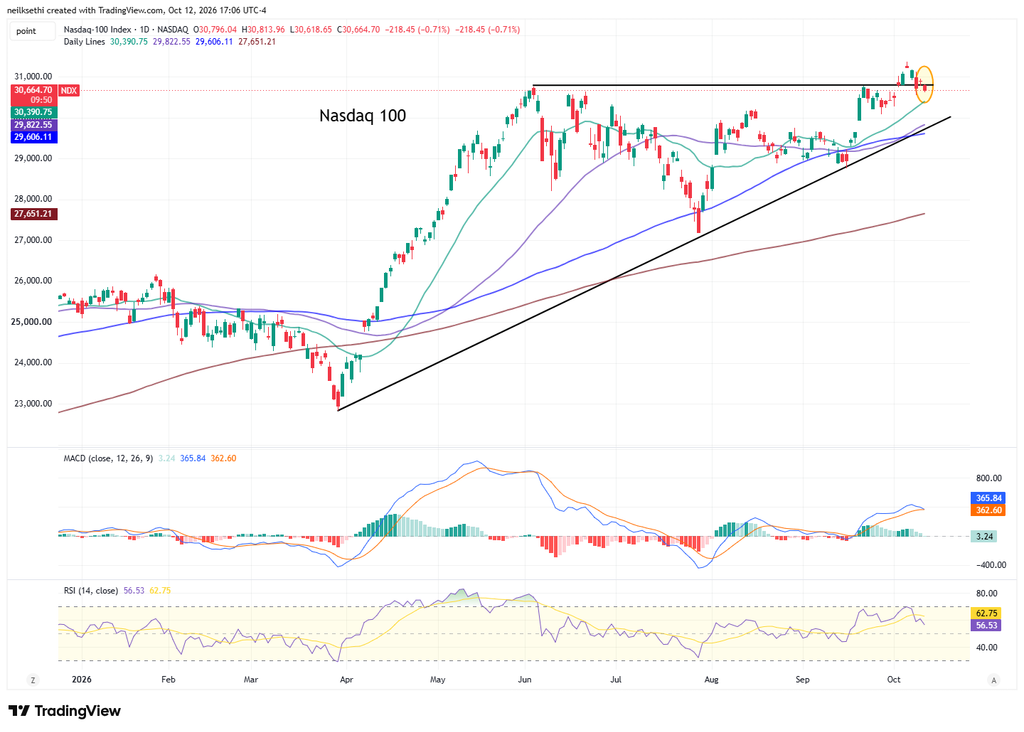
And the Nasdaq-100 (QQQ) similar to the Nasdaq. Has slipped beneath its breakout level.
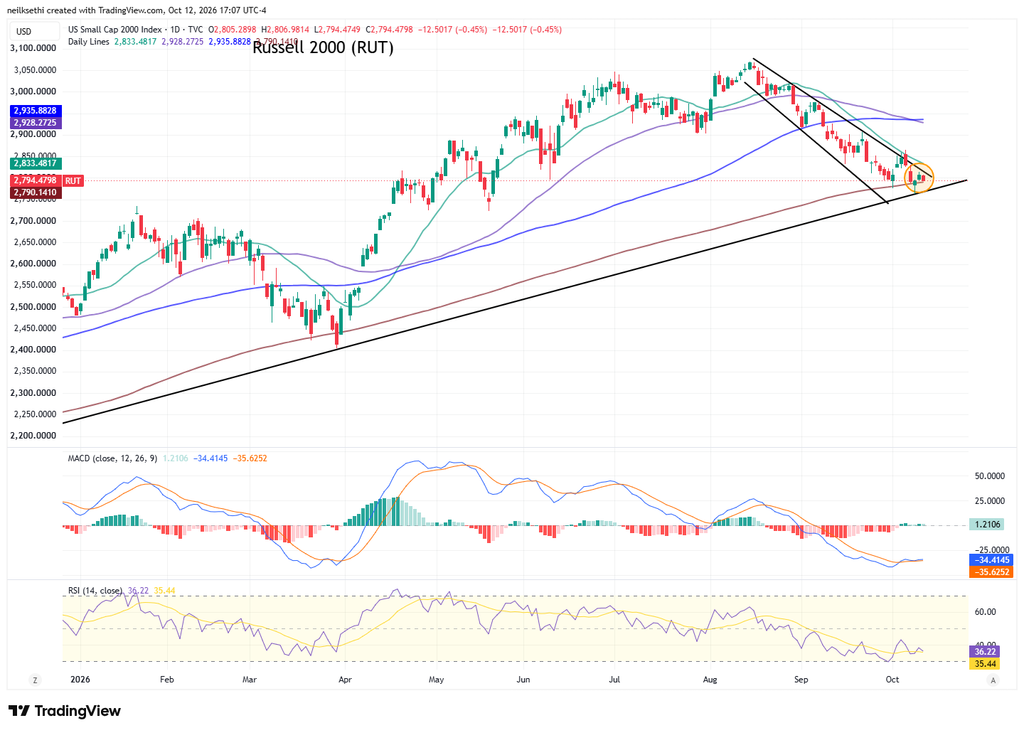
The Russell 2000 (RUT) eased back to the 200-DMA. For now remains in its downtrend from the highs. The daily MACD remains neutral, but the RSI under 40.
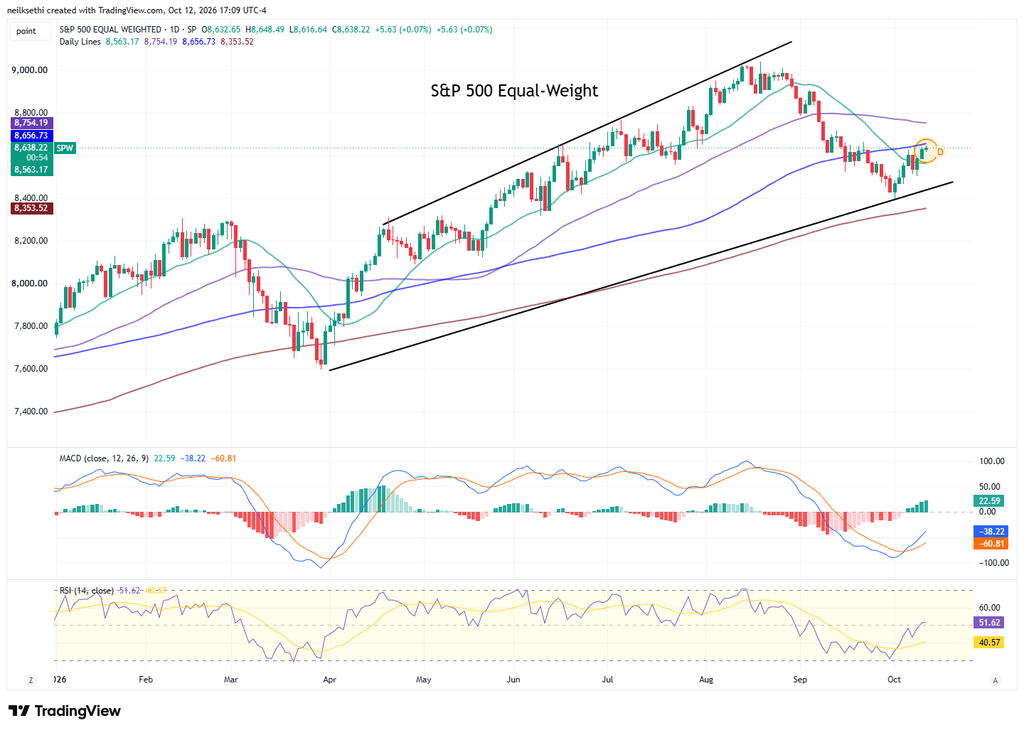
The equal-weighted SPX edged to a new 1-month high, but still needs to clear the 100-DMA. It has a positive MACD, and the RSI is now 50, so as noted last week “the technicals support a continued move higher.”
Treasury markets closed today.
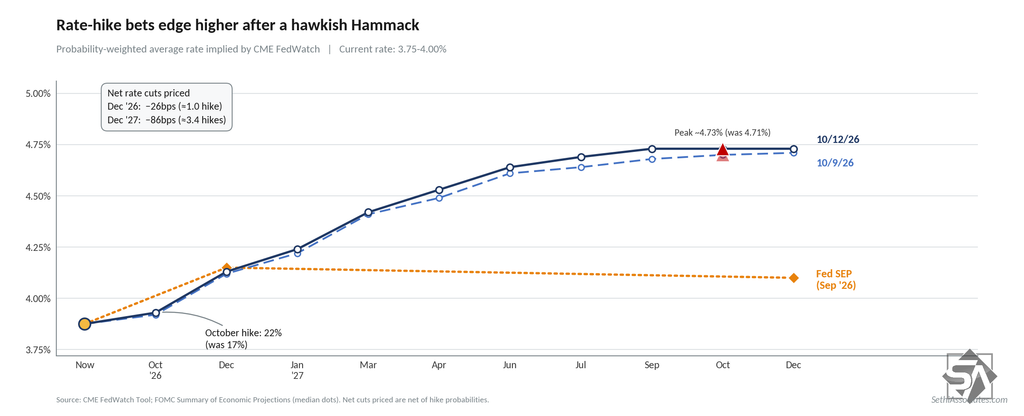
The CME Fedwatch tool was open though and that saw FOMC rate hike expectations firming a little with another hawkish speech from Cleveland Fed President Hammack (see below). October edged up to a 22% probability and December 87%. 2027 sees ~86 basis points of hikes through next December up from ~84 Friday.
Some posts on yields:
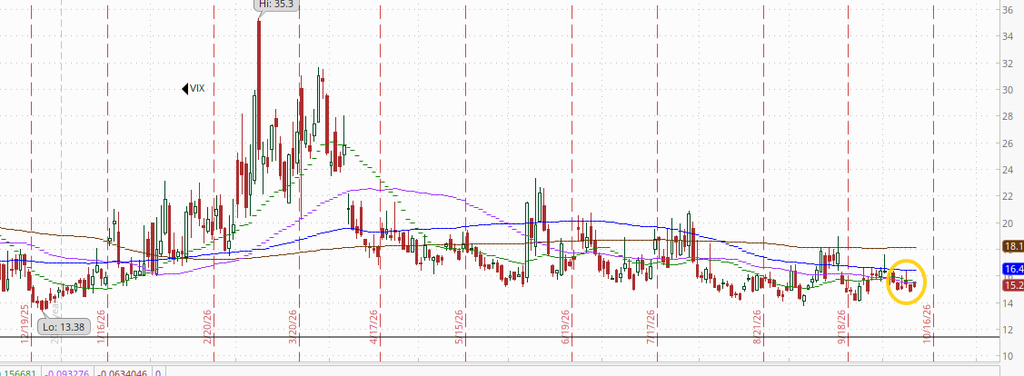
VIX edged up to 15.2. That’s consistent with ~0.95% average daily moves in the SPX over the next 30 days.
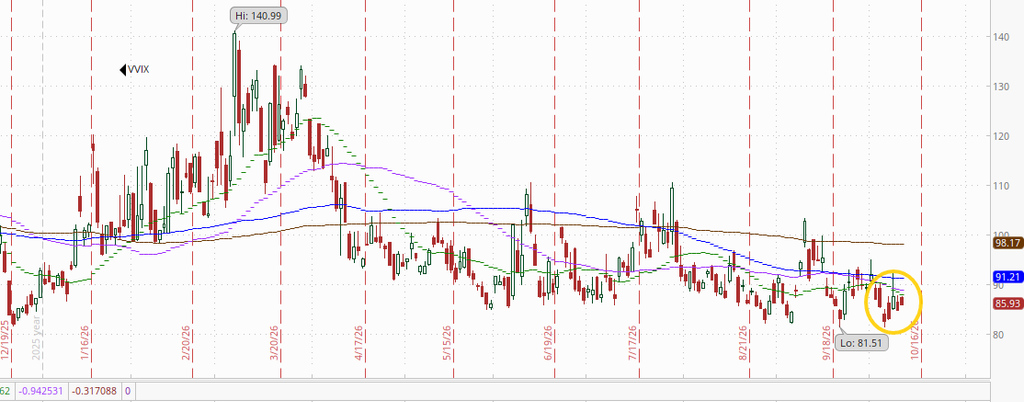
The VVIX (VIX of the VIX) edged to 85.9.
The current level is consistent with “moderate” daily moves in the VIX over the next 30 days (historically, normal is 80-100, although we haven’t been below 80 since July 2024). Above 100 is the level flagged by Charlie McElligott as indicating higher stress.
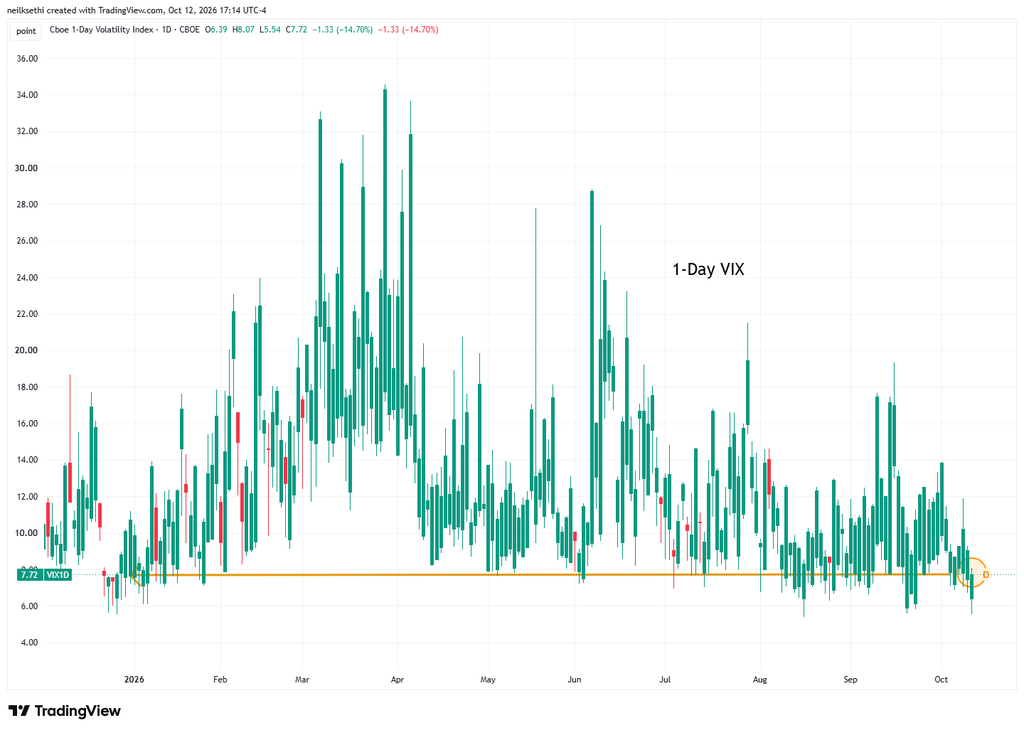
The 1-day VIX though dropped to 7.7, a new low for the year. The current reading is consistent with a move of just 0.48% in the SPX next session.
WTI futures (/CL) up for a third session to the highest close in two weeks (including after-hours).
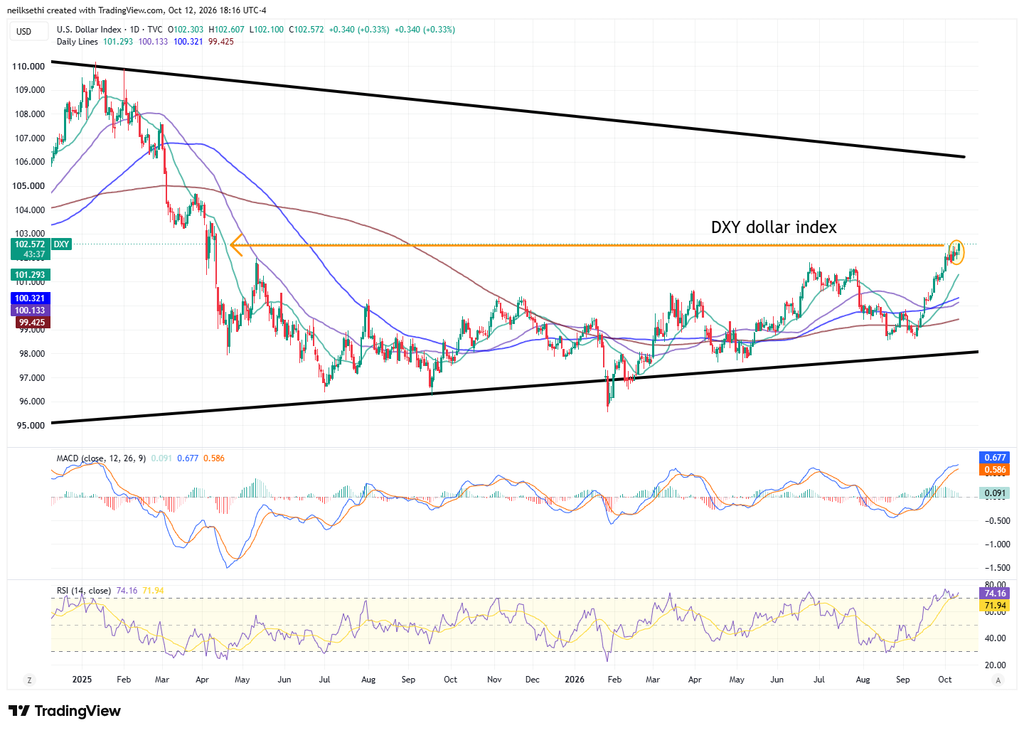
The DXY dollar index (which is fixed weighted with a heavy 57% weighting vs the euro) up another 0.3% to a new highest close since April 2025.
As I mentioned three weeks ago “The daily MACD remains positive and the RSI is above 60 so it continues to have strong technical support.”
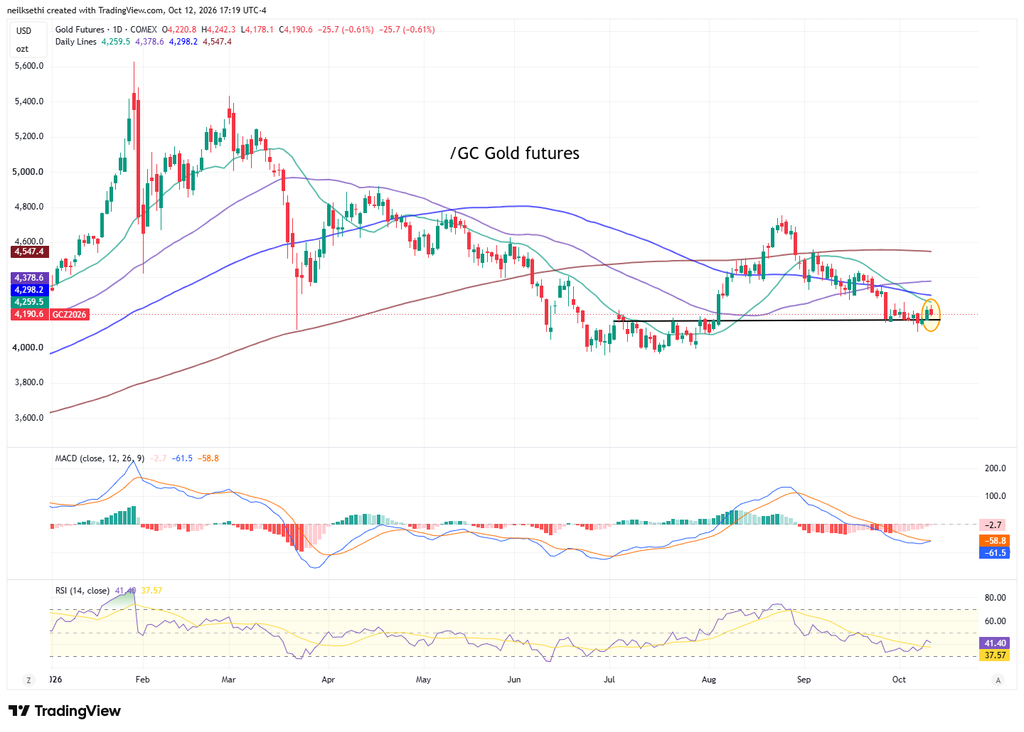
Gold futures (/GC) fell back but remained above support. As mentioned Friday, “still has quite a bit of resistance above, thin margin below.” The daily MACD remains negative and the RSI is around 40, but both are slowly firming.
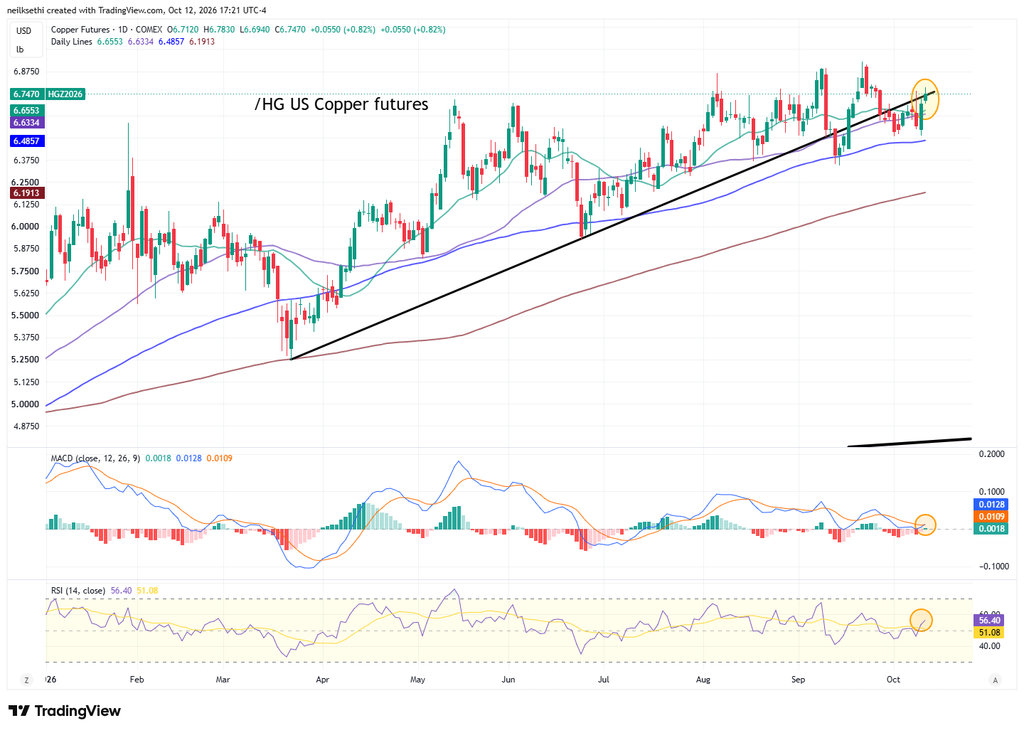
Despite the weakness in the AI trade, US copper futures (/HG) up another 0.8% to a new 2-week high, although overall still remaining range bound. Daily MACD and RSI slightly positive now.
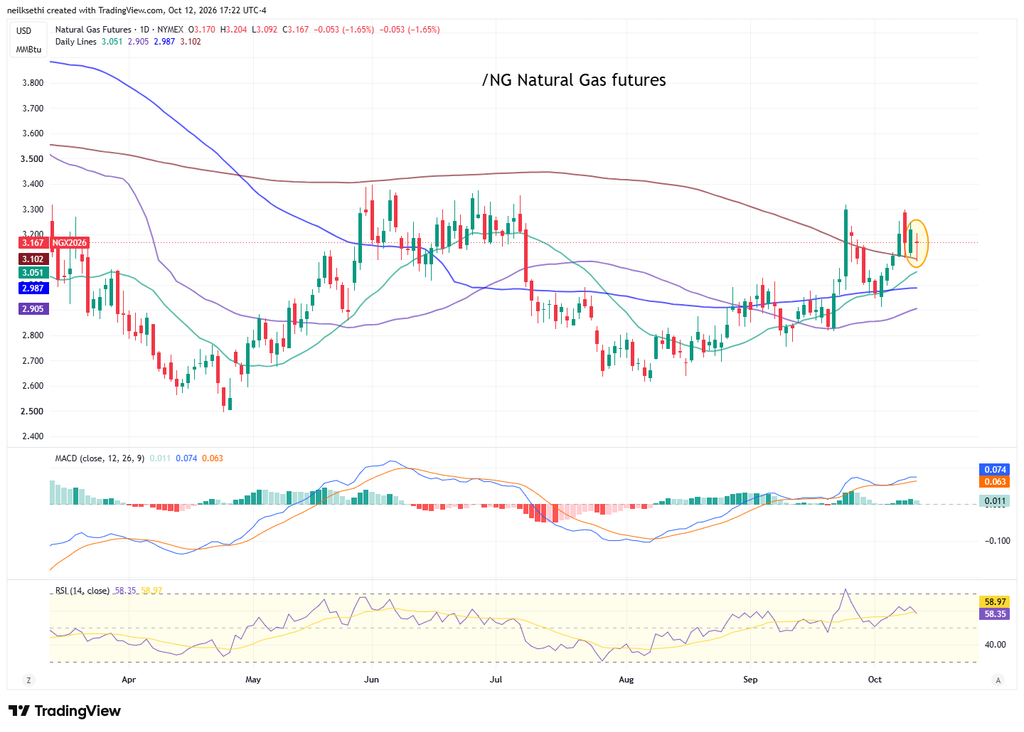
US natural gas futures (/NG) fell back remaining in their range since March.
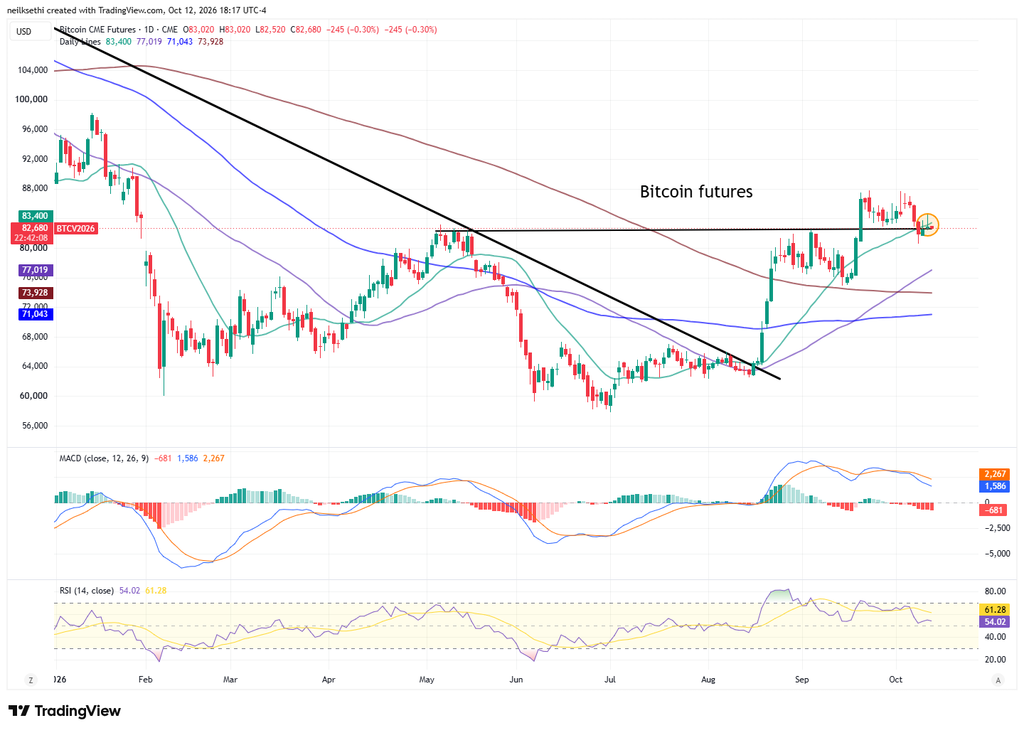
Bitcoin futures again traded over the $82,500 level, and this time held it through the close. I went ahead and re-entered my iShares Bitcoin Trust (IBIT) position with a stop just below current levels. Not a lot of confidence though with a still negative daily MACD, although the RSI still holds just above 50.
More From TheStreet Pro:
- Helene Meisler –
- Chris Versace –
- James “Rev Shark” DePorre –
- Bob Lang – Charting the S&P 500: New Highs, But Was It Convincing Enough?
- Peter Tchir – What Worries Me About These Diesel ‘Deals’
- Bret Jensen – How to Allocate a Safe Portfolio as Indices Mask Broad Weakness
And From Me If You Missed It:
Miscellaneous:
Wrap-Up – Can Tech Join the Rest of the Market?
I went through on Sunday my concerns about the Tech trade. It was lengthy, so I won’t revisit that all here, but it was in part based on the analysis of Deutsche Bank’s equity team, who as I mentioned has “called the past year as good as anyone”.
My takeaway was: “I remain hopeful that Tech can get it back into gear, but it does seem we’re due for a rotation out of Tech, and those have lasted over a month since mid-2024. So if they’re right, the answer is no, Tech and non-Tech will not rise together.”
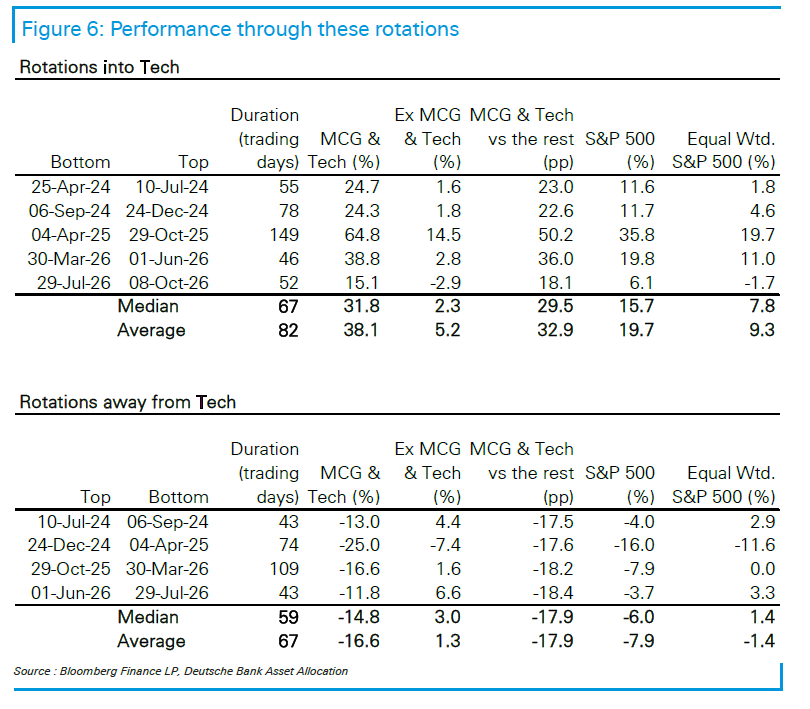
As I also said though “let’s not prejudge the outcome,” but I have to say after looking at the charts my caution levels continue to rise. So far the technicals for the Nasdaq, Nasdaq-100, SOX, and key stocks such as Nvidia, AMD, Micron, etc., have not broken, even if they’ve come back to where they were two weeks ago.
But as you can also see, their technical condition is far from pristine, and outside of the top level indices, there are daily MACD crossovers, and, in the case of SOX and Micron, the RSI falling under 50. I did sell out of SK Hynix (SKHY) today when that broke under its moving average support, and Micron will also get that treatment on any notable further weakness.
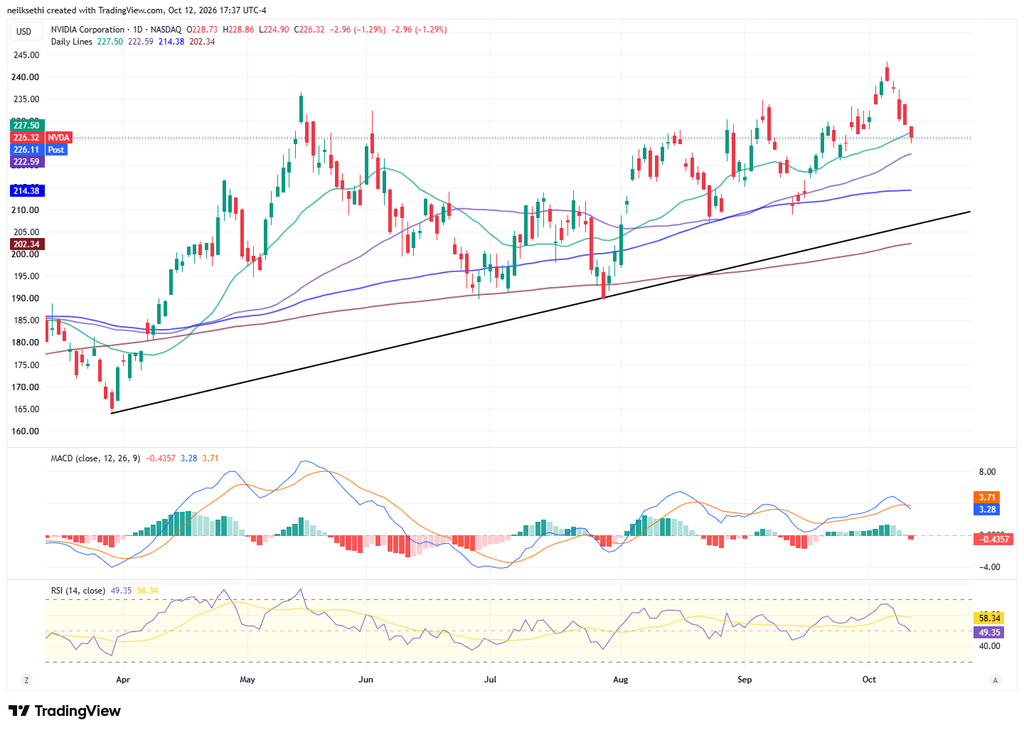
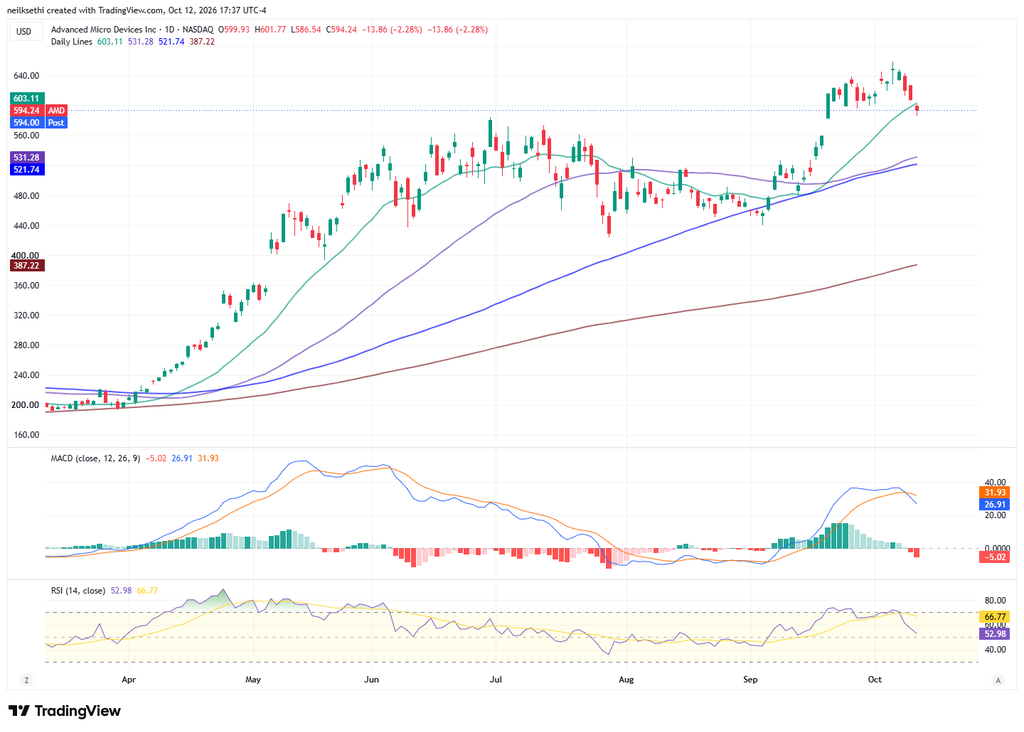
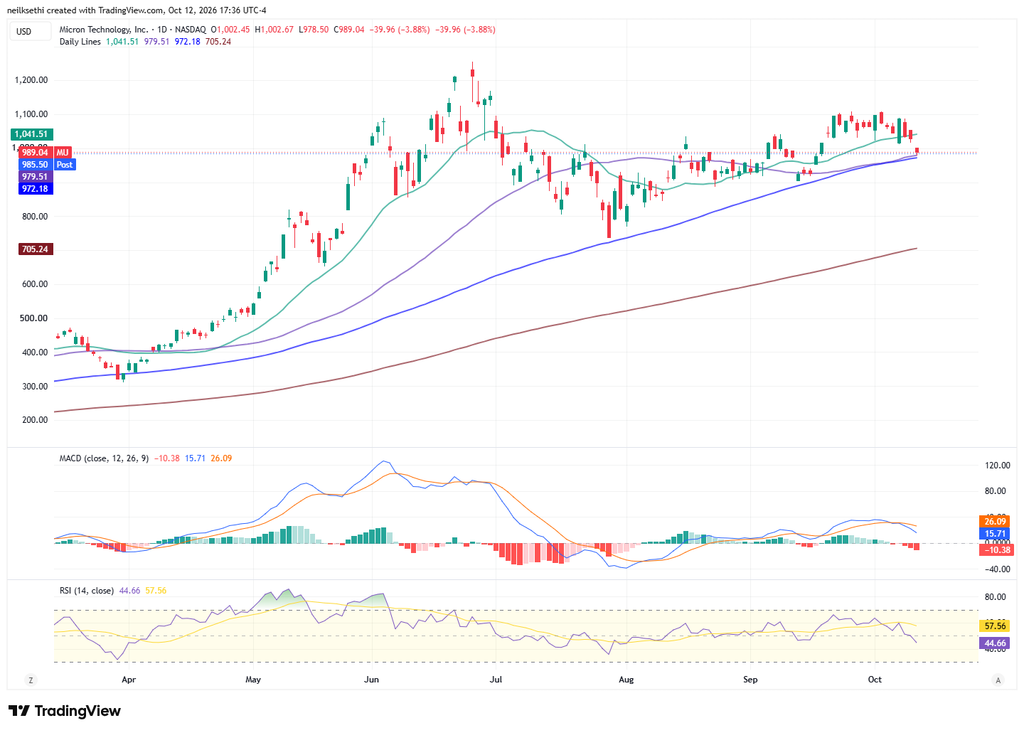
Meanwhile we’re seeing positive MACD crossovers and breakouts across a number of previous losers in Staples, Health Care, Real Estate, etc., with strong recent performances.
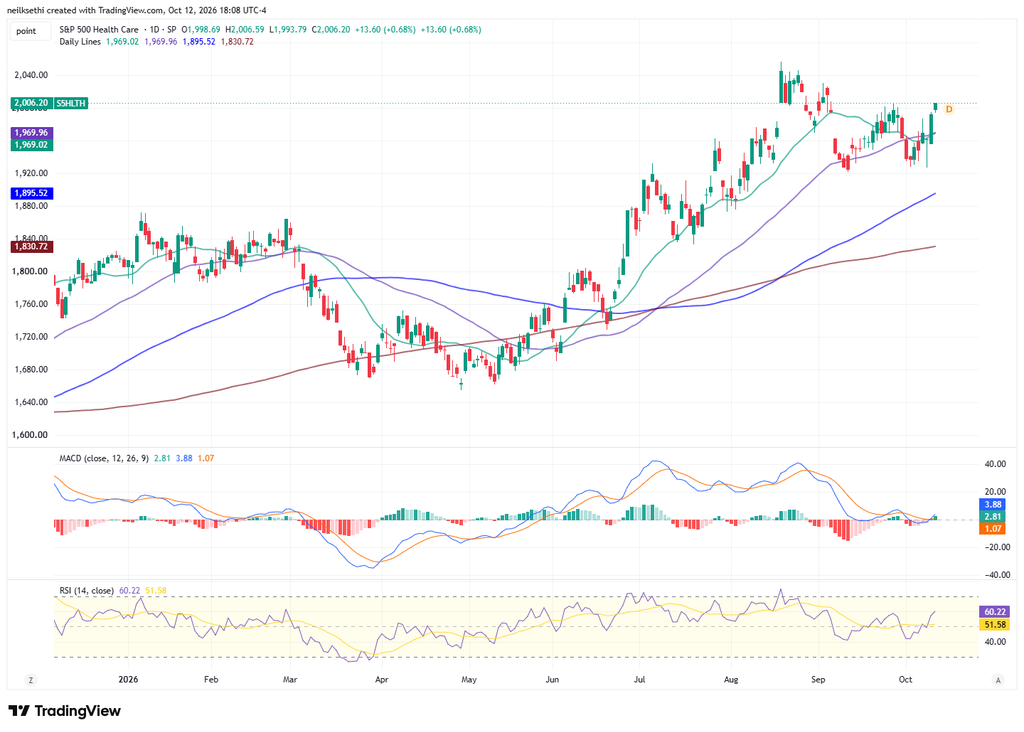
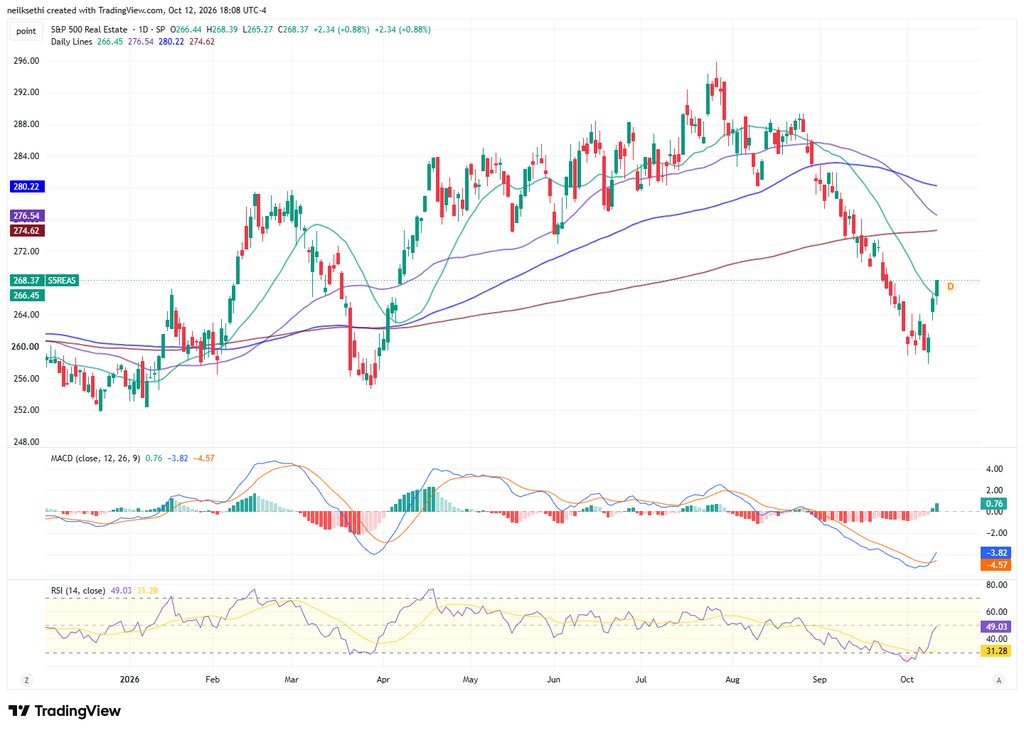
We have a day before we get to CPI (and PPI the day after) which will likely determine the near-term direction for this Tech vs everything else trade. We also get back to having to worry about Treasury yields tomorrow.
As always, let’s see what we get and go from there.
The Day Ahead – Here We Go
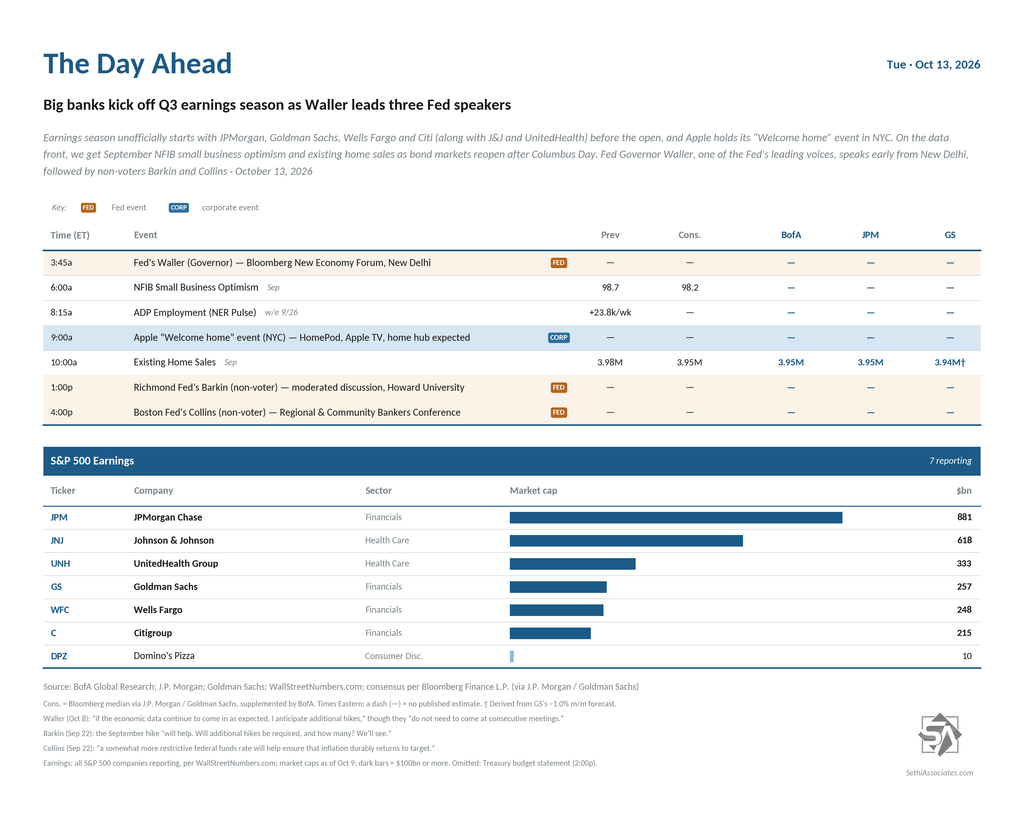
US economic data picks up Tuesday with September NFIB small business optimism and existing home sales along with ADP’s weekly job growth estimate.
Fed speakers stay busy with Governor Waller and regional Fed presidents Barkin and Collins.
No non-Bill (>1yr in maturity) US Treasury auctions this week.
Q3 earnings season unofficially kicks off Tuesday with the big banks: JPMorgan (JPM), Goldman Sachs (GS), Wells Fargo (WFC) and Citigroup (C) report, along with Johnson & Johnson (JNJ), UnitedHealth (UNH), and Domino’s Pizza (DPZ).
In other corporate events, Apple (AAPL) holds its “Welcome home” product event. As Chris Versace previewed: “As that [title] suggests, Apple will showcase several new Home products, including refreshed HomePods and Apple TV devices, most likely with Siri AI added. Of greater interest will be the company’s expected HomePad and related connected home product that include a doorbell, thermostat, smart deadbolt lock, and indoor and outdoor security cameras. Those products would challenge Alphabet’s (GOOGL) Nest and other connected device vendors.”
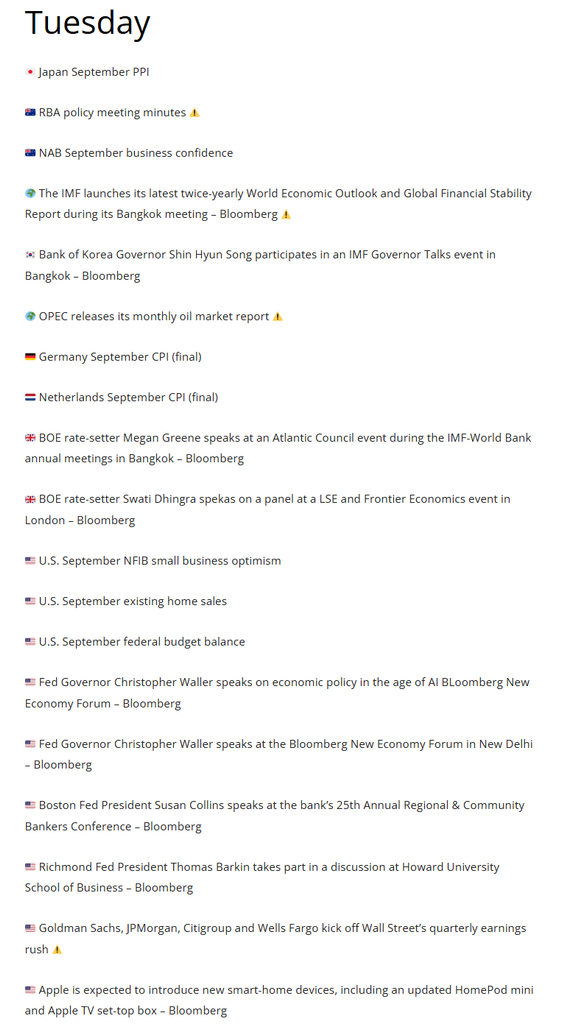
Ex-US highlights include Japan September PPI, bank lending, Germany August current account balance, RBA minutes, the OPEC monthly oil market report, and the IMF releases its latest twice-yearly World Economic Outlook and Global Financial Stability Report during its Bangkok meeting.
From Christophe Barraud’s international Week Ahead rundown:
At the time of publication, in terms of equities mentioned, Sethi was long FICO, LITE, NVDA, MU, PLTR, ORCL, AAPL, GOOG, QQQ, SPY, RSP, IWM, CPER, IBIT and numerous equities in the energy sector.
As a reminder comments are encouraged. If they are directed at me, please put @NeilSethi in front.