Market updates and conversation from TheStreet Pro team. Follow the latest and join the conversation below.
Stock Market Today: October 21, 2026
Newest first · All times Eastern · 10 updates
DATE:
By Chris Versace
Putin Reportedly Floats Three-Way Peace Talks
Axios is reporting Russian President Vladimir Putin told White House envoy Steve Witkoff on Wednesday that he “agrees in principle” resuming trilateral peace talks between Russia, Ukraine and the U.S. to end the war, according to Russian and U.S. officials.
The homebuilding sector, or the (XHB) ETF, has been mired in a massive slump this year. We can directly see the cause as being high interest rates, mortgages are comfortably above 7%. That is a huge difference from just five years ago when a new housing boom and refinancings took place (started when Covid was the issue). Many of those refinancers have very low interest rates and not only won’t pay off their mortgage but they won’t sell their house, either. The conundrum is about supply — is there too much or too little? It seems buyers are out there but maybe credit is an issue, or job security. Demand for housing is weak, this week saw housing starts and permits in negative territory.
Whatever the case, homebuilders are not in the best shape. Every chart looks the same, lower highs and lower lows, our textbook definition of a downtrend. The XHB has been fighting the 20-day moving average and losing, but eventually we’ll see it base and then move above there with some strong volume, it is just not happening now.
When might the homebuilders start to shine? It may not be in 2027, when Fannie Mae predicts mortgage rates will average 7.5%, far above its previous forecast of 6.75%. Not good times for the homebuilders, but maybe this is the down cycle for the group. Keep an eye on long-term rates.
U.S. Crude Inventories Extend Slide to Lowest Since October 1983
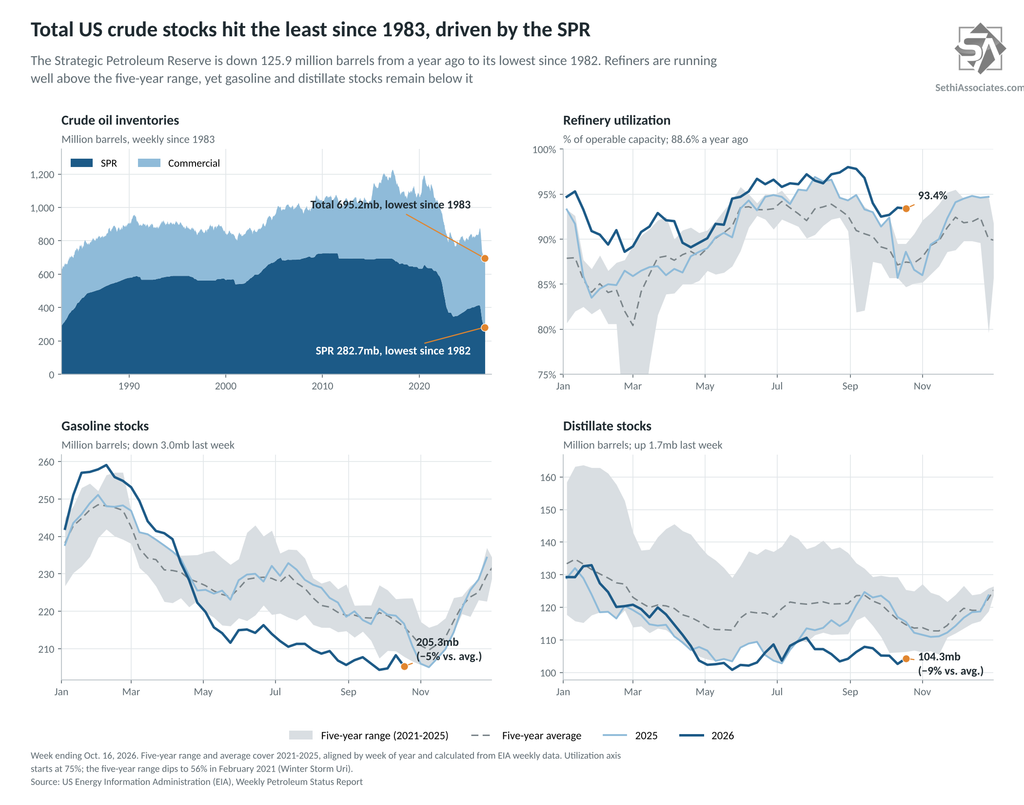
Total U.S. crude oil inventories (commercial plus the Strategic Petroleum Reserve) extended their slide to 695.2 million barrels last week, the least since October 1983, per the EIA. The SPR is driving it, accounting for 125.9 million of the 136.2 million barrel drop in total inventories from a year ago.
The SPR slipped another 0.3 million barrels to 282.7 million in the week ending October 16, its lowest since 1982 and down 30.8% from a year ago. But commercial crude drew 3.1 million barrels to 412.5 million, the third straight draw (14.8 million barrels over those three weeks). That left it 3% below the five-year average and the lowest for this time of year since 2014.
Turning to products, those also remain historically low even as refiners are running hard: ▪️ Refinery utilization was 93.4%, versus 88.6% this week last year and well above the five-year range. ▪️ Gasoline fell 3.0 million barrels, the biggest draw since early May, to 205.3 million, 5% below the five-year average. Gasoline demand rose 575,000 barrels a day to 8.98 million. ▪️ Distillates rose 1.7 million barrels, the first build in five weeks, but are still 9% below the five-year average. ▪️ Products are also being drawn down by exports which are up 6.8% from a year ago on a four-week average.
One other notable: crude production fell 410,000 barrels a day to 13.27 million, the lowest since late January, as Hurricane Isaias kept Gulf of Mexico output offline (57% was still shut in as of October 12, per BSEE). Expect a rebound as platforms restart.
Mortgage Applications Drop for 7th Straight Week Despite Easing Rates
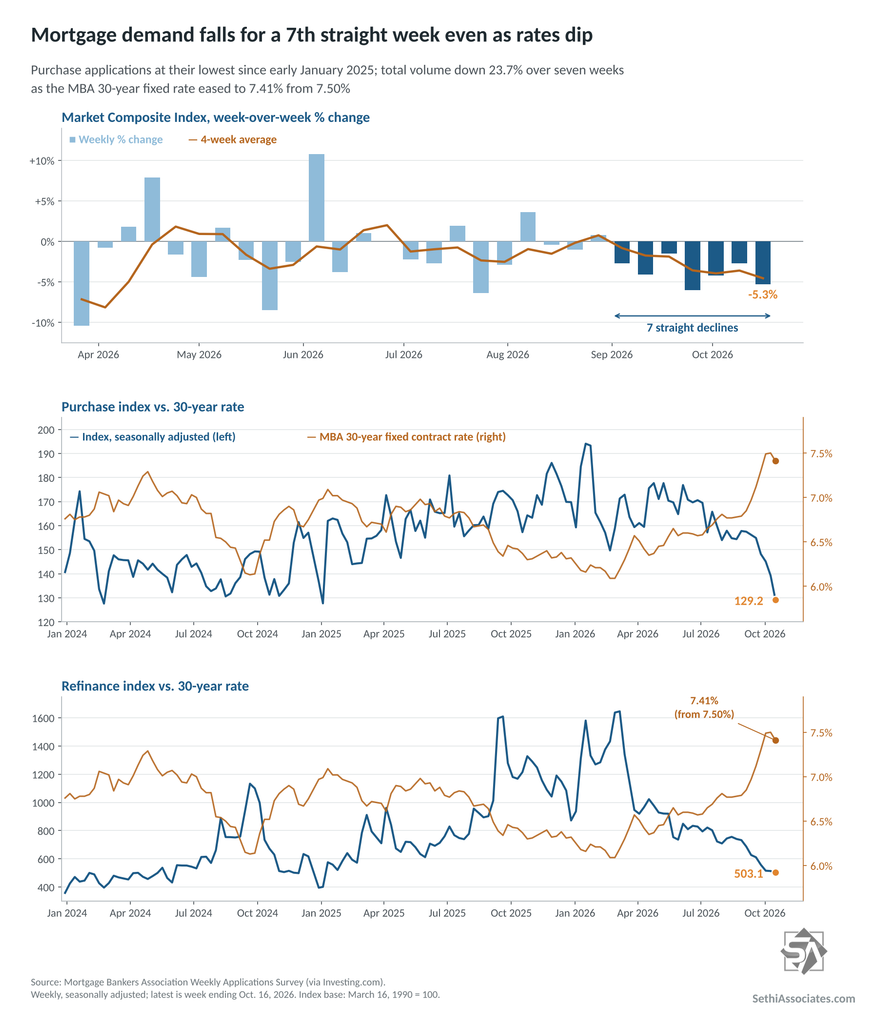
Mortgage applications fell 5.3% last week, according to the Mortgage Bankers Association (MBA), the seventh straight weekly decline, even as the 30-year fixed rate eased to 7.41% from 7.50%, its first drop in over two months. Total volume is now down 23.7% over those seven weeks.
▪️ Purchase applications fell 7% to their lowest level since early January 2025 and were 18% below a year ago. ▪️ Refinance applications fell 2% and were 59% lower than a year ago, with rates more than a full percentage point above where they were then.
MBA’s Joel Kan: “Lower rates were not enough to boost application activity, as both purchase and refinance applications continued to decline.”
CNBC’s housing reporter Diana Olick said buyers are reacting less to the weekly move in rates than to the overall higher level. The MBA’s 30-year rate has gone from 6.09% in February to 7.41% now.
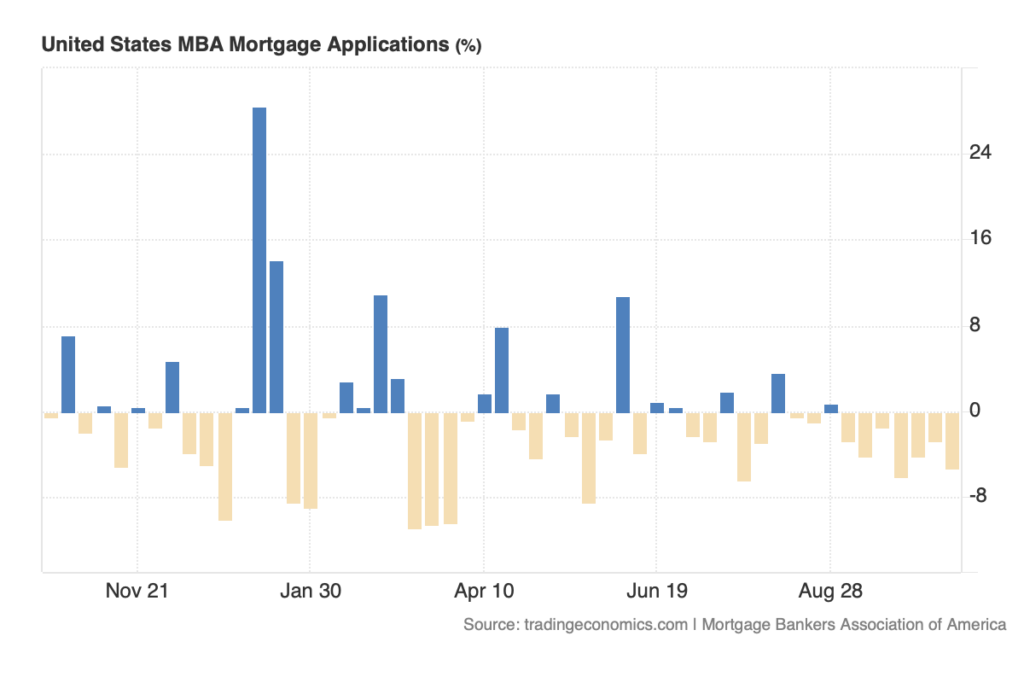
Per the Mortgage Bankers Association, U.S. mortgage applications fell 5.3% for the week ending October 16, marking a seventh consecutive weekly decline and reaching their lowest level since January 2025.
In other words, as we can see in the chart below, the slide continues.
The Informationis reporting that hackers used Claude and Grok to fully automate attacks on banks, supporting our view that AI adoption and usage by bad actors would accelerate the pace of cyber attacks and be a catalyst for incremental cybersecurity spending.
Here’s the gist:
A hacking group called CyberCartel used a network of AI agents running on models from Anthropic, SpaceX (SPCX) and the Chinese lab Moonshot AI to automate cyberattacks against more than 400 Latin American financial targets, according to an investigation by the cybersecurity startup Straiker.
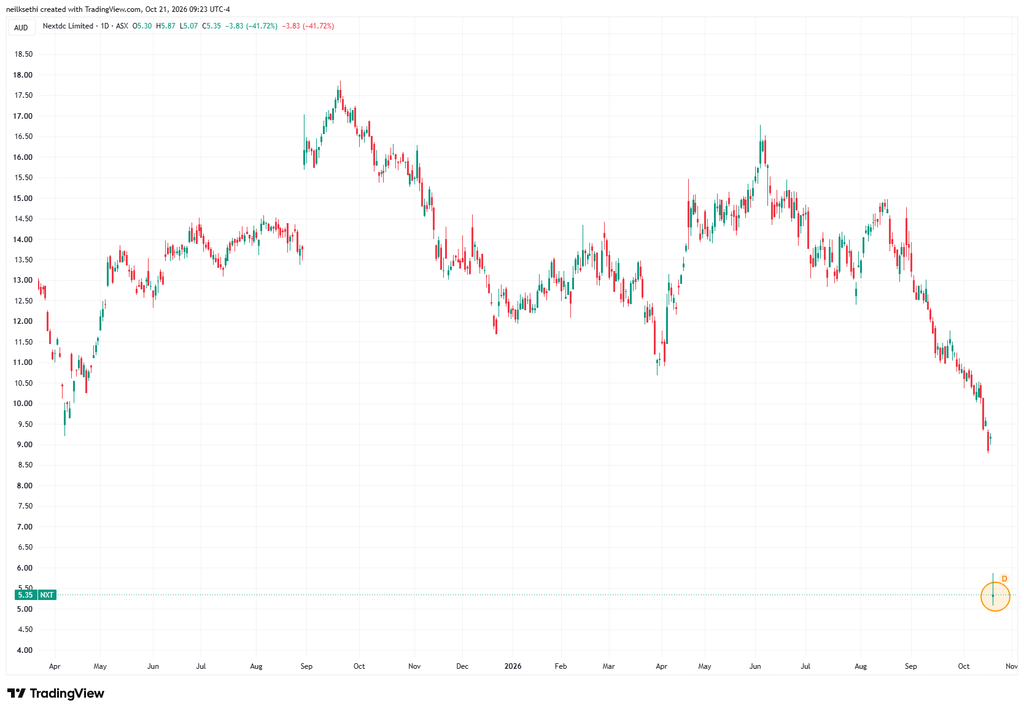
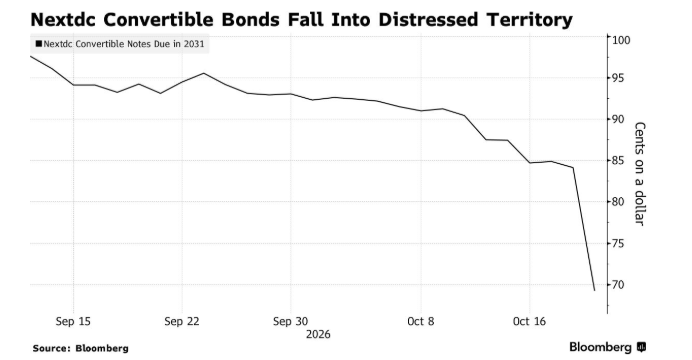
It’s not all positive in tech-land though as Australian data center firm Nextdc (NXT) slashed its full-year earnings guidance by a third and placed development plans on hold after protests delayed power supply to one of its major projects in Melbourne that saw the firm pause all new development work, a caution sign for other global projects that have run into opposition.
Its shares plunged almost 42% in Sydney — the most since listing in 2010 — cutting its value to about A$4 billion ($2.8 billion) while its bonds fell into distressed territory.
The delay forces the company to defer roughly A$140 million of contracted customer revenue in this financial year. Management has announced it will pause all new development projects. It has 17 in operation and 11 in development or planning.
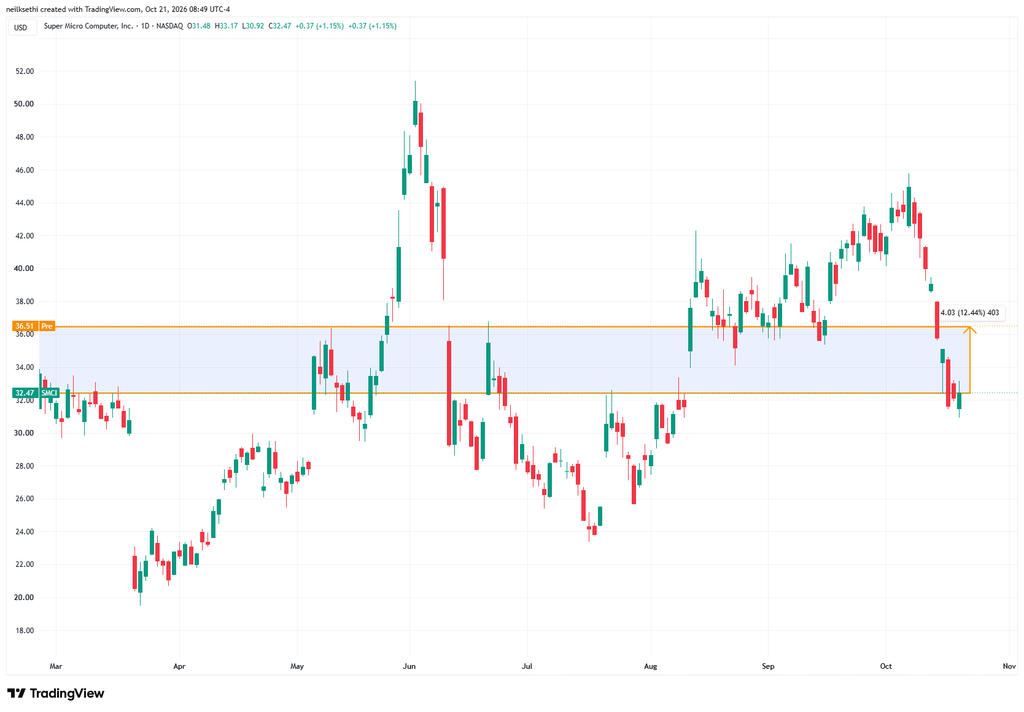
Shares of server maker Super Micro Computer (SMCI) are up over 12% premarket after the firm released preliminary quarterly numbers for the period ending September 30, saying it expects revenue of $18.5 billion to $19.5 billion for the quarter. That compares with its earlier forecast of $14.5 billion to $15.5 billion and an average analyst estimate of about $15 billion. The company also raised its gross margin forecast to 12% to 12.5%, from 10.4% to 10.8%
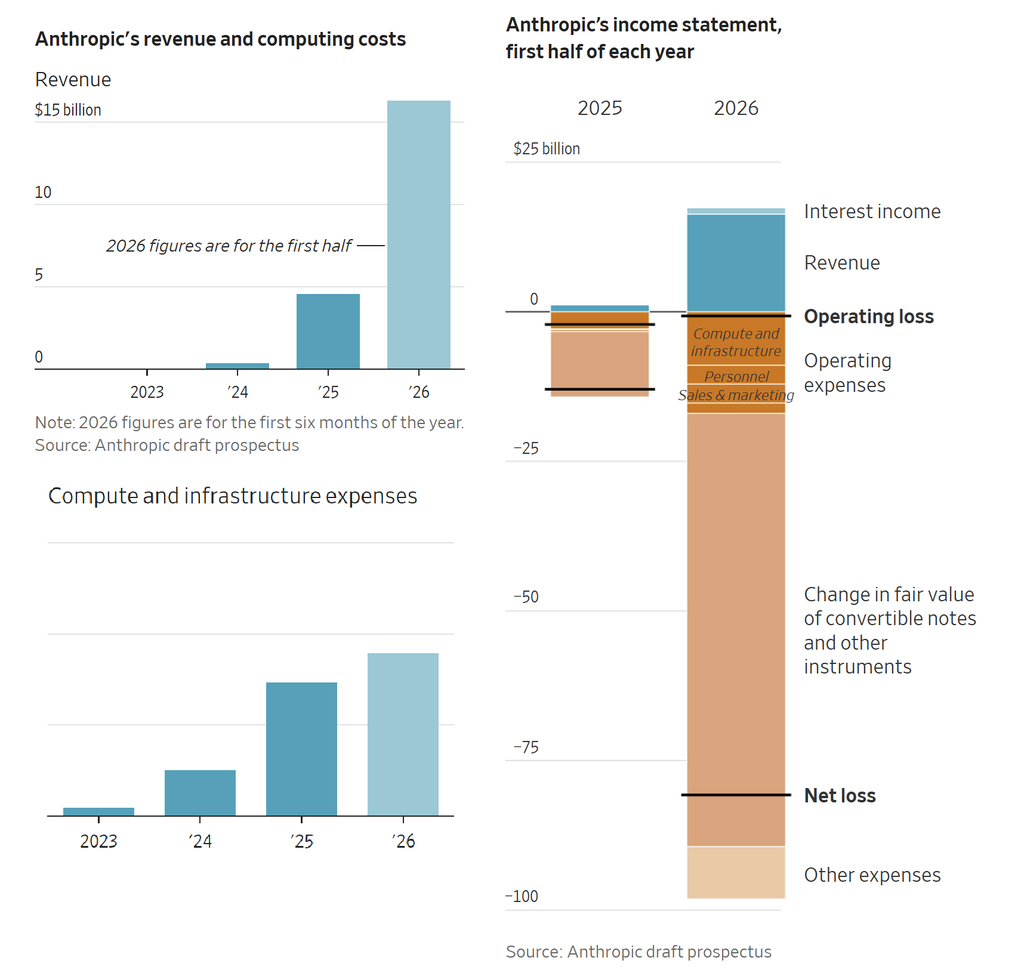
In addition, the Wall Street Journal is reporting that Anthropic’s draft prospectus signals coming spending on computer and power of as much as $750 billion in coming years, with $111 billion on contracts with Alphabet’s Google Cloud (GOOGL), $110 billion with Amazon Web Services (AMZN) and $31 billion with Microsoft (MSFT) “regardless of actual usage.”
Anthropic also agreed to spend up to $86 billion renting Nvidia (NVDA) chips from smaller AI cloud providers Nscale and Lambda.
And sales are growing at a blistering pace. The Journal reported revenues had grown to $16.3 billion in the six months ended June 30, up from $1.1 billion in the year-earlier period. That outpaced the nearly $9 billion on computing capacity and infrastructure, up from $2.3 billion.
Still it recorded a net loss of $80.7 billion, the vast majority ($72 billion) “tied to changes in the value of convertible notes and other instruments the company issued to raise funding.”
Wall Street Journal
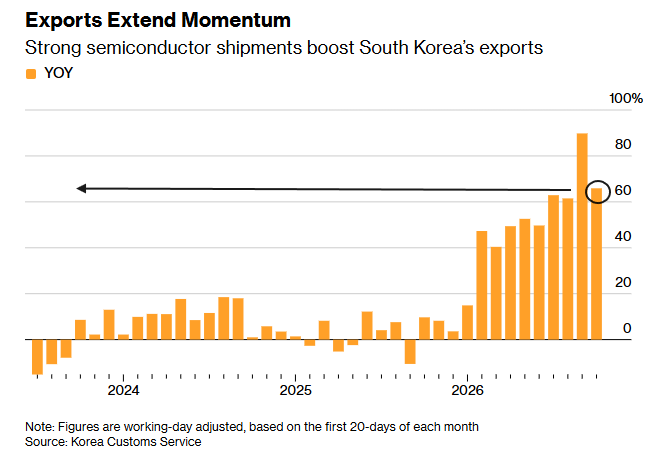
And finally, several Asian countries with large tech exposure (South Korea, Japan, Taiwan, etc.) are reporting strong export numbers led by semiconductor and other Tech shipments.
Bloomberg reports that South Korea’s exports the first 20 days of October, adjusted for working-day differences, rose 65.9% from a year earlier. While down from the 89.8% increase during the same period in September, it is otherwise a record. Semiconductors surged 222.5% from a year, while products increased 68.3%, and automobile exports almost 41%.
Bloomberg
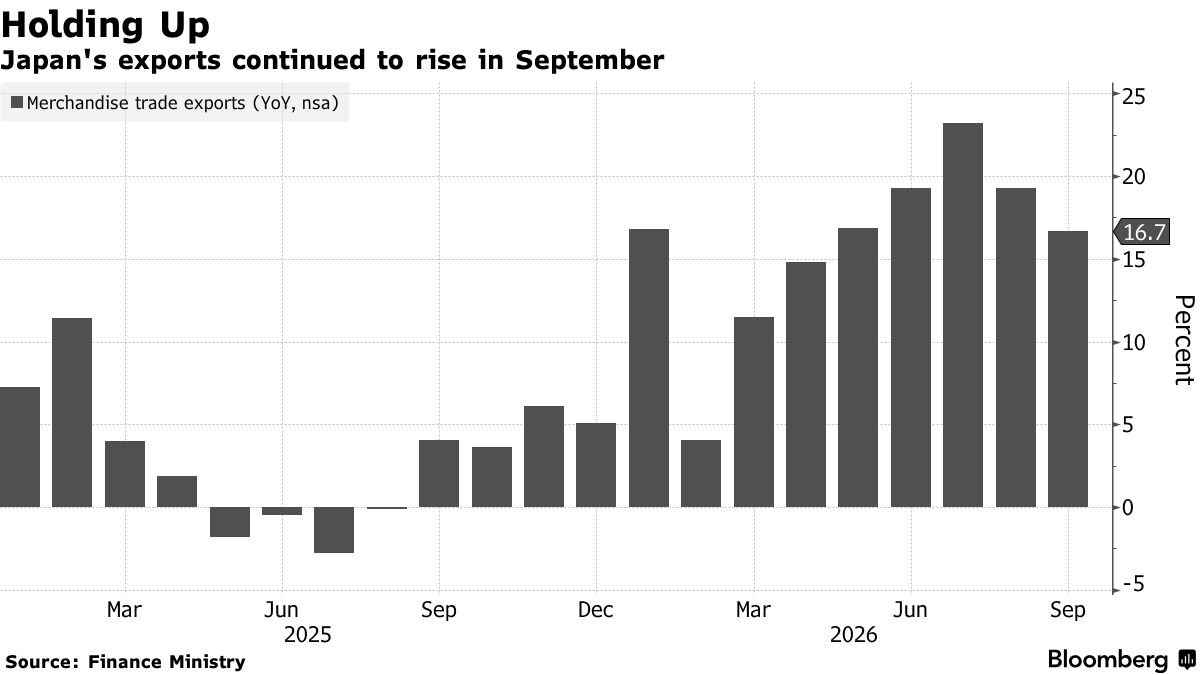
Also from Bloomberg, Japan’s September export growth rose 16.7% from a year earlier. While it missed expectations for a 21.2% increase, shipments of semiconductors and chip-making equipment surged 49.4% and 43.9% respectively (autos were +15.1%). Shipments to the US gained 22.9%. Those to China and the European Union advanced 8.6% and 10.5%, respectively.
Reuters reports that Taiwan’s export orders jumped 62.4% in September to a record $114.21 billion “credited to strong demand for AI, high-performance computing and cloud services applications.” The Ministry of Economic Affairs forecast October as rising between 62% and 67%. “Taiwan’s orders in September for telecoms products were up 87.3% from a year earlier, while those for electronic products jumped 71.0%.”
The SpaceX (SPCX) quarter beat on revenue and EBITDA across all three segments (Intelligence/AI, Space, Connectivity). The only blemish was a miss on Starlink subscriber adds, offset by better pricing. Guidance calls for revenue of $33B to $37B by Q1 FY27. Management says it expects 2 to 3 GW of compute by year-end 2026 and plans to add 10 GW in 2027, well above prior expectations, and told JPMorgan it is not considering raising equity.
Price targets:
JPMorgan: $500 from $240 (Overweight). Biggest move. Says the forward driver is superintelligence, not the segment beats.
Cantor Fitzgerald: $345 from $246 (Overweight). Sees $500B to $1T in year-end 2027 ARR, self-funded compute expansion, and chip supply constraints giving SpaceX pricing power.
Barclays: $300 from $254 (Overweight). Model update on the beat.
Morgan Stanley: $300 reiterated (Overweight). Says the story is only now getting interesting.
Citi: $240 from $200 (Buy). Also opened a 90-day upside catalyst watch, pointing to Q4 beat-and-raise continuation and Starship Flight 15 as a major reusability catalyst.
UBS: $230 from $210 (Buy). New compute deals ramping in Q4, Starship catch milestones, Grok improvements.
TD Cowen: $224 from $200 (Buy). Estimates up on the beat.
Susquehanna: $176 from $173 (Neutral). The lone holdout. Flags execution risk on the compute buildout and dependence on Starship commercialization.
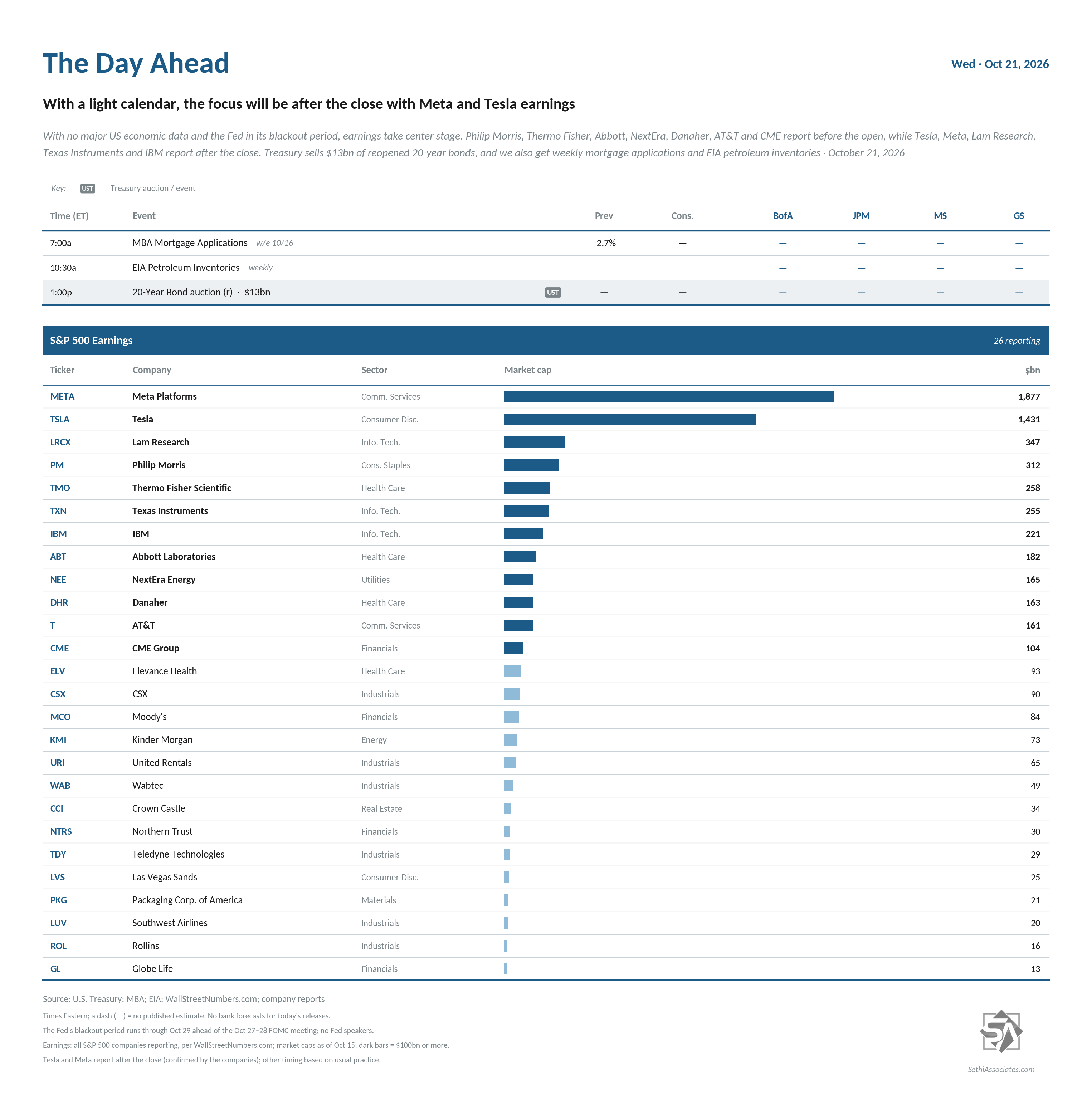
US economic data is light Wednesday, with only weekly mortgage applications and EIA petroleum inventories.
The Fed remains in its blackout period ahead of next week’s October 27–28 FOMC meeting.
Non-Bill (>1yr in maturity) US Treasury auctions resume with a $13B 20-year bond reopening.
Q3 earnings season continues with 26 S&P 500 components including a number of AI-related names: Meta Platforms (META), Tesla (TSLA), Lam Research (LRCX), Philip Morris (PM), Thermo Fisher Scientific (TMO), Texas Instruments (TXN), IBM (IBM), Abbott Laboratories (ABT), NextEra Energy (NEE), Danaher (DHR), AT&T (T), CME Group (CME), Elevance Health (ELV), CSX (CSX), Moody’s (MCO), Kinder Morgan (KMI), United Rentals (URI), Wabtec (WAB), Crown Castle (CCI), Northern Trust (NTRS), Teledyne Technologies (TDY), Las Vegas Sands (LVS), Packaging Corp. of America (PKG), Southwest Airlines (LUV), Rollins (ROL) and Globe Life (GL).
Ex-US highlights are UK September CPI, PPI, RPI, public finances, August house price index, Japan September trade balance, New Zealand Q3 CPI.
Conversation 0 Comments
One ongoing discussion across all days. Everyone can read; sign in to take part.
Your voice matters. Discussions are moderated for civility. Read our guidelines .
Log in to join the conversation