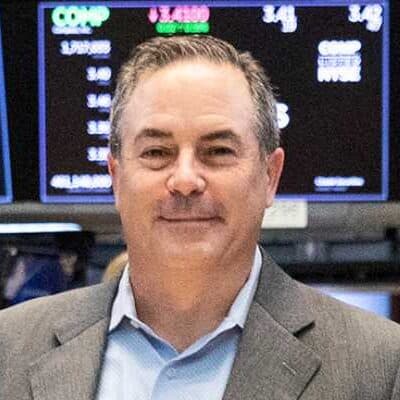
VIDEO: Drone Market Opportunity With Matternet CEO Andreas Raptopoulos
Exploring how autonomous drones are poised to transform the delivery market.
You've reached your free article limit
You've read 0 of 1 free Pro articles.
In this episode, we explore the rapidly evolving drone market, its applications in healthcare, delivery and public safety, and the regulatory landscape shaping its future.
Andreas Raptopoulos, CEO of Matternet, shared insights on autonomous drone networks, industry opportunities and the evolving regulatory framework. Founded by Raptopoulos in 2011, Matternet designs and builds drone delivery platforms and is currently the only FAA type-certified drone delivery platform in the world. Matternet began commercial operations in Switzerland in 2017 and has partnered with UPS in the U.S. since 2019.
More Pro Portfolio
- We’re Scooping Up Shares of a Chip Company and a Well Positioned Retailer
- We’re Tracking 27 Portfolio Signals Across Our Investing Themes
- Weekly Roundup: Geopolitics Wins Out, But Portfolio Continues to Outperform
Transcript
Chris Versace: Hey folks, Chris Versace here, Portfolio Manager of the Street Pro Portfolio and Chief Investment Officer over at Tematica Research. Buckle up, my friends, because we’ve got a discussion to share today on an area you’ve probably heard more than a little bit about. It’s been getting a lot of buzz over the last several quarters — from the role it’s played in the Russia-Ukraine war, to public safety, to the delivery markets. Yes, we are talking about drones.
Some forecasts say the global drone market is projected to reach $210 billion — that’s billion with a B — by 2034, more than doubling from around $100 billion or so this year. Companies like AeroVironment, Kratos, Dragonfly, and Ondas Holdings are some of the names associated with this market. Another company you might have heard of that’s very involved in this space — and we’ll talk much more about it today — is Amazon. Amazon’s Prime Air drone delivery is set to hit 500 U.S. cities by the end of this year. And in the Pro Portfolio, we also hold Axon, which is involved in the drone market as well.
Joining us to discuss the drone market and the opportunities out there, please welcome Andreas Raptopoulos, CEO and founder of autonomous drone networking company Matternet, which, by the way, is the only FAA type-certified delivery platform. Andreas, thank you for joining me.
Andreas Raptopoulos: Chris, it’s a pleasure to be here. Thanks for having me.
Chris Versace: Happy to have you, and happy to talk about the drone market — it’s one with so many aspects to it. Years ago we heard that before too long, things would be delivered by drone. We’ve heard about sampling programs from UPS and Amazon. When we first spoke, I mentioned how I was at Virginia Tech and someone there had received a coffee delivery by Google Wing, and you said, “Yes, of course.” But before we get started, tell us a little about yourself, about Matternet, what it’s trying to do in the drone space, and — more importantly — the pain point it’s trying to help companies and customers overcome.
Andreas Raptopoulos: Matternet is a drone delivery company. We design and build a very advanced drone delivery platform. As you mentioned in your intro, we are currently the only FAA type-certified drone delivery platform in the world. FAA type certification is the process manned aircraft go through to demonstrate their worthiness and safety, so the company is one of the pioneers of the drone delivery industry.
We started operating in the humanitarian space many years ago, when I started the company back in 2011. Since 2017 we’ve been doing commercial operations, initially in Switzerland for healthcare organizations, and since 2019 here in the U.S. in partnership with UPS. We’ve been building the company at the same time as building the industry. We’ve worked very closely with the FAA and European authorities to figure out how the low-altitude economy should work, and how the airspace that powers it should work.
Finally, we’re now seeing all that work come to bear. I think we’re at an inflection point for our industry — 2026 is the inflection year for drone delivery in the United States. This is catalyzed by a new regulatory framework called Part 108, which regulates the low-altitude economy — how autonomous aircraft can operate for delivery beyond visual line of sight, meaning over long distances and fully autonomously. It’s a very exciting time for the industry.
Chris Versace: When you say long distances, what do you mean?
Andreas Raptopoulos: Up until a couple of years ago, you could only fly a drone in the United States within visual line of sight of a human operator — typically that constrains operations to about a mile away, maybe a bit more in perfect visibility conditions. With beyond-visual-line-of-sight operations, we’re now able to send a drone out for miles without an operator supervising it directly, through systems that let one person supervise whole fleets.
For example, when Matternet is flying, we’re delivering a service here in Mountain View around our headquarters. People can go to our website, order a chocolate or a drink, and have it delivered to their front yard by one of our drones. When these drones are flying, they’re completely autonomous and supervised through a central facility we call Mission Control, where a single person can supervise a fleet of drones flying at the same time. That’s really the leap happening through this new regulatory framework. Part 108 was proposed by the FAA in August of last year, and we expect it to be finalized into a rule sometime this year. Matternet and a few other companies, like Amazon, are already operating under the premises of these rules because we’re known entities to the FAA — they know our systems and how they work, and they’ve authorized us to fly in some areas to help validate the rule that’s coming out and to help kickstart the industry.
Chris Versace: Getting back to Matternet more specifically — it sounds like the company is a drone-as-a-service type business, where you partner with other companies and enable them to deliver via drone. Is that correct?
Andreas Raptopoulos: Matternet is very unique among drone delivery companies. First, we only focus on the civilian market. We think this space is going to be huge, and that drone delivery is going to change how several industries work — food and food delivery, retail, healthcare and healthcare delivery. So we’re really focused on drone delivery for the civilian space.
Our long-term objective is to become the best-in-class OEM, equipment manufacturer, technology provider, and infrastructure layer that large corporates needing fast delivery can come to in order to roll out their own delivery services — companies like UPS, which has been a customer for many years, FedEx, Uber, DoorDash, Amazon, Target, Walmart, and others. When these companies — and much smaller companies too, like a restaurant chain or a hospital — come to us, we generally give them two options.
One option is for them to take our technology and operate it themselves. For companies where managing those operations is core to their business model — UPS, for example — this is the preferred path. For other companies that care about fast delivery but don’t want to manage operations themselves — a hospital system, say — they can access the service rather than run it themselves. So we either provide what we call “enterprise access,” where they get access to our technology and operate it, or “drone delivery as a service,” where we provide the service directly and that’s what the customer pays us for.
Chris Versace: My suspicion is that the second one is probably going to be the larger piece of your revenue stream, mostly because I don’t think a lot of companies have the logistical know-how to really leverage what’s capable in the drone market. That seems like a big opportunity for you.
Andreas Raptopoulos: Yes, I think in the early days we’ll see much more delivery-as-service than the enterprise access model, which could involve a technology sale or lease. But over time, as the ecosystem matures, I think we’ll see the enterprise access model ramp up. What’s critical for us — and the reason we went through the effort of acquiring FAA type certification for our systems — is that we want to enable the ecosystem to develop services using this technology. We have global aspirations; we want our technology used pretty much everywhere in the world. Within the next few years, we want to see our technology operated by large enterprises here in the U.S., but also by much smaller enterprises here and overseas.
Our goal is to reach a million deliveries a day by 2032. That will take about 50,000 Matternet systems flying in the national airspace system every day, and we envision many companies operating those systems around the globe.
Chris Versace: You mentioned the regulatory landscape later this year should be very beneficial. Different regions of the world operate on different timetables — is the U.S. leading the curve here? How far behind are Europe or some of the other regions you’re thinking about?
Andreas Raptopoulos: I think the U.S. is now back in a leadership position in this space. The regulatory piece — the aviation and airspace piece — is extremely important, and it now provides the regulatory clarity that allows investment dollars to flow into the space. We’re going to see these services grow exponentially over the next few years.
To give you a sense of scale: the industry is probably doing three to five thousand deliveries a day in the U.S. today by drone. I think that number will be three to five million a day by 2030 — a thousand-fold increase in drone deliveries in the U.S. over the next four years or so, in my opinion. So the U.S. is now leading. The FAA has taken its time to figure out the framework, but from day one, one of the things they’ve focused on is how this scales nationally.
Chris Versace: Right — if there are tens of thousands of drones flying around trying to hit these delivery numbers, how do they coordinate with each other without clogging up the airspace?
Andreas Raptopoulos: Exactly. Our office is on the other side of the highway from NASA Ames. Back in 2013, I believe, NASA Ames started an effort to describe the architecture of what we today call UTM — unmanned aircraft systems traffic management. This is automated, decentralized infrastructure that makes sure everyone can coordinate flight paths with each other, using services and airspace providers that manage those paths. It’s really impressive to see all these pieces coming together now — that’s another enabler for scale.
Chris Versace: It sounds a little to me like this isn’t too different from what we’re seeing develop with autonomous cars, in the sense that cars need to know where every other car is and how it’s moving. Similar dynamics?
Andreas Raptopoulos: I think the airspace is far more orderly and regulated than the road layer. If someone were flying in the so-called Mode C Veil — the 30 nautical miles around major airports in the U.S. — and, say, I was flying with a friend on his Cessna over the weekend, we’d see all the other airplanes broadcasting their position through a system called ADS-B. We use that same system at Matternet to see aircraft in our vicinity. These paradigms have existed in aviation for decades — generally speaking, every user of the airspace needs to know where every other user is, and there need to be feeds that anyone can tap into. That infrastructure already exists for aviation.
For autonomous cars, my sense is that each vehicle operates as an autonomous perception node — it has to build its own map of the objects moving around it, including people and buildings. So it’s a slightly different architecture.
Chris Versace: Let me back you up a bit. You mentioned the work Matternet is doing involves both hardware and software components, correct?
Andreas Raptopoulos: Yes.
Chris Versace: Okay — and you also mentioned robotics and AI. Let’s think about this for a second. Hypothetically, an order comes in — how does the drone get loaded? How is it dispatched? What’s monitoring it? How is it recognized when the product is delivered? And how is the drone reloaded once it arrives, assuming it’s making multiple deliveries in a day?
Andreas Raptopoulos: To solve this problem at a cost level that’s industry-changing — one that can really be adopted and transform those industries — you have to think about automation not just in the air, but also on the ground.
Our systems are recharged automatically, and they pick up orders automatically. We’re trying to remove the friction in how a package gets into the system. We’ve been working in healthcare for years, and we’re now expanding into B2C, retail, and food. We’re figuring out how someone preparing food in a kitchen can load it into our system for the drone to pick up without ever leaving the kitchen. We call that loading point a “portal” — the package gets uploaded into a position where the drone can pick it up automatically, without a human attaching it.
Once the drone is airborne, it flies to the customer’s location and delivers the package to their front yard automatically — no hands, no human intervention between preparing the food and getting it into the customer’s hands. You can apply that same model to other use cases. When the aircraft returns from its mission, it docks and automatically recharges. That’s really the key to cost-effective scale in this space — automation not just in the air, but for the ground elements too.
Chris Versace: Sounds like there’s a robotics or automation component that helps load whatever it is — clothing, food from a fast food vendor, whatever. And you’re —
Andreas Raptopoulos: Right — it looks more like a conveyor-belt system than a humanoid robot doing the job. These are relatively simple robotics used to upload packages into the system. The recharging is also handled in coordination with the drone flying to the right place, locking in, and automatically recharging.
Chris Versace: You’re developing the hardware as well — the drones themselves. What’s the weight capacity today, and where does it need to go to fulfill the promise of what you’re describing? Are we talking fifteen, twenty pounds — big, heavy textbooks — or is it still going to be five or six pounds or less?
Andreas Raptopoulos: It’s surprising when you look at the numbers. North of 90% of what’s shipped through retail — say, Amazon — and through food networks is under five pounds. I’d say north of 80% is under five pounds, and north of 90% is under ten pounds. Our Matternet 2 aircraft, which is FAA type-certified, has a load-bearing capacity of four and a half pounds. Our next-generation system, which we’ll announce in a few weeks, takes that up to eleven pounds. That covers the vast majority of retail, food, and medical use cases. There are some use cases it won’t serve, but we’re really focused on that 90 to 95%.
When you design a system like this, our view is that you have to focus on building the smallest, lightest, quietest, and least expensive asset you can put in the air — because then you can scale that operation to tens of thousands of flying robots operating in the background, twenty-four seven, without anybody noticing.
Chris Versace: How much of the adoption you’ll see from companies is productivity-based? I was just reading a forecast for the energy industry predicting a worker shortage, and the claim is that the energy market will adopt robots to help overcome that labor shortage. Do you see something similar as a tailwind for the adoption of what Matternet is trying to do?
Andreas Raptopoulos: Absolutely. Some of the biggest retailers in the U.S. are forecasting labor shortages that will affect their ability to deliver packages. They’re forecasting delivery volume growing significantly over the next ten years, and they don’t see the workforce available to do these delivery jobs. So everyone is thinking about automation as one of the key ways to solve that challenge.
Humans are tool builders. When we think about a tool for delivering something lightweight across town quickly — today I might go on the Uber Eats or DoorDash app, order lunch, and it arrives 45 minutes later. It’s a little crazy that we’re using a 4,000-pound vehicle to do that.
Chris Versace: To deliver something that, as you pointed out, is less than five pounds.
Andreas Raptopoulos: Exactly — it’s irrational. But we just haven’t had a better way of doing it, at least here in the suburbs. I think we’re now crossing a tipping point where it’s going to look increasingly irrational to use cars for this kind of job. Cars weren’t designed for that — they’re a tool being misused for that purpose. A drone is designed for exactly this: a lightweight asset transporting a lightweight package, and it can do it much faster, without polluting the environment or creating traffic. I’m looking forward to us reclaiming our roads — to not having to sit behind delivery drivers waiting to pick something up when I’m trying to go meet someone. We’re going to see that transformation play out over the next few years.
Chris Versace: I’ll add to your list — I’m very happy to sit on my bottom and order something and have it show up between four and eight a.m. the next morning, so I don’t need to go anywhere. I think it plays into something you said earlier that really caught my ear: Amazon does this very well — removing transactional friction. And that’s something you’re trying to do as well. As they continue to close the gap — using myself as an example, instead of getting in my car, running an errand, and coming back — Amazon has increasingly shrunk that competitive window.
So if I need something, I can think, “Well, if I pay $3.99 extra I could have it in a couple hours, or I could just get it tomorrow morning” — and it’s just easier that way. Amazon has talked about bringing not just next-day delivery but same-day delivery to a significant number of cities across the U.S. and elsewhere. As that happens, and as the number of packages being delivered grows, won’t the number of drivers needed and the overall operational logistics become a real challenge?
I can see the case for drone adoption to speed delivery — even at today’s roughly five-mile range, that cuts delivery time from a package riding on a truck all day to an hour or less.
Andreas Raptopoulos: Yes. Our current system can deliver within a five-mile radius. Our next-gen system, which we’ll announce at the end of September, will double that to a ten-mile delivery radius. That covers most of the delivery missions a company like Amazon would run from a distribution center — say, in San Jose, south of our office here in Mountain View — to most of the residences it serves. There are some interesting models for combining modalities and leaving the last mile to this fast, automated system.
Removing friction is really the lens here — how do you increase automation, make it very fast, make it very cheap? With scale, we’re going to see interest change as a result. I was thinking this morning about how there was a time we accessed the internet using dial-up connections.
Chris Versace: Yes, I am that old. It hurt — it made my ears hurt.
Andreas Raptopoulos: It was almost romantic, listening to that sound and waiting to see when it would connect — but it was slow and unreliable. Still, it was the best system we had, so we used it and loved it. Then broadband internet came around, and all these new kinds of services were built on top of it — the music industry was transformed, the entertainment industry at large, e-commerce, getting cars to your doorstep, and so on.
I think the same is going to happen with the physical transport of small items. We’re moving from the dial-up era to the broadband era with drones, and Matternet’s mission is to be that infrastructure layer — to be the Cisco of the space, giving people access to this technology so they can reinvent their services, delight their customers, and move us into a system of higher convenience, lower cost, and one that’s friendlier to the environment and to our cities and communities. We’re at the inflection point of crossing over from dial-up to broadband.
Chris Versace: When you put it that way, I have to put my analyst hat on and ask: we’re nearing the inflection point — what’s the risk to that?
Andreas Raptopoulos: Each of us in the industry has to behave with a lot of responsibility. We need to maintain extremely high levels of safety — because these systems are autonomous and involve small aerial assets, the probability of injury is much lower than with cars on the road, and we need to keep it that way. We all need to adhere to strict safety standards and deliver on the promise of safety.
The second key part is privacy. Matternet, for instance, has a very strict protocol against capturing any footage that could invade someone’s privacy during a delivery. We also need clear communication with the communities we serve, so they understand the key points around safety and privacy. Noise is another consideration — we need to make sure this doesn’t increase noise levels in our communities. Cities are getting quieter thanks to electric vehicles, and we need to amplify that trend rather than detract from it. These are things we all need to handle responsibly in order to grow the industry. And then, of course, there’s the wider narrative around automation and job loss that we need to be thoughtful about as well.
Chris Versace: What about the customer experience? Say I order something and it’s coming by drone — how does it know where my doorstep is and where to put the package? And how do you make sure that, say, a hamburger and fries aren’t jostled around? Everyone’s had the experience of a delivery driver taking the corners too fast and the pizza arrives with all the cheese slid to one side — not a good experience.
Andreas Raptopoulos: The first time you order to a certain address, the system lets you choose your drop zone — it could be your front yard or your backyard, which can be completely private. After that, every time you order, the system defaults to that same location unless you specify otherwise. If you’re out and about somewhere with drone delivery available, you can designate a spot and the system will suggest candidate drop zones around it. It’s tailored to you, your preferences, and your location.
And the flight itself is surprisingly gentle — from the hands of the person preparing the food, to your hands, with no obstacles in between. Things arrive in the best possible condition: hot things stay hot, fries don’t have a chance to get soggy.
Chris Versace: Good, good.
Andreas Raptopoulos: It’s hard to grasp unless you experience it. When you do, it feels like magic — like someone’s playing a trick on you. How did that thing, ordered from three miles away, arrive at my location five or six minutes later? It doesn’t compute the way we normally calculate distance, but that’s how the experience feels.
Chris Versace: Well, it’s because it goes the way the crow flies, as they say. Two last questions. First — how many drone deliveries do you personally get in a week? Not the company, you personally.
Andreas Raptopoulos: We don’t talk about company numbers, but personally — we have a service here where we deliver chocolate, so whenever I need chocolate, I just order a drone delivery. That could be a handful of days a week. We’re now getting ready to expand our service with one of the great local food merchants, so I’ll probably be getting a drone delivery at least once a day for lunch.
Chris Versace: All right — I didn’t hear coffee, though. That would be my early-morning delivery. Second question: you mentioned a couple of announcements coming up, and the regulatory environment hopefully getting ironed out by the end of the year. We know Amazon is making announcements about where they want to be by the end of the year, and I suspect there will be competitive movements from UPS and others. Where do you think we’ll see the first meaningful adoption of drone delivery outside of what we’d consider traditional logistics companies? Retail? Fast food? If you had to tell someone watching this the two areas to pay attention to — where we’re likely to see this take off in a way they can relate to and actually use — what would those be?
Andreas Raptopoulos: Food and retail. In food, it’s already clear that Uber and DoorDash are leaning in, in a big way, to roll out drone delivery for their customers. Walmart is leaning in too — I think they’re leading in terms of number of drone deliveries per day in the U.S. today, having rolled out to more than a hundred locations. And as you mentioned, Amazon has made its big announcement of 500 cities, I believe by sometime next year. Those four players alone are enough to create real scale in the market — which is behind my prediction of three to five million deliveries a day by the end of the decade.
Chris Versace: Andreas, I want to thank you for your time — you’ve been very generous. Before we wrap up, is there anything we didn’t touch on, about the industry or Matternet specifically, that we should mention?
Andreas Raptopoulos: The one key thought I’d leave you and your listeners with is that the future is here — it’s happening very fast. I think we generally underestimate how quickly this technology will develop over the next three or four years and touch the lives of everyone here in the U.S. I’m extremely excited to be part of this revolution in logistics, and I’m looking forward to seeing the industry transform in positive ways as instant delivery reaches the vast majority of households in the U.S.
Chris Versace: Well, I look forward to getting my first long black delivered — I don’t know when that’ll be, but I’m looking forward to it, and to seeing how hot it is. We’ll talk more about it then. Andreas, again, thank you so much for joining us. For folks who want to learn more about Matternet, where’s the best place to go?
Andreas Raptopoulos: Our website is probably the best — matternet.com. We’re on all the social channels, and that’s really the best place to follow us. You can also go to our investor website and subscribe for updates, and in a few weeks’ time we’ll also be trading, so you can follow our stock ticker too.
Chris Versace: Excellent — we’ll talk more about that after it happens. Andreas Raptopoulos, thank you so much for joining us. And folks, that’s our podcast for today. Thanks for tuning in, and we’ll be back with a fresh episode before you know it.