Small Business Price-Hike Plans Jump to the Highest Since 2022
Let’s review the latest NFIB Small Business Optimism Index and what it means for the economy, consumers, inflation and the Fed.
You've reached your free article limit
You've read 0 of 1 free Pro articles.

NFIB’s Optimism Index for small businesses was little changed at 97.8 in October, but a net 37% of owners plan to raise prices, the most since July 2022, another concerning data point for the Fed after this week’s hot CPI print.
U.S. NFIB Business Optimism Oct: 97.8 (est 98.2; prev 97.9)
Executive Summary
- The NFIB Small Business Optimism Index slipped 0.1 points to 97.8 in October, below the 98.2 estimate and a third straight decline that left it just under its 53-year average of 98.0.
- Price pressure built underneath: a net 37% of owners plan to raise prices, up 6 points and the highest since July 2022, and a net 33% already did, up 2 points.
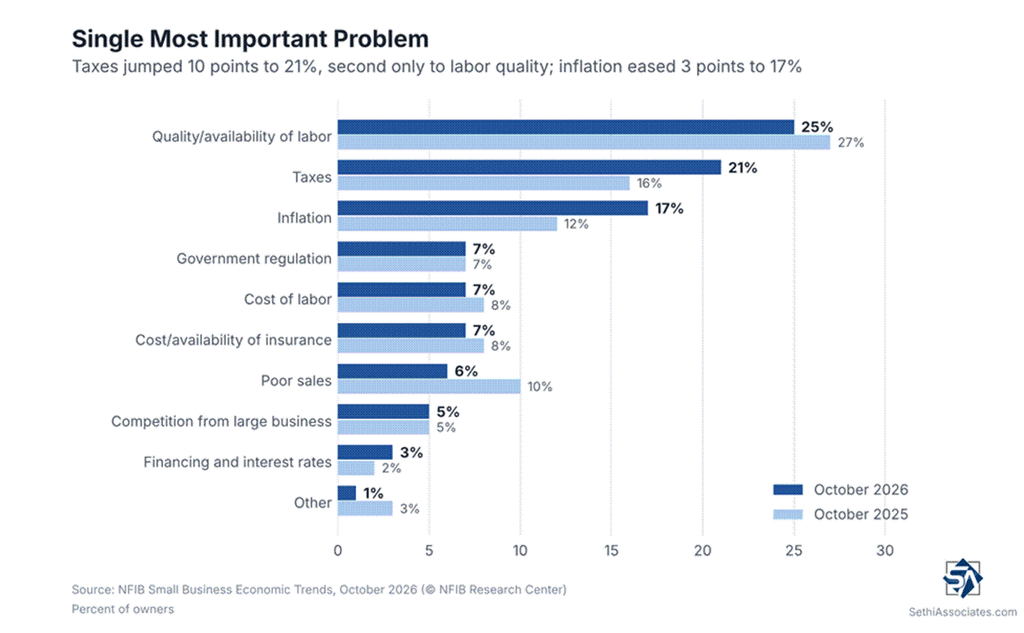
- Taxes jumped 10 points to 21% as owners’ single most important problem, the highest since May 2021 and second only to labor quality.
- Hiring demand firmed, with 36% of owners reporting openings they could not fill, while borrowing costs rose and earnings trends fell to the weakest since March.
October Optimism Index
The NFIB Small Business Optimism Index slipped 0.1 points to 97.8 in October, below the 98.2 consensus estimate, its third straight decline and the lowest since June (97.4), leaving it just under the 53-year average of 98.0. That follows September’s three-month low.
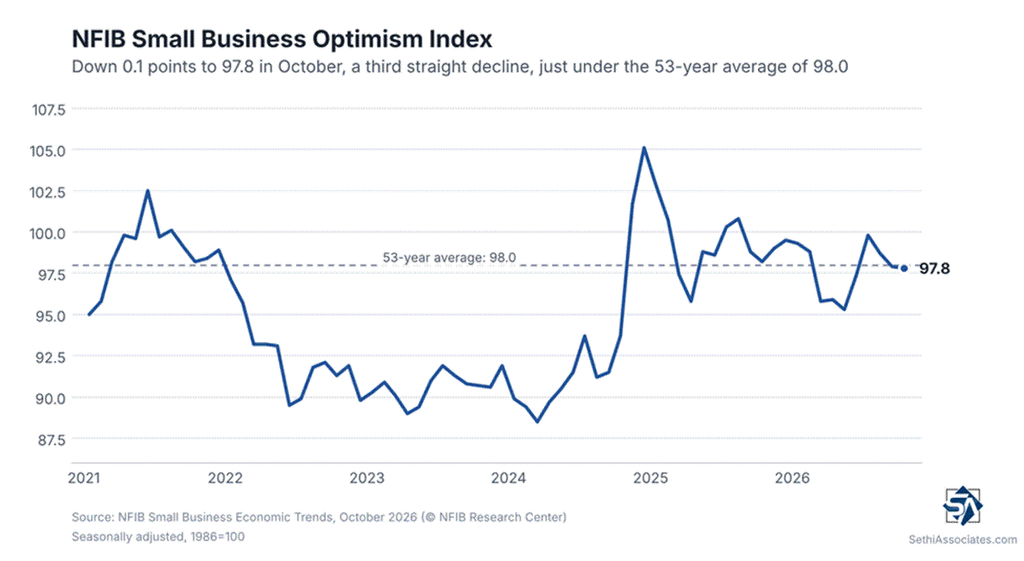
The headline barely moved, but the pieces underneath shifted, with hiring demand and expectations for the economy improving while other areas retreated.
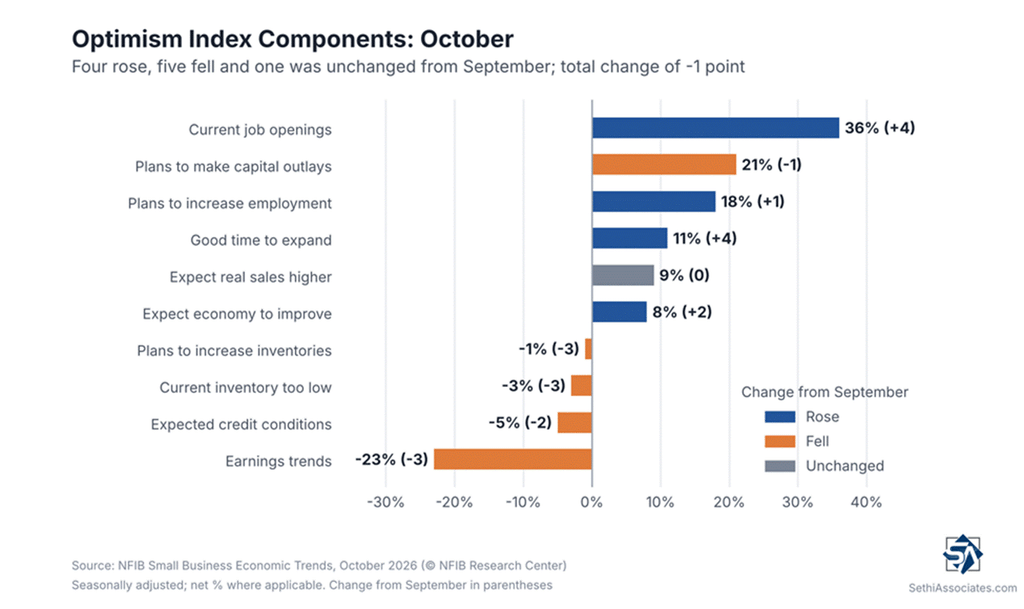
Four of the 10 components rose, five fell and one was unchanged. Positively, job openings and the share calling it a good time to expand each rose 4 points and those expecting the economy to improve rose 2 points. On the other side earnings trends and both inventory measures fell 3 points each while expected credit conditions fell 2 points.
“There was little change in optimism among small businesses in October as owners navigated enduring challenges, though there were some encouraging developments,” said NFIB Chief Economist Bill Dunkelberg.
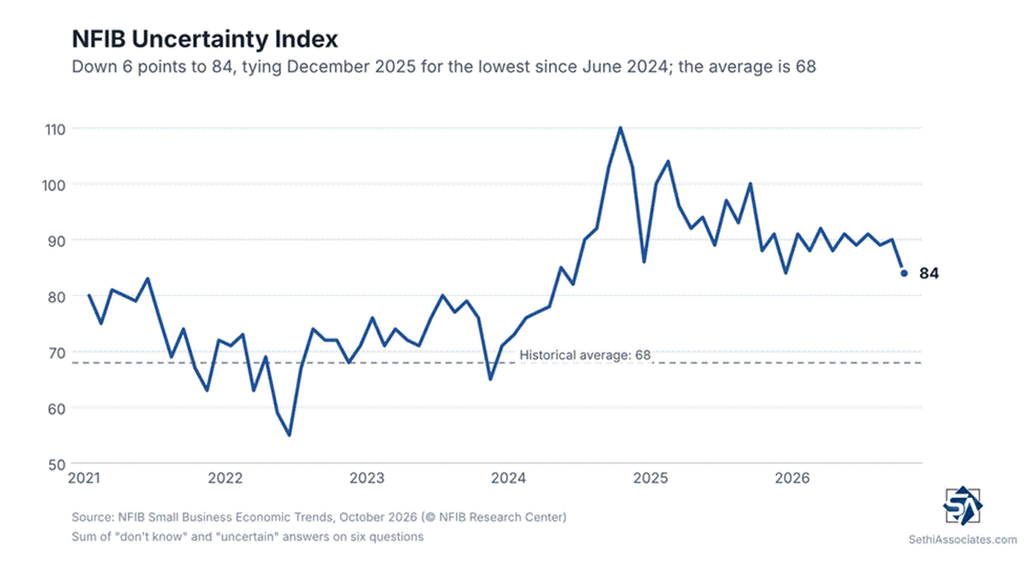
The Uncertainty Index fell 6 points to 84, tying December 2025 for the lowest since June 2024, though still well above its historical average of 68. NFIB’s commentary noted the midterm elections “have now concluded, removing one source of uncertainty.”
Outlook
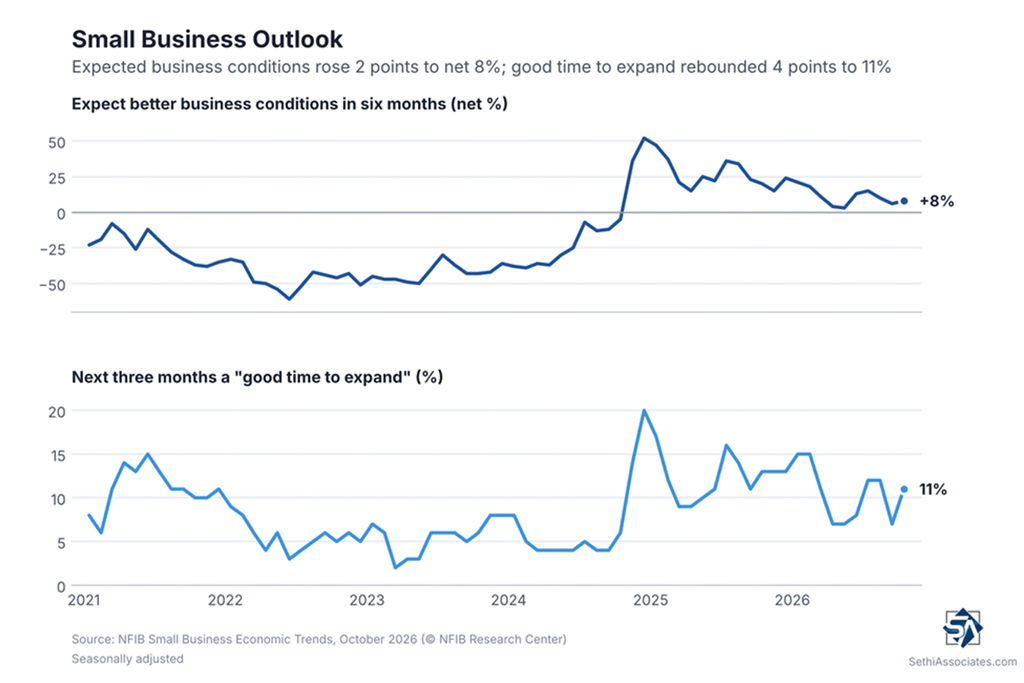
A net 8% of owners expect better business conditions over the next six months, up 2 points after two months of declines. The share saying it is a good time to expand rebounded 4 points to 11%.
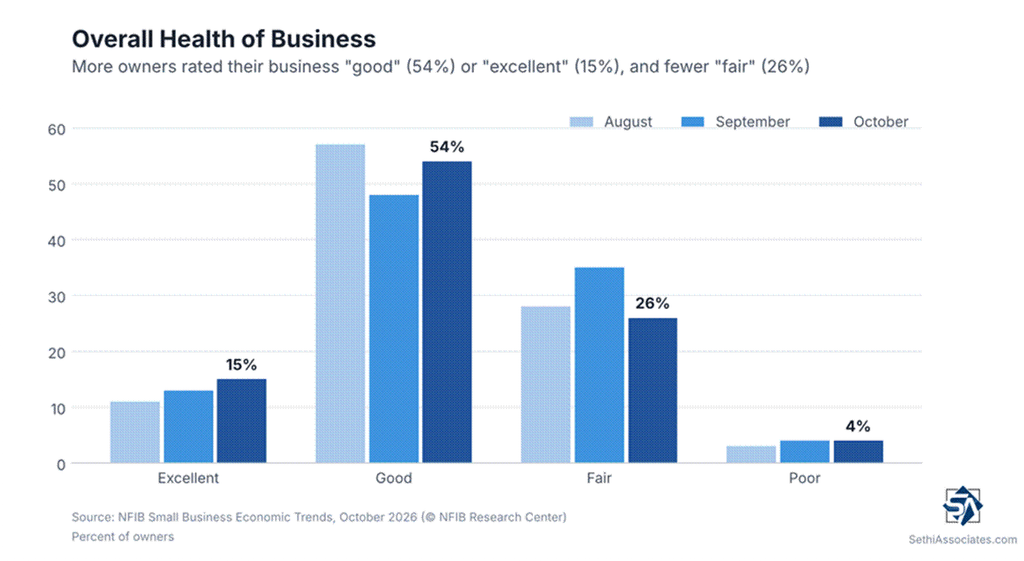
Owners rated their own businesses better, largely reversing September’s shift toward “fair.” Some 54% said good (up 6 points) and 15% excellent (up 2 points), while 26% said fair (down 9 points).
Earnings
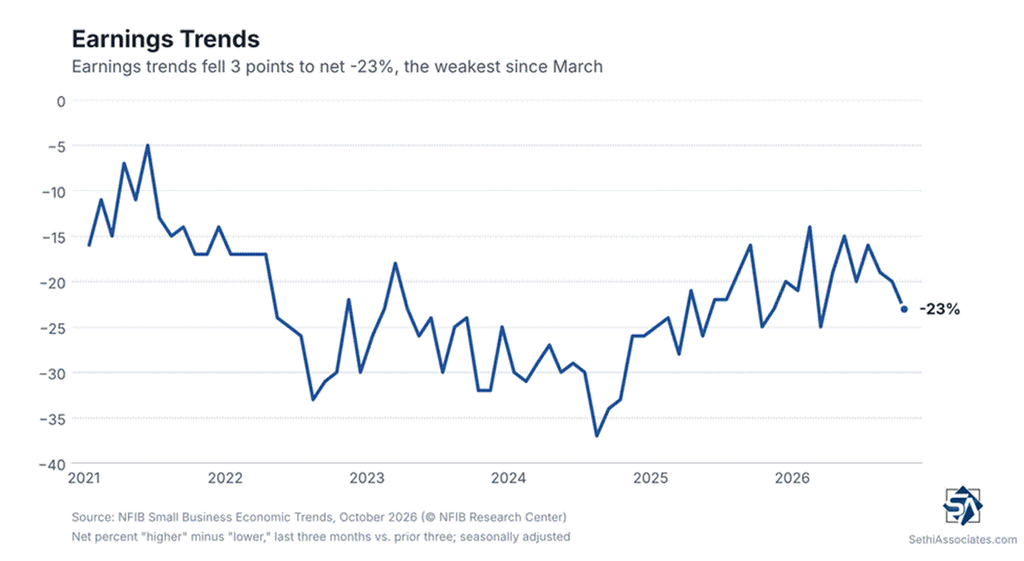
Earnings trends fell 3 points to a net -23%, the weakest since March, even as sales improved.
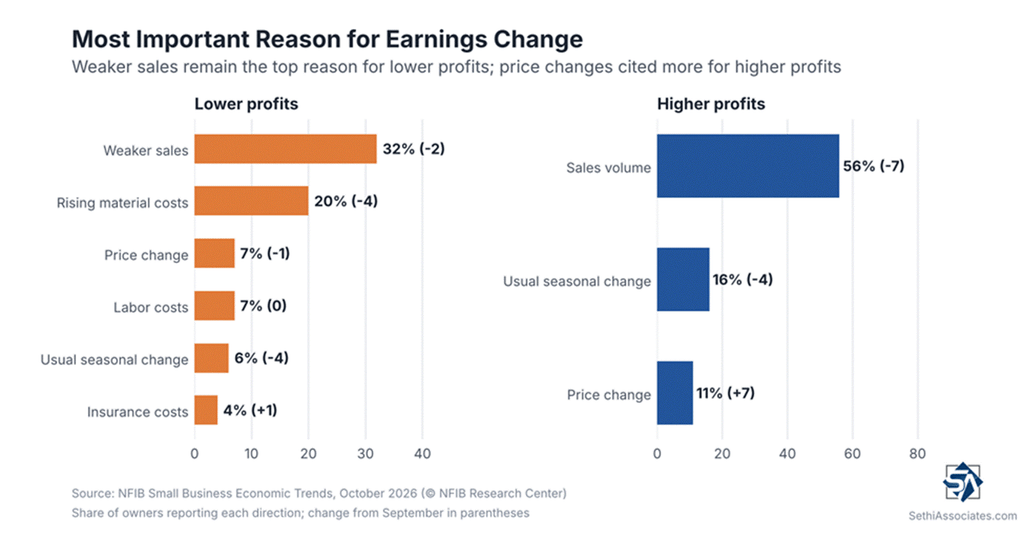
Weaker sales (32%) and rising material costs (20%) remained the top reasons for lower profits. Among owners with higher profits, 11% credited price changes, up 7 points, while those crediting sales volume and seasonality declined.
Sales and Inventories
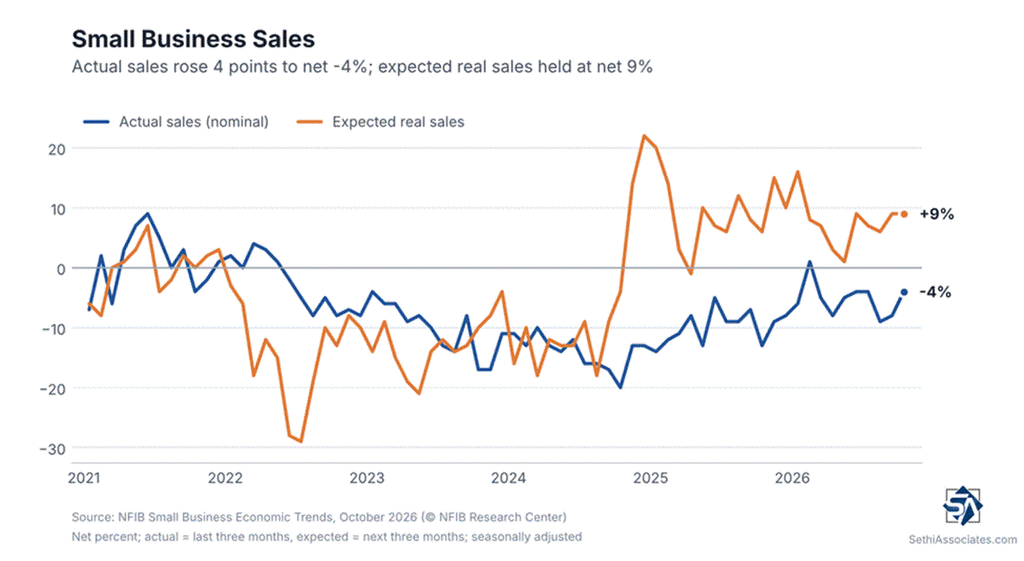
A net -4% of owners reported higher nominal sales over the past three months, up 4 points and tying June and July for the best reading since February. Expected real sales held at a net 9%.
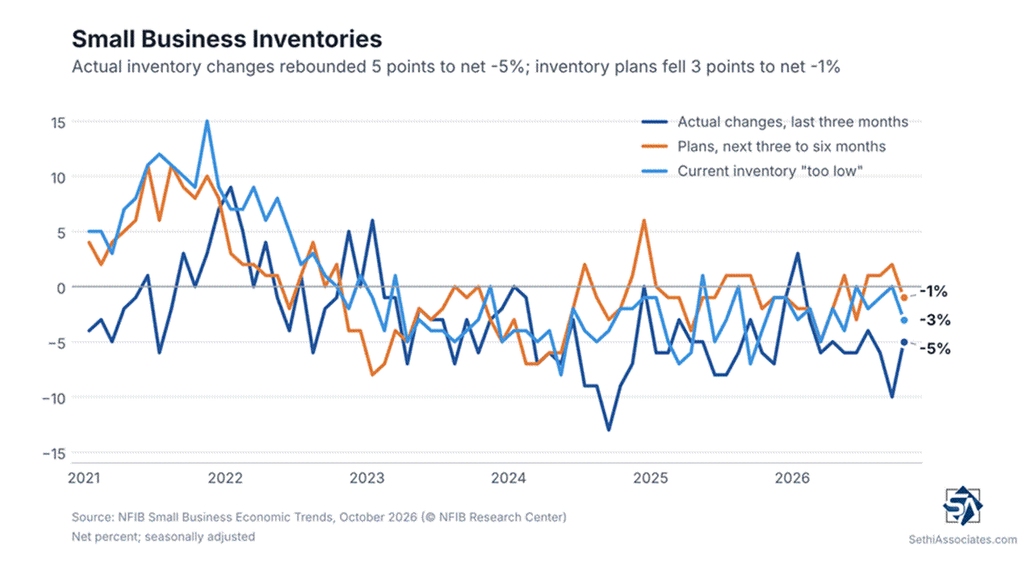
Inventory drawdowns became less widespread after September’s broadest since 2024, with actual inventory changes up 5 points to a net -5%. But plans to add stock fell 3 points to a net -1%.
Prices
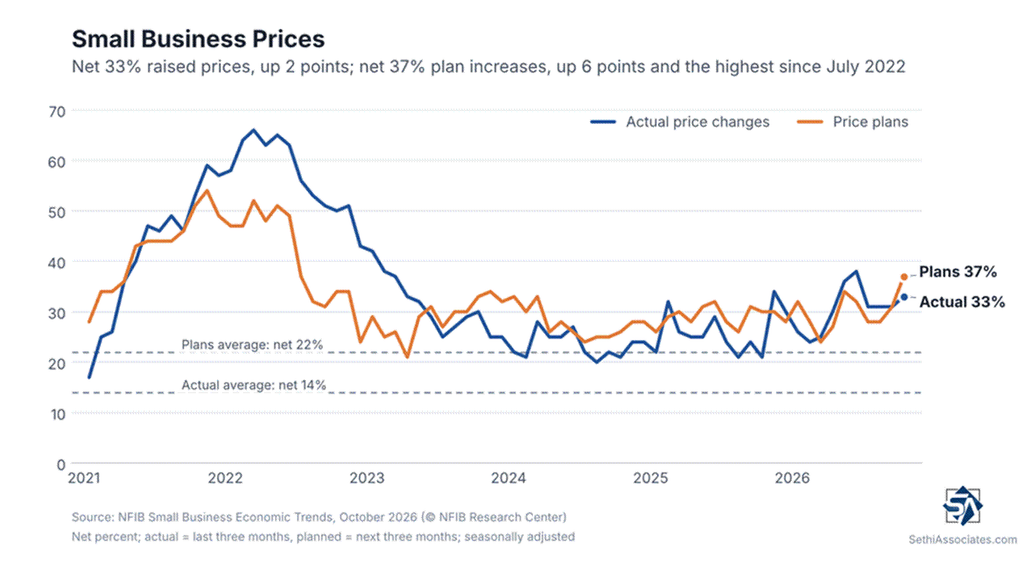
A net 37% of owners plan to raise prices over the next three months, up 6 points and the highest since July 2022.
A net 33% raised average selling prices over the past three months, up 2 points and well above the historical average of a net 14%. The jump in plans comes as consumers’ inflation expectations remain at multi-year highs and as core CPI came in hot again Tuesday (Core CPI Comes in Hot Again, Putting a Half-Point Fed Hike on the Table).
Labor Markets
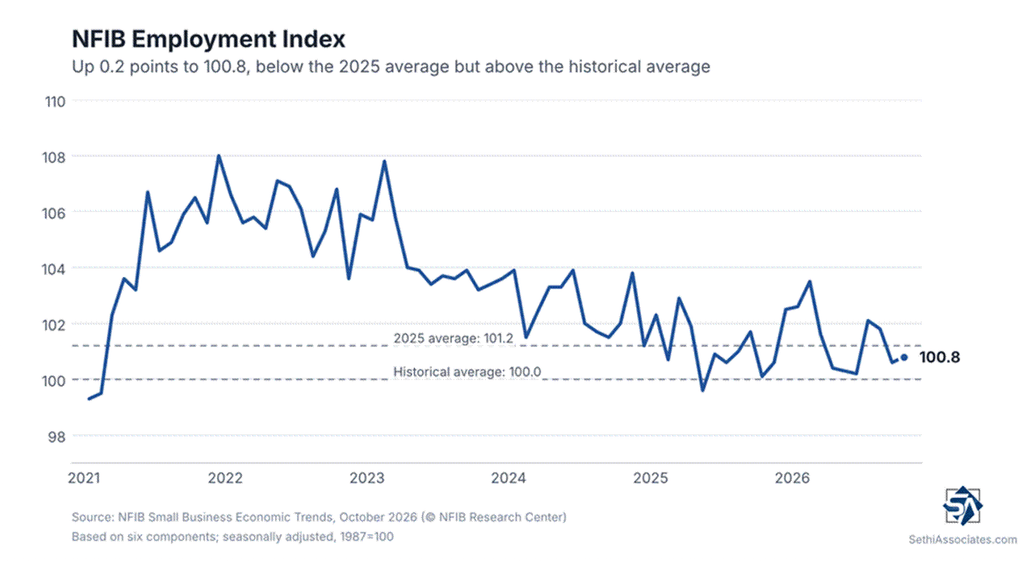
The NFIB Employment Index edged up 0.2 points to 100.8, below the 2025 average of 101.2 but above its historical average of 100.0.
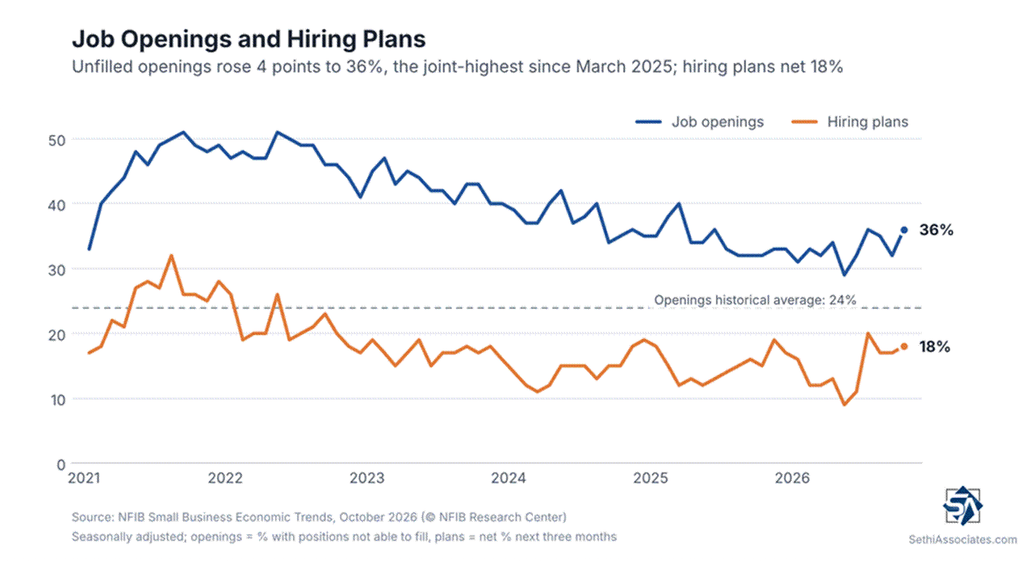
Thirty-six percent of owners reported job openings they could not fill, up 4 points and the joint-highest since March 2025. A net 18% plan to add jobs over the next three months, up 1 point, and 56% were hiring or trying to hire, up 5 points. Of those, 86% found few or no qualified applicants. The firmer read lines up with October payrolls topping every forecast, quits jumping the most since May 2023 and job cuts at a three-year low.
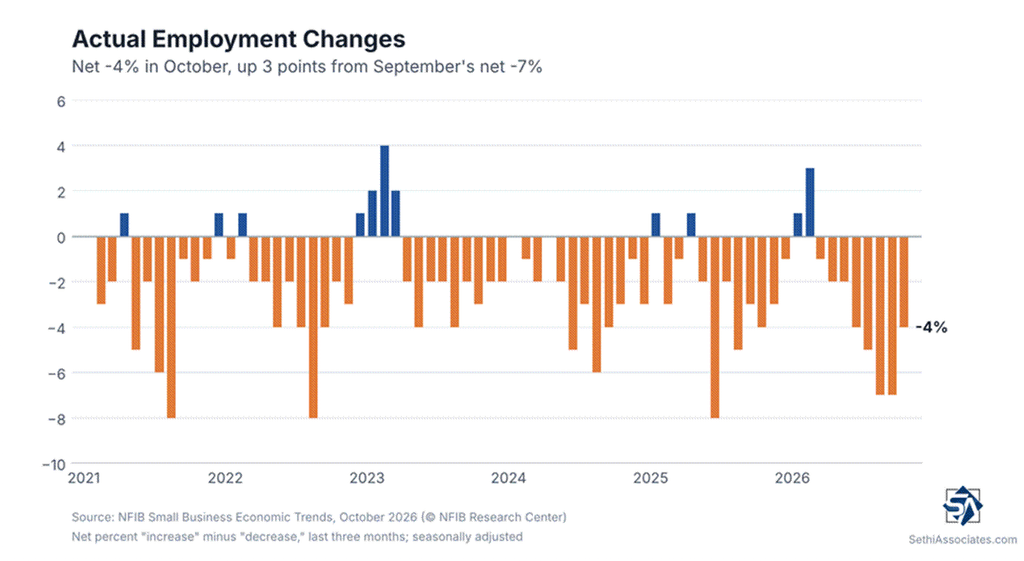
Actual employment changes over the past three months improved 3 points to a net -4%.
Compensation
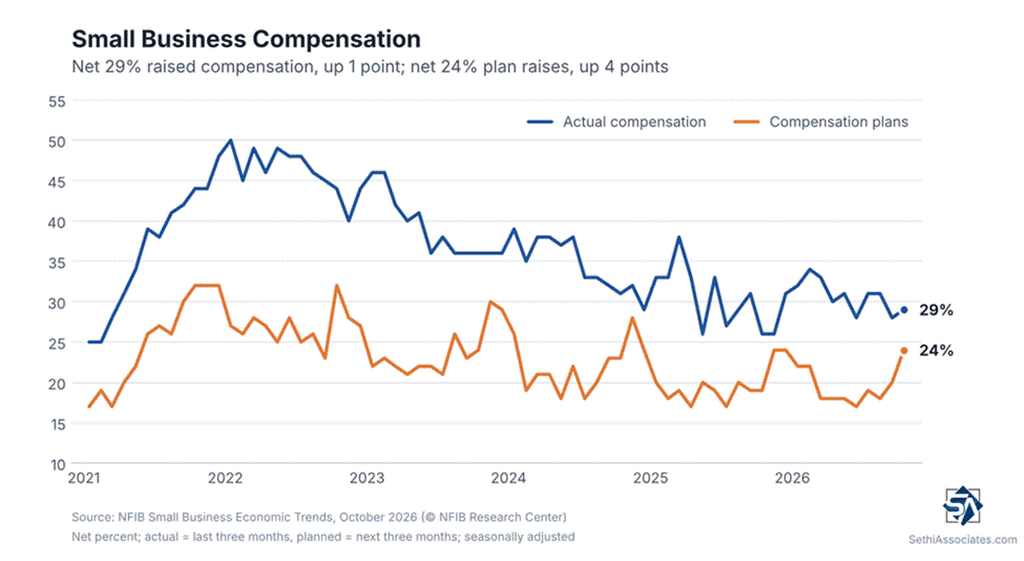
A net 29% of owners raised compensation, up 1 point. A net 24% plan raises over the next three months, up 4 points and, per NFIB, the highest since December 2025. Both are above their historical averages.
Credit Conditions
A net 13% of regular borrowers paid a higher rate on their most recent loan, up 5 points and the most since August 2024. The average rate on short-term loans rose 0.3 points to 8.5%, near its historical average of 8.3%.
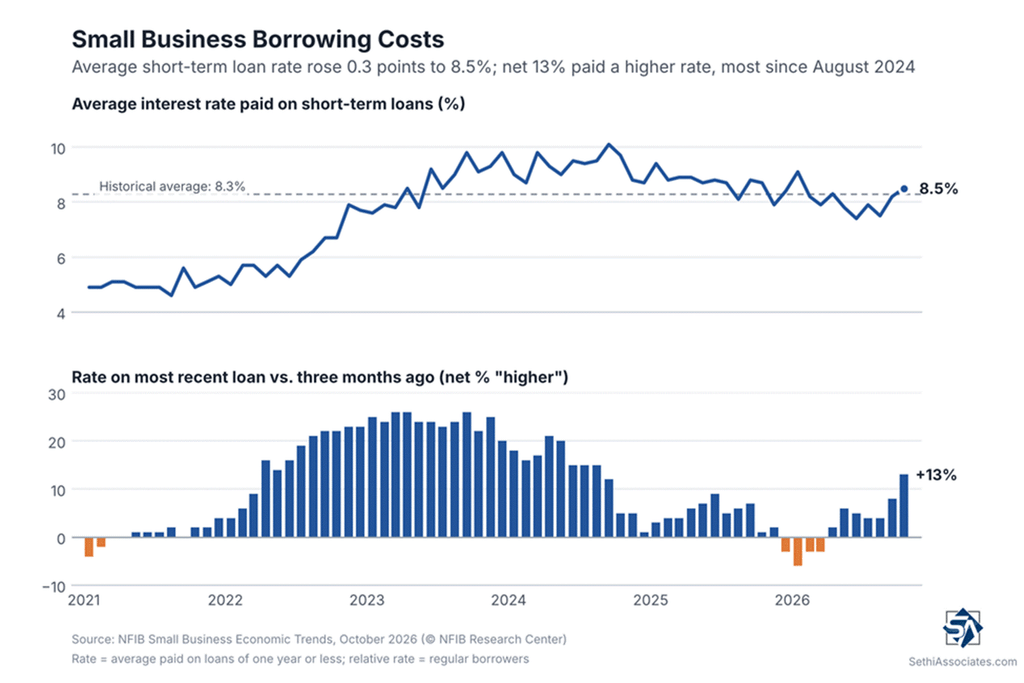
The share borrowing regularly rose 3 points to 25%, still below the historical average of 34%.
Capital Outlays
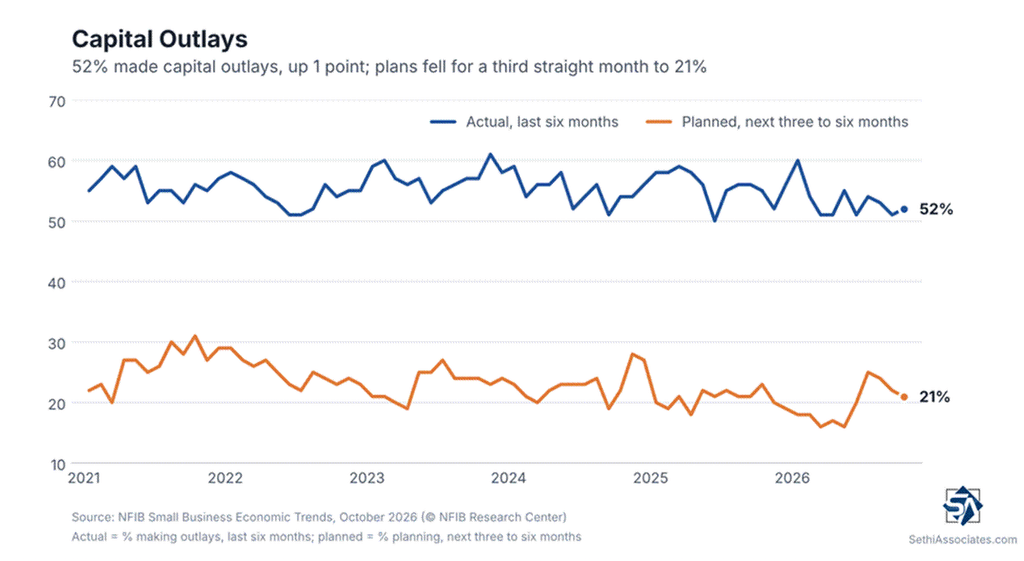
Some 52% of owners made capital outlays over the past six months, up 1 point. Plans for the next three to six months fell 1 point to 21%, a third straight monthly decline.
Single Most Important Problem
Labor quality or availability was the top problem for a fourth straight month at 25%, down 1 point and 13 points above its historical average of 12%. It was 27% a year ago.
Taxes jumped 10 points to 21%, the highest since May 2021, moving into second place. They were 16% a year ago. NFIB said, “With taxes rising sharply as a top concern among small business owners in October, that policy area will be closely watched.”
Inflation fell 3 points to 17%, up from 12% a year ago and well above its 7% historical average. Poor sales fell 5 points to 6%, the lowest since November 2024.
NFIB Commentary and Member Quotes
Looking ahead, Dunkelberg said “continued strength in consumer spending will support economic growth, while persistent inflation, labor shortages, and policy risks will weigh on the small business outlook.”
Member comments published with the report centered mostly on fuel and other input costs and finding skilled labor, with tariffs, taxes and insurance also cited. Those NFIB highlighted on their summary page:
- “Our biggest hindrance to growth is finding quality employees.” – Services, WV
- “My cost of doing business goes up, but margins stay the same or are lower.” – Services, CT
- “The climate for my business in our area of operation is remaining strong. We are maintaining a competitive presence with larger companies and those of similar sizes by shopping suppliers, providing timely service, and maintaining communication with our customers.” – Construction, NC
What to Watch
The largest share of small businesses planning price increases since July 2022 is just another data point that will put pressure on the Fed to quicken the pace of rate hikes (see Dallas’ Logan Adds to 50 Basis Point Speculation).
All charts by Sethi Associates using data from the NFIB Small Business Economic Trends report for October 2026.