How to Profit on the FX Markets as the Yen Faces Pivotal Moment
Here’s how U.S. investors can play the underlying trends in the Japanese yen exchange.
You've reached your free article limit
You've read 0 of 1 free Pro articles.
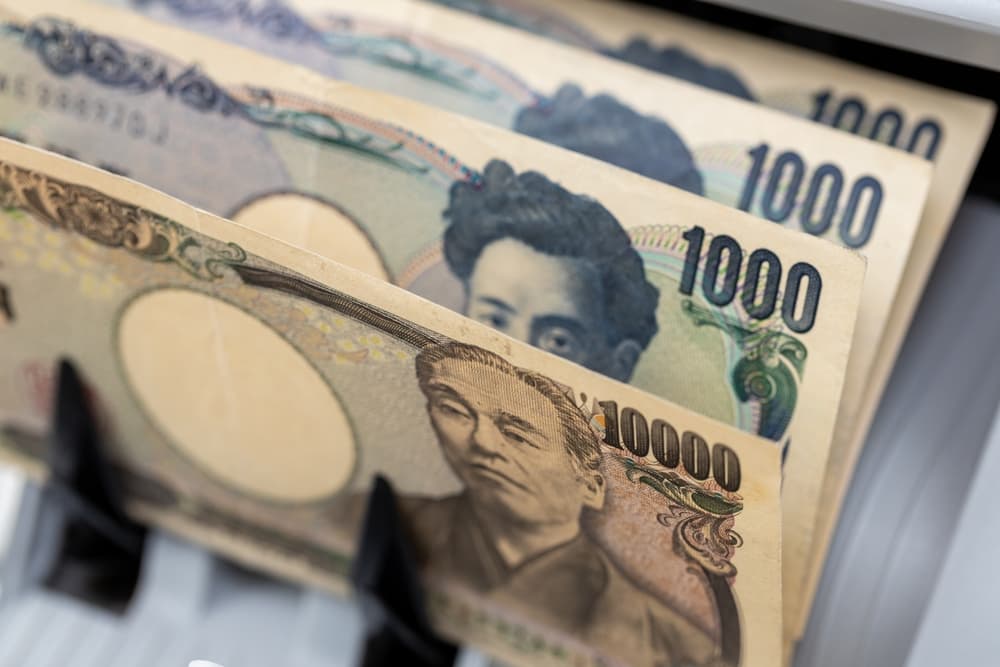
The foreign-exchange (FX) market is a strange beast. Nothing much changes for extended periods and then suddenly, it’s all change, everywhere at once.
Are we at such a point now?
Keen readers will know that I’ve been following the strange course of the Japanese yen over the last few years. It is exceptionally weak, at levels last seen 40 years ago (when Halley’s Comet came calling, and 20-year-old Mike Tyson became the youngest heavyweight champion in history).
I believe we could be at a pivotal moment in the Japanese currency’s moves. It has suddenly strengthened on Thursday, from ¥160.31 to ¥155.41 as I write, apparently without the artificial help of government intervention.
What gives? In part, we have the impact of the G20 finance meeting, bringing together the finance ministers and central bank chiefs of the 20 largest economies over the last couple of days in Asheville, North Carolina.
Information the Market Doesn’t Have
The upshot, currency wise, is the implication that both the United States and Japan will continue to encourage a stronger yen.
“I have information that the market doesn’t have,” U.S. Treasury Secretary Scott Bessent said at the meeting, “and it’s my belief that the Japanese government and the Bank of Japan will do the things that will lead to a stronger yen.”
I wonder what that could be? He surely can’t be hinting that the BoJ is going to raise rates at its next meeting, right? Because the market is pricing in odds of around 90% that the Japanese central bank will do just that.
Enlightened Self-Interest
Of course, he almost certainly is referring to a BoJ hike. Both BoJ Governor Kazuo Ueda and Japanese finance minister Satsuki Katayama were in attendance, as well as Bessent and U.S. Federal Reserve chair Kevin Warsh.
European leaders took Bessent to task for selling euros to buy the yen, when Japan and the United States took a highly unusual tag-team approach to driving up the value of the Japanese currency on July 31. I’m not surprised, since he’s been keen to insulate U.S. Treasuries for fear of driving borrowing costs higher, at the cost of the European currency.
I wrote a column at the time explaining the “enlightened self-interest” of Bessent, who early in his career helped orchestrate the $1 billion bet against the British pound by George Soros and Soros Fund Management.
Weak Yen Echoes Crisis Times
I explained last month how the movements of the yen should be of great interest to U.S. investors. Bessent believes that a weak yen was one of the catalysts setting off the Asian financial crisis of 1997 and 1998, when currencies like the Thai baht and Indonesian rupiah spun into free fall.
Coincidentally, the last joint U.S.-Japan intervention was during that crisis, in 1998. Yet intervention is expensive and short-lived. It’s a “fool’s game,” in the words of Stephen Roach, the former chief economist at Morgan Stanley, who last week penned a fascinating opinion piece on his substack, “Don’t Mess With Markets.”
The FX market is the largest and most-liquid in the world, with turnover of $9.6 trillion per day. The combined Japan-U.S. intervention equates to 0.6% of daily FX trading volume, and only 4% of yen daily trading. It’s a tiny splash in the currency ocean.
Natural Strengthening Required
The yen will need to strengthen organically, which may be what we are now starting to see.
Analysts have also long been warning that they expect the U.S. dollar to weaken. Just when that seems poised to happen, though, we get a jolt of geopolitical tension, a flight to quality back into U.S. assets and the greenback gets strong support.
Economists love to say that certain economic conditions will prevail “all things being equal.” And, of course, they are never equal. Change being the only constant, and all that.
All things being equal, though, and we should see the yen strengthen. We should see the U.S. dollar weaken. And we should see some unwinding of the “carry trade” that has encouraged institutional investors to borrow at the exceedingly cheap interest rates in Japan to buy assets overseas, mainly in U.S. markets.
The interest-rate differential between Japan and other developed markets as well as the currency flows from borrowed yen into U.S. dollars explain the extreme weakness of the yen.
Diverging Rate Decisions?
We may see a narrowing of that differential later this month. Chances are that the BoJ will raise rates at its meeting on September 17 to 18. The jury is still out whether the Fed will raise rates at its own monetary-policy meeting on September 15 to 16. While it’s about a 90% “sure thing” of a Japanese rate hike, the Fed’s decision is very much in the balance — trading at a 70.2% likelihood on prediction market Kalshi as of this writing, but that’s up from just 37% last week before Warsh gave a hawkish speech in Jackson Hole.
The key shift would not be the actual interest-rate change, however. It would be any change in stance by the central banks. And that’s where we may be seeing a fundamental shift.
The BoJ may accelerate the pace of its future rate hikes, Bloomberg is reporting, without naming its sources, “people familiar with the matter.” Maybe we should ask Bessent again?
The Market Needs No Further Hints
Ueda and the Japanese central bank see inflation risks that are skewed to the upside, while prices that are rising on imports and corporate inputs due to the weak yen add to that case. Inflation will push 3% once a fuel subsidy ends. Japan imports all of its oil, priced in dollars.
Ueda told reporters in Asheville that “we need to pay greater attention than before” to upside risks on inflation. As the Japan Times put it, “market participants are in little need of further hints.”
This would already be the quickest hike under Ueda. The BoJ bumped the rate in June to the current 1.0% — the highest rate in 31 years, as I explained at the time.
The BoJ has normally moved every six months or so. There have been five rate rises since March 2024 when, as I noted, Japan raised rates for the first time in 17 years, exiting the era of negative borrowing costs.
Here’s How to Play the Shift
If the yen continues to strengthen, it should pay off for investors outside Japan to hold unhedged positions in Japanese equities. These positions will naturally gain in value due to currency appreciation, when viewed through the prism of the investor’s home currency.
I’ve been building up a position in an exchange-traded fund (ETF) that gives me that kind of exposure, the WisdomTree Japan SmallCap Dividend Fund (DFJ).
I like WisdomTree ETFs in general because they are based on “smart” indexes. They screen for desired factors and weight in interesting ways with the aim on improving performance over the basic Japan market.
In this case, DFJ works off the WisdomTree Japan Dividend Index, then excludes the 300-largest companies covered there. The small-cap ETF then weights the remaining components by the annual dividends paid.
This, I hope, gives me improved exposure to domestic-focused Japanese companies that are making their money in yen, within Japan. I’m looking to avoid exposure to the large-cap exporters in blue-chip indexes like the Nikkei 225.
Such “Japan Inc.” holdings are already benefitting from exporting their wares or making, say, cars in the United States, then goosing their U.S. dollar profits when they repatriate them back to Japan. These profits would shrink if the yen is appreciating.
So DFJ is effectively the polar opposite of the WisdomTree Japan Hedged Equity Fund (DXJ). DFJ is unhedged where DXJ hedges the yen. The DXJ fund excludes companies that get more than 80% of their revenue inside Japan, skewing the fund toward major exporters.
It will be interesting to watch the DFJ and DXJ pairing. If the yen does change course and strengthen, DFJ should outperform.
At the time of publication, McMillan was long DFJ.