Monday’s Solid 2-Year Auction
In the excitement Monday, I missed updating on the $69 billion 2-year Treasury note auction, which came a day earlier than normal due to the Thanksgiving holiday. The good news is that in contrast with the 3-year, 10-year and 30-year auctions earlier this month, yesterday’s auction was a solid one, with demand improving across the board from October. It also stopped through, meaning it sold at a lower yield than the market expected.
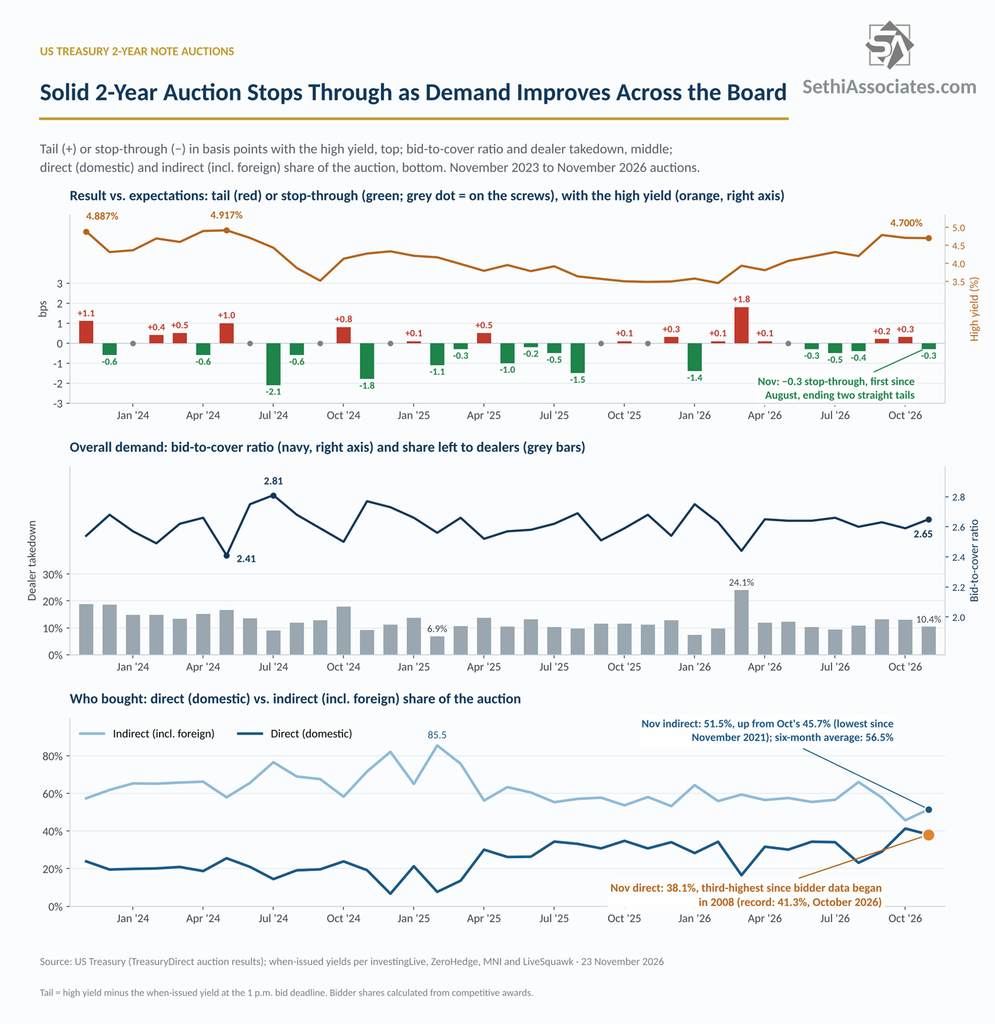
Looking at the details:
The notes sold at a high yield of 4.700%, 0.3 basis point below the 4.703% when-issued yield just before the 1 p.m. ET bid deadline, according to investingLive and ZeroHedge. It was the first stop-through since August and ended two straight tails, including a 0.3 basis point tail at the October auction. The six-month average is a 0.1 basis point stop-through. The high yield was little changed from October’s 4.708%, against a six-month average of 4.379%.
Overall demand picked up. The bid-to-cover ratio, a measure of how many dollars were bid for each dollar of notes sold, rose to 2.65, the highest since July, from 2.59 in October, and topped the six-month average of 2.63. Dealers, who take whatever other bidders don’t, were left with 10.4%, the least since July, down from 13.0% in October and below the six-month average of 11.5%.
Indirect bidders, which include foreign buyers, took 51.5%, up from October’s 45.7%, which was the lowest since November 2021. That was still below the six-month average of 56.5%. Direct bidders, mostly domestic investors, took 38.1%, down from October’s record 41.3% but still the third-highest since bidder data began in 2008, based on Treasury data. The six-month average is 32.0%.
ZeroHedge called it “a solid, if generally average, auction.”
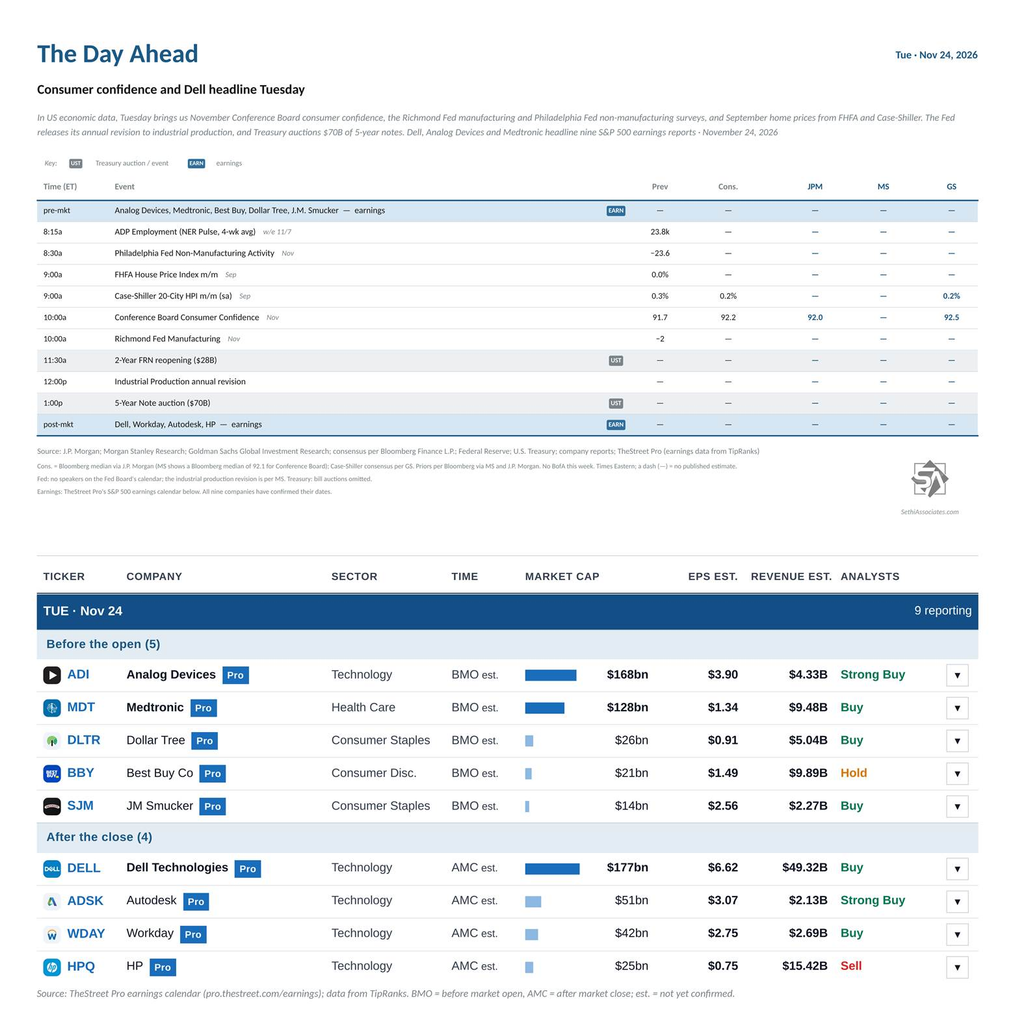
Treasury’s $70 billion 5-year note auction follows this afternoon, and the $44 billion 7-year on Wednesday.
Conversation 0 Comments
One ongoing discussion across all days. Everyone can read; sign in to take part.
Your voice matters. Discussions are moderated for civility. Read our guidelines .
Log in to join the conversation