Dallas’ Logan Adds to 50 Basis Point Speculation
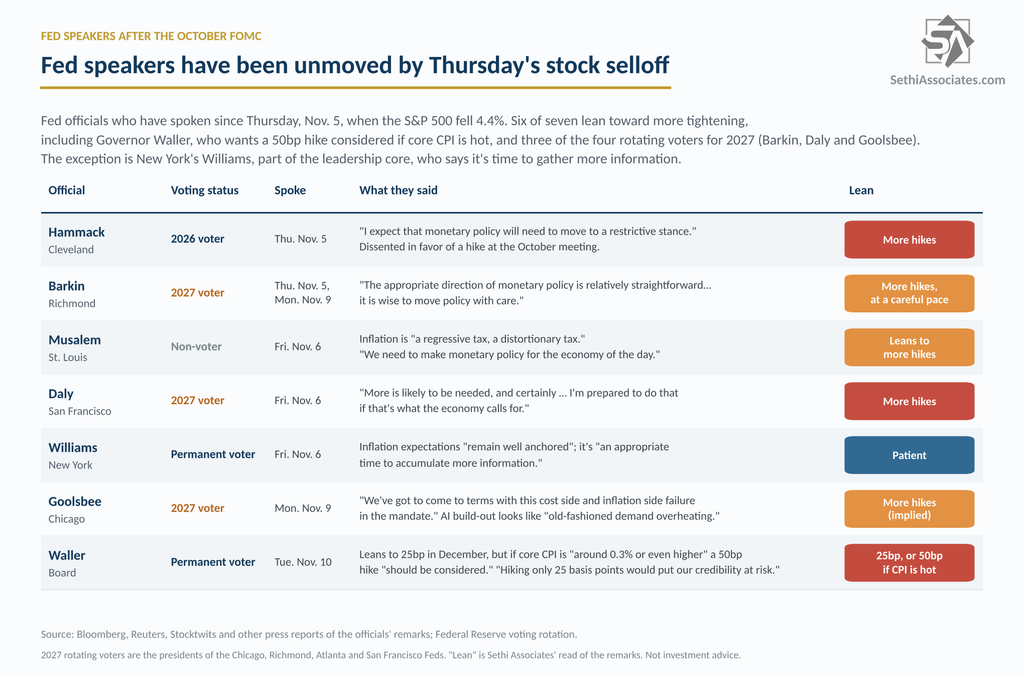
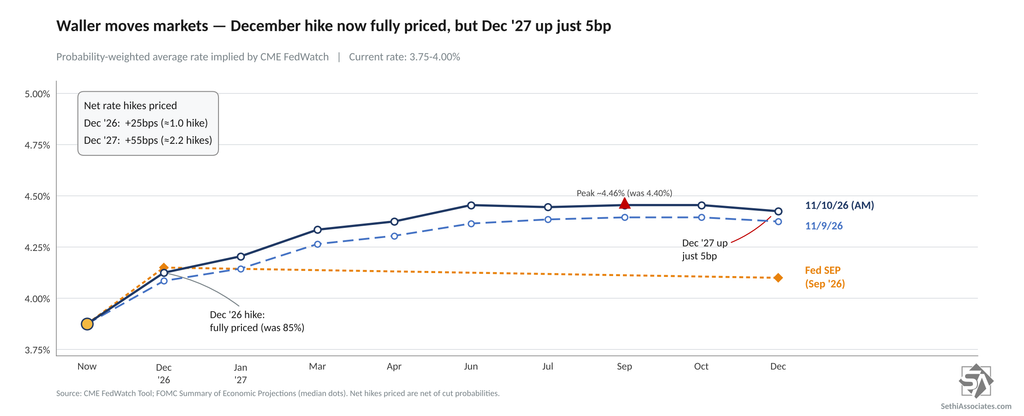
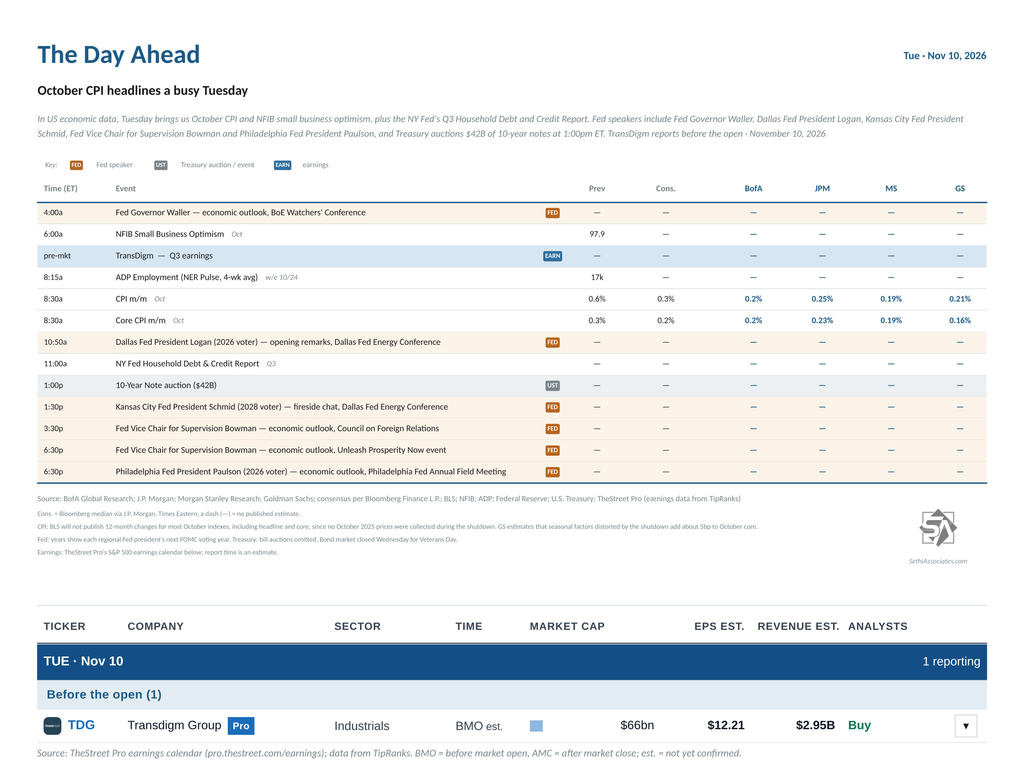
The relatively hawkish Dallas Fed President Logan (a 2026 FOMC voter) is the first speaker after the hot CPI print (Core CPI Comes in Hot Again, Putting a Half-Point Fed Hike on the Table) and Governor Waller’s speech this morning opening the door to a 50-basis point hike at the Fed’s December meeting (Fed’s Waller Floats a Half-Point Hike if CPI Runs Hot).
Logan adds to the momentum behind a potential 50 basis point hike (or perhaps back-to-back hikes) saying in a speech at an energy conference that “the FOMC needs to implement at least two more 25-basis-point rate increases,” and “[i]t may be possible to move more rapidly this winter than the FOMC has moved so far this fall.”
Unfortunately the speech is not on the Dallas Fed’s website, so I don’t know the rest of the comments.
12.30pm Update – The speech is now posted, and a few other points stand out. She said this morning’s CPI “was higher than expected” and that “I am concerned that PCE inflation could rise when we receive those data for October in a couple of weeks.” She like Waller, though, isn’t calling for a dramatic hiking cycle: “I currently estimate that the fed funds target range is at least 50 basis points—half a percentage point—below the level that would create some modest restriction and begin to bring the inflation trend back to target.”
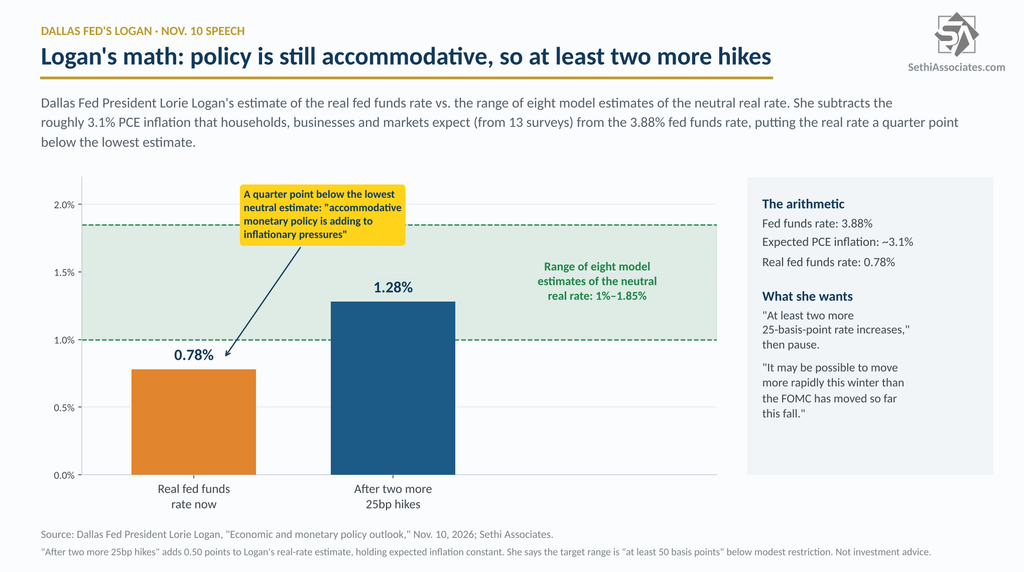
But she notes the real fed funds rate is just 78 basis points (the 3.88% fed funds rate less the roughly 3.1% inflation that households, businesses and markets expect), a quarter point below the lowest of eight model estimates of neutral, so “accommodative monetary policy is adding to inflationary pressures.”
On October’s skip, she said the volatile markets argued for moving “more gradually,” but “Skipping one meeting does not change the monetary policy destination,” and “the precise timing of each rate increase has little effect on the longer-term rates most borrowers pay.” After two more hikes, “it would make sense in my view to pause and examine economic and financial developments.”
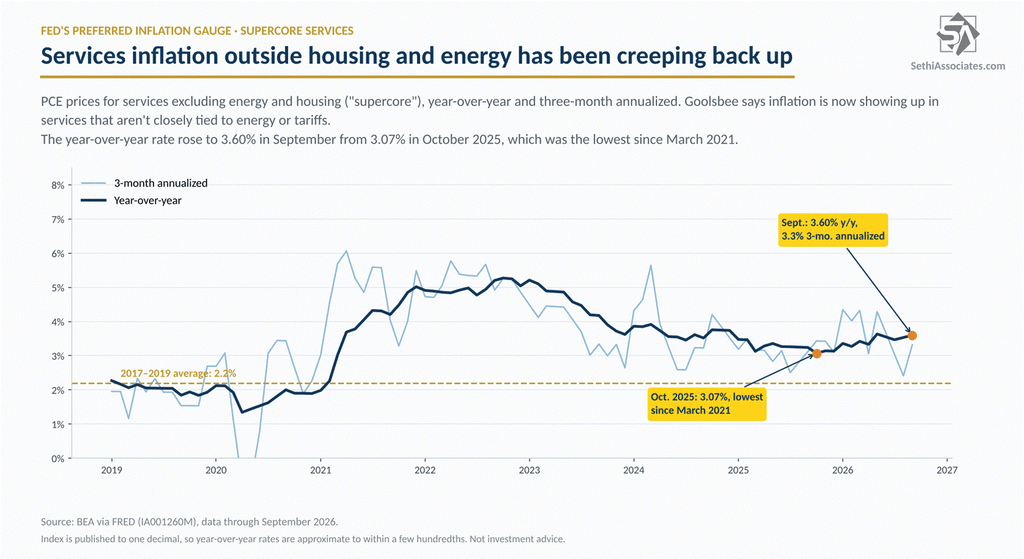
And like Goolsbee yesterday (see the Waller post), she pointed to services which came in hot in October. “Prices for non-housing, non-transportation core services rose 3.2% over the 12 months ended in September,” eight tenths of a point above the pace consistent with the Fed’s target, and those prices “aren’t particularly sensitive to tariffs, conflict in the Middle East or surging demand for computer chips.”
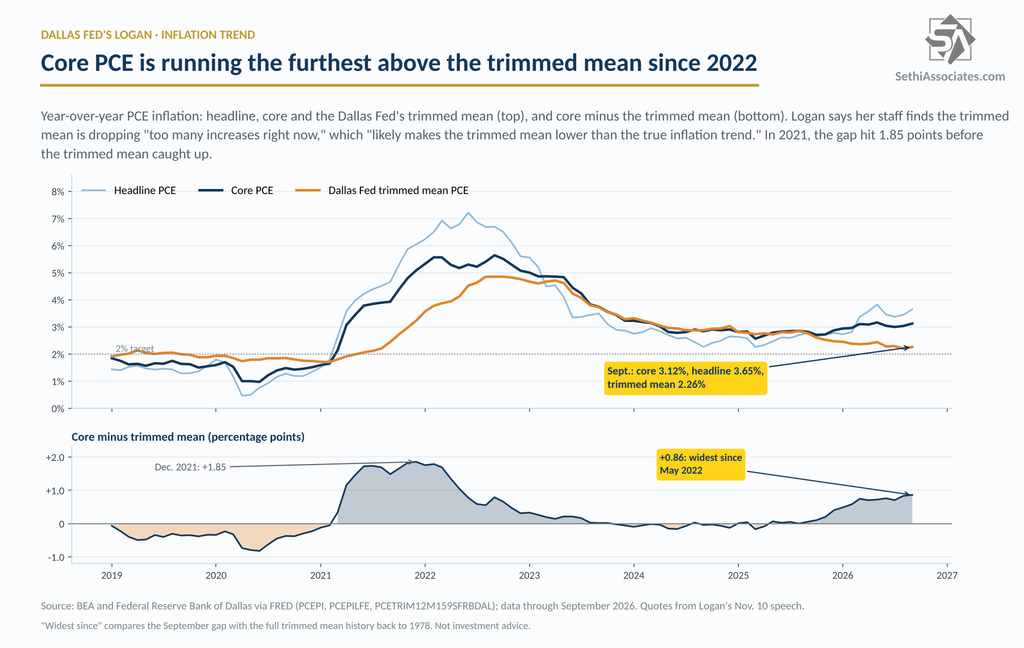
But she downplayed her own bank’s inflation gauge. The Dallas Fed’s trimmed mean PCE was lower, at 2.3% over the 12 months through September, but she said her staff’s research finds “a change in the mix of price increases and decreases is causing the trimmed mean to drop too many increases right now,” which “likely makes the trimmed mean lower than the true inflation trend.”
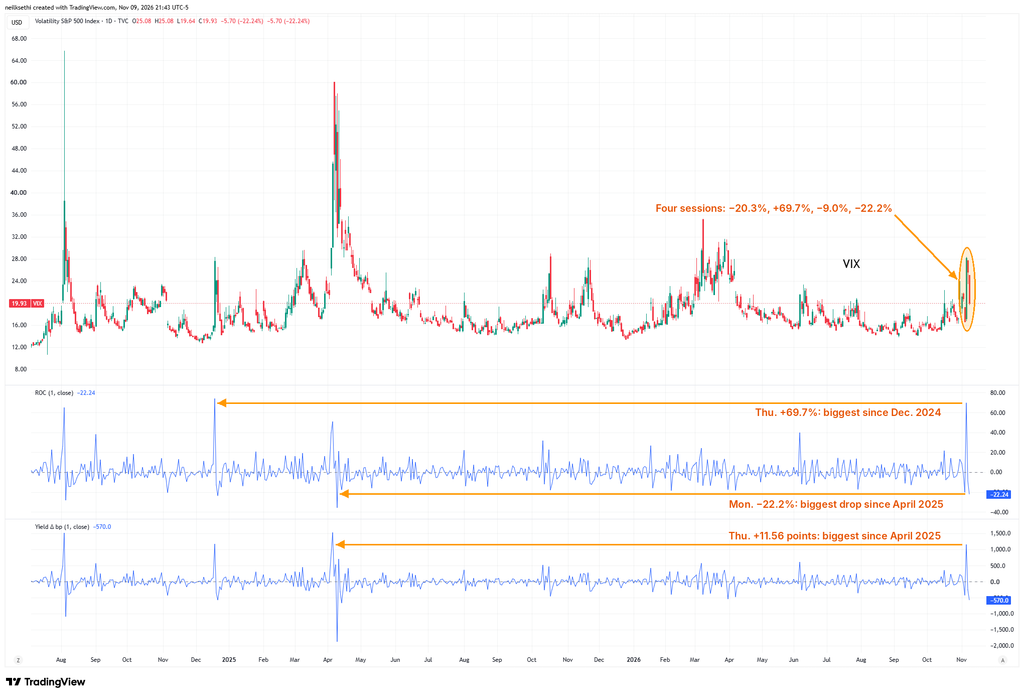
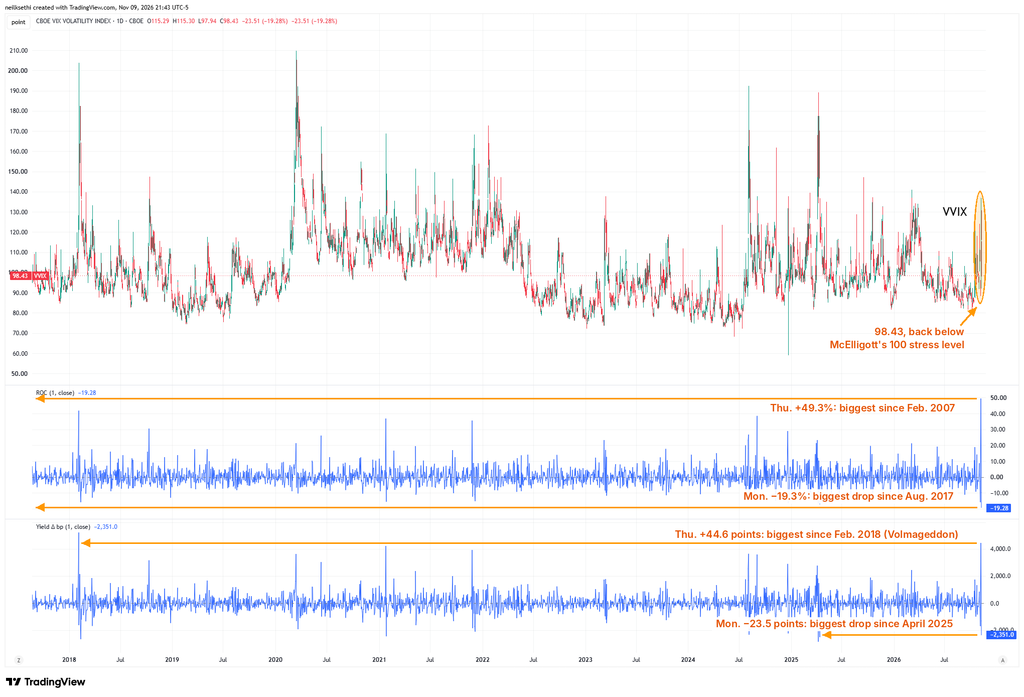
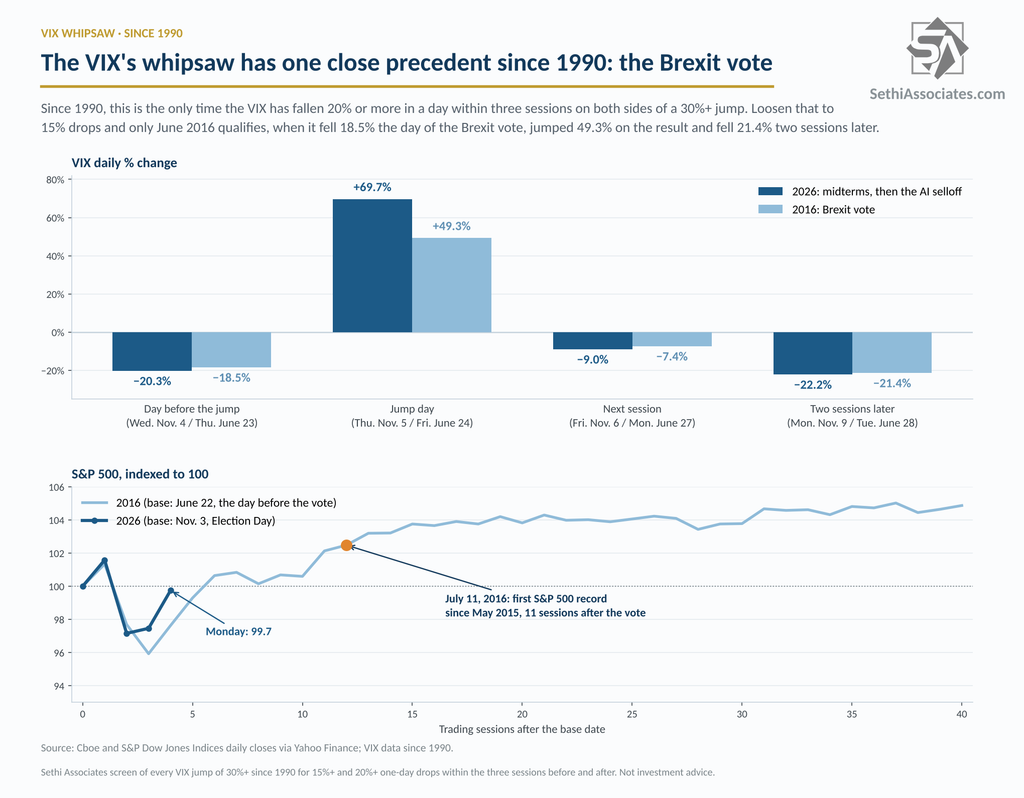
She, like the other Fed speakers since Thursday, wasn’t moved by markets either. Financial conditions “are currently providing a tailwind,” with credit spreads still “compressed by historical standards,” and the rise in 10-year yields is “more a message that investors believe monetary policy has work to do than an independent headwind for activity.”
Conversation 0 Comments
One ongoing discussion across all days. Everyone can read; sign in to take part.
Your voice matters. Discussions are moderated for civility. Read our guidelines .
Log in to join the conversation