Nvidia’s Problem Is Bigger Than Its CEO
The board is weighing Jensen Huang’s future, but the larger risk for the market is the financing system he built.
You've reached your free article limit
You've read 0 of 1 free Pro articles.
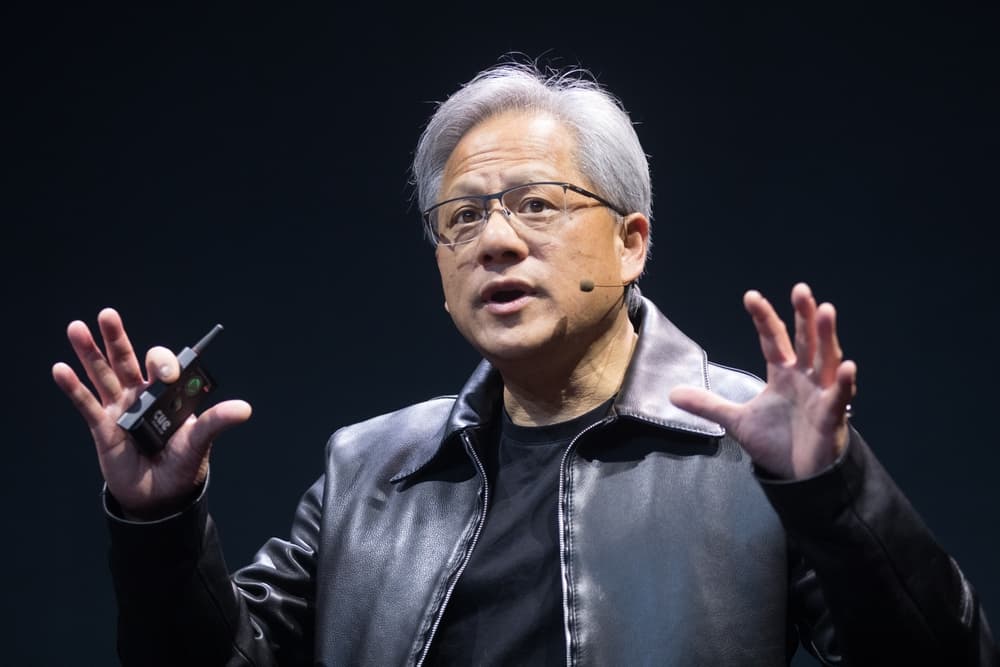
Nvidia’s (NVDA) board met late Wednesday to decide whether Jensen Huang remains chief executive. So far it hasn’t announced anything. The stock is down about 6% premarket to around $163 after The Wall Street Journal reported that the board was preparing to oust him. The New York Times added a report of a second relationship, this one with an executive who reports to him.
Nasdaq 100 futures are down about 0.8%, S&P 500 futures are off about 0.4% and Dow futures are flat.
The Board Decides
Huang founded Nvidia and has run it for more than 30 years, but he doesn’t have voting control. A majority of the 11 directors can remove him, and Bloomberg reports that the board is already working with an outside firm to identify replacements.
When Intel (INTC) and McDonald’s (MCD) removed chief executives over relationships with employees, the stocks fell 2% to 3% and moved on. Neither of those executives was a founder who defined the company the way Huang has been the face of AI, so the reaction here is likely to be bigger.
Wall Street is stepping aside. Bernstein and Oppenheimer both downgraded the stock overnight. Bernstein’s Stacy Rasgon cut his price target to $200 from $400 and wrote, “We’ve had enough, and prefer to watch from the sidelines.” Citi kept its Buy rating but cut its target to $225 from $285.
Even the lowered targets are well above Thursday morning’s price. At $163, Nvidia trades at less than 18 times this year’s expected earnings and about 10 times next year’s. That discounts a lot of damage, but nobody wants to step in until the board acts and the headlines stop.
The Financing Is the Bigger Issue
Nvidia’s chips will keep selling with or without Huang. The market is more concerned about the financing system he created.
Nvidia uses its cash to fund its customers and suppliers, and they use the money to buy more Nvidia chips. It committed $30 billion to an OpenAI financing round last year and agreed to cover $105 billion of OpenAI’s rent on a giant Ohio data center. This fall it floated a $500 billion plan to work with Wall Street firms to finance chip purchases by its customers. It is also one of the strategic investors in the Anthropic IPO.
This is similar to what Lucent and Nortel did at the top of the telecom bubble, when they lent money to customers so the customers could buy their equipment. That did not end well.
Huang has been the main driver and architect behind the circular financing program. A new chief executive may be less inclined to keep writing those checks. If the financing slows, customers buy fewer chips, and the growth estimates that make Nvidia look cheap come down.
That is why the companies that rely on Nvidia’s money are weak this morning. CoreWeave (CRWV) is down about 5% after Wednesday’s jump, and SoftBank fell 3% in Tokyo. Nvidia’s competitors are doing better. Advanced Micro Devices (AMD) is up about 4% after an upgrade from William Blair, and Broadcom (AVGO) is up about 3%.
Game Plan
The bond market reopens today with the 10-year Treasury yield at 5% and a 30-year auction this afternoon. Stocks ignored rates on Wednesday because there were no yields to watch, so this is the first test of that bounce. Oil rebounded on Wednesday as well, with Brent back above $92.
I came into the day with high cash levels, and I’m in no hurry. If the board acts and the chips hold up without Nvidia, I’d count that as a positive. If Wednesday’s bounce unravels, last week’s lows come back into play, and I’ll wait for the retest.
I wrote on Wednesday that I’d rather own Amazon.com (AMZN), which is acting well, than buy Nvidia because it looks cheap. A stock under this kind of cloud can stay cheap for a while. I’d love to put some cash to work, but I’m going to wait for better chart development before I act.
At the time of publication, Rev Shark was long AMZN.