Here’s Why I’m Keeping Over a Third of My Portfolio in Treasuries, Cash
The crumbling AI trade, web and tech outages, war and an oddly awful housing market have me sitting tight for now.
You've reached your free article limit
You've read 0 of 1 free Pro articles.

The AI trade continues to deteriorate here in the fourth quarter. Better-than-expected-earnings and guidance from Nvidia Corp. (NVDA) on Tuesday has not resulted in a rebound off its recent steep decline. The fact that the 10-Q was pushed off by several weeks for the first time in company history certainly didn’t help assuage growing investor concerns around the chip juggernaut. The huge IPO of Anthropic PBC (ANT) went off successfully yesterday and moved the Nasdaq higher by over 2% in early trading Thursday. But it was a rebound the tech-heavy index could not hold through the rest of the day, and the Nasdaq ended the day down 2.25%. A huge intraday swing.
The last week has seen significant outages at the Federal Aviation Administration, major banks and across numerous well-known websites. The official word is these events were not triggered by cyber- or AI-related attacks, and that may indeed to be the case. But this is doing little to relieve consumer anxieties. The status quo in the Middle East, whatever that is, seems to be holding with the conflict ebbing into small tit-for-tat attacks by both sides. Whether this situation holds for the rest of 2026 is an unknown. It is hard to see how a permanent resolution is in place over the next few months. One of the first actions of the new congress when it sits on Jan. 3 will be to try to end this conflict.
And the war in Ukraine feels even farther away from any conclusion. Ukraine continue to hit Russian refineries and other facilities and just heavily damaged the critical Kerch bridge in Crimea. Russia in turn is increasingly hitting key energy and other infrastructure and new escalation given this week’s events feels highly likely. The Russell 2000 formed a “death cross” on Wednesday. This is where the 50-day moving average for the index goes under the 200-day moving average. The last time this occurred in March 2025, the small cap index sold off by 16% over the next two weeks.
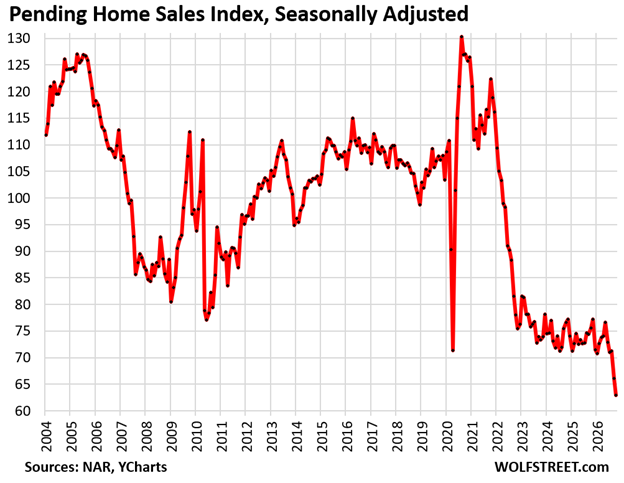
Finally, we have the housing market, which continues to travel from bad to worse. Home builder sentiment recently hit a 14-year low. Pending home sales continue to be abysmal and October’s numbers were down nearly 17% year-over-year and by roughly half the levels of October 2021. The South and the West led the weakness. Single-home supply is now at 12-year highs and condo inventories are in even worse shape.
Mortgage rates above 7% and historically low housing affordability has resulted in a rare condition in the housing sector. A situation where both home sellers and buyers are currently on “strike.” This is an environment that hardly can be improved by a likely Fed Funds rate hike at the upcoming Federal Open Market Committee meeting. I believe that in 2027, more sellers will capitulate and average home prices will start to fall nationally. Of note, in many regions of the country, home prices have already fallen significantly, especially in the condo market.
AI-related capital spending growth will drop dramatically from this year’s torrid over 90% rise. Markets are supposed to climb a “wall of worry.” Given the significant and growing issues on many fronts, however, I remain quite cautious as 2026 comes to a close. Currently, I am keeping just over 35% of my portfolio in short-term Treasuries and cash. That is likely to remain my positioning until there is a further pull back in equities or some of the risks highlighted in this column get resolved positively.
At the time of publication, Jensen had no position in any security mentioned.