A Change in Market Character Is Brewing, but It Still Needs Proof
Small-caps and transports led a broad rally, but a durable uptrend needs follow-through, and volatility isn’t going away.
You've reached your free article limit
You've read 0 of 1 free Pro articles.
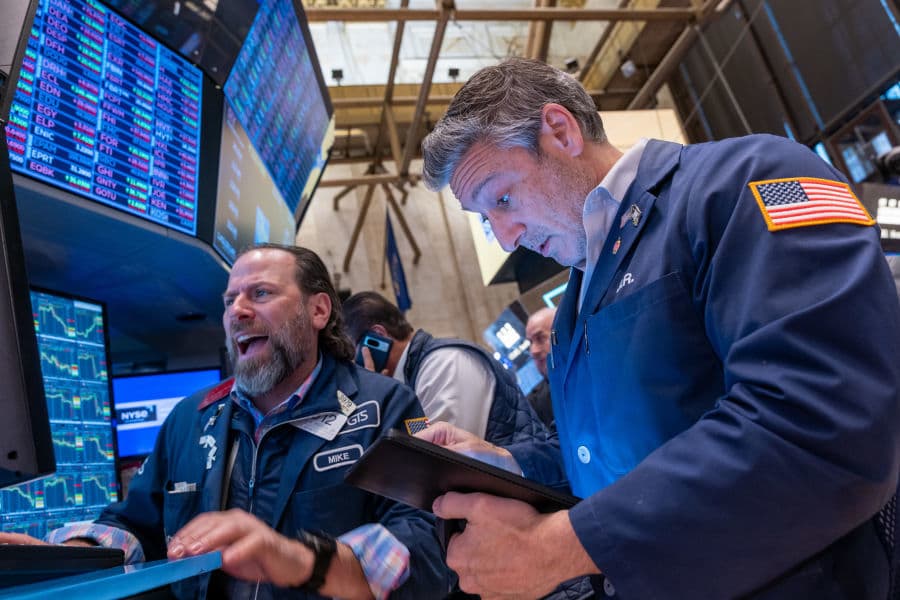
Monday’s market action felt different. The question now is whether it marks a change in this market’s character or was just another sharp swing in a choppy correction.
The broad market action was a significant shift. The Russell 2000 gained more than 3% and had its best day since March, gapping above all of its key moving averages. The Dow Jones Transportation Average, which tracks the companies that move goods and raw materials, also rose more than 3%. The S&P 500 gained 2.4% on higher volume, and advancing stocks beat decliners on the New York Stock Exchange by nearly 5 to 1.
For most of this year, the worry was that the market was too dependent on a handful of AI stocks. On Monday, the AI leaders lagged while small-caps, transports and the rest of the market led. Investors are looking for new themes, and they found some. This is the healthy rotational action that I have been writing about for months.
Valuations are helping the bullish view. The recent selloff brought the S&P 500 down to about 17.7 times projected earnings over the next 12 months, according to FactSet. That is the lowest level since November 2023. Friday’s solid jobs report and strong earnings growth add support.
Proof Still Required
We don’t have enough evidence yet to declare a change in character. Investor’s Business Daily cut its recommended market exposure back to 0% to 20% after Thursday’s selloff and kept it there Monday. Monday was only the second day of a rally attempt in the S&P 500 and the Nasdaq. The first few days of a rally attempt are often driven by short covering and by investors who were caught out of position. That is why IBD waits for a follow-through day, which is defined as a sizable gain on higher volume on the fourth day or later. The earliest that could come is Wednesday, as long as Friday’s lows hold.
The Dow Jones Industrial Average closed above all of its moving averages, and the Russell 2000 is back above its 50-day line. The S&P 500 held its 200-day line Friday but still has to recover its 10-day, 21-day and 50-day lines. That is progress, but it is far from a confirmed uptrend.
Volatility is the most important issue. The Nasdaq has moved an average of 2.1 percentage points a day over the past eight sessions, its most volatile period since April 2025, according to Dow Jones Market Data. That makes it hard to hold positions and hard to find good entries.
The list of things the market has to digest isn’t getting shorter. As Barron’s put it Tuesday morning, sorting through the myriad issues surrounding Nvidia (NVDA), along with a hawkish Fed, the pending debut of Anthropic and the biggest electoral change in U.S. politics since the 1970s, “is the last thing a struggling market needs.” Each of those could swing sentiment on its own. Together, they guarantee choppier action before the market settles into a trend.
Why the AI Leaders Aren’t Leading
The rotation away from the AI leaders is being driven by a shift in focus from chips and power to capital and politics. The smaller AI cloud companies are feeling this transition first. Their business model depends on raising money over and over, mostly through debt, and the chief executive of Nebius Group (NBIS) recently described some sources of capital as “temporarily closed.”
CoreWeave’s (CRWV) convertible bonds issued in September trade at about 67 cents on the dollar. Even the giants are racing to raise money while they can. Microsoft (MSFT) sold $25 billion in debt the day after its earnings, its first offering since 2017, and Oracle (ORCL) raised $20 billion in debt and stock last week.
Politics adds to it. Texas Governor-elect Gina Hinojosa says new data-center permits will require more local control and concessions from owners, although existing permits are unaffected. Congressional Democrats appear ready to subpoena Nvidia CEO Jensen Huang once they take control in January, and the stock fell more than 4% Monday.
The winners from slower construction are the companies that already own AI capacity. Amazon (AMZN) and Microsoft both gained nearly 3% Monday, while Nvidia fell. Fewer new data centers mean the existing ones become more valuable and the cloud providers gain pricing power. That theme will keep driving rotation inside the AI group, and it is why Amazon recovered so quickly from a negative reaction to its earnings report.
Game Plan
The market is looking for new themes, and the rotation is ongoing, but it remains choppy and inconsistent. That bodes well as we move deeper into positive year-end seasonality, but volatility is likely to stay high and keep it challenging.
I’m inclined to put more cash to work, but I’m having a hard time finding charts I like. The setups outside of technology are improving, and I’ll add to positions that make progress.
Until we get a follow-through day and a pullback that holds above last week’s lows, I’m not going to treat Monday as a signal that it’s time to rush to put on risk.
At the time of publication, Rev Shark was long AMZN.