More Tales From Nvidia: Questions I Ask Myself (Issue #274!)
When it starts working its way into the common lexicon, it is usually pretty much over. Charlie makes some good points too — in his tweet:
This is why IMHO @JensenHuang resigns. This will be a closed-door hearings; watch when the Dems take charge. The scrutiny will be unrelenting because of his ties to Trump. True, the @nvidia board is weak by corporate governance standards but it will have no choice but to act… https://t.co/YP1LqsWuNv
— Charles Gasparino (@CGasparino)
At any rate, the thing I can’t get over, this thing is so fishy. When the Secretary of State is worried about it, and writes a memo, and the whole thing still gets buried, that tells you something really strange was going on. It may be broader and deeper than anyone knows.
As far as reckless CEOs are concerned, Dario Amodei and Sam Altman, HELLO!!!!! And about the worst governance ever too. At least in Nvidia (NVDA) case, there are not separate classes of stock that give the founders permanent control, and they have a board with some power, as feckless as they may be.
If you want to get conspiratorial, which, well nothing would surprise me anymore:
* Why did the news break now? Everything always happens for a reason. This is non-random. Someone looking for a way out or an excuse for something? Other?
* You can wonder about Singapore, which is where Oracle (ORCL) has its big data center.
* What about some of the other semis, their leadership, and their dealings with China?
MORGAN STANLEY SEES S&P 500 CORRECTION NEARING ITS END
Morgan Stanley's chief US equity strategist Mike Wilson believes the market correction is entering its final phase, potentially setting up a year-end rally.
Wilson expects the S&P 500 to approach his 7,100–7,300 downside…
More Tales From Nvidia: More Funny Business (Issue #273!)
Back to the fundamentals, as Anthropic apparently starts their road show, which I would call “WeWork Part Deux.”
Remember, as I wrote before, WeWork cut their valuation 3x, still couldn’t get it done, and then eventually ended up bankrupt. And in my view, WeWork and Adam Neumann had better governance and were a better deal, for a variety of reasons. And that was before everything started coming undone and prior to policy heading in the wrong direction and prior to the head of the central bank of Nvidia, who is also financing them, was caught canoodling with a Chinese spy.
This is why it does not work. This is not dot-com or railroads. The $ are being spent on an incredibly dis-economic technology that will decay as opposed to sticking around. This is rapidly depreciating immature broken software and compute that is the equivalent of UNIX, SPARC, and VAX or a Mainframe.
Then, the more they are spending, the less they are getting. It is sort of like the impact of every incremental dollar of debt on GDP, very diminishing marginal returns. There is no scaling. If the underlying technology does the opposite of scaling, the business cannot scale.
Said simply, cost per unit is going way up (Anthropic’s S-1 tells you this too), revenue per unit is plummeting. See this tweet and subtweet:
Anthropic is gaining exponentially less capability per billion dollars spent over time. It's now 8x as expensive to boost AI capabilities as it was 2 years ago, getting worse on a log scale. This includes METR report & internal models.
Nvidia’s Board investigation = Try to buy everything (IMHO).
A bonafide investigation is needed as this is a big deal.
Moreover, I was under the impression that SI is a national security issue (see the previous “More Tales)….
How does one do a real investigation — as it sounds like the investigators wanted this all buried too. I suspect because Jensen Huang was telling the White House the stock market depends on Nvidia (or the White House was inferring that or both), so let me put as many chips in as many places as possible to keep it going!
"I typically don't meet management and I don't talk to management. Generally, if you become a CEO of a company, you're a really good salesman — one way or the other — and you're going to probably spin people.… pic.twitter.com/aYeD5aojHn
I don’t want to bury the lede: I am returning to the land of the living, as on Thursday I pivoted and have begun to accumulate selected equities, as I said at the time.
Yes, I have had an ursine market view — for several years now. My concerns, written almost daily in my Diary, were multiple, and I’ll repeat them here:
* The rising prospects for “slugfation” (sluggish economic growth and sticky inflation)
* The lack of fiscal discipline on the part of both the Republicans and Democrats) in Washington, DC.
* Interest rates will likely be higher for longer
* Improvisational foreign policy that had potential adverse social, interest rate and economic ramifications
* The AI trade has been the straw that stirs the drink” of the U.S. economy, corporate profits and the U.S. stock market – we saw a wide range of concerns (including political objections to data center expansion) and have questioned the optimistic ROIC assumptions regarding the massive AI capital spending spree
* Investor optimism seemed extreme as valuations have been elevated – with most traditional valuation metrics in the 90%-tile or higher
* For years investors have increasingly acted as if they were at a casino (gambling/speculating and not investing) – as measured by the popularity and proliferation of leveraged ETFs and ODTE (zero days till expiration) options
* Market structure posed a potential risk should price momentum abruptly reverse
Though my arguments had merit (and most were generally proven accurate), the markets ignored my concerns.
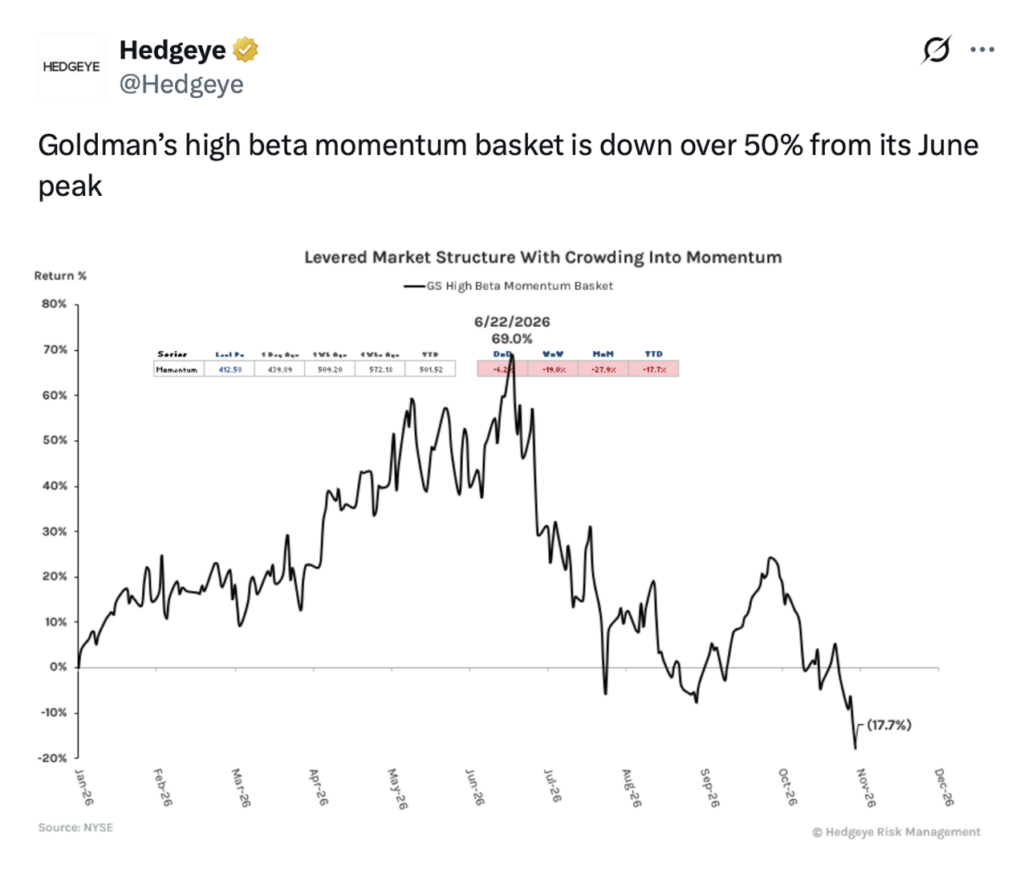
While the price of the S&P Index has remained elevated, over the last several months there has been a stealth Bear Market which has accelerated dramatically over the last week. Since the early summer, many widely-held stocks technology stocks have fallen by 50% or more.
1. Consider for example, Dell Technologies’ (DELL) shares which traded at $595 on Oct. 8 and, less than a month later Thursday, Nov. 5, I initiated a long position at $319.
2. We are finding plenty of emerging value opportunities outside of technology. As an example, we initiated a long in “best of class” Morgan Stanley also on Thursday at $181 compared to its share price of $235 less than four months ago.
3. We have other examples of developing that we will share in the future in my Diary.
No Longer a Cassandra
As repeatedly stated, my hedge fund is not a short or short-biased fund.
I recognize that I have sounded Cassandra-like in my bearish views but, as mentioned, many of my concerns were valid and on target. Specifically, interest rates rose rapidly (absolutely and relative to expectations), inflation was sticky economic growth was disappointing, improvisational policy led to an unwanted war and the efficacy and profitability of AI is now suspect.
We have often written that being long stocks can generate wealth and being short stocks (and/or having large cash reserves) can help to preserve capital.
Until recently, most stocks failed to meet our standards for investing. This is changing rapidly – as, on Thursday, the major Indices each fell by about 5%.
The concerns expressed above have largely been accepted by most investors and some have begun to be discounted (“second level thinking”) in an increasingly greater number of stocks.
Importantly, some of the major concerns (discussed above) are likely to moderate:
* While the cumulative or “stacked” inflation since 2021 remains problematic, we now see signposts (e.g. lower energy prices) that inflation will moderate relative to consensus expectations
* If inflation does retreat, the domestic economy (fueled by the consumer) may exhibit better growth than we previously expected
* Interest rates may have peaked for the cycle
* The current Administration’s potential improvisational policies are likely to be diluted by the stronger than expected showing of the Democratic Party in this week’s elections and the President’s “lame duck” status
* Tuesday’s Blue Wave likely means that the AI capital spending spree will probably be moderated – reducing our fears and smoothing the AI capital spending cycle (serving to reduce the chance of a boom-and-bust cycle)
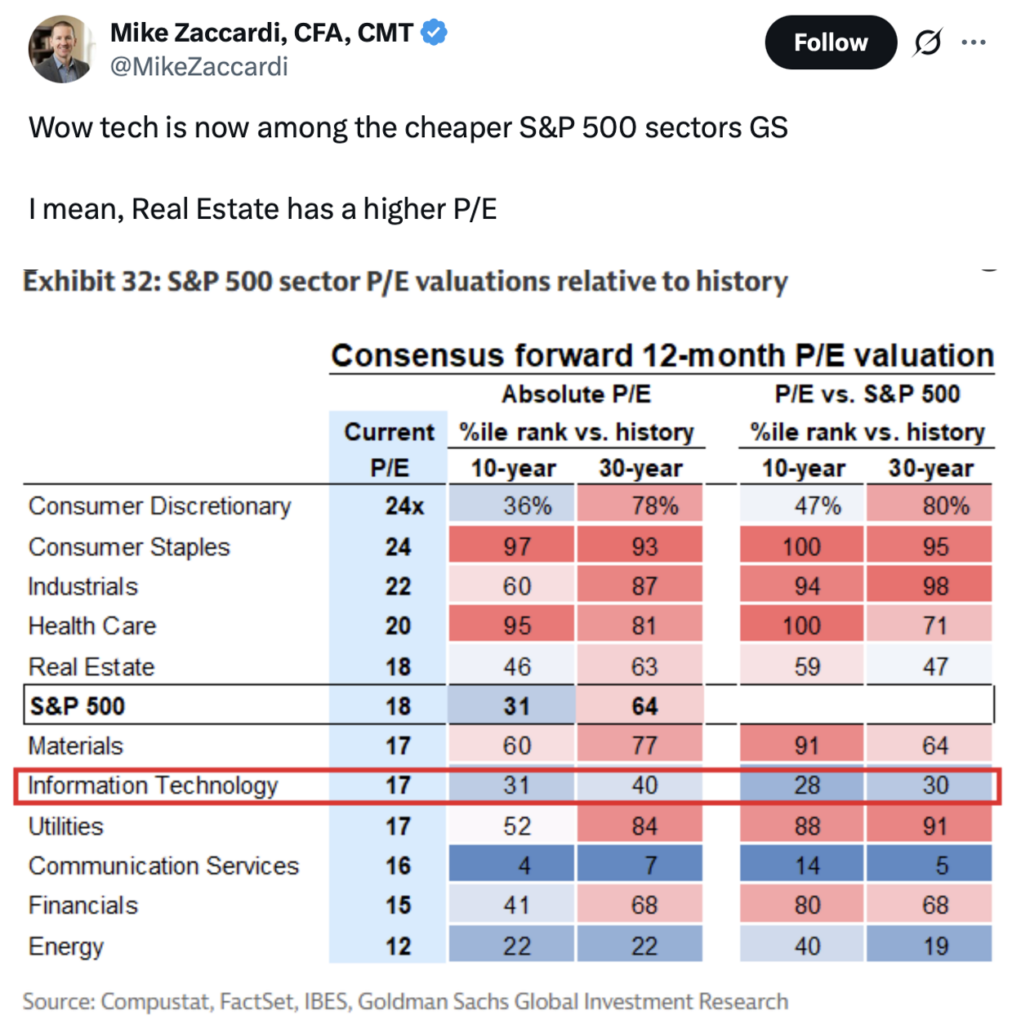
* Equity valuations in a number of sectors (particularly technology) have declined considerably as “fear” and panic have replaced greed
With the rise in “fear” and heavy (recent) trading and investment losses, there has been a diminished interest in ODTE call options and leveraged ETFs are suffering from outflows – moreover several large hedge funds have apparently been forced to liquidate (and have contributed to this week’s sharp market decline)
That is not to say I am wildly bullish – we are not.
However, as an expression of the increased investment opportunities that appear to be emerging, I have moved from a small net short exposure to a 10% net long exposure by Thursday’s close of trading.
Should the current decline in stocks accelerate I am likely to increase my invested position if the fundamentals and other factors continue to stabilize or improve.
Bottom Line
I welcome the chance to return to “the land of the living” and buying equities – with my current intention of buying and holding… and not trading.
To paraphrase Warren Buffett: It may be time to consider being greedy when others are panicking and are feeling fearful.
I now see emerging value in selected equities that have been decimated over the last 3-4 months.
1 of 2) What is seasonality? It is an examination of historical price trends over specific periods of time 'assuming' ALL ELSE BEING EQUAL. It is unstated in every post you see based on seasonality. In mkts, the "things' are current macro issues/influences.
Would you rather buy a high forward P/E when a stock has had a substantial decline and is looking forward to renewed growth or would you prefer to buy a declining P/E because questions have been raised about future growth? Scarlett prefers the former. https://t.co/If1mb9HeJZ
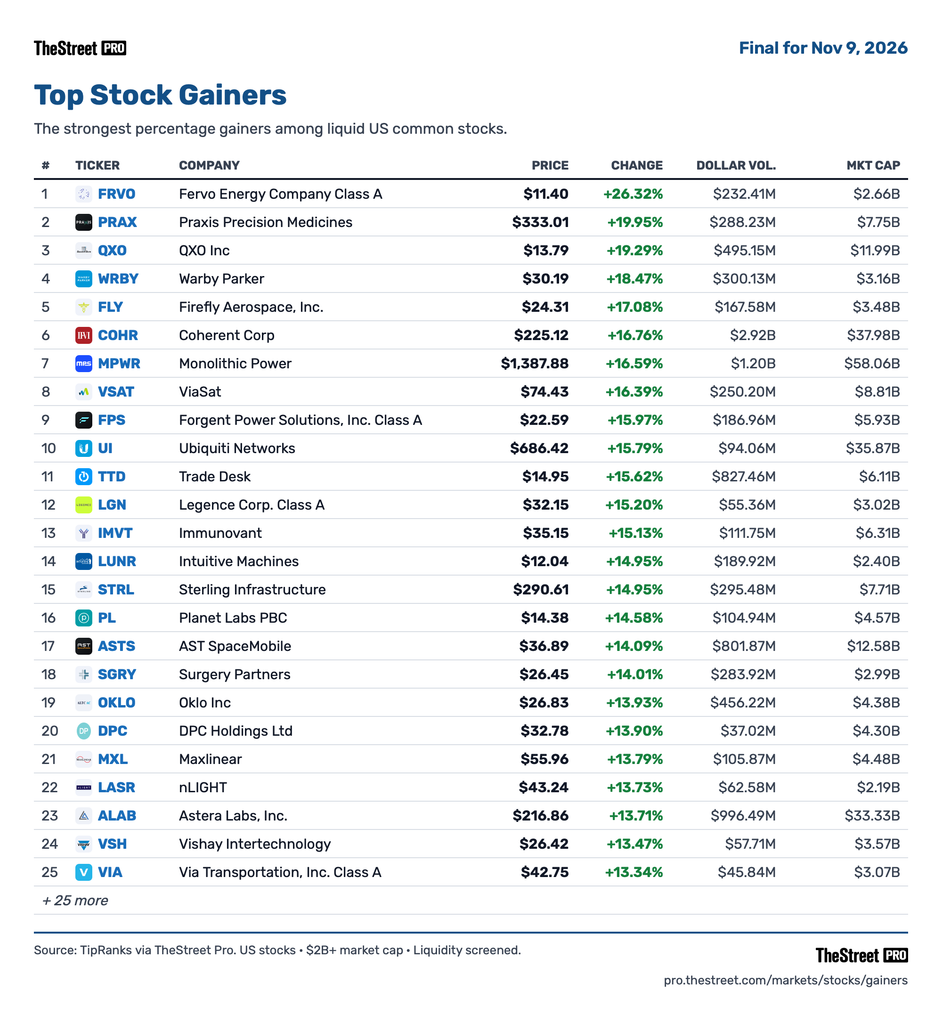
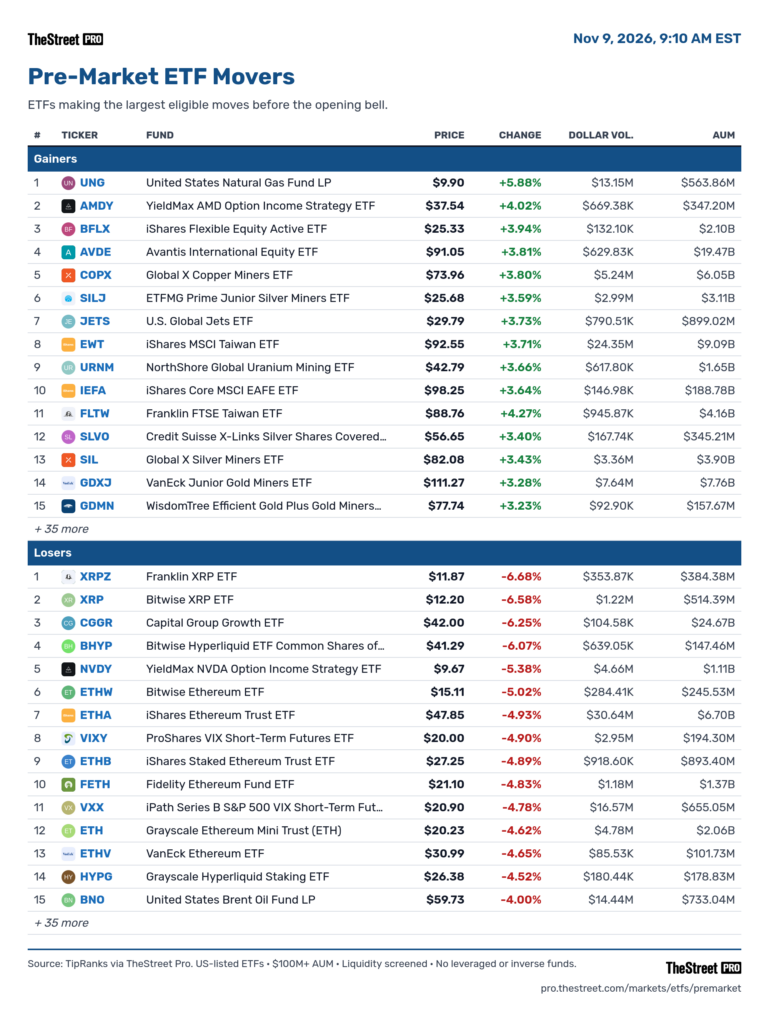
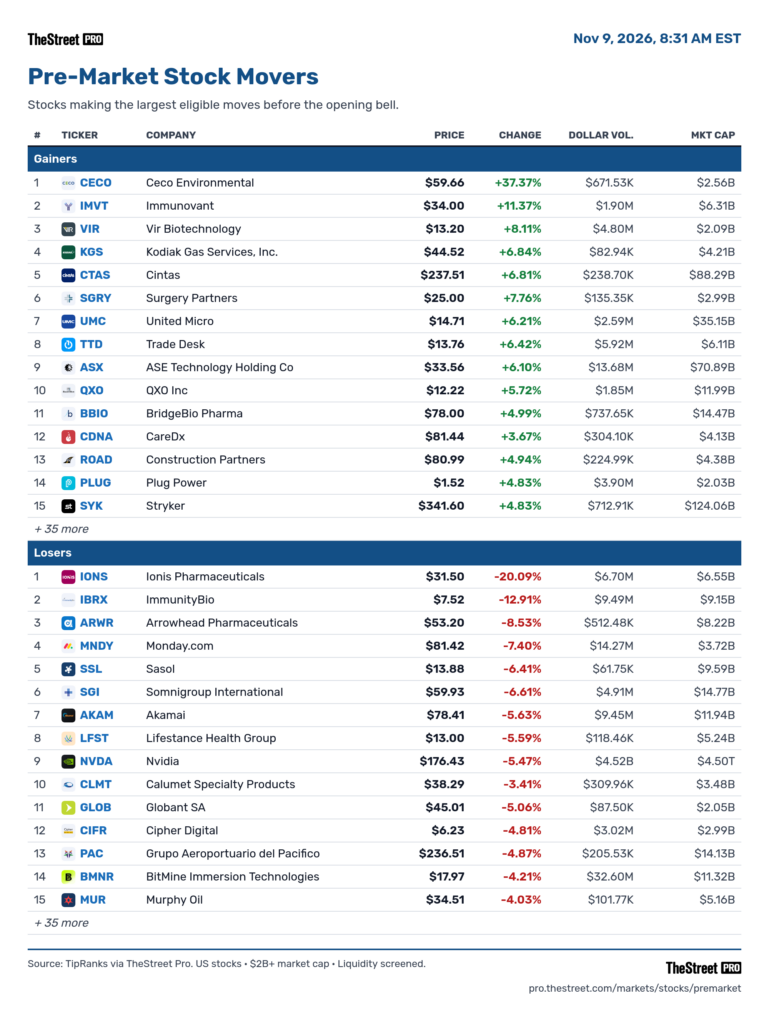
AMD Up, NVDA Down: Upside, Downside Movers in the Morning
Upside
– CKX +61% ($1B cash equity investment led by Brad Jacobs includes a planned $10.13-per-share pre-closing dividend)
– CECO +45% (Q3 beat, FY27 revenue and EBITDA outlooks topped expectations and the FY26 orders view was raised)
– GFR +38% (agrees to be acquired by Strathcona Resources)
– HRTX +29%, CRMD +3.5% (CorMedix agrees to acquire substantially all Heron assets for $145M upfront)
– EDSA +23% (exclusive collaboration and licensing agreement with Kyorin for paridiprubart)
– VIR +10% (Phase 3 ECLIPSE 1 trial met its primary endpoint, alongside expanded positive Phase 2 SOLSTICE data)
– KGS +8.0% (Q3 beat and FY adjusted EBITDA and discretionary cash-flow guidance was raised)
– QXO +5.9% (preliminary Q3 sales rose 79% and adjusted EBITDA increased 85%, aided by acquisitions)
– ASTS +3.8% (forms Rakuten AST joint venture to build a direct-to-device satellite network in Japan)
– UAL +3.9%, DAL +3.8%, JBLU +3.9%, AAL +3.6% (airlines rise as crude prices drop roughly 4%)
– KGC +3.6%, WPM +3.3%, NEM +2.8%, AEM +2.8% (gold miners rise as bullion advances and the dollar weakens)
– AMD +3.5% (rebounds from last week’s AI-chip selloff as technology futures stabilize)
– B +2.2% (Q3 profit beat, gold production increased and FY production guidance was maintained)
– CEG +1.7% (Q3 beat and FY adjusted EPS guidance was raised above expectations)
Downside
– ZURA -69% (Phase 2 TibuSHIELD study in hidradenitis suppurativa failed its primary endpoint)
– SOC -44% (Q3 revenue missed, second-half oil-sales guidance was withdrawn and the filing raised going-concern concerns)
– PLCE -39% (files for Chapter 11 protection and begins a sale process)
– IONS -24% (quarterly revenue beat, but FY revenue guidance came in below Street expectations)
– CEVA -14% (Q3 revenue and adjusted EPS missed expectations)
– FTH -14% (positive Phase 2 PIKTOR data fell short of elevated expectations, with a 33% confirmed response rate and 64% grade 3-or-higher treatment-related adverse events)
– TNXP -14% (TONMYA sales grew, but commercialization spending drove a wider loss and the share count more than doubled year over year)
– ABEO -11% (quarter missed while a pipeline acquisition funded with $20M of stock and a $30M private placement added dilution)
– MNDY -6.9% (Q3 beat, but the Q4 revenue outlook came in light)
– UNIT -6.0% (record bookings and a revenue-guide raise were outweighed by a large Q3 net loss and heavy interest expense)
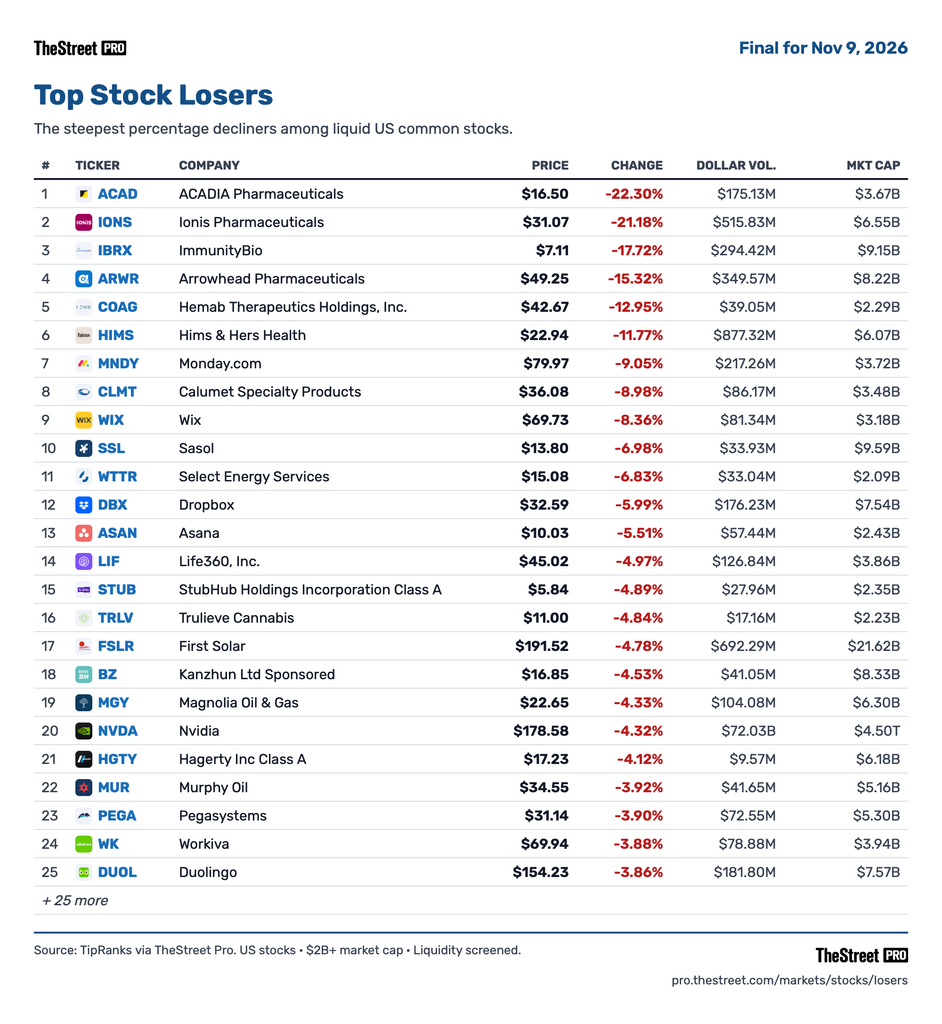
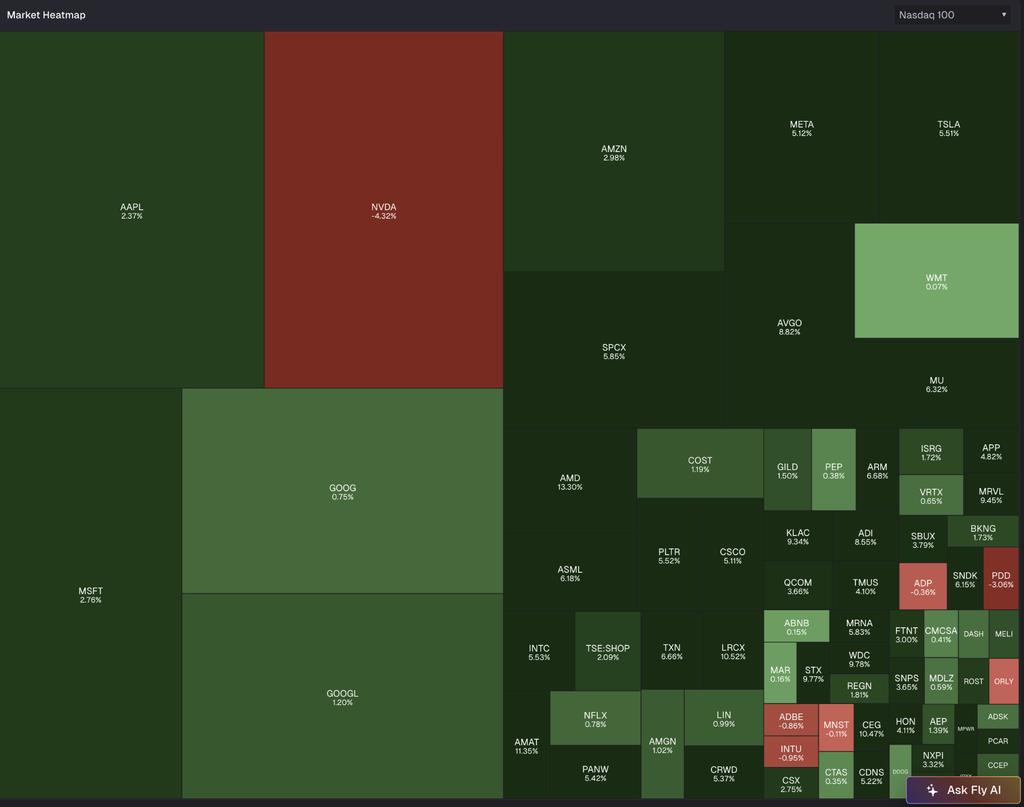
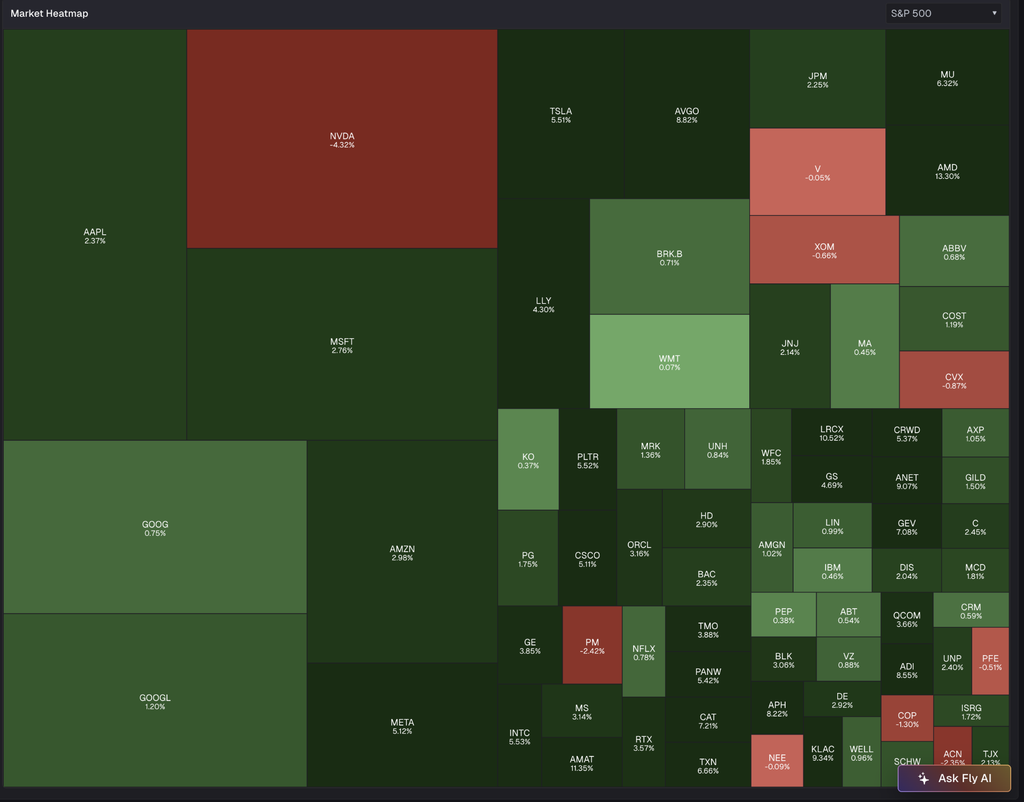
– NVDA -5.5% (board investigation involving CEO Jensen Huang raises leadership and governance uncertainty)
– IREN -4.1% (JPMorgan cuts its target on lower capex and project delays as Bitcoin weakness adds pressure)
– CRCL -3.2%, MARA -1.8%, MSTR -3.2% (crypto-linked stocks fall as Bitcoin trades near a two-month low)
– DKNG -2.9% (JPMorgan downgrades to Neutral, removes the stock from its Focus List and cuts its target to $21)
– PDD -1.8% (Morgan Stanley downgrades to Equal-Weight and cuts its target to $90 from $129)
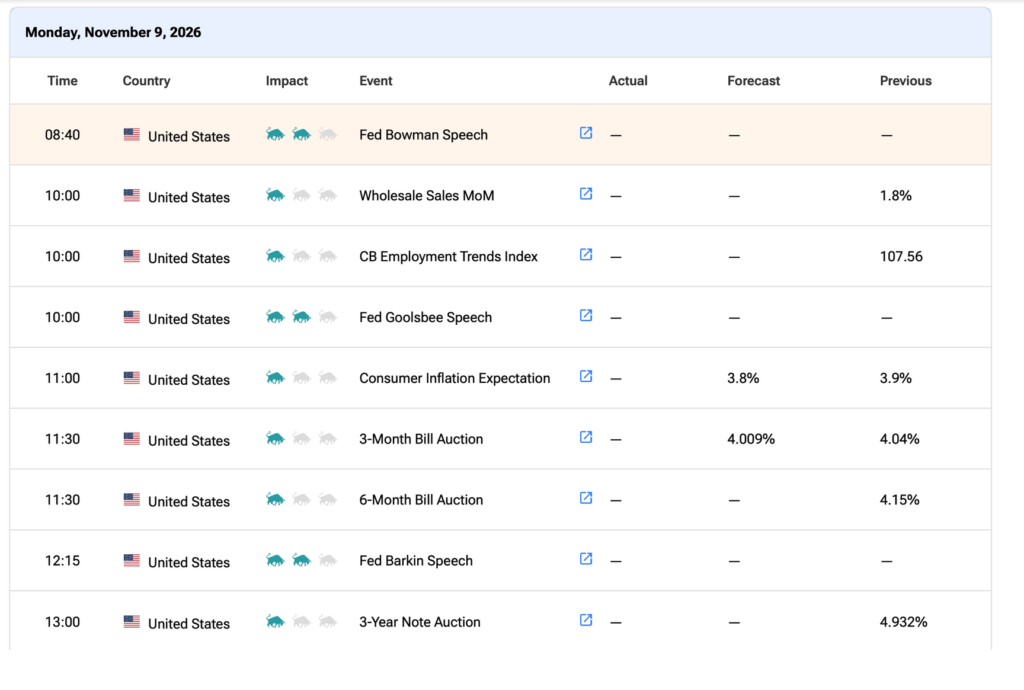
8:40 a.m.: Fed Vice Chair for Supervision Bowman (Voter) participates in “Community Banking” discussion before the Mutual Board Summit Conference, Boston, MA No text. Q&A from moderator. No webcast;
This is my 272nd “More Tales From Nvidia” over the last two years.
Contrary to my repeated concerns and specifically stated headwinds, there has been near-universal optimism on the prospects for Nvidia’s (NVDA) share price from the sell side:
Now, the Chairman of the Central Bank of Nvidia (Jensen Huang) who is in the middle of the whole thing has been caught consorting with Alice Huang at the exact same time as those who seemingly were protecting him were put out of the protection business.
The story keeps getting crazier. To recap everything that has been reported so far:
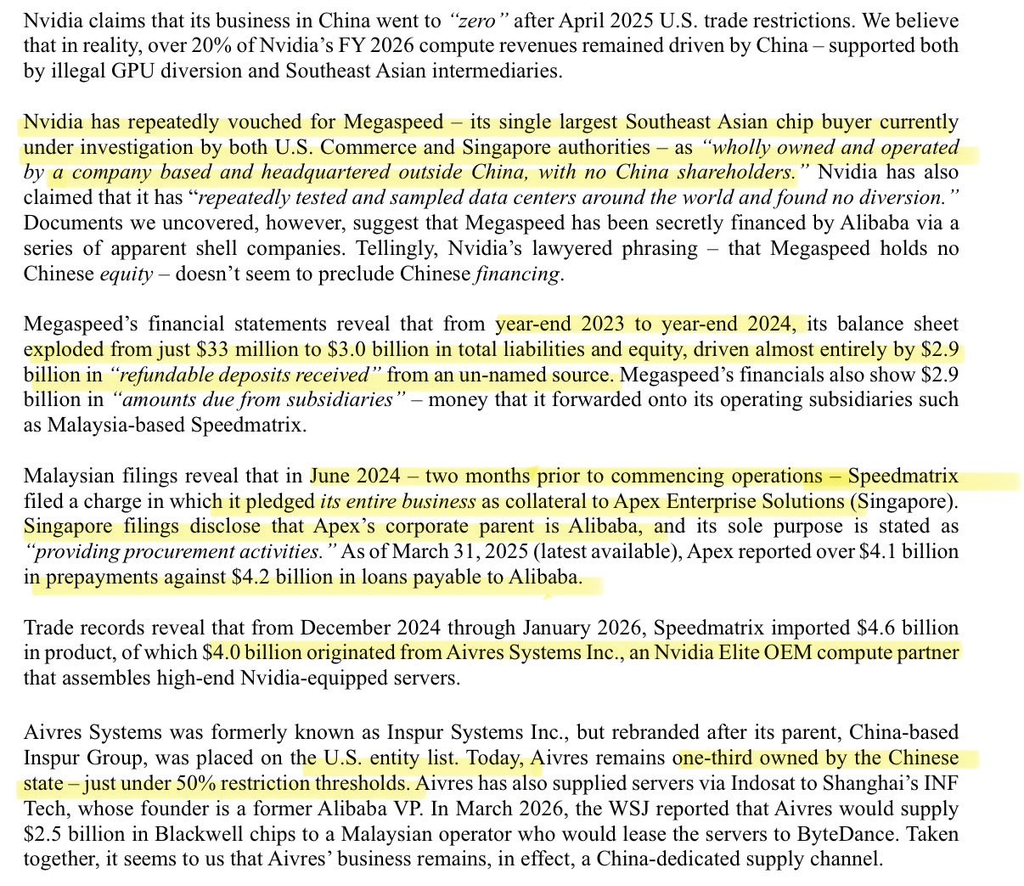
– The US intelligence community discovered that Jensen Huang, the CEO of the largest company in the world, was sleeping with Alice Huang, a Chinese spy and an executive at Megaspeed. (FT) -… https://t.co/Ws5cI7aBwc
— Chris McGuire (@ChrisRMcGuire)
To make matters worse, it sounds like Secretary of State Marco Rubio knew about the Nvidia spy for a while and drafted a memo about it to warn the entirety of the administration. But the administration still decided to look the other way while Jensen Huang was allowed to continue to lobby and influence the White House and national policy, probably in part because he was telling them that Nvidia and AI were important for the equity market:
Now under clear pressure, the Nvidia board decides to investigate.
This is called being a little late to the party.
I have a hard time believing they too didn’t know what was going on, and decided to look the other way. Further, I find it even harder to believe that they didn’t know Nvidia parts were likely making their way to China in various ways indirectly or via third party-hosted access, for a long time and in significant volume, in ways they weren’t supposed to. But I guess they had plausible deniability. They no longer do.
They are doing this to protect themselves, as much as anything else, in my view. If they were serious Jensen Huang would be asked to take a vacation while this investigation is occurring given the gravity of the situation as well as all the other extra-curriculars including the circular financing which puts the company at risk, the boob signings, him running around like a PT Barnum stock promoter all the time, and of course where chips seemingly have been going as well.
In my view, you cannot allow him to continue to run the company with this issue unresolved, but with enough to go on to know this was no bueno, on top of all the other stuff. If a junior employee was found doing this stuff, would they be allowed to keep their job while the investigation was going on, or would they be told to stay home? Shouldn’t the CEO, with access to the most information and with the most power be held to the highest standard of anyone? Heck even the NFL makes players sit out while they are doing investigations under their personal conduct policy and puts players on the commissioner’s exempt list. Football is a lot less important than this issue. When a parent is being investigated for child-related harms, the child can be taken away from the parent in order to protect the child until you know in fact it is safe, if it is safe at all:
As far as Jensen’s statement, I find his reaction to be quite pathetic. He is seemingly trying to position this as an extramarital affair, and leads with all of the stuff about his wife and children, to try and garner sympathy and deflect from the real issue. I find it not only to be pathetic, but also misleading. He is not being investigated for an extramarital affair. He should handle his personal apologies and life privately, and stop using his wife and children as a tool to deflect from what he did. If I were his wife (and kids), I would be more pissed that I am now being used as a diversionary shield and publicly embarrassed at the same time.
Frankly, the public does not give a crap about this part of the issue nor is it our business. My guess is this may not be the first time for the boob signer either, that boob signing told you something in my view:
Nvidia CEO Jensen Huang's email to Nvidia employees:
To my colleagues at NVIDIA,
I owe my family and all of you an apology.
I was unfaithful to my wife. My actions hurt her and our children. There is no excuse for what I did. I am deeply sorry.
Throughout my life, my family…
— tae kim (@firstadopter)
Back to the Deteriorating Fundamentals
Big picture it is important not to forget the whole AI trade and underlying fundamentals were badly coming undone prior to the election, even with the full policy support of the U.S. government intact. Token prices were cratering, open source was gaining share, the SOX had rolled over, the financing markets were blowing up badly, public companies were showing deceleration and missing numbers, OpenAI was struggling to raise money, Anthropic’s biz had already slowed and their S-1 and IPO process were off to a terrible start, the balance sheets and cash flow statements of the big public companies were coming completely undone (GOOGL, META and AMZN all cash flow negative), and the underlying technology was showing all of its holes, including its inability to scale and the fact that it was a terribly dis-economic money loser and not doing what it was supposed to do.
Policy support was really what drove the big second leg of this trade. The AI story was already starting to decelerate and roll over in early 2024 due to the fact that the technology was showing its warts. It was not scaling, and it was not doing what it was supposed to do, and it was clearly dis-economic. But then the U.S. government came in and threw all their might behind this whole thing, which resulted in the post-Liberation Day reflexive investment boom inclusive of all the circular financing and stock price moves, that fed on each other (while insiders sold hand over fist the whole time).
People think about bubbles in different ways. There are P/E and sales multiples, there are earnings bubbles, but there are also market cap and cumulative invested capital bubbles, which is what I think is the most important metric in the case of AI. If you look at the invested capital and the market cap ascribed to this space, it dwarfs dot-com. Importantly, at least in the case of dot-com, the underlying technology was solid, and had lasting value. Even the fiber laid back then is in place and in production now.
The chips and compute put in place for Gen AI and LLMs, forget it. As I said in my last “More Tales,” Gen AI and its underlying compute are the equivalent of Unix, Sparc, and Mainframes or Vax. At any rate, the public market cap and capital invested plus the private capital invested into and the paper valuations of the junk venture startups in this space make dot-com look like nothing.
In summary, even prior to the election this whole thing, which is a bubble that dwarfs dot-com, was imploding of its own weight, even with the full policy support of the U.S. government. That policy support is what kicked off the bulk of the reflexive investment boom which started in 2024 that really blew up the bubble. Now the trade that was already coming undone due to its own weight will lose its policy support, and on top of it all the chairman of the central bank of Nvidia that was financing this whole thing was busted for canoodling with a Chinese spy. Talk about a triple whammy. This is not the second derivative going the wrong way. This is like three first derivatives going the wrong way, while you have about the biggest bubble in history.
Hollywood could not have dreamed this thing up.
As the desperation continues, here comes the “government who is going to bail out AI” comments from the stock promoters on “comedy central,” like this one, because it is a “national security issue” and China will eat everyone’s babies if we don’t do it:
And there it is.
After today’s market crash, CNBC pundits discuss how an AI government bailout will happen for national security. pic.twitter.com/pJwvnl1fuM
— Matt Stoller (@matthewstoller)
The whole notion is absurd. Even if the elections didn’t go the way they did, there was no way the government would bail out the whole thing. Now, you can absolutely forget about it.
Further, the underlying notion that AI would be bailed out by the government absorbing Anthropic and OpenAI, for example, at a $2 trillion valuation each, and rewarding all the existing equity investors, and on top of that continuing to fund the entire ecosystem apace — is also absurd. This is basically what is being implied by the current bailout argument, because that is the only thing that would keep the stocks going.
Things are only bailed out, AFTER they are wiped out. Like in 2008, bailouts happen after the carnage, not before it. The bailout is the business whose equity was wiped out is absorbed by a larger surviving entity, whose price was also severely damaged along the way, even though they survived.
Anyone wishing for a bailout is wishing to be wiped out first. It makes no sense.
Then Gen AI and the national security and China issue are not what they are meant to be.
How is Meta (META) spending $500 billion or whatever it was to build Muse a national security issue? Personal shopping agents are really life or death for us? How are all these garbage VC startups that apparently consume about 70%-80% of the tokens from Anthropic and OpenAI a national security issue?
How is it a national security issue for Meta to get this absurd AI tax credit, by claiming its data centers are for research and experimentation, especially when they are turning around and using them for a personal agent like Muse? Good luck with that one holding up, especially now. My guess, they are going to owe the money back, which is in the billions, and their EPS will take a hit too going forward when the tax rate moves back up. Good thing they sold all that equity!
How is it a national security issue to throw trillions of dollars at a dis-economic and broken technology? Gen AI software is UNIX, the chips it runs on are SPARC, and the compute infrastructure is the equivalent of a giant mainframe or VAX. Things change over time. Throwing trillions of dollars at a first-generation technology is never a good idea. Way too much, way too soon.
It is NOT in our national security interest to keep throwing this amount of dollars at a broken technology that does not scale.
Sure, we should have some of it, but we did not need this much, in all the places it is, in all of its various forms. The wagon was hitched to the wrong thing by the U.S. government, as usual, and done to too much of a degree, as usual. Just like with Green Energy, and mRNA and all the hype around those stocks too. In both cases, the equity investors also largely wiped out. The U.S. government continues its perfect track record of being the world’s worst allocator of capital.
It would have been in our national security interest to do this more slowly, not start the rat race with China who also took the cheese, and instead throw more of the dollars behind alternative approaches (Neurosymbolic AI, World Models, etc) that might be more effective, more economic, less resource consumptive, and deliver more value and ROI and actually do the things we were told Gen AI was supposed to be able to do.
It is in our national security interest to have a strong economy. Lighting capital on fire is never good for the economy or national security.
Then, if we are really concerned about national security and China as a threat, why do we continue to let any Nvidia chips go to China, both directly, and indirectly? This includes the chips that are not supposed to go there, but something tells me continue to be accessed via various means. The Jensen Chinese spy story is one more interesting wrinkle in this regard.
Something tells me, Jensen Huang, who had access to the White House, was telling them that they better keep letting him do it, because he alone is 8% of the S&P, and AI-linked stonks might be 40%-50% of the S&P. So the White House kept allowing him to do some stuff and sell second gen chips into China, while probably looking the other way on the various ways China could skirt the export controls on the first gen chips, and looked the other way on some other things as well. No way Jensen can continue to be a White House advisor, in my view. He is clearly very self-interested, at a minimum. If he was so smart, he would have learned from Eric Swalwell.
If we are so concerned about national security, all of this should be cut off, including all the indirect means China has of getting their hands on this stuff. My guess, the going is going to get tougher in this regard.
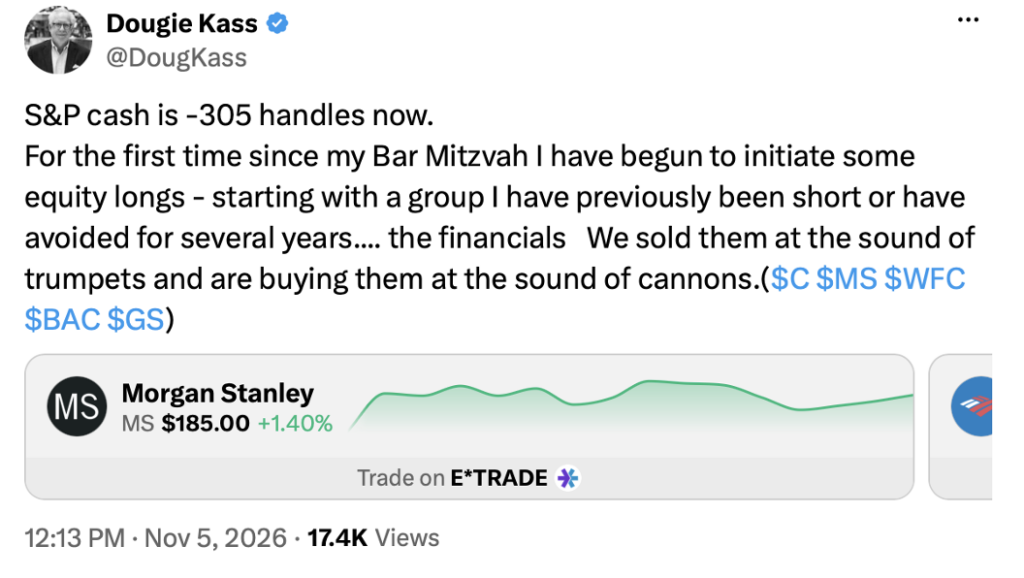
If the technology sector continues to suffer, I would expect a rotation back into the financials (banks and brokers), a sector that has suffered mightily.
Late last week I initiated long positions in C, BAC, WFC, GS and MS.
I plan to add more on any weakness.
Position: Long C (M), BAC (M), WFC (M), GS (M), MS (M)
Nvidia CEO Jensen Huang's email to Nvidia employees:
To my colleagues at NVIDIA,
I owe my family and all of you an apology.
I was unfaithful to my wife. My actions hurt her and our children. There is no excuse for what I did. I am deeply sorry.
Throughout my life, my familyShow more
MORGAN STANLEY SEES S&P 500 CORRECTION NEARING ITS END
Morgan Stanley's chief US equity strategist Mike Wilson believes the market correction is entering its final phase, potentially setting up a year-end rally.
Wilson expects the S&P 500 to approach his 7,100–7,300 downsideShow more
Berkshire Hathaway investment manager Ted Weschler:
"I typically don't meet management and I don't talk to management. Generally, if you become a CEO of a company, you're a really good salesman — one way or the other — and you're going to probably spin people.Show more
Anthropic is gaining exponentially less capability per billion dollars spent over time. It's now 8x as expensive to boost AI capabilities as it was 2 years ago, getting worse on a log scale. This includes METR report & internal models.
Credit to @alexolegimas, @sebkrier, andShow more
Ramez Naam
@ramez
AI progress per dollar of investment shows diminishing returns (as we've all known, right?) This is using METR's estimate of acceleration at Anthropic. That acceleration isn't enough to overcome the diminishing returns. by
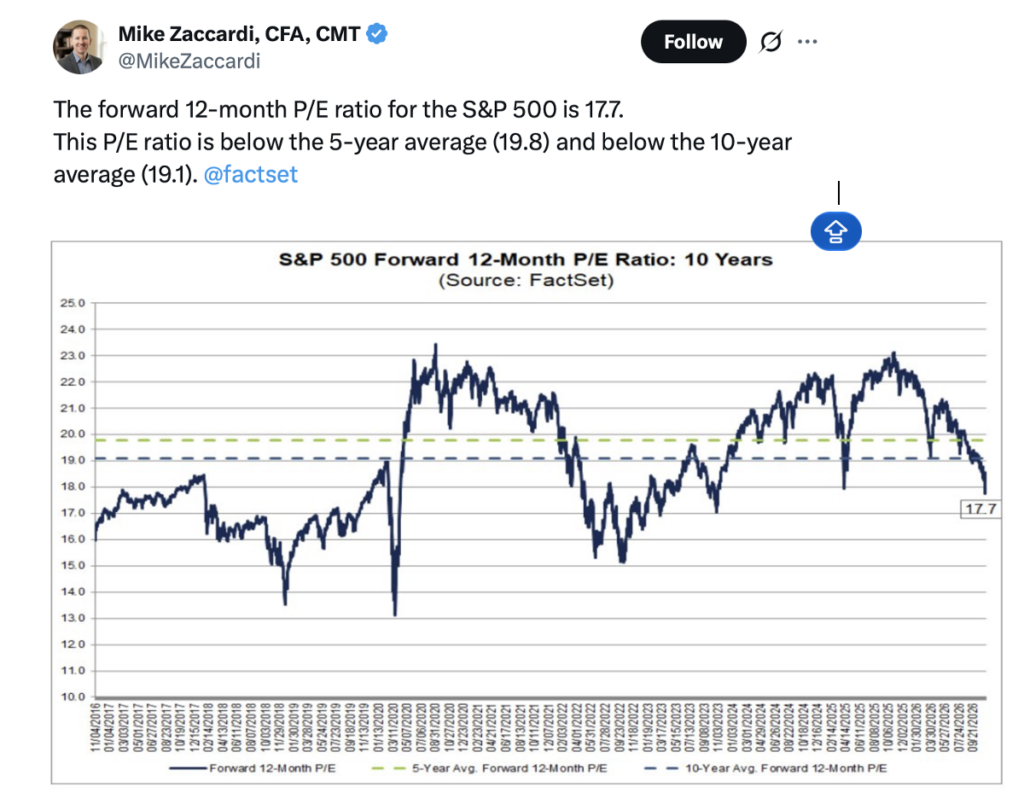
Would you rather buy a high forward P/E when a stock has had a substantial decline and is looking forward to renewed growth or would you prefer to buy a declining P/E because questions have been raised about future growth? Scarlett prefers the former.
@sebkrier
ISABELNET
@ISABELNET_SA
🇺🇸 Valuations
The Nasdaq 100 now trades at 20 times forward earnings, right around its 20-year median. The S&P 500 trades at 18 times and the Russell 2000 at 21
👉 isabelnet.com/?s=valuation@GoldmanSachs$rut$qqq$spx#spx#stocks#equity
This is why IMHO @JensenHuang resigns. This will be a closed-door hearings; watch when the Dems take charge. The scrutiny will be unrelenting because of his ties to Trump. True, the @nvidia board is weak by corporate governance standards but it will have no choice but to actShow more
The story keeps getting crazier. To recap everything that has been reported so far:
- The US intelligence community discovered that Jensen Huang, the CEO of the largest company in the world, was sleeping with Alice Huang, a Chinese spy and an executive at Megaspeed. (FT)
-Show more
@ChinaSelect
ICYMI: Chairman @RepMoolenaar, Chairman @RepBrianMast, and Chairman @RepRickCrawford have sent a letter to NVIDIA CEO @JensenHuang asking him to appear before their three committees this month. The letter expresses concerns over NVIDIA’s security protocols against foreign
Demetri
@AsiaLens
US intelligence agencies believe @Nvidia CEO Jensen Huang had romantic relationship with alleged Chinese spy
as.ft.com/r/97c2f9f7-ad2…
1 of 2) What is seasonality? It is an examination of historical price trends over specific periods of time 'assuming' ALL ELSE BEING EQUAL. It is unstated in every post you see based on seasonality. In mkts, the "things' are current macro issues/influences.