Elon Musk Just Predicted a Neocloud Bloodbath. CoreWeave Investors Should Listen.
AI demand may be booming, but SpaceX’s ability to shift GPU capacity gives it a flexibility most neocloud operators lack.
You've reached your free article limit
You've read 0 of 1 free Pro articles.
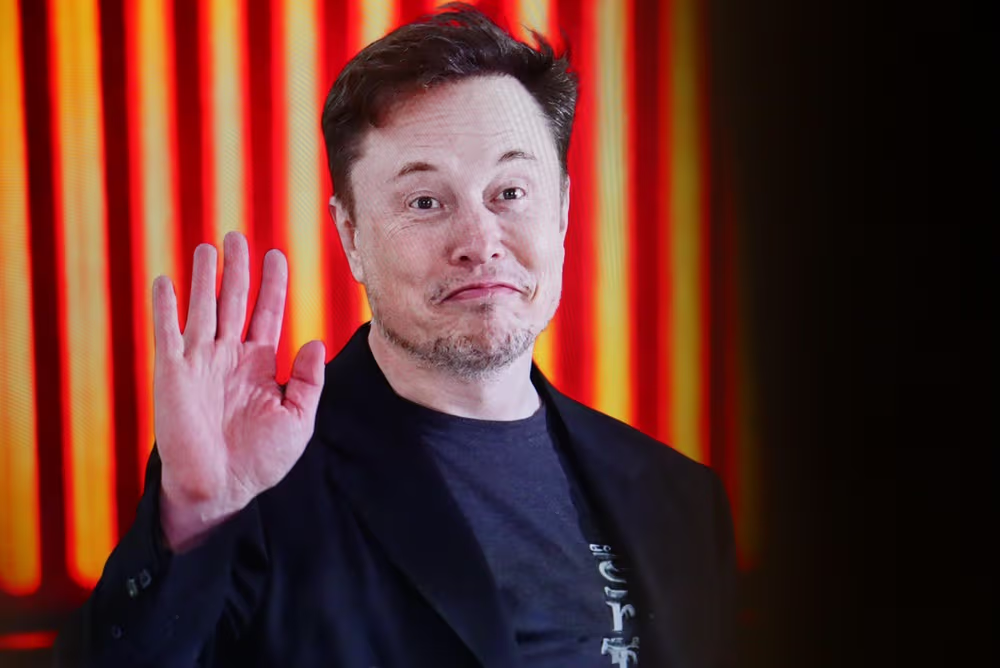
Elon Musk spent part of his Sunday handing out odds on the neocloud business, and they weren’t good.
Replying to Chamath Palihapitiya on X, Musk said debt markets have “almost entirely shut off” money for any company without substantial revenue outside of AI data centers. Then he
He added that SpaceX (SPCX) had just closed $40 billion in GPU debt, crediting its investment-grade rating and Starlink and launch revenue.
Musk never named CoreWeave (CRWV). But earlier this month, he reposted a chart of CoreWeave’s rising bond yields with a one-word comment, “Yikes.” The stock closed Friday at $54.24, down about a third from $80.26 on October 12.
To be clear, It’s way too soon to write CoreWeave’s obituary.
Nvidia’s (NVDA) Jensen Huang said Thursday that demand for companies like CoreWeave is “off the charts,” and I believe him. But SpaceX’s October 20 earnings call got me thinking. SpaceX has an advantage in renting out compute that CoreWeave can’t easily match, and it’s not about the chips.
The Sofa King Who Cut Out the Middleman
One of my best friends from high school comes from a family that still runs a very successful furniture chain outside the U.S. Decades ago, developers would build a shopping center, then come knocking and ask his dad to anchor it with one of his stores.
So he cut out the middleman and started developing the centers himself. His stores were about the size of a Target (TGT), Walmart (WMT), or T.J. Maxx (TJX), so he could anchor a center with one of his own. If another big-box retailer came along with a better offer, he could lease them the space instead. He never had to take a lousy deal just to fill the building.
SpaceX is sitting in my buddy’s dad’s chair.
On the earnings call, Musk said the rough goal is for “half of the compute” to be used internally and the other half “rented to others.” The internal half runs Grok and SpaceX’s other AI products. Musk wants to rent the rest “at effectively the spot-market rate, as opposed to signing these long-term deals.”
CFO Bret Johnsen laid out the furniture-store math himself. SpaceX will “continuously evaluate the highest-margin usage for our compute assets,” he said, and its current contracts let it “flexibly manage our capacity for our own model-training purposes.”
The Price of Staying Flexible
That flexibility pays because customers who lock in for years get a discount, while those who need GPUs right now pay more. Nebius (NBIS) said in August that three-to-six-month contracts fetch $40 million to $50 million per megawatt a year, more than double its one-to-three-year deals, according to The Information, a tech business site. CoreWeave said in September it’s signing three-to-six-month contracts at about $40 million per megawatt.
CoreWeave knows the short game pays, but financing it is another story. It buys its chips with money borrowed against customer contracts, which made up 98% of its revenue last quarter. Lenders love long contracts, and two loans from this year show how much less they like short ones.
In March, CoreWeave borrowed $8.5 billion against a contract with one unnamed “leading AI enterprise.” It earned an investment-grade rating, and the floating-rate piece costs 2.25 percentage points over SOFR, the Secured Overnight Financing Rate, basically what big banks pay to borrow overnight.
In August, it borrowed $2.6 billion against a mix of AI, financial services and tech customers. Moody’s and Fitch rated it junk, and it costs 5.5 points over SOFR.
Part of that gap is the customers. Part of it is the calendar. The August loan runs about five years, but the underlying contracts average about three. For the last two years, lenders are counting on CoreWeave to re-rent the chips. CoreWeave even pitched that as a plus, since it can chase shorter, higher-margin contracts. Lenders went along but more than doubled the markup.
That’s the empty-building risk, and CoreWeave has no furniture store to move in. Its one safety net is Nvidia (NVDA), which agreed in 2025 to buy CoreWeave’s unsold capacity through April 2032 under a deal initially valued at $6.3 billion. SpaceX’s fallback is Grok, which doesn’t pay rent like Nvidia but has no cap on how many chips it can use.
Yes, Musk Borrows Against GPUs Too
Musk’s “Yikes” looks a little different once you see how SpaceX pays for its own chips. Bloomberg reported Friday that the $40 billion deal centers on a special purpose vehicle that buys Nvidia chips and keeps the debt off SpaceX’s books, helping protect its investment-grade rating. That’s not so different from the deal CoreWeave and Blackstone (BX) cooked up in 2023, when they used AI chips as collateral for a $2.3 billion loan.
Musk is running the same play, but with more muscle.
SpaceX had $89.9 billion in cash and marketable securities at the end of September, largely thanks to its $85.7 billion IPO in June. CoreWeave had $5.5 billion in cash at the end of June against about $35 billion of debt, and paid a $640 million interest bill last quarter on top of a $49 million operating loss. With Starlink, launches, and $90 billion in the bank, lenders hear the pitch very differently.
Plenty of Chips, Not Enough Buildings
On the call, Musk said SpaceX tried renting extra compute from other cloud providers and came up empty. It was like calling around for a generator the night before a hurricane. Four days later, Musk
That sounds contradictory, but both can be true. Chips are arriving faster than data centers can get power and cooling, and no one can rent a GPU in a half-finished building.
When a tech writer suggested SpaceX’s demand was good news for the neoclouds, Musk
Chamath said in
He says Musk’s edge is power.
Musk says SpaceX is casting its own turbine blades to get around a supply bottleneck — and claims that means it “can bring power online 12 to 18 months faster than anyone else.” That would be a serious advantage, but I don’t believe there’s any independent evidence that SpaceX can deliver. I’ve got a ton of faith that Musk gets this done. His calendar, not so much. Even
Ninety Days’ Notice
Every mall has an anchor who might walk, and SpaceX’s is Google (GOOGL). The contract pays $920 million a month for about 110,000 Nvidia GPUs through June 2029, but either side can end it with 90 days’ notice starting January 1.
Musk doesn’t sound worried. He said SpaceX’s short contracts are already renewing at higher prices. That 90-day clause looks to me like a call option on rising rents. If compute keeps getting pricier, SpaceX can cut Google loose and re-rent those chips at a higher rate.
If he’s wrong, Google could be gone by spring, and SpaceX learns the hard part of my buddy’s dad’s playbook. Moving your own store into an empty anchor spot only works if that store sells enough sofas to cover the rent. Musk says Grok Bot “may end up being what uses most” of SpaceX’s compute. It’d better sell a lot of sofas.
Bob Byrne’s AI Stack Series:
- Who Gets Paid When You Ask AI a Question?
- Meet the Chips Behind Every AI Answer
- Why Fast AI Chips Still Have to Wait
- AI Needs Somewhere to Plug In: 7 Stocks That Have the Power
- The AI Boom Has an Electric Bill. Here’s Who Gets Paid.
- The AI Selloff Looks Like a Bear Trap. Follow the Bottleneck Instead.
At the time of publication, Byrne was long NBIS.