The AI Boom Has an Electric Bill. Here’s Who Gets Paid.
AI needs more than Nvidia chips. Here are the companies ‘powering’ the AI buildout.
You've reached your free article limit
You've read 0 of 1 free Pro articles.
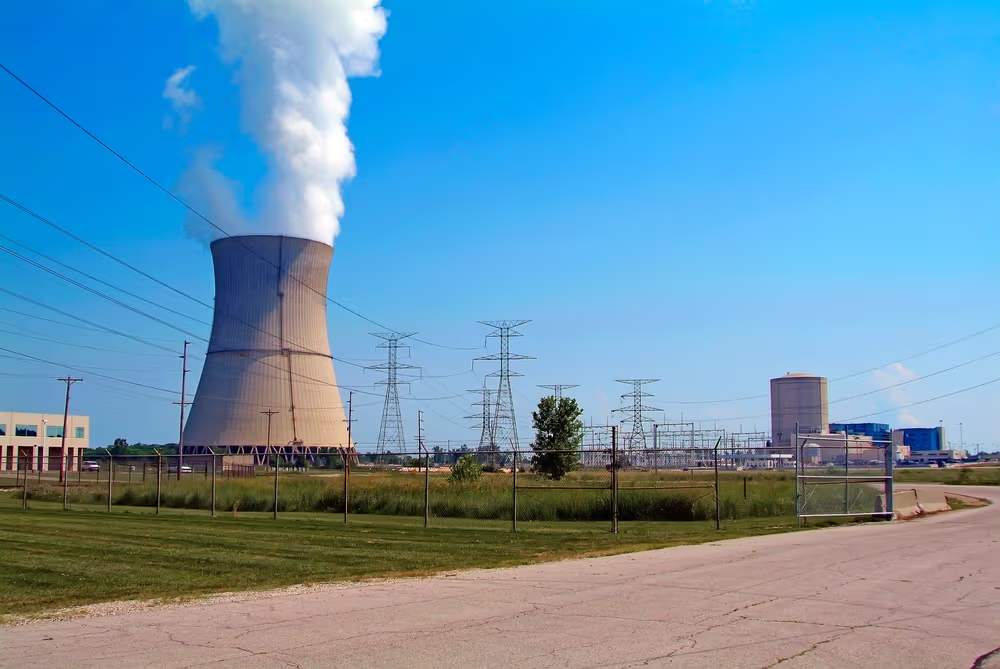
Most of us think about electricity when the bill arrives, or the lights go out. Microsoft (MSFT) has had to think a little further ahead.
In 2024, it signed a 20-year agreement to buy power from Pennsylvania’s Three Mile Island Unit 1, a retired 835-megawatt nuclear plant that Constellation Energy (CEG) plans to restart as the Crane Clean Energy Center in the second half of 2027.
Nvidia (NVDA) may be the first name we think of in the AI trade, but its customers also need somewhere to plug in all those chips. Microsoft’s deal shows how far they’ll go to secure that power.
The same need sits behind Earnings Desk, our fictional research app, which we began discussing here. Last time, we got the building ready. Now we need the power to run it.
Buying Power for the Years Ahead
Constellation and Vistra (VST) own nuclear and natural gas plants that sell electricity. For a data center operator planning years of growth, locking in a reliable supplier early makes the rest easier and, hopefully, financeable.
In January, Vistra announced 20-year agreements with Meta (META) covering more than 2,100 megawatts from its Perry and Davis-Besse nuclear plants in Ohio. Meta’s commitment also gives Vistra the confidence to fund upgrades that will bring the total to about 2,600 megawatts by 2034.
So why do tech companies keep knocking on the doors of nuclear and gas plants? Both can run around the clock, and gas plants can turn output up or down as demand shifts. Wind and solar pitch in when the weather cooperates, and batteries help after sunset. But Earnings Desk never really closes, so the computers behind it need electricity every single hour.
Of course, buying electricity and delivering it are two different jobs. Meta isn’t stringing a wire from Perry to its data centers. Vistra feeds the regional grid, Meta’s facilities draw from that shared network, and Meta pays the local utility to deliver the power on top of its contract with Vistra, which is where our next group of companies comes in.
Getting Power to the Right Place
Suppose Earnings Desk’s computing provider finds a warehouse it wants to fill with servers. The building has electricity, but the nearby lines were built for a warehouse, not thousands of power-hungry computers.
That brings in a utility like American Electric Power (AEP), which might need to add power lines or expand a substation. So, when a developer says a site has power, we still need to know how much it can actually use.
That construction gives Quanta Services (PWR) a place in the story. Its crews build and maintain power lines and substations, and the utility recovers the cost through customer bills, at a return regulators approve.
Before committing to those upgrades, the utility wants to know the customer will stick around. In Ohio, regulators approved AEP’s plan in July 2025, requiring large new data centers to pay for at least 85% of the power they reserve for up to 12 years. That keeps other customers from getting stuck with the bill.
Making Power at the Site
If a developer faces a long wait for the utility, they can also generate electricity on-site, the behind-the-meter power we touched on last time.
This is where Bloom Energy (BE) comes in. Its fuel cells turn natural gas and other fuels into steady electricity through a chemical reaction, though running them on gas still produces carbon dioxide. Speed is Bloom’s big selling point, but that doesn’t mean you can call up and order a few. It ended 2025 with about $6 billion in equipment orders waiting to be filled and is working to double its factory output to 2 gigawatts a year by the end of 2026.
Oracle (ORCL) gives you a sense of who’s already in line, since Bloom said in April that Oracle had contracted for an initial 1.2 gigawatts, with room to buy up to 2.8 gigawatts, which is more than a full year of Bloom’s expanded output. Two weeks later, Oracle said up to 2.45 gigawatts of those fuel cells would power Project Jupiter, the New Mexico campus from our last article, which is why that gas pipeline delay matters so much.
GE Vernova (GEV), which makes the gas turbines that drive generators, said in December 2025 that it had sold out its production slots through 2028, so even the machines come with a wait.
Elon Musk is working around that wait, too. SpaceX (SPCX) disclosed an April agreement to buy about $2 billion of mobile gas turbines for its data centers.
These approaches still need fuel and permits, but when they fit the site, they get computers working sooner.
Following the Money a Little Further
Say Earnings Desk becomes more popular and its computing provider needs another building full of servers. That can mean more business for a power producer, a utility, an equipment maker, and a construction company, with each getting paid for a different job.
That’s what makes this part of the AI trade worth watching. Competing apps and computer suppliers can all end up needing the same power infrastructure. We still have to look at what each company spends to deliver, what it keeps, and how much optimism is already in its stock price.
We’ve come a long way from typing a question about an earnings report. But there’s one piece of the computer we haven’t followed back to its source. Nvidia, Advanced Micro Devices (AMD), and the cloud giants design the chips, and someone else has to turn those designs into working hardware. The factories, equipment, packaging, and testing behind that job bring us to the final part of the series.
Bob Byrne’s AI Series:
- Who Gets Paid When You Ask AI a Question?
- Meet the Chips Behind Every AI Answer
- Why Fast AI Chips Still Have to Wait
- AI Needs Somewhere to Plug In: 7 Stocks That Have the Power
- AI Data Center Stocks Could Bounce Hard. Here’s What Would Make It Last.
At the time of publication, Byrne had no positions in any securities mentioned.