Charles Schwab Gets Boost From Single Stock Futures Update
Single stock futures could change the way traders view individual stocks.
You've reached your free article limit
You've read 0 of 1 free Pro articles.
In late July, the CME introduced single stock futures, or SSFs. Traders can now purchase futures contracts on individual stocks like Apple (AAPL), Nvidia (NVDA), Amazon (AMZN) and Palantir (PLTR). Over 50 stocks are currently represented, with more likely on the way.
How do these contracts work? Instead of buying 100 shares of stock, a trader can purchase a standard futures contract representing 100 shares of that stock. Micro contracts are also available, representing 10 shares of the stock.
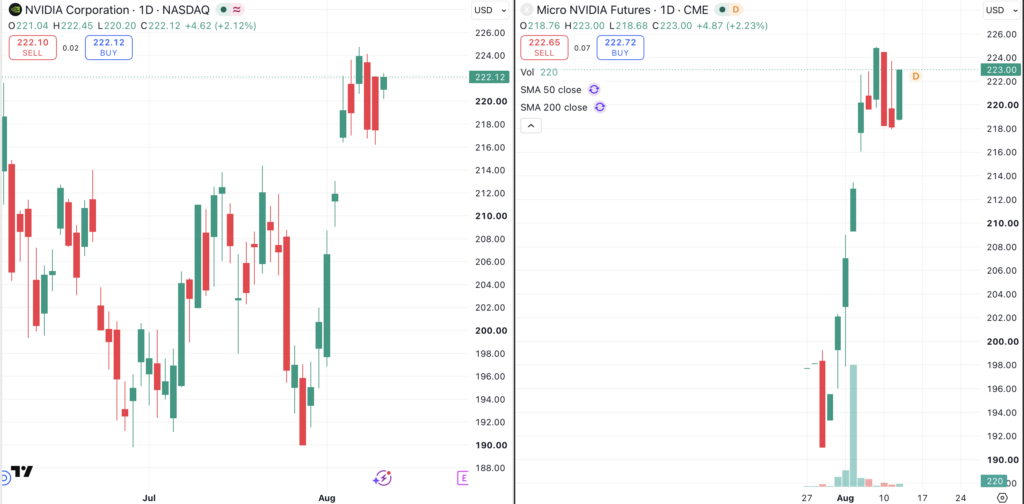
On the left, we see Nvidia common stock, and on the right, Nvidia micro futures. According to the chart, the first day of trading for Nvidia micro futures was July 27.
Leverage and Liquidity
According to the two charts above, I can purchase one share of Nvidia for about $223, or a micro contract representing 10 shares of Nvidia for approximately the same price.
This suggests leverage of about 10:1. While this is not considered excessive for a futures contract, it may require a period of adjustment for stock traders. Like a sharp blade, highly leveraged instruments can be dangerous if wielded without caution.
Since these contracts are new, liquidity could be an issue. Initially, traders may have difficulty entering and exiting positions. More buyers and sellers will likely materialize as word spreads and the contracts gain popularity.
23-Hour Trading Day
These instruments trade 23 hours per day, meaning that traders are less likely to miss a pre-market or after-hours move. This could also help minimize gaps. The contracts settle in cash, making delivery of shares a non-issue.
The only beef I have with the CME is the one hour they chose to close this 23-hour market. These futures aren’t tradable from 5 p.m. Eastern until 6 p.m. Since many earnings reports and conference calls occur at this time, this so-called maintenance window should be moved to a later hour.
Brokers Will Benefit
Any broker that carries SSFs is likely to benefit, but some will gain more than others. I think Charles Schwab (SCHW), which announced this week that it will offer the contracts, stands to gain the most.
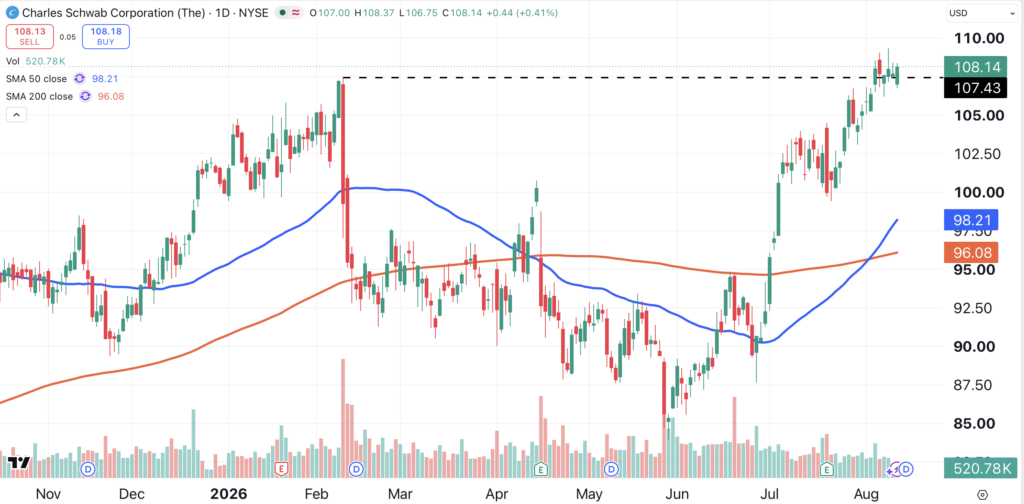
Schwab shares reached an all-time high earlier this week, breaking resistance from February (black dotted line). The stock’s rising 50-day moving average (blue) recently crossed above its rising 200-day moving average (red), a bullish signal.
Bottom Line
75% of Schwab’s futures trading volume already occurs in index futures. It wouldn’t be a huge leap for individual investors to move from e-mini S&P 500 or Nasdaq 100 futures to single stock futures, which can be traded on Schwab’s Think or Swim platform.
I see huge potential for SSFs. Investors can use them to hedge stock positions, or as a substitute for buying stock. There are also potential tax advantages to trading futures versus stocks. It’ll be interesting to see how investors and traders respond to this new type of futures contract.