Credit Card Balances Post Biggest Drop Since 2024, But Student and Auto Loans Hit Record Highs
Revolving balances (credit cards) dropped the most since November 2024 in August, while nonrevolving credit (student loan + autos) climbed to another record high.
You've reached your free article limit
You've read 0 of 1 free Pro articles.

U.S. Consumer Credit (USD) Aug: $8.28 billion (est $15.00 billion; prev $18.06 billion; prevR $17.74 billion)
Executive Summary
- Consumer credit rose $8.28 billion in August, the least since May and well short of the $15.00 billion Bloomberg consensus.
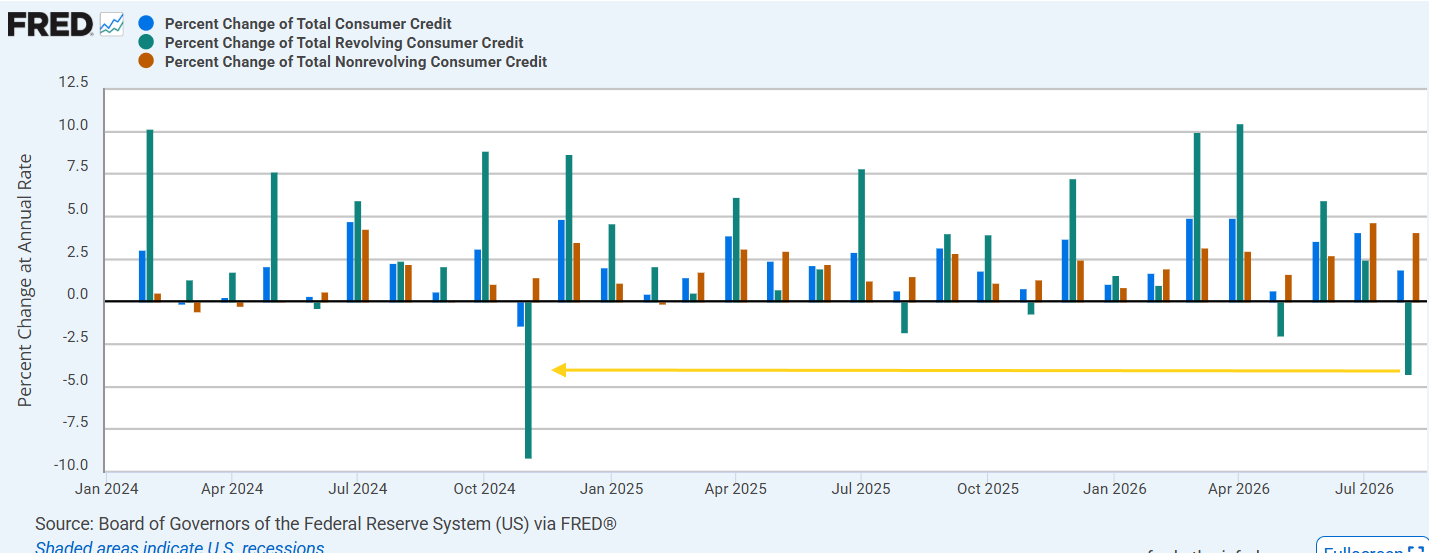
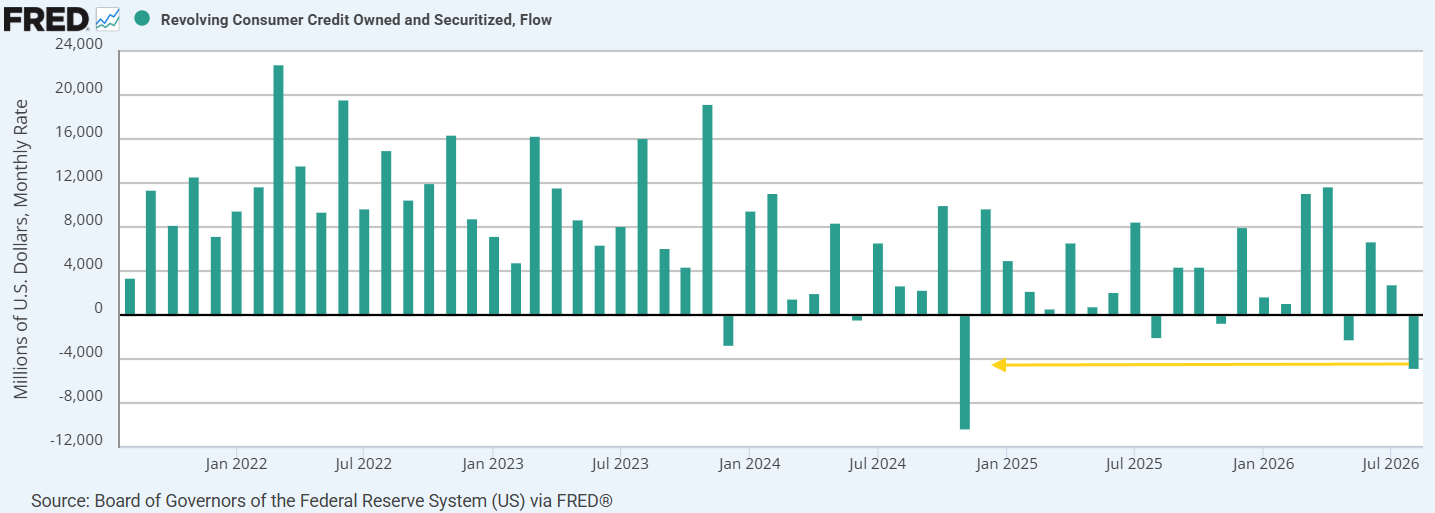
- Revolving credit (mostly credit cards) fell $4.79 billion, the largest decline since November 2024.
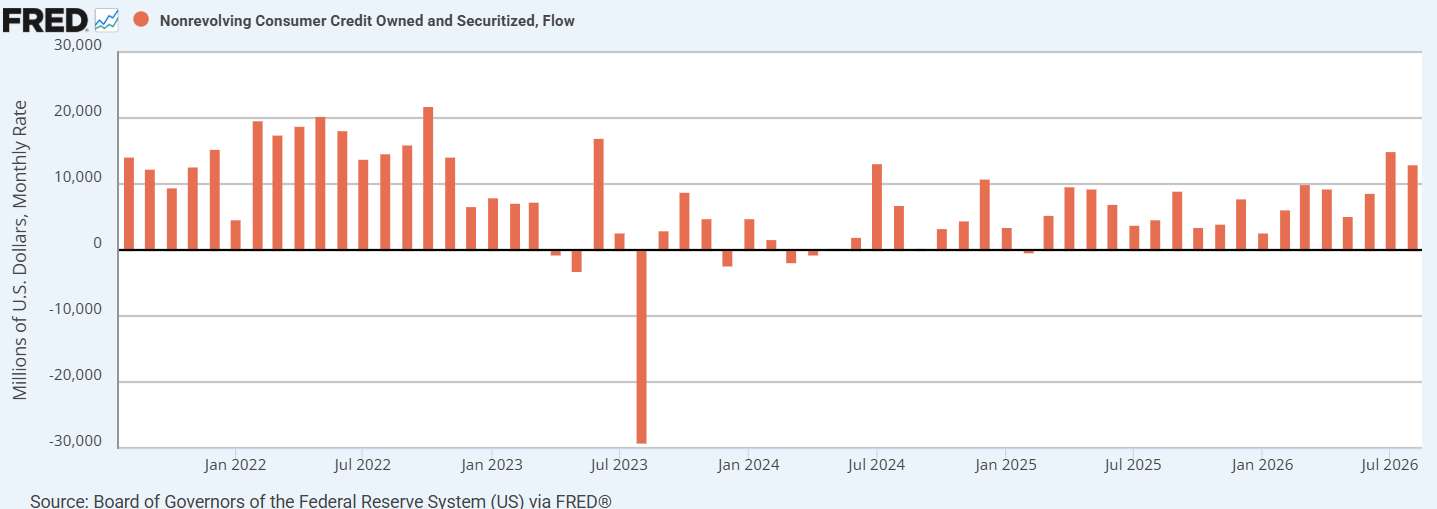
- But nonrevolving credit (mostly student & auto loans — roughly three times larger than revolving debt) rose $13.07 billion to a record high. Total consumer credit also hit an all-time high.
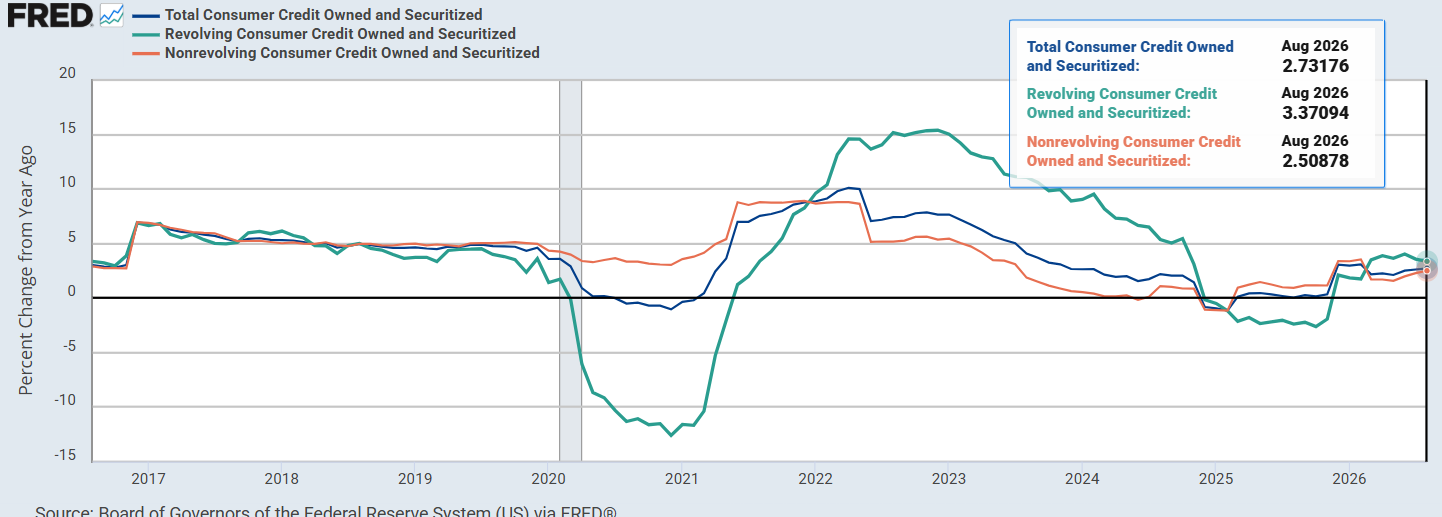
- Year-over-year, revolving still leads at +3.37%, barely positive adjusted for inflation, while total is at +2.73%.
As a reminder this report captures balances outstanding as of a point in time and is not necessarily a reflection of interest-bearing debt — a meaningful share of revolving (credit card) balances gets paid off within the grace period each cycle before any interest accrues, so the outstanding figure should be taken in that context. Also, this does not include mortgage debt.
The consumer credit report from the Federal Reserve for August saw a much smaller-than-expected $8.28 billion increase (+1.92% at a seasonally adjusted annual rate, or SAAR), the least since May, down from July’s revised $17.74 billion and well short of the $15.00 billion Bloomberg consensus.
The slowdown was driven by revolving credit (mostly credit cards), which fell $4.79 billion (-4.23% SAAR), the largest decline since November 2024, after a $2.78 billion gain in July.
Nonrevolving credit (mostly student and auto loans, roughly three times larger than revolving debt) rose another $13.07 billion (+4.09% SAAR), the second-largest gain since July 2024, behind only July’s revised $14.96 billion, taking that to an all-time high. Total consumer credit also hit an all-time high.
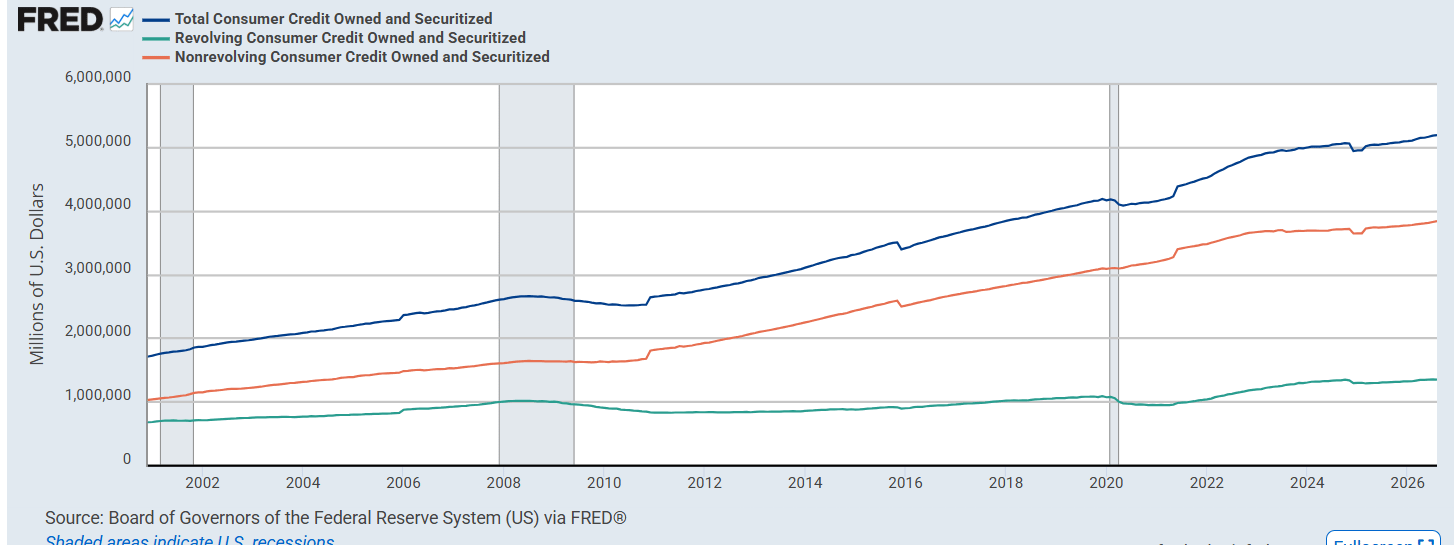
On a year-over-year basis, revolving credit remained the leader at +3.37% (from +3.58% in July), nonrevolving +2.51% (from +2.29%), and total +2.73% (from +2.62%), all relatively modest, especially when adjusted for inflation.