Rising Rates, Record Diesel Prices Make a Toxic Brew
There are two major risks that investors seem more than happy to underweigh.
You've reached your free article limit
You've read 0 of 1 free Pro articles.

The major market indexes continue to remain impervious to a litany of economic and geopolitical challenges. The NASDAQ hit a new all-time high on Monday and followed up with another gain on Tuesday. The S&P 500 closed over 7,800 for the first time on Tuesday as well.
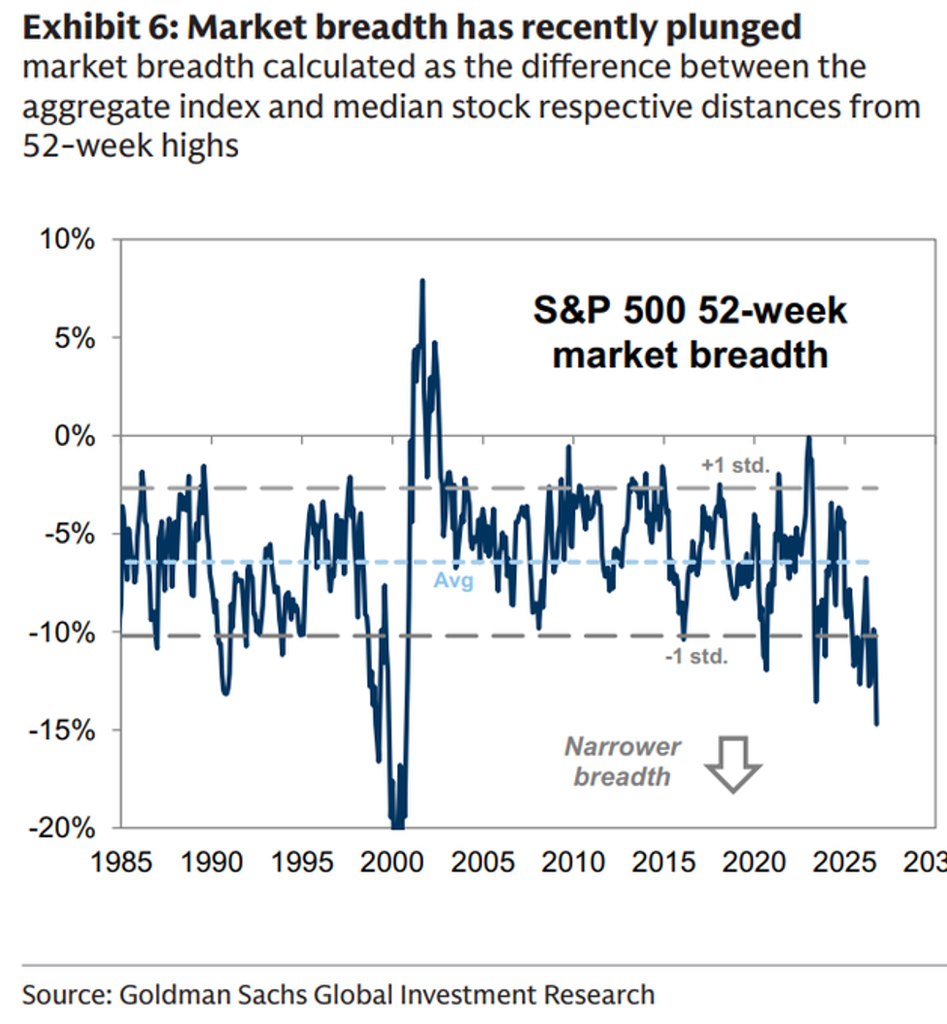
That said, market breadth is as abysmal as it has been since late in the dotcom bubble. The two major risks investors seem more than happy to underweigh for the moment are the rise in interest rates and record diesel prices. The yields on the 10-year and 30-year treasuries are at their highest thresholds since 2002. This makes the burgeoning federal debt load much more costly to service. At this rate, debt servicing costs might be the largest item in the federal budget in the just-started fiscal 2027 year.
30-year mortgage rates are heading to the 7.5% level, effectively freezing what already has been a moribund housing market for four years now. The commercial mortgage-backed securities (CMBS) delinquency rate hit 12.2% against office properties in September, according to Trepp. That is 1.5% above the peak of the Great Financial Crisis.
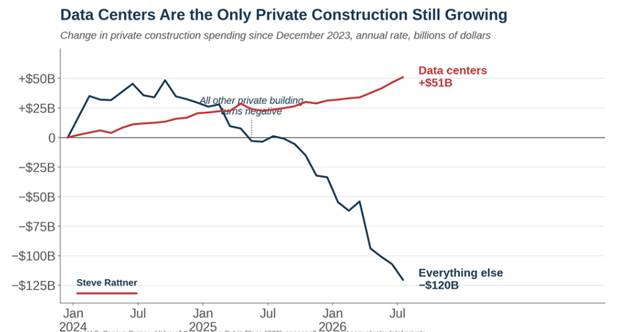
The CMBS delinquency rate against multi-family moved above 8% last month as well. These two categories account for roughly 70% of $5 trillion of CRE debt outstanding. And, as Wolf Street noted this week, the “extend and pretend” era by CRE lenders appears to be coming to an end. This will result in significantly higher defaults and write-offs in 2027. Thank goodness for the data center buildout. Otherwise, there would be a huge wave of unemployment in the construction industry.
And rising rates are hardly just a problem for the United States. The 30-year yield for Japanese sovereign debt just hit an all-time high — quite problematic for a country with roughly a 230% debt-to-GDP ratio. The yen carry trade has become a thing of the past. The divergence between French 10-year yields and their German counterparts have hit the highest level since the Greek debt crisis some decade and a half ago. France is struggling with high fiscal deficits, an approximate 120% GDP-to-debt ratio and is enduring a “summer of love” across most of the country. The euro is at its lowest level against the greenback since spring 2025.
Then we have the unfolding diesel crisis. A huge chunk of the pre-war oil exports from the Gulf region has been restored, albeit with a tenfold increase in transportation costs and with roughly 30% of the U.S. navy allocated to babysitting the Strait of Hormuz. Refined products are a different story, as refineries in the gulf region have been damaged and Russia has suspended diesel exports as its energy facilities have been hit by Ukrainian drones and missiles.
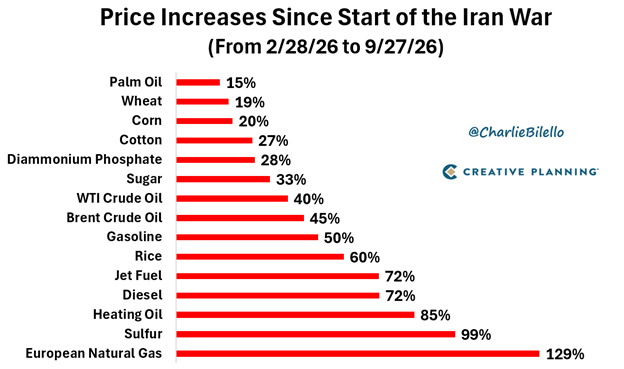
As a result, prices for jet and diesel fuel have gone through the roof. Average diesel prices have spiked to just under $6.50 a gallon in the U.S. They are over $10 a gallon equivalent throughout Europe. President Trump has cajoled Europe to release some of their diesel reserves but there is still talk about a U.S. diesel export ban in front of the upcoming midterms. That would only be a temporary panacea and would have negative longer-term impacts. It would also push diesel prices still higher in Europe and Asia.
And every good that moves to market via shipping, trucking or rail is impacted by higher diesel prices. And this will continue to be a major headwind in controlling inflation and could be a key factor behind future rate hikes by the Federal Reserve. Neither of these growing risks are priced properly into the markets. Which is why I have raised by allocation to cash and short-term treasuries this month from 25% to 30% within my portfolio to 35%. The probability of at least a correction in the market feels elevated to me.
At the time of publication, Jensen had no positions in any securities mentioned.