Consumer Inflation Expectations Jump to 3-Year High
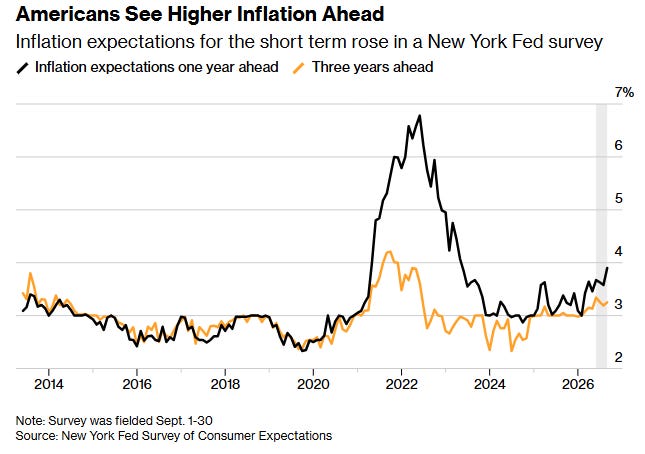
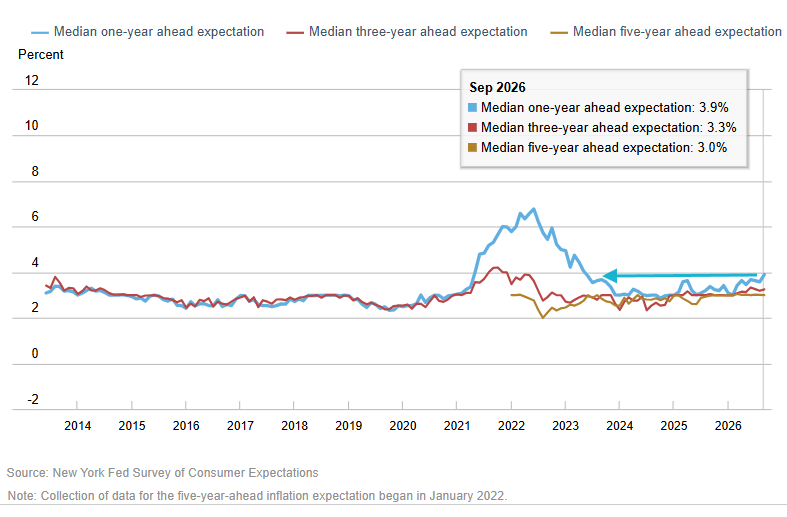
One-year inflation expectations came in at the highest since May 2023 in the NY Fed’s consumer survey.
You've reached your free article limit
You've read 0 of 1 free Pro articles.

Executive Summary
• Near-term inflation expectations jumped. Median one-year expectations rose three-tenths to 3.9%, the highest since May 2023, and three-year expectations rose a tenth to 3.3%, while five-year expectations held at 3.0%.
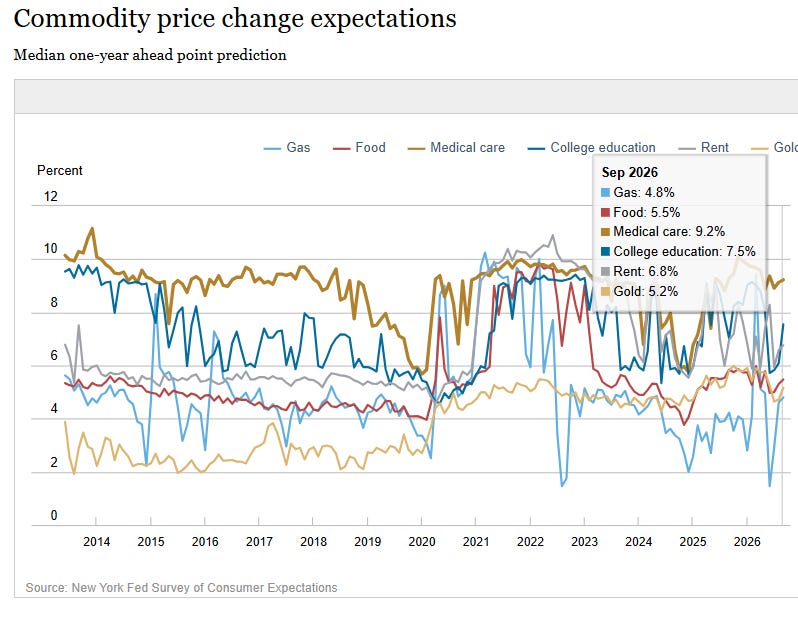
• Everyday cost expectations firmed across the board. Expected price increases for gas, food, medical care, college and rent all rose again, with gas and college up for a third straight month.
• Labor market expectations mostly improved. The perceived probability of losing one’s job fell to 13.5%, the lowest since December 2024, and unemployment and job-finding expectations improved, though expected earnings growth slipped to 2.6%.
• Income and spending expectations also climbed. Expected household income growth rose to 3.1%, the highest since February 2025, and expected spending growth to 5.5%, the highest since May 2023.
• Household finances still deteriorated. Larger shares of households reported being worse off than a year ago and expected to be worse off a year from now, and perceptions of credit access declined.
The New York Fed’s Survey of Consumer Expectations is a survey I like much better than the more widely cited University of Michigan survey because it follows the same rotating panel of roughly 1,300 household heads each month — respondents stay in for up to a year, with a similar number rotating in and out — which makes the month-to-month changes more meaningful than surveys that draw a fresh sample every wave (like UMich). It’s also about twice the size of the UMich survey (so smaller sample bias). This edition was fielded from September 1 to September 30.
Big picture, September was mixed again.
On inflation, median one-year expectations jumped three-tenths to 3.9%, the highest since May 2023, after two months at 3.6%, while the three-year measure rose a tenth to 3.3%, the joint highest (with June and July) since June 2022. Five-year expectations held at 3.0% for a 13th straight month, a joint record high for a series that began in January 2022.
Expected price increases for gas, food, medical care, college and rent all rose again, with gas and college up for a third straight month: the median one-year-ahead expected change rose 0.2 points to 4.8% for gas (up from a joint record low of 1.5% in June), 0.2 to 5.5% for food, 0.1 to 9.2% for medical care, 1.4 to 7.5% for college tuition, and 0.2 to 6.8% for rent. Gas, food and college are now at their highest since May, and medical care and rent at their highest since June. Expectations for gold prices were up 0.5 points to 5.2%.
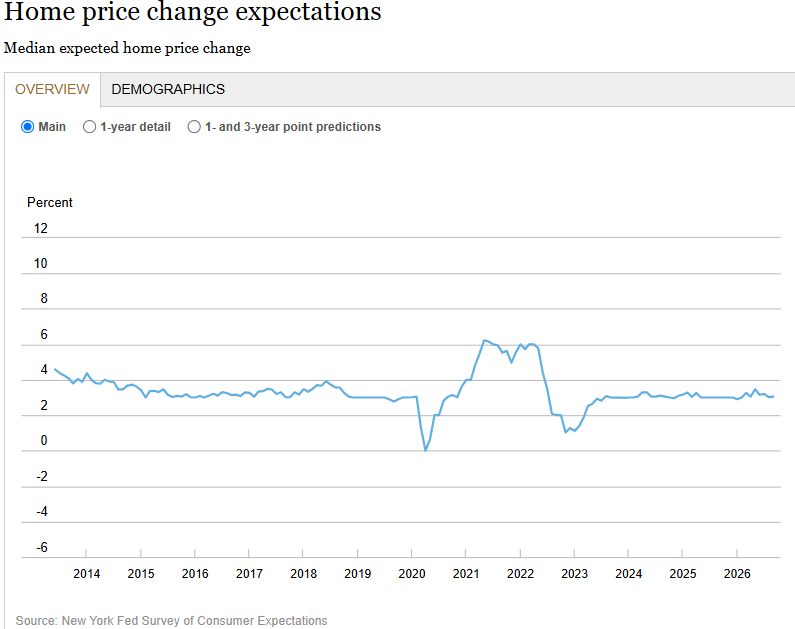
Expected home-price growth though was unchanged at 3.0%, just under its 12-month average of 3.1%. These have been little changed the past three years.
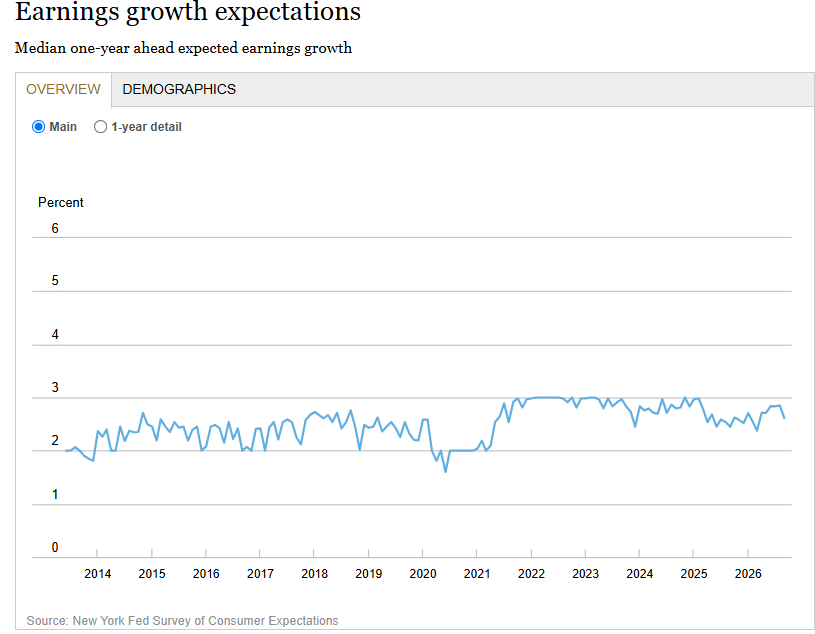
Labor market expectations “mostly improved,” per the New York Fed, though expected earnings growth fell back three-tenths to 2.6%, the lowest since March and equal to its 12-month average, from August’s 2.9%, the best since February 2025.
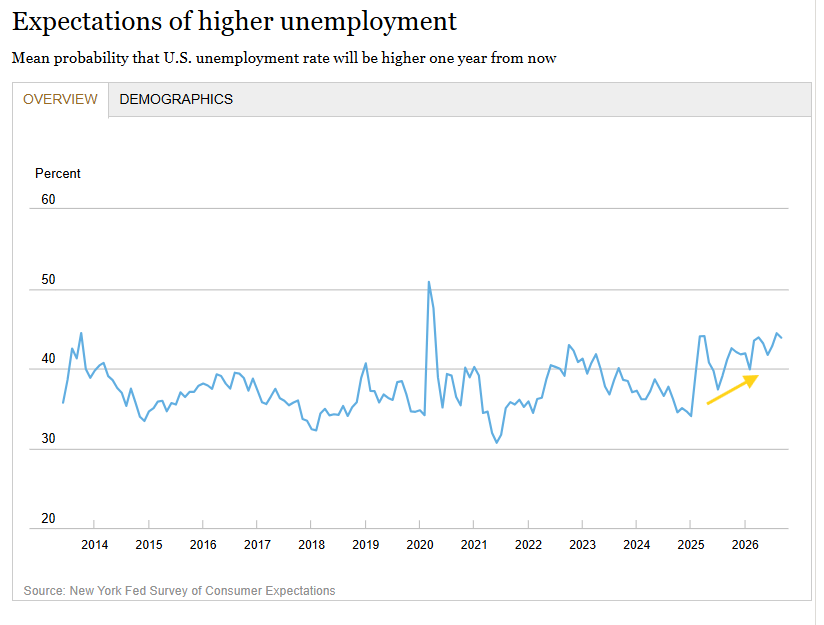
The mean probability that the unemployment rate will be higher a year from now eased half a point to 43.9%, still above its 12-month average of 42.4%, from August’s 44.4%, the highest since April 2020.
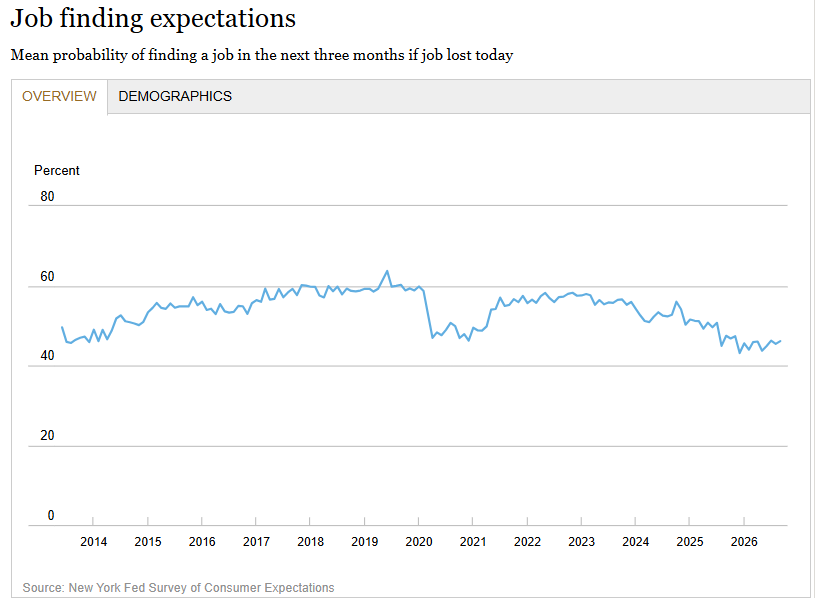
Perceptions of job-finding prospects also improved, the mean probability of finding a job if one lost their current position rising seven-tenths to 46.1%, above its 12-month average of 45.5%.
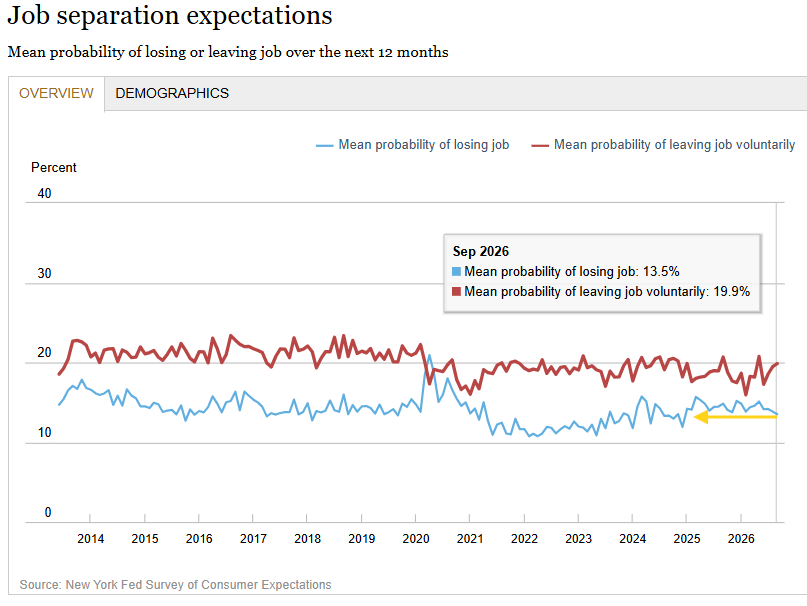
And the perceived probability of losing one’s job fell three-tenths to 13.5%, the lowest since December 2024, as the expected quit rate rose four-tenths to 19.9%, the highest since May and above its 12-month average of 18.5%. The New York Fed said the drop in job-loss expectations “was driven by those between ages 40 to 60 and those with annual household incomes over $100,000,” and the rise in quit expectations “was driven by those without a Bachelor’s degree and those above age 40.”
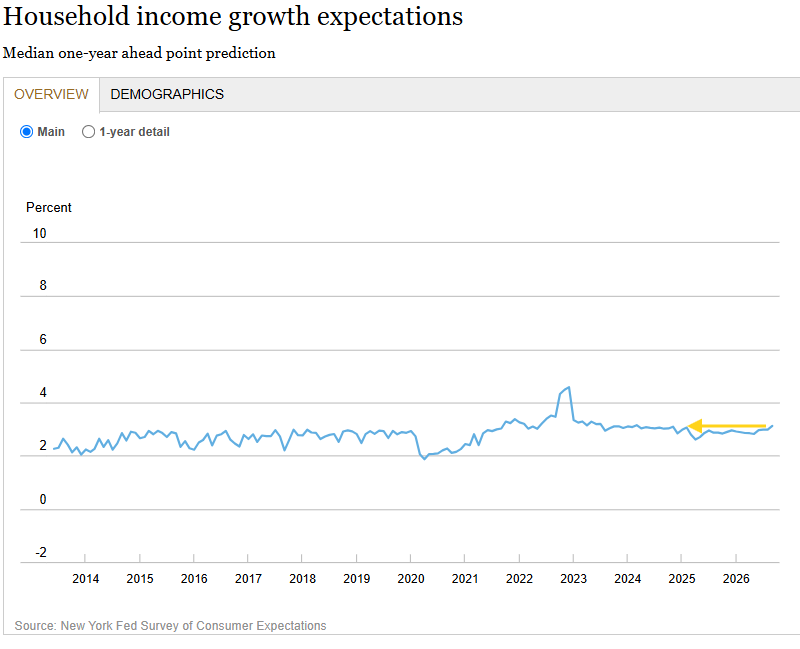
Despite the lower expected earnings growth, the survey found “income and spending growth expectations both increased.” Expected household income growth rose a tenth to 3.1%, its highest since February 2025 (and joint highest since July 2023), edging above the narrow 2.8%–3.0% band it had held since mid-2025.
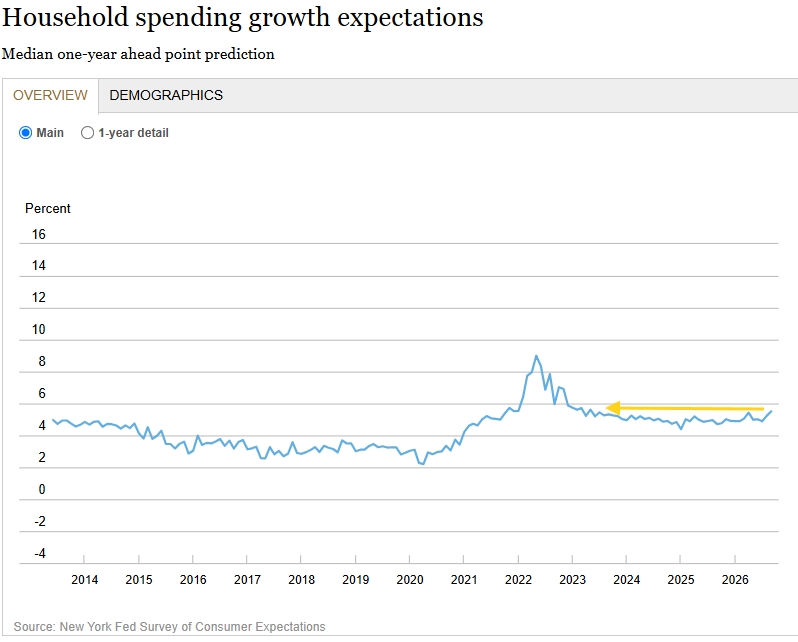
Expected spending growth rose three-tenths to 5.5%, the highest since May 2023 and above its 12-month average of 5.0%, with the increase “broad-based across age and education groups.”
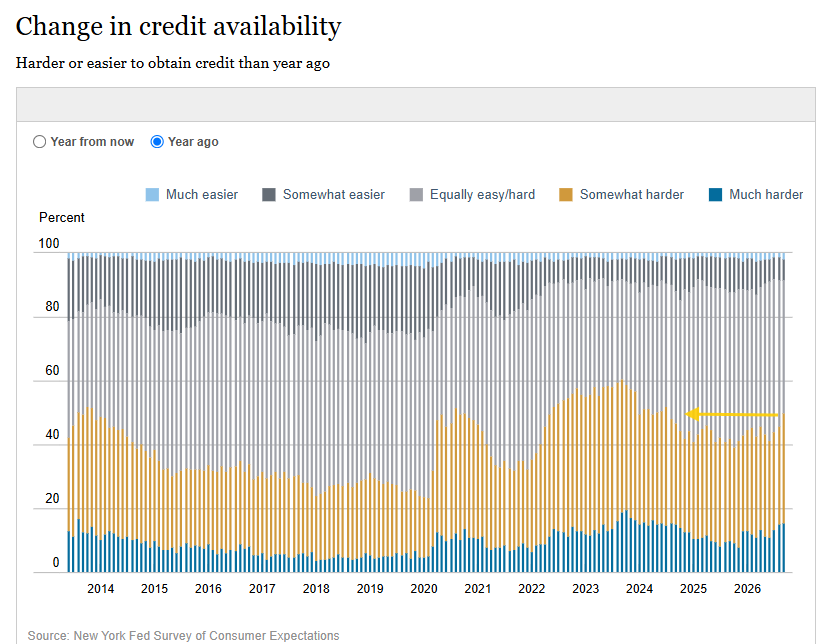
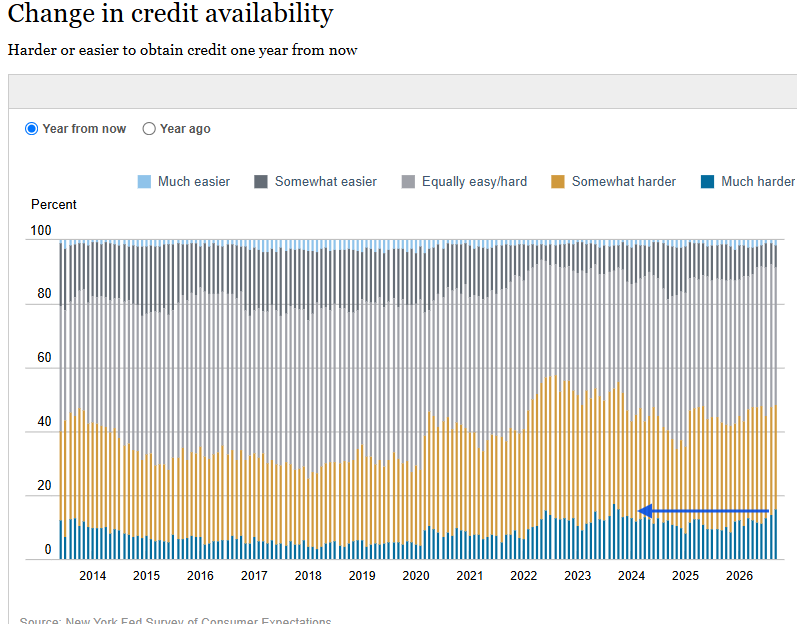
Perceptions of credit access relative to a year ago though deteriorated again, with a larger net share of households saying credit is harder to get (the share saying “somewhat harder” was 34.4%, the highest since December 2024), while expectations for future availability were “essentially unchanged” according to the report but the share saying they expected it would be “much harder” to obtain credit a year from now was 16.0%, the highest since September 2023.
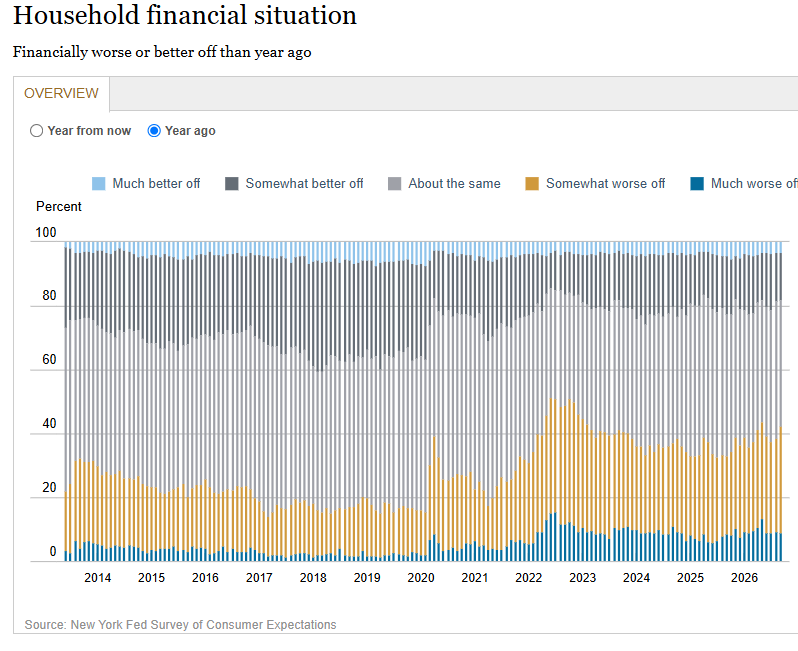
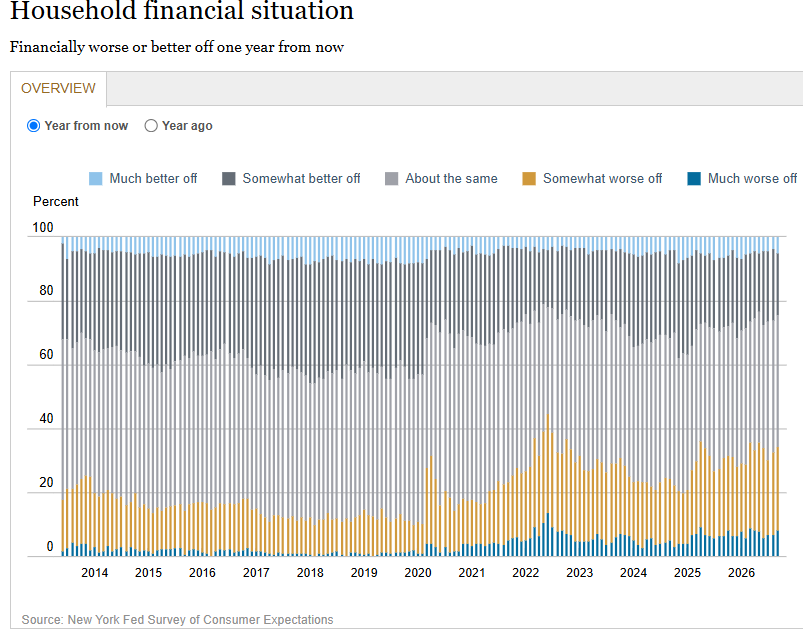
Assessments of households’ own financial situations also deteriorated on both counts for a second straight month, with larger shares reporting being worse off than a year ago and expecting to be worse off a year from now. 42% of households said they were worse off than a year ago versus 18% better off. The outlook for the coming year was less negative, with 25% expecting to be better off a year from now versus 34.5% worse off.
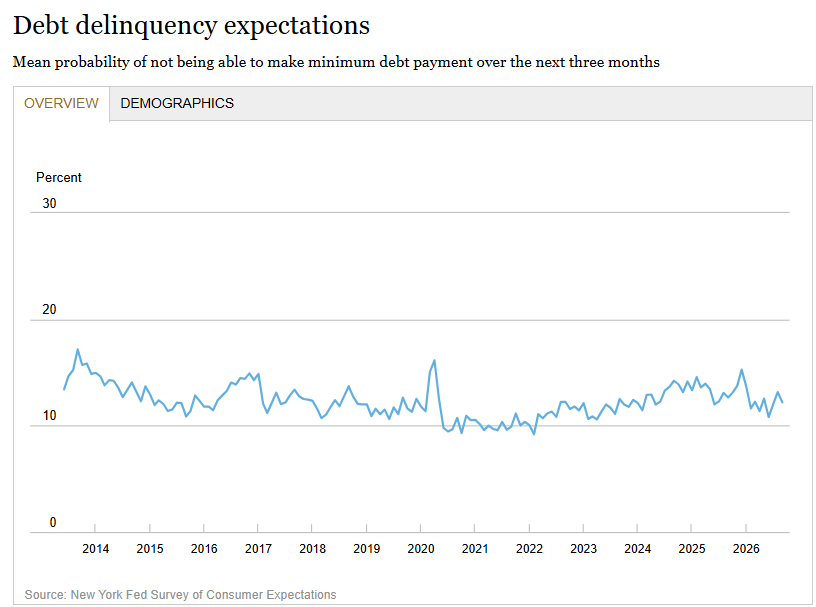
Positively, though, the average perceived probability of missing a minimum debt payment over the next three months fell a full point to 12.2%, below its 12-month average of 12.7%, from August’s 13.2%, the highest since January.
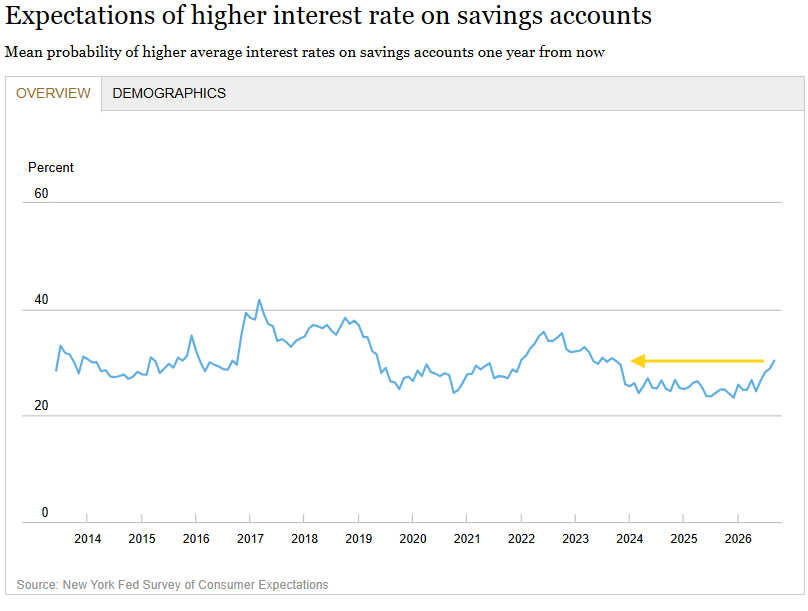
And the mean perceived probability that the average interest rate on savings accounts will be higher in 12 months rose 1.5 points to 30.3%, the highest since October 2023.
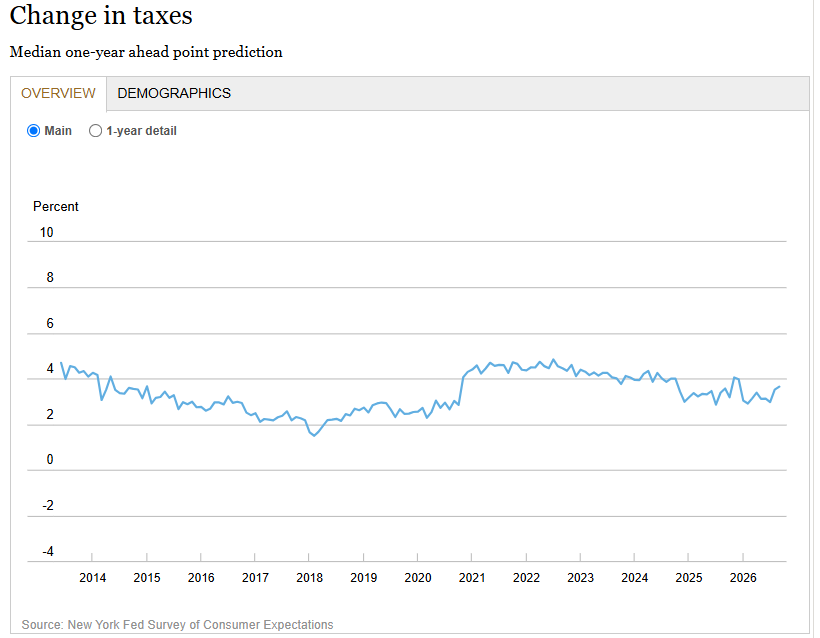
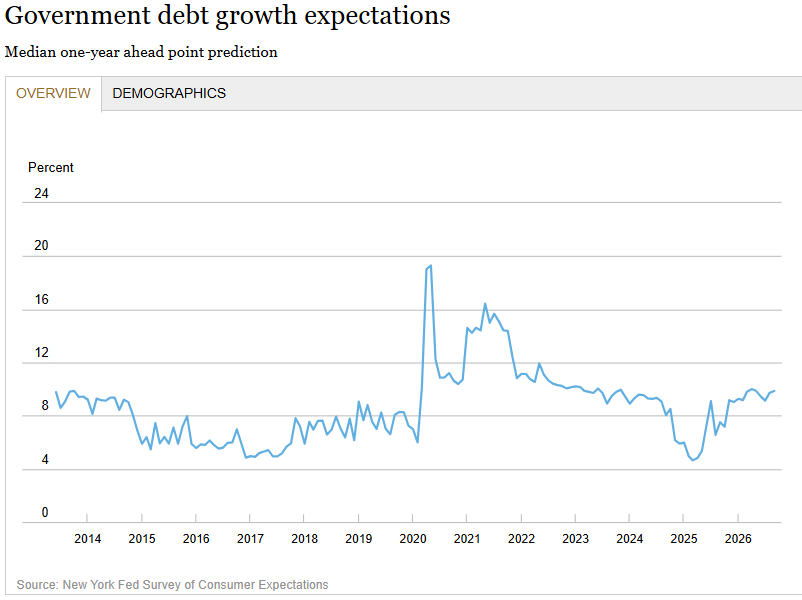
Households also expected taxes to increase in the next year (up two-tenths to 3.7%, the highest since December 2025) and government debt (up two-tenths to 9.9%, still above its 12-month average of 9.1%).
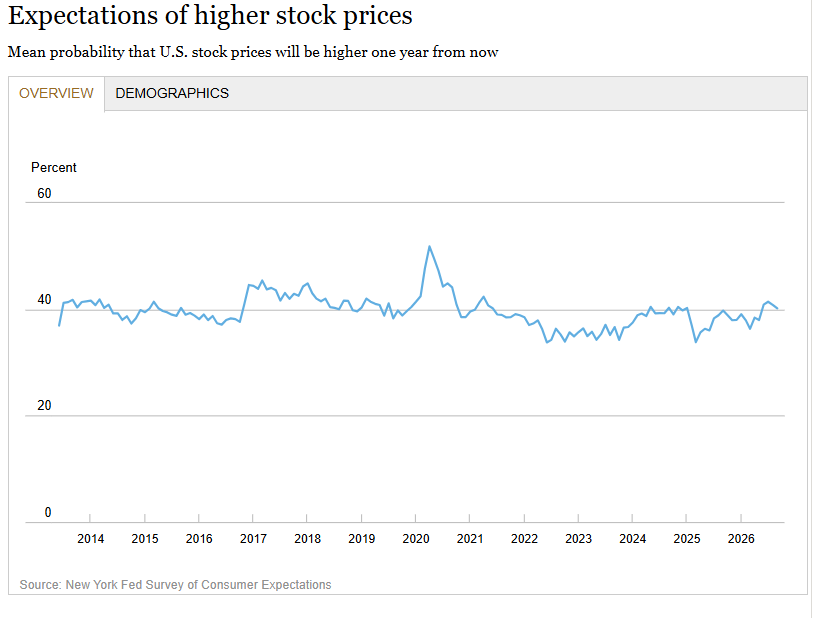
Finally, the mean perceived probability that U.S. stock prices will be higher 12 months from now fell seven-tenths to 40.2%, a second straight decline from July’s 41.4%, the highest since April 2021.