Can a Bounce This Big Be Trusted?
We have a huge bounce early Monday, but nothing changed over the weekend. Will buyers chase the recovery?
You've reached your free article limit
You've read 0 of 1 free Pro articles.
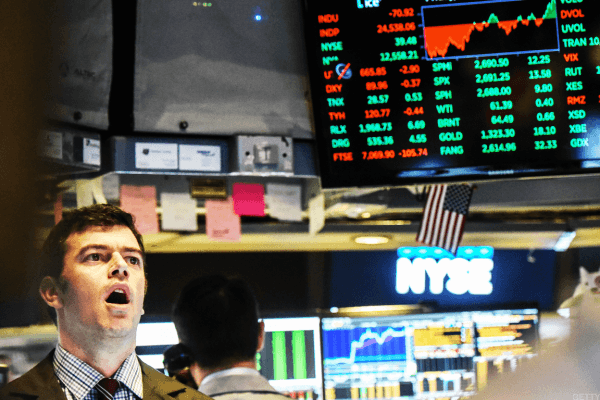
The Invesco QQQ Trust (QQQ) is up about 3.7%, and the SPDR S&P 500 ETF (SPY) is up about 2.8% early Monday as the market stages a huge bounce after last week’s selling.
The obvious question is whether we are just going to forget about last week and go straight up from here. It is unlikely. Nothing suddenly changed over the weekend other than some contemplation that the selling went too far on Friday.
There were some supportive headlines, as governments in Asia stepped in to steady their markets and Wall Street strategists lined up to call the selloff a buying opportunity, but none of that addresses what caused the selling. There are still questions about AI spending and whether it will be profitable, inflation is still a problem, the Fed is still expected to raise interest rates in December and consumer confidence is still weak.
Overhead Resistance
The issue now is overhead resistance. The folks who suffered badly in the big drop are breathing a sigh of relief that they can now escape with diminished losses, and their selling is what a bounce like this has to work through.
There are a lot of them, because support levels failed all over the market last week and every buyer who stepped in at those levels is now holding a loss. Funds that were forced to sell on Friday still have positions they would like to reduce. A level that was support on the way down becomes a place to sell on the way back up, and the market has to absorb all of that supply before it can make progress.
The market typically does not favor “V”-shaped bounces, because of that overhead resistance, and we don’t usually form a lasting bottom in this manner. Lows are much more durable when they have been tested and hold.
The Sharpest Rallies Come in Downtrends
A big up day feels like proof that the worst is over, but the biggest one-day gains tend to occur in bear markets. Shorts rush to cover, underinvested managers panic about missing a turn and sellers are scarce for a few hours because the most urgent ones finished on Friday.
That creates a fast move that runs out of fuel once the urgent buyers are done. I noted on Friday that in every prior case of a week like the last one, the market went on to make a lower low before the selling was over. I’m not predicting that will happen, but it is sufficient reason not to be too trusting at this point.
The Fear of Missing Out
Moves like this can cause some FOMO from people who are scared that they missed the greatest buying opportunity in years. Analyst Dan Ives is already calling it a “generational opportunity,” and that sort of talk adds to the pressure to chase.
The cost of waiting is smaller than it feels. If this is the low, there is usually a pullback that tests it, and that test is where the lower-risk entry is. You give up the first few percent, and in return you get a clear level to trade against.
What a Lasting Low Looks Like
The action this morning is only the first step in a potential bottom, and what is needed now is follow-through.
A lasting low is usually a process that takes weeks. The market bounces, pulls back and holds above the prior low, or it undercuts the low briefly and recovers. The second trip down does less damage than the first, with fewer new lows than the 1,100 we saw on Friday and more stocks that refuse to go down with the indexes.
Those stocks are the ones to focus on. The names that hold up best when the market is tested are usually the leaders when it turns.
Game Plan
This is the relief rally I said on Friday that I would be watching for, but I’m not going to chase a gap-up open. I want to see how stocks act once the early buying is out of the way and whether they can hold their gains into the close. I still have high levels of cash, and I’ll start putting it to work when I see lows that are tested and hold.
A bounce like this is still useful. It shows which stocks have buyers waiting and which ones can barely lift, and that is how I build a shopping list.
Keep in mind that this is Thanksgiving week. There is typically thin but positive trading around the holiday, but these huge swings are an unusual factor that is going to make things more unstable and uncertain.
My primary mission at this point is to identify some new buys and then start the process of accumulation. That will be done incrementally and will depend on the price action.
At the time of publication, DePorre had no position in any security mentioned.