AI Takes Even More Arrows
The credit markets were already choking on AI-related debt issuance and now we have the Nvidia surprise. Let’s see what to expect now.
You've reached your free article limit
You've read 0 of 1 free Pro articles.

The buy-the-dip urge remains strong in this market. That was demonstrated again last week as the Nasdaq rose 2.5%, a week after the tech-heavy index tumbled 3.4%. The rally happened even as the CEO of Nvidia Corp. (NVDA) was forced out. Nvidia has since given back some $1.6 trillion of market value from its highs. And this saga may not be over as a couple of big investors and Elon Musk have publicly come out and stated the board of the giant chipmaker should consider reinstating Jensen Huang.
Their support is not that surprising, given Nvidia operates as a “banker” throughout the AI ecosystem. It takes equity stakes in firms such as in neocloud providers CoreWeave (CRWV) and Nebius N.V. (NBIS). The company also acts like a financial backstop for huge AI data center projects, such as the $500 billion effort planned for Ohio. How the recent midterm results in that state will impact that endeavor, however, is an unknown.
In addition, the company has been a huge advocate for open-source models. And to be fair, Mr. Huang’s ouster at Nvidia does feel somewhat orchestrated. Much like the surge of stories around how dangerous AI could become around Labor Day that resulted in congressional hearings. The timing is also curious given the coming Anthropic PBC (ANT) IPO, and the open-source models are an existential threat to frontier AI companies like Anthropic and OpenAI.
The push for more federal regulation would be beneficial to these companies if it created a duopoly and would provide a considerable moat for a sector that currently doesn’t have much of one. The commerce secretary’s job seems hanging by a thread and it is unknown if Nvidia empowered shell companies to evade sanctions on AI chips going to China. In summary, it feels like this tale is just getting started, so get your popcorn ready as this story may have more twists and turns than a novella.
The other big theme last week was around inflation and interest rates. The October consumer price index reading came in hotter than expected. The October producer price index report came in a bit cooler than the consensus. That said, the 12-month rise was the highest since November 2022. Not surprisingly, interest rates shot up. It didn’t help that the federal government sold over $750 billion in new Treasury securities last week. After touching 4.82% on Nov. 5, the yield on the 10-Year Treasury closed the week near 5.15%. The 30-year treasury yield ended the week just under 5.5%.
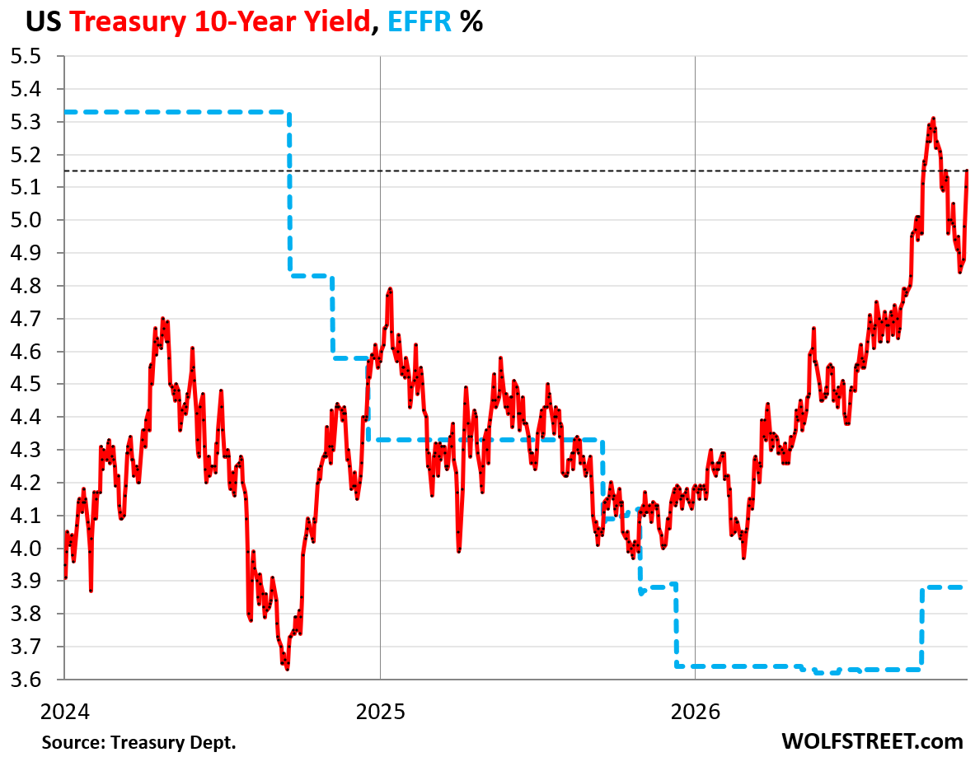
With the two-year Treasury yield significantly above the Fed Funds rate, the market is projecting a couple of additional rate hikes on the horizon. A quarter percentage point increase for the Fed Funds rate is all but certain at the December Federal Open Market Committee meeting with a very slight probability of a half-point hike.
The credit markets were choking on AI-related debt issuance as it was. Last week’s news around Nvidia and a surge in rates raises considerable questions on how this buildout will be financed going forward. A significant slowdown in AI infrastructure capital spending growth feels almost certain in 2027 after an over 90% surge this year. This will have considerable negative impacts on economic growth and doesn’t feel like it priced into the market despite last week’s buyer’s enthusiasm.
At the time of publication, Jensen had no position in any security mentioned.