Jensen Huang Is Out. Nvidia Shareholders Should Want Him Back.
Nobody’s charged him with a crime; nobody else can do everything he did, and Nvidia’s board shouldn’t hire his replacement on Washington’s 10-day clock.
You've reached your free article limit
You've read 0 of 1 free Pro articles.
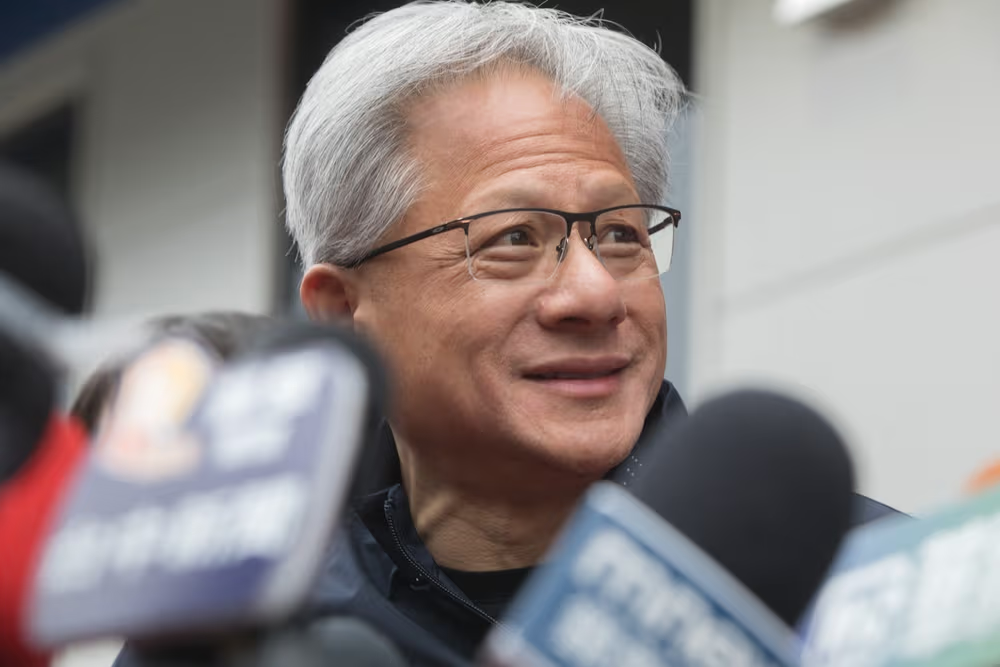
Sunday morning, Treasury Secretary Scott Bessent went on Fox News, called for a “dramatic shakeup” at Nvidia (NVDA), and told the board to “go outside the company” for its next CEO. He also wants answers on export compliance within 10 days, and all of this landed two days before Nvidia’s first earnings report without Jensen Huang. I think the board should thank him politely and take its time.
Jensen resigned Thursday after reports of a relationship with someone who reported to him and another with Alice Huang, an executive at Nvidia customer Megaspeed whom U.S. intelligence officials believe was working for China. Nobody has charged Jensen with anything, and The New York Times, which broke the story, reported that officials initially didn’t believe he knew what she was up to.
The Justice Department is digging, and prosecutors have charged a string of middlemen with smuggling Nvidia chips to China, but none of those cases touch Jensen. So far, the only thing in his story that looks like a clear crime is that somebody leaked classified intelligence to a newspaper.
The direct report is a real problem, and at nearly any public company that alone could have cost him the job. Still, a personal lapse in judgment is a long way from knowingly helping a foreign spy, and the court of public opinion is a lousy place to decide which one this was. Whether he comes back should be up to Nvidia’s shareholders and the board they elect, not a cabinet secretary on Fox News.
Four Jobs, One Guy
That question is huge for shareholders, because I don’t see anybody else who can do what Jensen did. The Information says Nvidia’s chips are largely sold out through 2028, so plenty of executives could sell them, and a few could run the engineering side. Jensen did both while also serving as the company’s inspiration and the most aggressive dealmaker in AI, and I can’t think of anyone else who’s done all four.
Wall Street mostly watches the chip sales, but the deals are wilder. Nvidia put about $10 billion into Elon Musk’s xAI in January and committed up to $10 billion more to Anthropic. By late July, counting the stock it owned, the money it had promised, and the data center rent it had guaranteed, mostly for OpenAI’s campus in Ohio, Nvidia had close to $290 billion riding on the industry. That’s more than its revenue last fiscal year.
Plenty of Nvidia’s deals rested on trust in one man.
That quote jumped out at me as an Alphabet (GOOGL) shareholder. On Oct. 29, investors dumped the stock 12.6%, its worst day since going public, after search growth slowed to 12% from 17%, and I used the drop to buy shares. Lost in the selloff was a cloud business that more than doubled its revenue, helped partly by selling Google’s own AI chips to other companies. If Nvidia’s customers go shopping, Google’s chips are the easiest alternative to try, which is part of why I think the stock deserves a second look.
Kress Plays It Safer
For now, Colette Kress, Nvidia’s longtime CFO, is running the company as interim CEO. The Wall Street Journal says Jensen called her “a deer in the headlights” at an August meeting where she questioned his guarantees. Nvidia had weighed a $250 billion backstop for that Ohio campus, and Kress cut its first commitment roughly in half.
Some investors will cheer a more careful Nvidia, but Jensen built the company by taking risks, and Broadcom (AVGO) is happy to take them now. Bloomberg reports Broadcom guaranteed $30 billion of a $35 billion lease of Google’s AI chips for Anthropic, while Nvidia’s $500 billion financing partnership with six investment firms hasn’t closed a deal. From Nov. 6 to Nov. 13, a stretch that includes Jensen’s resignation, Broadcom’s stock rose 18% and Nvidia’s fell 13%.
A Very Short Bench
As for who replaces Jensen, AMD’s Lisa Su is a distant relative of his and runs the rival she rebuilt. Tim Cook, now retired from Apple (AAPL), made his name as a careful operator. The Financial Times reports the board has approached Arm’s (ARM) Rene Haas, who spent seven years at Nvidia, though Arm licenses chip designs rather than writing $10 billion checks. Founders Fund’s Shaun Maguire argued on X that Jensen was “technical, aggressive” and credible enough to be aggressive, and that Palo Alto Networks’ (PANW) Nikesh Arora has the same mix.
They can all sell, but I can’t picture any of them writing a $10 billion check on a handshake. The hosts of the tech show TBPN couldn’t name a CEO with that appetite for deals besides OpenAI’s Sam Altman. Tae Kim, author of “The Nvidia Way,” told the show the realistic best case is a new CEO who knows their limits, with Nvidia throwing “a billion dollars” at keeping Kress and its top engineers. That’s a caretaker plan, and it’s the strongest argument I’ve heard for waiting on Jensen.
Ignore the Clock
Kress reports Tuesday against her own $108 billion revenue forecast, and with the chips spoken for, the numbers should hold up. The bigger decision can wait until the facts are in. Jensen still owns about 3.6% of Nvidia, so nobody has more reason to want the company to win, and if he’s cleared on China, I’d want him back running it.
If the board moves on without him, I wouldn’t expect Jensen to sit still. He sketched out Nvidia in a Denny’s booth in 1993, and he’s spent the past two years calling robots AI’s next big wave. My bet is he’ll start a robotics company, and the people who’ve been taking his calls for 30 years will fight over who gets to fund it.
At the time of publication, Byrne was long GOOGL.