The following is from Peter Boockvar
I’ll make this case again/The earnings comments of note
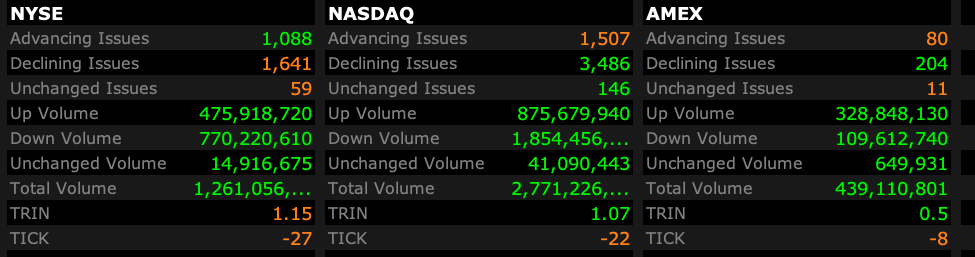
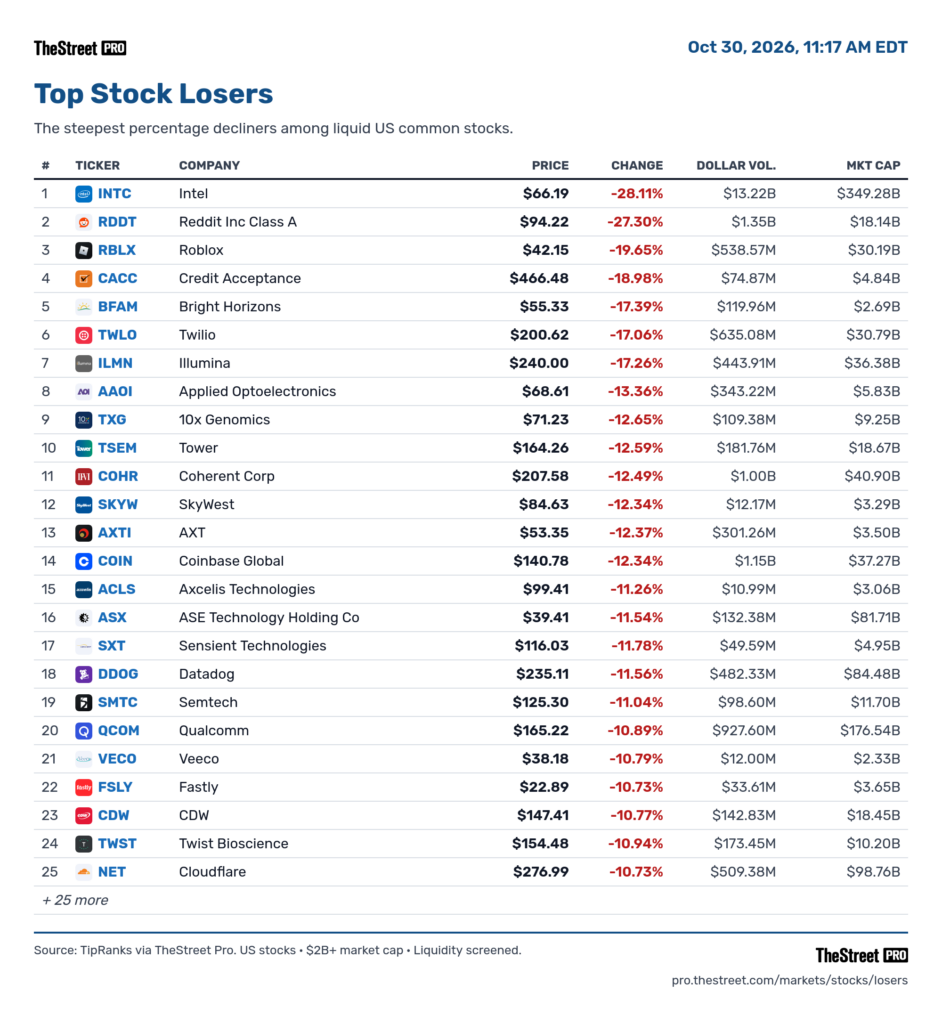
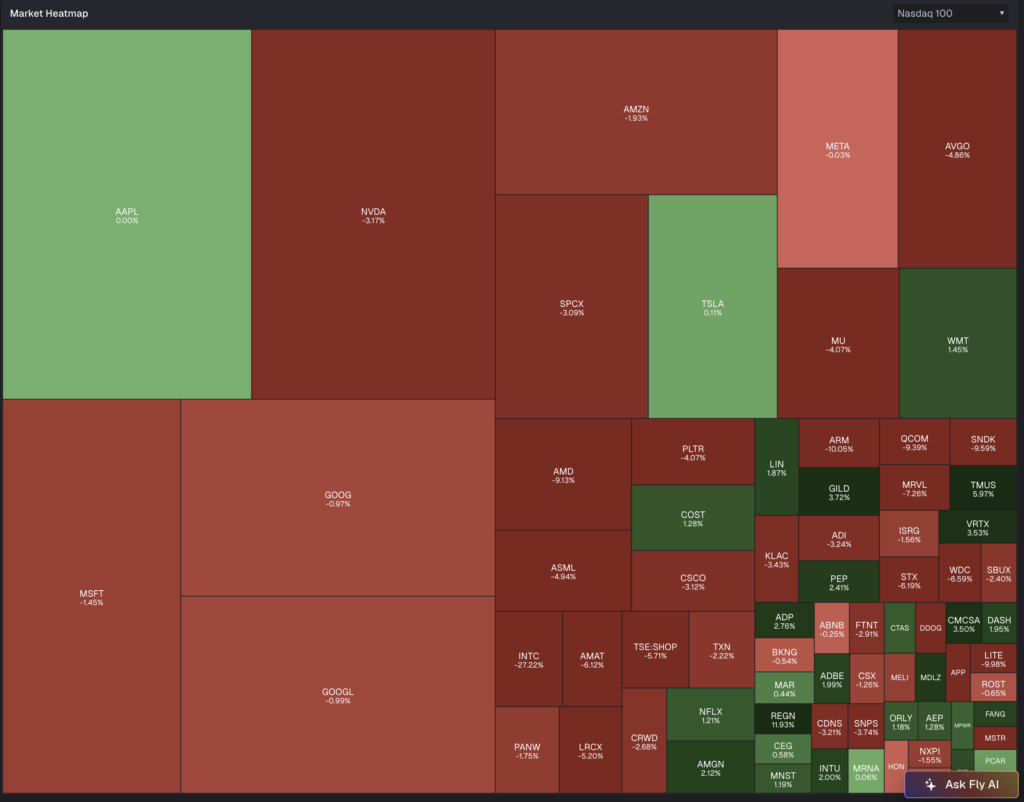
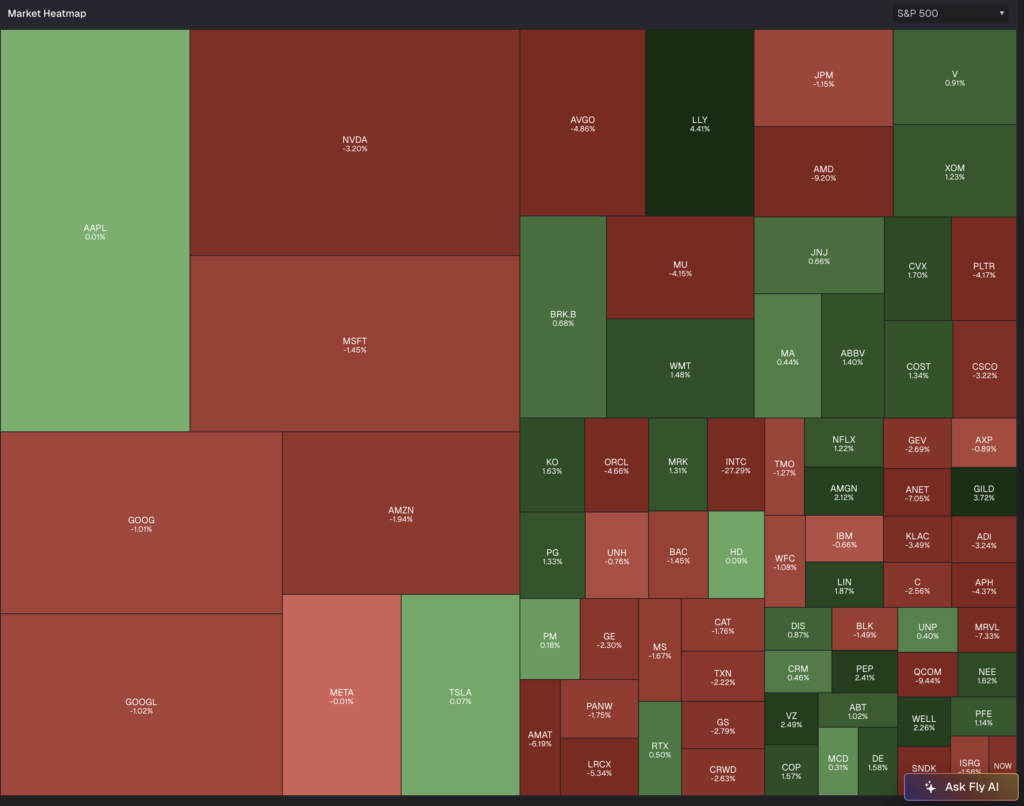
I’m going to make the case for a 3rd time this week that if tech stocks continue to falter here, the Fed will not be hiking rates in December due to the huge, as we know, reliance the US economy and US stock market has on it. Rate hike odds have slipped modestly to 74% from 84% both right before and after Fed Chair Warsh spoke on Wednesday. And if I’m right, I expect the US dollar to weaken as the whole world is long US tech stocks, the lack of another hike would give less reason to own the US dollar, and I’d think REAL interest rates would drop too and thus gold should end its corrective move here, going on since hitting its peak in January.
I’ll jump right to the earnings calls and start with those that are causing this morning selloff.
From Amazon:
AWS saw sales up 39% y/o/y, just above the estimate of up 38%. Retail online sales grew just 2%, the slowest pace since early 2023 in large part because of a shift in timing with Prime Day as it was in Q3 ‘25 and Q2 ‘26 and normalizing for this would have added an additional 400 bps of growth. Advertising sales were up just 12%, the weakest pace of growth since they started telling us about its financial details.
CapEx in the quarter was $75.9 billion and “primarily relates to AWS and AI as we invest to support strong customer demand.” Free cash flow was about minus $42 billion in the quarter.
“We still expect 2026 cash CapEx of approximately $220 billion, the majority for AWS, and expect to spend meaningfully more in 2027, with a clear line of sight to attract its financial returns…AWS is a $184 billion annualized revenue run rate business, and yet the opportunity remains extraordinary.”
From Intel:
Strength in the data center business “was partially offset by weakness in CCPG (Client computing and physical AI group) driven by industry wide impacts from higher memory prices and limited IT budgets. The industry continues to navigate one of the most significant supply shortages in history driven by the unprecedented demand for super intelligence.”
And even in their data center business, “I also want to acknowledge headwinds limiting our progress to meet this extremely high AI driven demand.”
Back to their client business, “In recent weeks, our customers began signaling a PC slowdown based on the memory prices and availability. Year-to-date system endpoint prices have increased significantly, placing additional pressure on already limited IT budgets. The pace of this PC correction has accelerated over the last two months and our OEM partners are aggressively managing inventory to match the softer sell through.”
“We expect the current environment to persist until memory availability and prices begin to normalize.”
From Caterpillar, down 9% yesterday and lower by 40% from its June peak as of this morning:
“Power generation grew 75%, driven by continued very strong demand for turbines and large reciprocating engines used in data center applications.”
“Sales to users in oil and gas increased 5% and were driven by turbines and turbine related services. Industrial sales to users were down due to softness in the EAME (Europe, Africa, Middle East) region.”
Sales into the construction end market grew by 20% and 27% to North America. “Non-residential construction investment continues to be supported by the IIJA, critical infrastructure programs, and data centers.”
From Ebay, up 2.7% yesterday:
Gross merchandise volume grew 13% with particular growth in “collectibles, Ebay Motors, fashion, and refurbished goods” And they spent more time talking about how they are really benefiting from the collectibles business which is “our largest growth contributor.”
This was interesting and its either a desire for vintage items and/or a reflection of consumers trying to save money, in their Re-commerce report out this month, it “points to a secular shift in re-commerce, as 47% of consumers surveyed now buy secondhand at least monthly, up from 35% last year, and 89% expect to spend the same or more on secondhand goods in 2027.”
“It also highlights seller economic. Roughly 85% of sellers source secondhand inventory from their own belongings, and nearly 30% say selling secondhand helps them earn extra income.”
“Younger consumers are accelerating this shift. 53% of 18 to 29 year olds expect to buy more secondhand in 2027.”
From Starbucks, little changed premarket:
Global comps were up 7.2%, “marking our 5th consecutive quarter of comp growth, and US comps were up 7.7%.”
“Our plan is working. More customers are visiting us because the Starbucks experience is better. Our coffeehouses are coffeehouses again…Strength is coming through the fundamentals.”
From Monro, the auto repair/tire change company that we own and that was down 14% yesterday:
Comps fell 1.8%, “reflecting an operating environment which continued to challenge the full service auto aftermarket. This was driven by lower store traffic, consumers that continued to defer higher ticket spending decisions and traded down to lower cost alternatives in tires.”
From Hershey, down 2% yesterday and lower for a 5th day:
“the operating environment has become more challenging as consumers manage the cumulative pressure of higher gas prices, inflation, and interest rates. As September progressed, we saw consumers become more deliberate about spending, particularly in channels most exposed to higher gas prices like convenience stores where the U.S. candy, gum, and mint category declined nearly 5% in the month. That caution persisted into October, with growth moderating across snacking segments, though our categories are holding up comparatively well.”
From Brunswick, the boat and parts maker and up 8% yesterday:
“Headwinds from geopolitical uncertainty, inflation and higher borrowing costs are weighing on consumer confidence and discretionary spending, particularly for the value consumer, but our premium and core focused portfolio continues to be resilient and perform ahead of overall year-to-date SSI (statistical surveys) data.” The upper income earner likes to buy boats.
And, “while fuel prices are elevated, they do not appear to be abating enthusiasm for boating.”
“Boating participation remains healthy, supporting demand for parts, aftermarket products and subscription boating, which together with distribution market share gains helped drive our strongest 3rd quarter engine P&A (parts & accessories) since 2020.”
From Hyatt Hotels, up 6% yesterday:
“Performance was driven by durable demand from high end travelers and continued strength across our luxury portfolio with some benefit from the FIFA World Cup in July and the timing of the Jewish holidays in September.”
“RevPAR growth in the US also exceeded our expectations, while most international markets delivered strong growth.”
“RevPAR increased across all customer segments, business, group and especially leisure travel.”
From DR Horton and whose stock rose 2.5% yesterday but after falling by 2.7% on Wednesday:
Gross margins fell 120 bps sequentially as “Market conditions became more challenging as the quarter progressed, which limited our ability to offset higher costs with pricing, resulting in 80 bps of the decline. Above normal litigation costs accounted for the remainder of the decrease.”
“We expect continued pressure on our home sales gross margin in the first quarter, reflecting a lower average sales price and higher incentive levels to remain elevated in fiscal 2027.”
“Looking ahead to fiscal 2027, we expect affordability constraints, higher mortgage rates and cautious consumer sentiment to continue to pressure new home demand.”
From Mastercard, up 4% yesterday:
“While there continues to be economic and geopolitical uncertainty, consumers continue to spend, businesses continue to invest and commerce continues to expand. The economy, our overall business and our network have a resilient backdrop.”
On the agentic situation, “Consumers are already beginning to use agents to discover and purchase products. We expect that trend to build as holiday shopping ramps up and to continue well beyond the season. It is still early days and the numbers are not yet significant in the grand scheme, but as the AI agentic assistance have emerged, agentic transactions are ramping up at impressive weekly growth rates. We’re now seeing the early stages of consumer adoption.”
Benefiting from infrastructure spend, Vulcan Materials said this with its stock rallying by 6% yesterday:
“The demand environment remains mixed across end uses with growth opportunities in some categories and challenges in others…On the public side, activity remains healthy at healthy levels. There is still a long tail from IIJA with approximately 35% of funds yet to be spent. There is a current extension of the Federal Highway Authorization Bill that maintains funding at current levels and is expected to be extened again until a bill is passed.”
“On the private side, large project opportunities continue to drive non-residential activity…We are currently shipping on a variety of solar, wind, LNG, power plant and refinery projects in addition to large scale manufacturing projects like SpaceX and Toyota in South Texas and Scout Motors in South Carolina.”
“The continued lack of housing affordability and a challening rate environment are limiting residential construction activity.”
“On a mix adjusted basis, average selling prices in the quarter improved 5% compared to the prior year with improvement widespread across geographies.”
From Blue Owl Capital:
“Portfolio health remains robust with no meaningful changes to our direct lending watchlist, portfolio growth trends, or our realized loss rate, which sits at a low 12 bps per annum for the total direct lending portfolio and at a net gain for our technology lending book.”
They remain bullish on data centers, “Unfortunately, people have somehow turned the word data center generically into a question mark, as opposed to the tremendous opportunity done right that it presents.”
The data point of note overseas was in Japan where Tokyo CPI for October rose 2.6% y/o/y, one tenth less than anticipated and vs 3% in the month before. The headline rate was higher by 2.8%, one tenth above the forecast and vs 2.7% in the month before.
As the BoJ is not raising rates likely until December, there was nothing market moving and JGB yields fell in response to the tech stock worries.
In Europe, France’s economy unexpectedly contracted by .1% y/o/y instead of rising .3% as expected. CPI in France was higher by 3.8% in October, above the estimate of 3.6% and both help to explain the anger there.
Consumer price inflation in Spain in October was higher by 4.9% y/o/y but as expected.
In Germany, their October jobs data was as expected and with an unemployment rate of 6.4%.