The following is from Peter Boockvar:
Stock market wealth effect/A tough trade off/China will buy your gold/Other notables
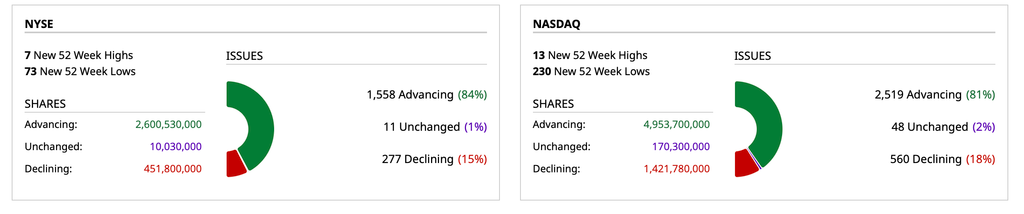
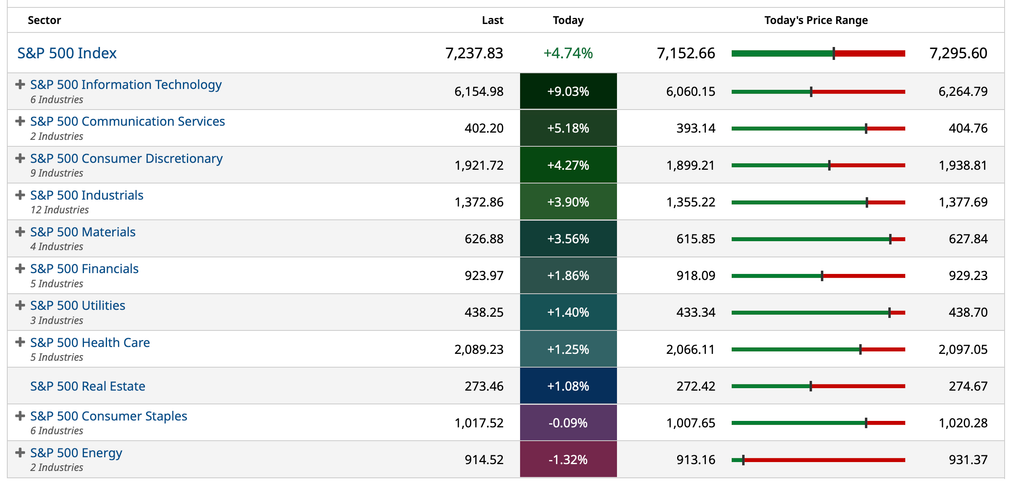
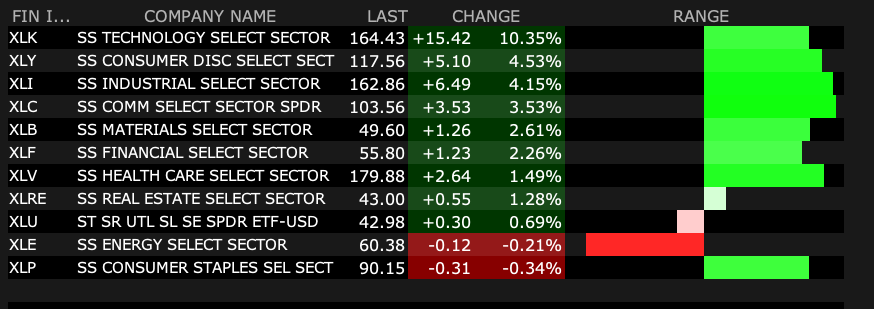
After a sharp market correction, the quality and sustainability of the eventual bounce back rally is what matters most. For reference, the 200 day moving average is 7348 in the S&P 500 and a rally in the coming days/weeks, or not, above that is the real test for now.
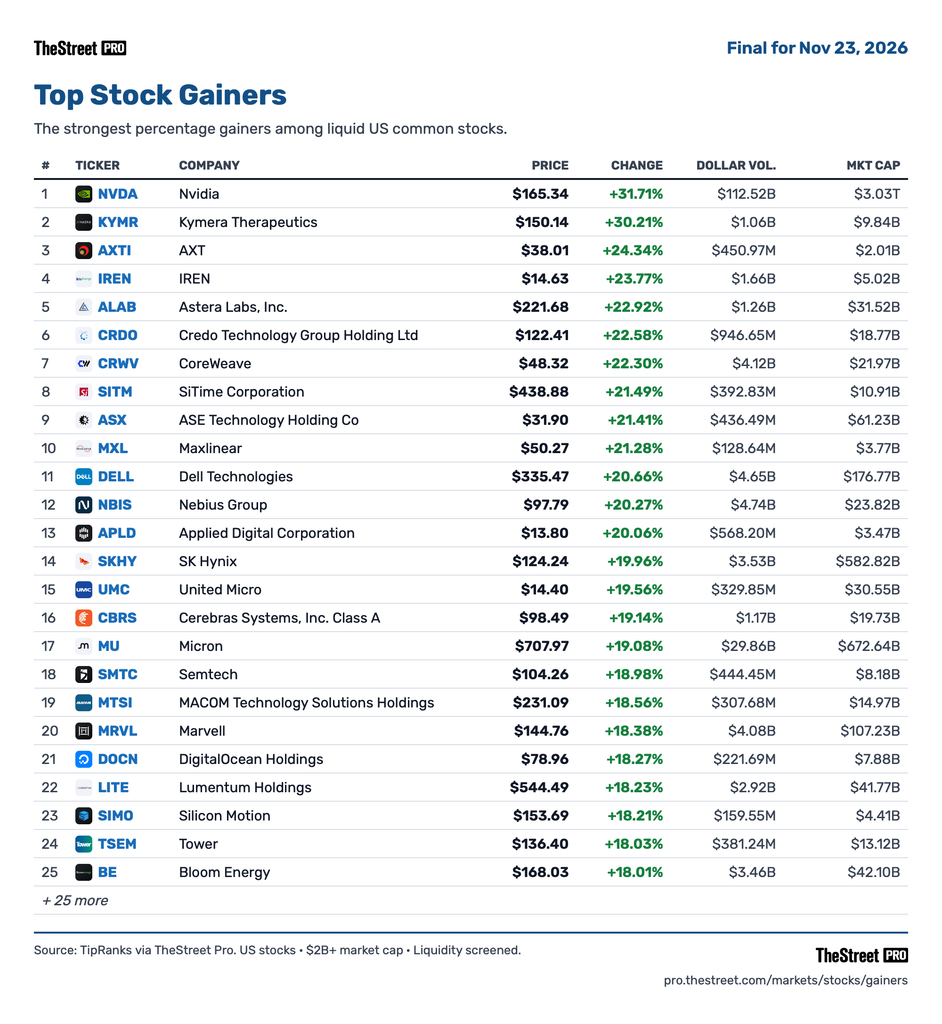
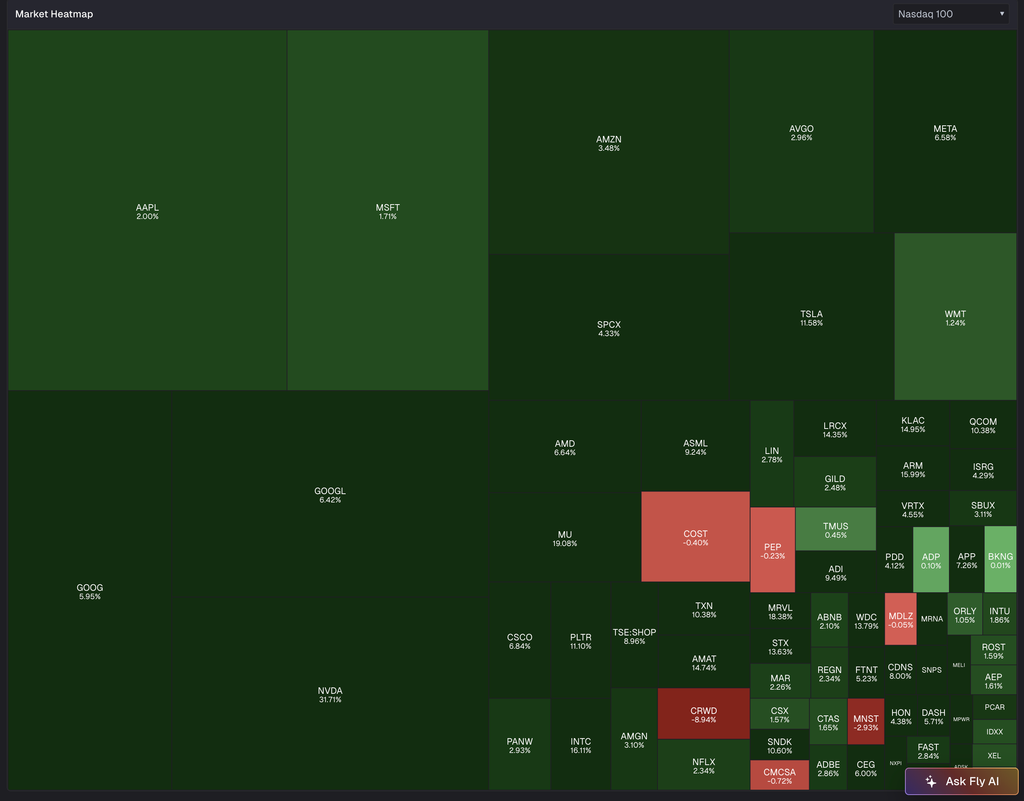
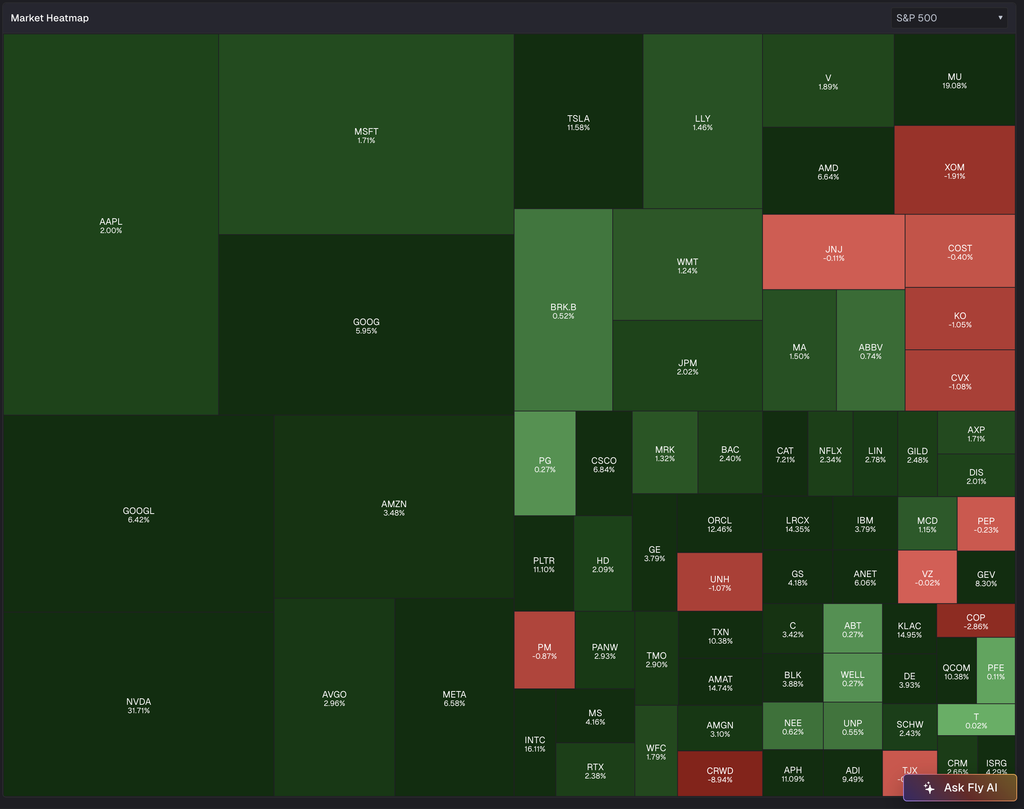
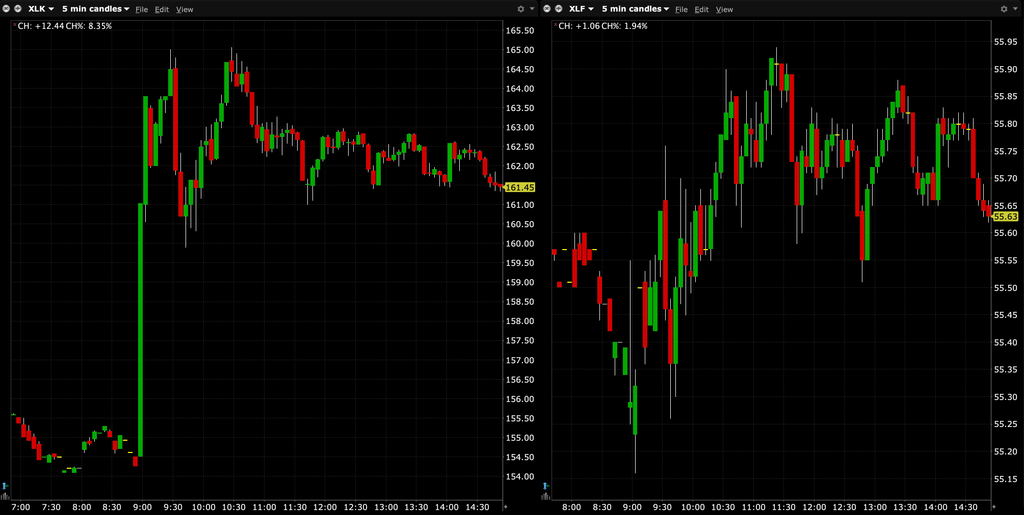
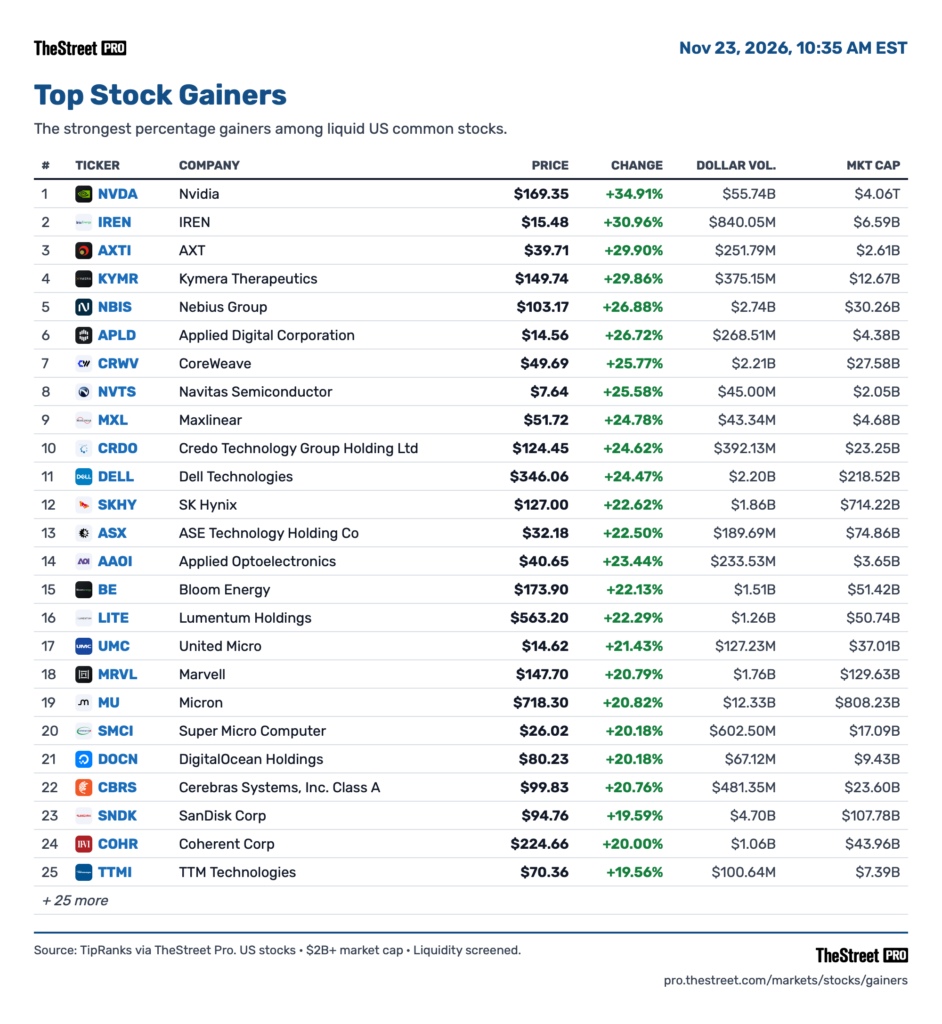
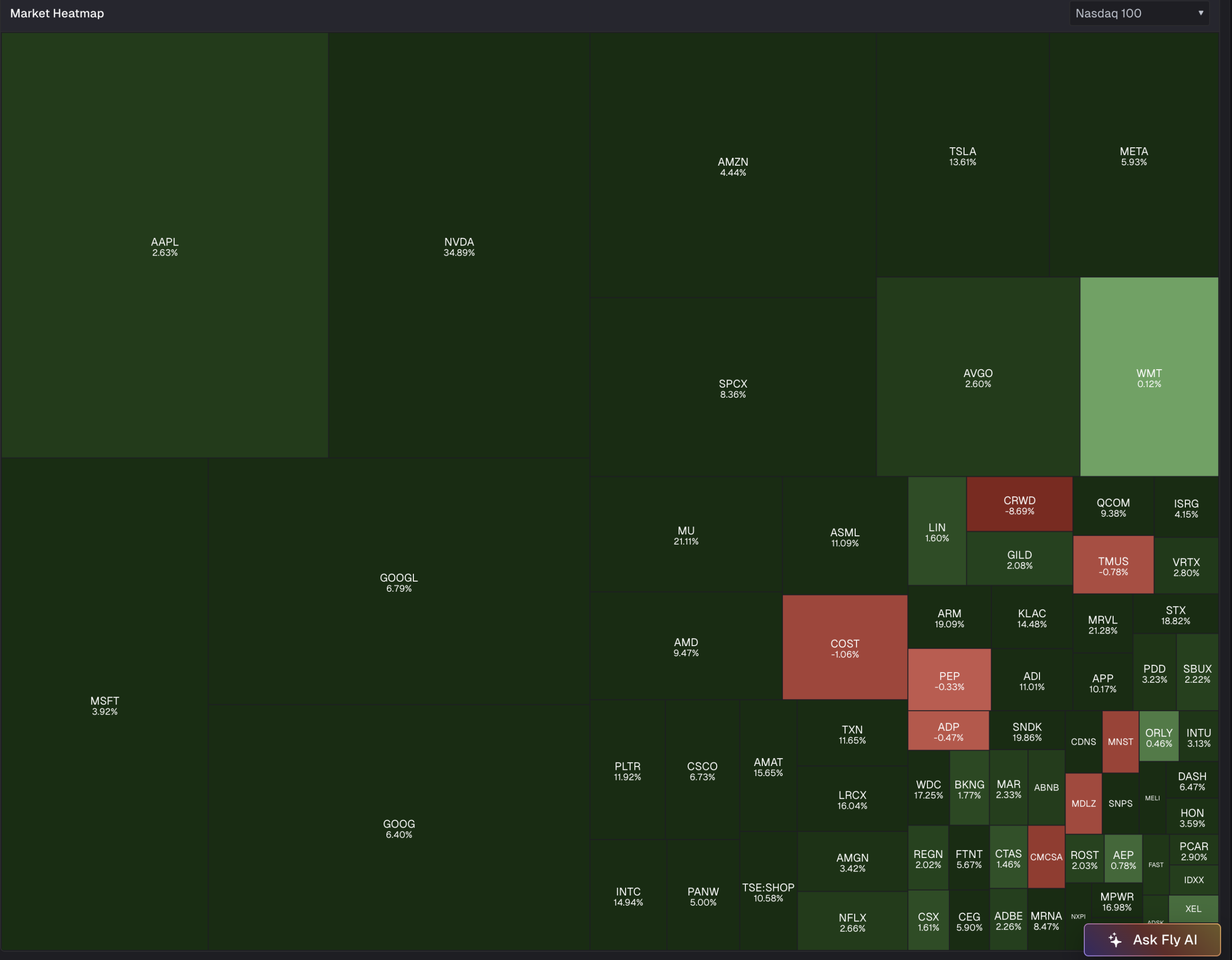
We were reminded again of how interconnected the US stock market is and the wealth effect that helps to boost upper income spending. And the AI data center buildout and the companies that contribute to it that in turn has driven the stock market. In case you didn’t see my mention of this on Friday in my Succinct Summation, the UoM said this in Friday’s consumer confidence release:
“Current personal finances improved for most low-wealth consumers and, to a lesser extent, middle-wealth consumers, who experienced some relief with falling gas prices. In contrast, those with the largest stockholdings reported a decline in personal finances, consistent with continued AI-related agitation in stock markets.” I bolded to highlight.
While there is heated debate about the extent at how much tighter the export rules of certain semiconductors to China should be, it’s being reported that Congress is about to officially ban Chinese cars from being sold in the US. While on the surface, we can understand that we want to protect the US domestic auto industry (the Europeans want to also) but my friend Louis Gave in Barron’s over the weekend highlighted the trade offs involved in an era of high inflation and a cost of living squeeze that has angered the American people (as well as others in other countries) as seen at the ballot box a few weeks ago where citizens want the ability to buy cheaper products.
He said, “Every Western government is facing a Sophie’s Choice. Do I want to protect my welfare state or my industrial jobs?…There is only one deflationary force left in the world, China. Either you embrace China and lower inflation and the cost of capital or you block China and protect your industrial jobs but end with higher inflation and a higher cost of capital, which means you need to reform your welfare state.”
With respect to Europe, he said “Exports of cheap Chinese cars are tearing Europe apart. Greece, Portugal, Spain, Hungary, and Poland are saying ‘Yes, please, I’ll have the 10,000 euro BYD cars.’ The Germans say, ‘No, you’ll have the 30,000 euro Volkswagen.’ “
Speaking of China, and gold too, gold imports are this year the 3rd largest Chinese import behind memory chips and crude oil. According to China customs data on Friday, imports of unwrought non-monetary gold (gold bars, ingots and other unprocessed forms) rose 174% y/o/y in October to 156 tons.
The South China Morning Post said “China’s customs statistics exclude monetary gold held as official reserves, meaning the figures largely reflect commercial imports serving private investment, jewelry manufacturing and other market demand, rather than direct central bank reserve purchases.”
So, as western investors puke gold, China buys more of it.
I mention this because I just thought it was really interesting on how big our investing world has gotten and not for the first time but interesting so. Space, meaning the universe above us, is now a consideration when it comes to loan covenants. I read over the weekend in the FT that “Lenders backing SpaceX’s latest $43 billion debt package, which is secured by its advanced AI chips, have tried to bar Elon Musk from firing the collateral into space as part of his plan for orbital data centers.”
“SpaceX has said it plans to use the chips involved in the debt deal on Earth. But lenders have expressed concern that if the group later decided to shoot the valuable chips that underpin their loans into space, it would prevent them from reclaiming the semiconductors for sale in the event of a default, according to people familiar with the matter. It is uncertain whether the provision was included in the final documents.”
To a few calls of note from late last week.
From Williams Sonoma, down sharply last week:
Overall comps rose 5.1% led by Williams Sonoma and West Elm, with a smaller contribution from Pottery Barn. “Every brand and channel delivered a positive comp…Our design advantages and direct sourcing model translate into superior economics, allowing us to increase full price selling while continuing to give our customers great quality and value…We continue to increase full price selling with fewer promotions and shallower markdowns.”
Helping to drive comp growth in a “housing market that has gotten worse” they said, “We continue to take market share in the fragmented home furnishings industry, while increasing our penetration of the full price selling and delivering strong earnings growth.”
“During the quarter, cost pressures increased, including higher oil, gas and diesel costs impacting both raw material and transportation costs.”
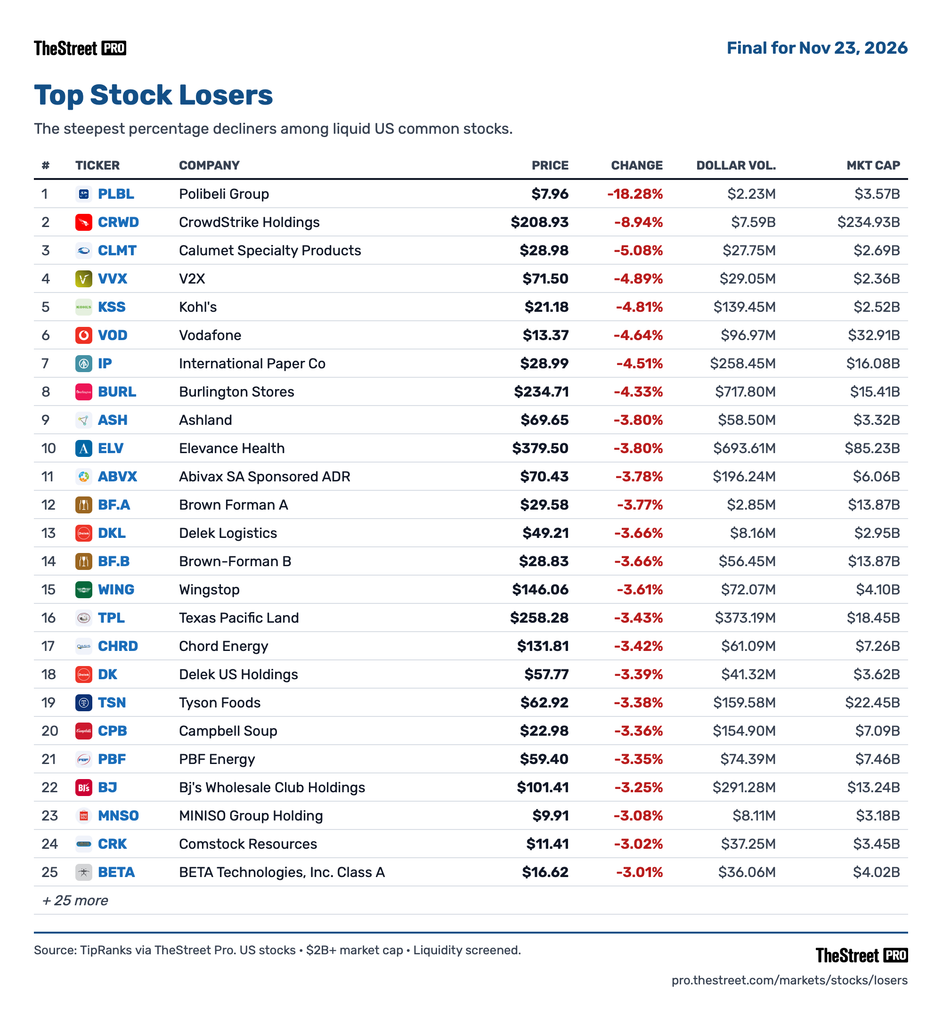
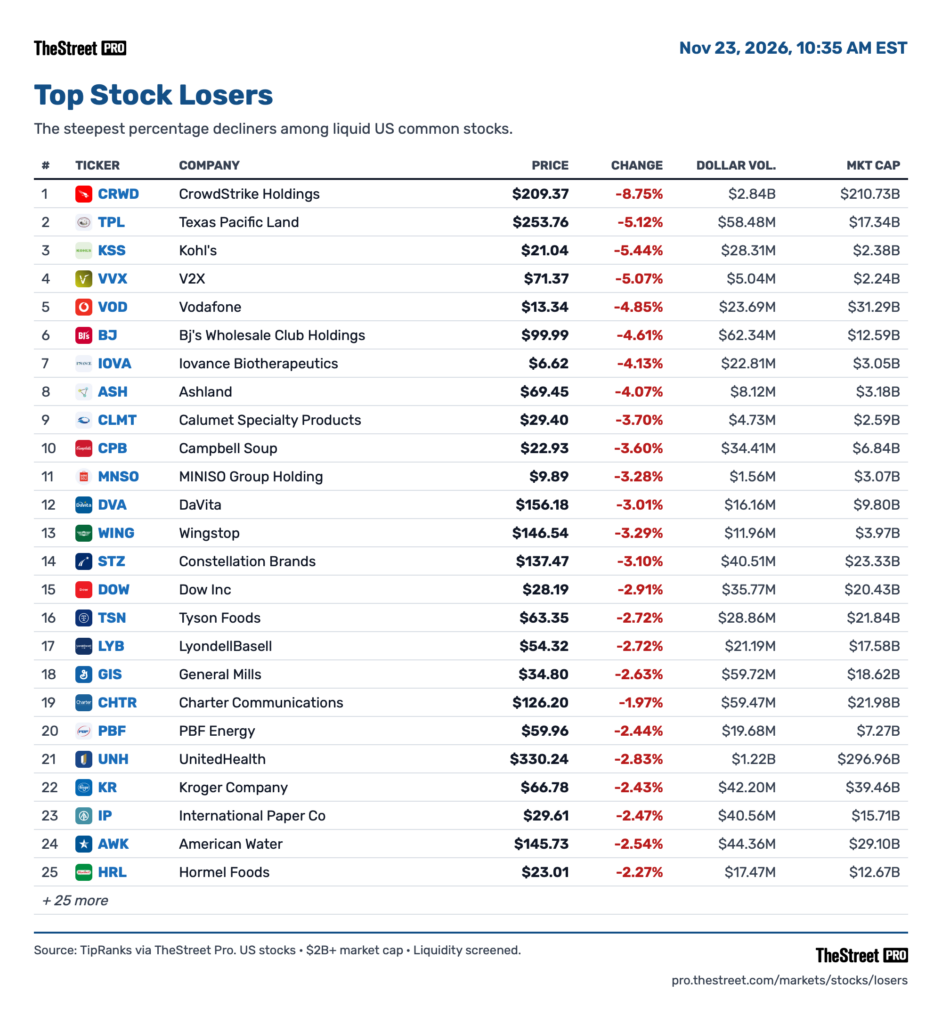
From BJ Wholesale, down 5% Friday:
Comps ex gasoline rose 4.1% y/o/y. “Turning to the broader environment, our consumer remains resilient. This quarter, more members shopped with us and spent more across every income level, with a growing share choosing higher tier memberships. We also continued to gain share.”
Generally for the Club model that they offer, “we’ve been talking for a while about this is Clubs’ time where members’ wallets are pressured, consumers’ wallets are pressured. We’re among the lowest cost providers of grocery and general merchandise.”
On pricing and inflation, “there will be considerable pressure coming from a price increase perspective out there if you take just one thing and talk about the diesel cost, certainty that is real. Every one of our competitors is experiencing that. We’re experiencing that. We’ve offset that in our P&L with tariff refunds in some ways…And so I think that could be a headwind next year. It could be offset by raising prices.”
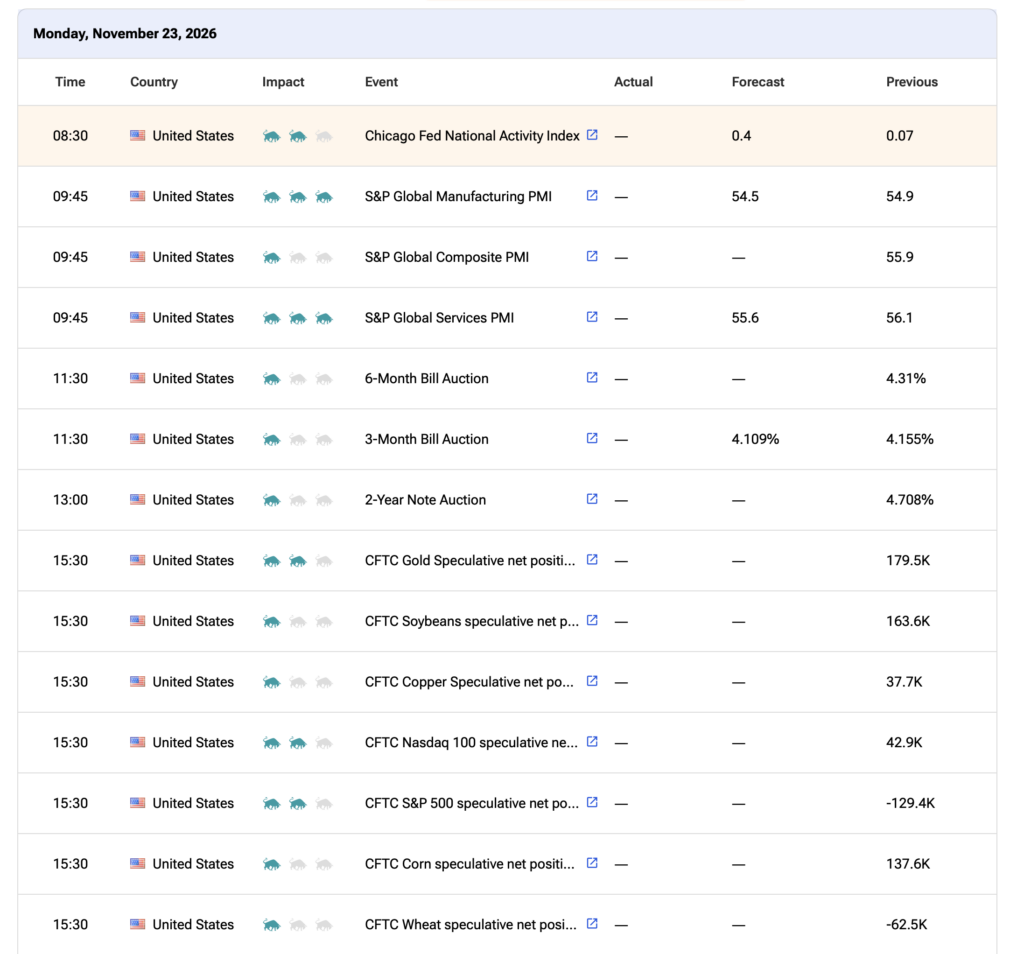
To some economic data, November manufacturing PMI’s are coming out. In Australia, things were soft with manufacturing at 48.7 vs 49.6 in October and services falling to 46.2 from 48.5.
India remains an economic bright spot with manufacturing at 56 vs 54.7 and services at 55.3 vs 55.8.
The preliminary November Eurozone PMI was unchanged at 51.7 with manufacturing up slightly at 52.9 while services slipped a touch to 51.2. France was particularly weak in both, offset by above 50 prints for each component in Germany.
S&P Global said, “While growth in Germany has accelerated to the fastest for four and a half years, as its manufacturing sector enjoys a growth spurt of the likes not seen for over five years, France is suffering a deepening downturn.”
Further, “Just as manufacturers of business equipment and machinery are enjoying their day in the sun amid surging investment spending on defence and AI-related technologies, boosting Germany’s economy in particular, uncertainty about the pollical environment, social unrest and the high cost of living are hitting service providers especially hard, especially for consumer-facing businesses, dampening growth both in France and across the rest of the region as a whole.”
With regards to inflation, “Input costs rose sharply again in November, despite the rate of inflation easing to a three-month low. Marked but weaker increases were seen in both the manufacturing and services sectors in the penultimate month of the year.”
“Similarly, the rate of output price inflation was the slowest since August amid weaker increases in charges across both monitored sectors. Selling prices in Germany rose at a sharp and accelerated pace amid improving customer demand, but weakness in France meant that companies there increased their charges at the slowest pace in eight months. Meanwhile, the rest of the eurozone as a whole posted a marked rise in selling prices, but one that was the weakest in three months.”
In the UK, the composite index was lower with services falling to 52 from 52.8 while manufacturing was little changed at 52.7.
S&P Global said, “Encouragingly, business confidence has improved, with optimism about the year ahead regaining the levels seen prior to the outbreak of war in the Middle East back in February, indicating that the recent Budget has been generally well received by the business community.”
On costs, “Inflationary pressures moderated during November. Input costs increased at the slowest pace for three months, although the rate of inflation remained well above the long-run survey average. Higher business expenses were linked to greater energy, fuel, raw material, technology and wage costs. Many firms noted that suppliers had brought in fuel surcharges and passed on rising logistics costs amid the Middle East conflict.”
“Meanwhile, average prices charged by UK private sector companies increased at an historically strong pace in November. That said, the overall rate of inflation was the lowest since July amid weaker rises in both the manufacturing and service sectors.”