Friday’s After-Hours-Movers
Position: None
BY Doug Kass · Oct 16, 2026, 4:55 PM EDT
 Doug KassDoug Kass
Position: None
BY Doug Kass · Oct 16, 2026, 4:55 PM EDT
Closing Volume
– NYSE volume 10% above its one-month average
– NASDAQ volume 17% above its one-month average
– VIX index: up 21.45% to 19.99
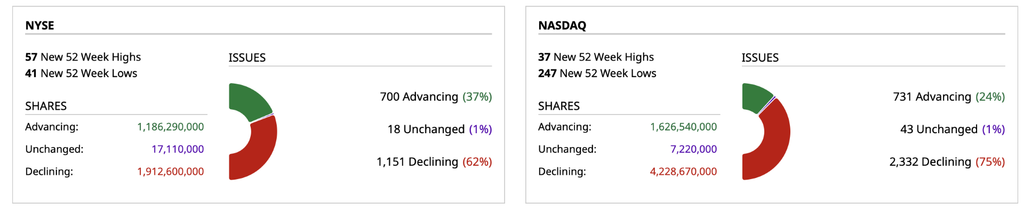
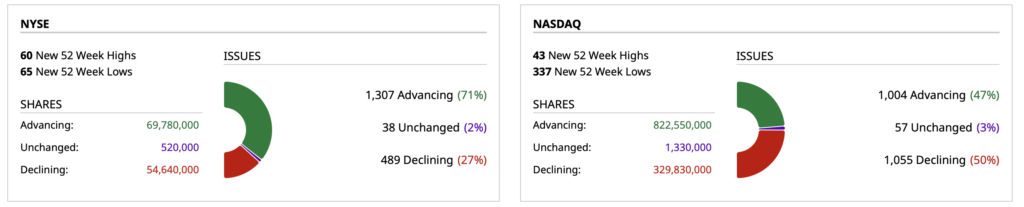
Breadth
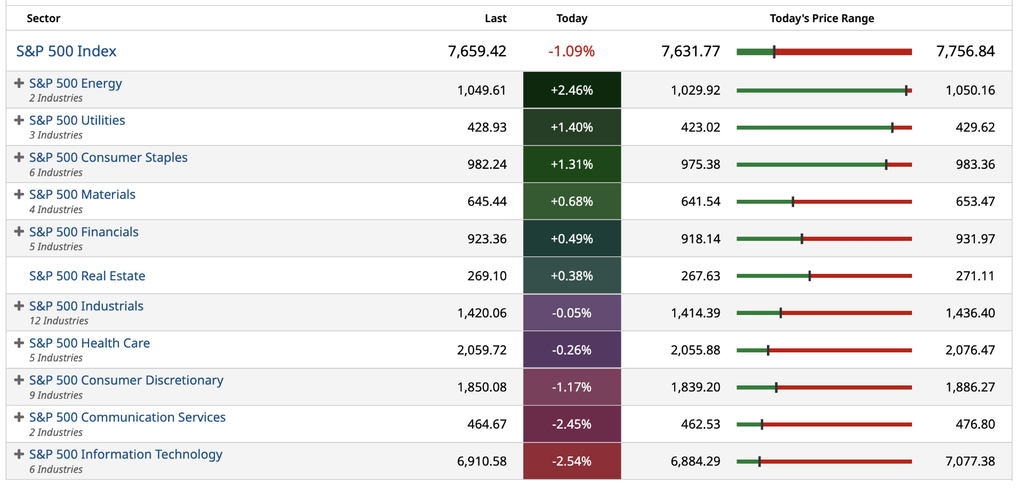
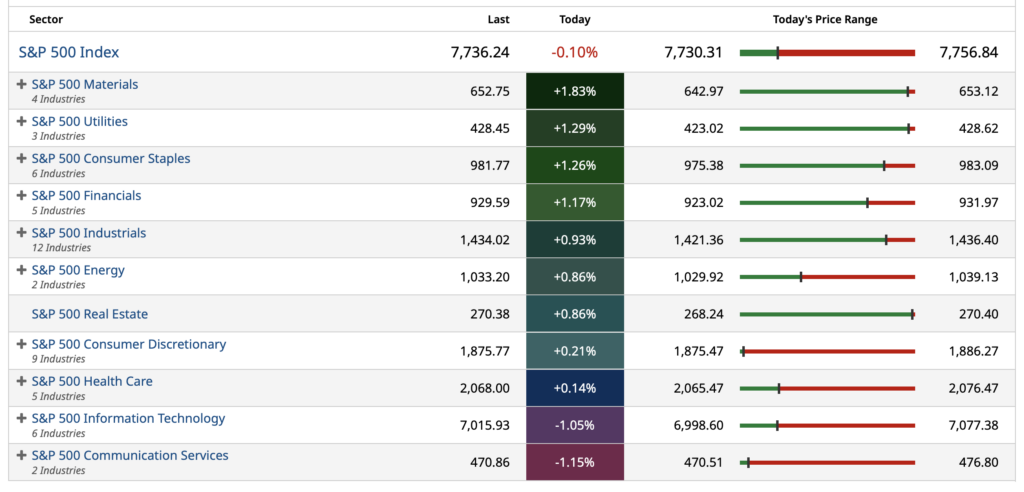
S&P 500 Sectors
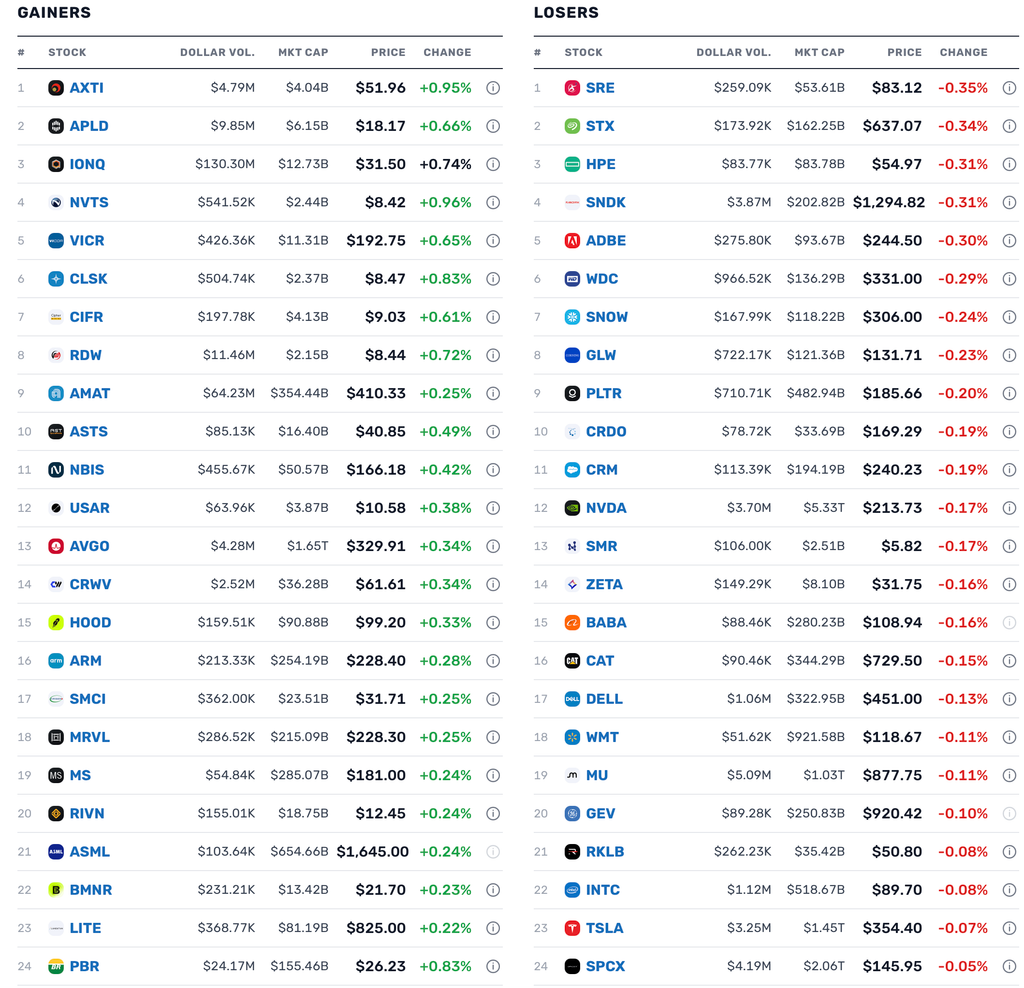
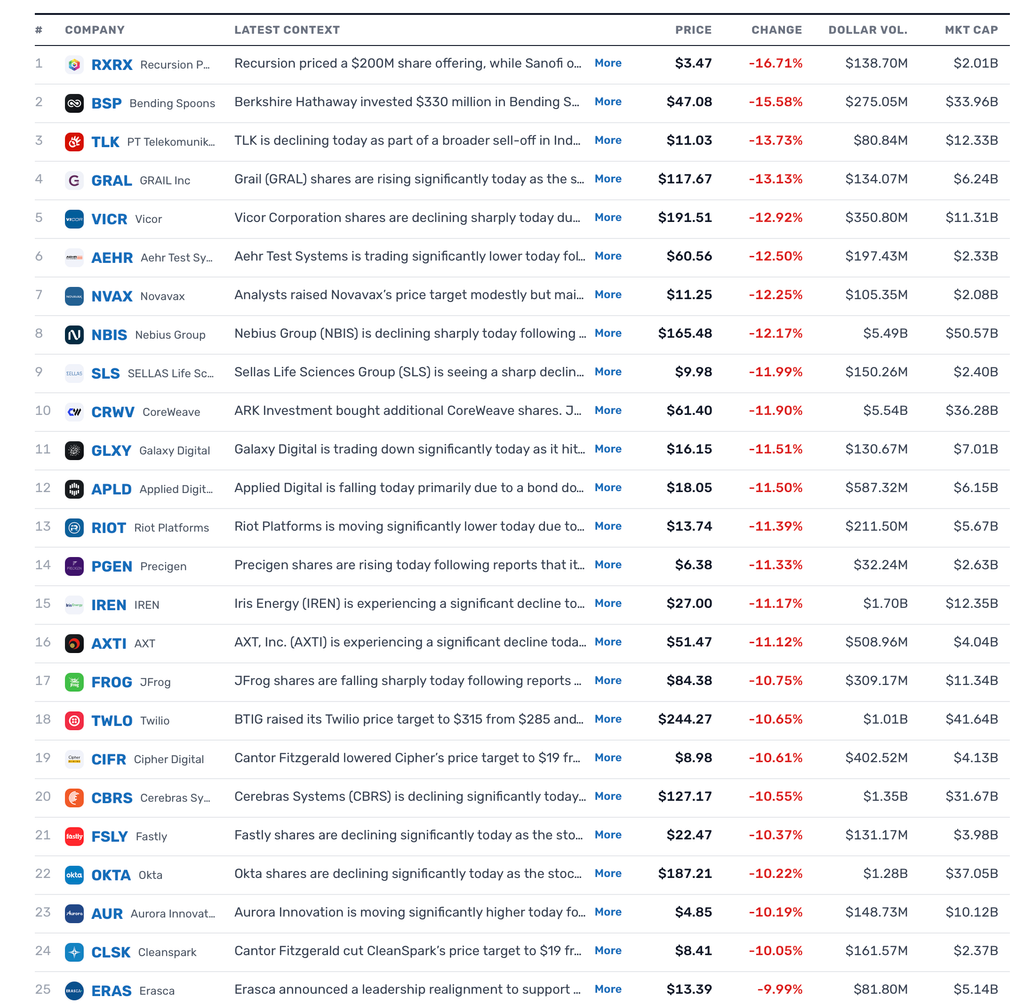
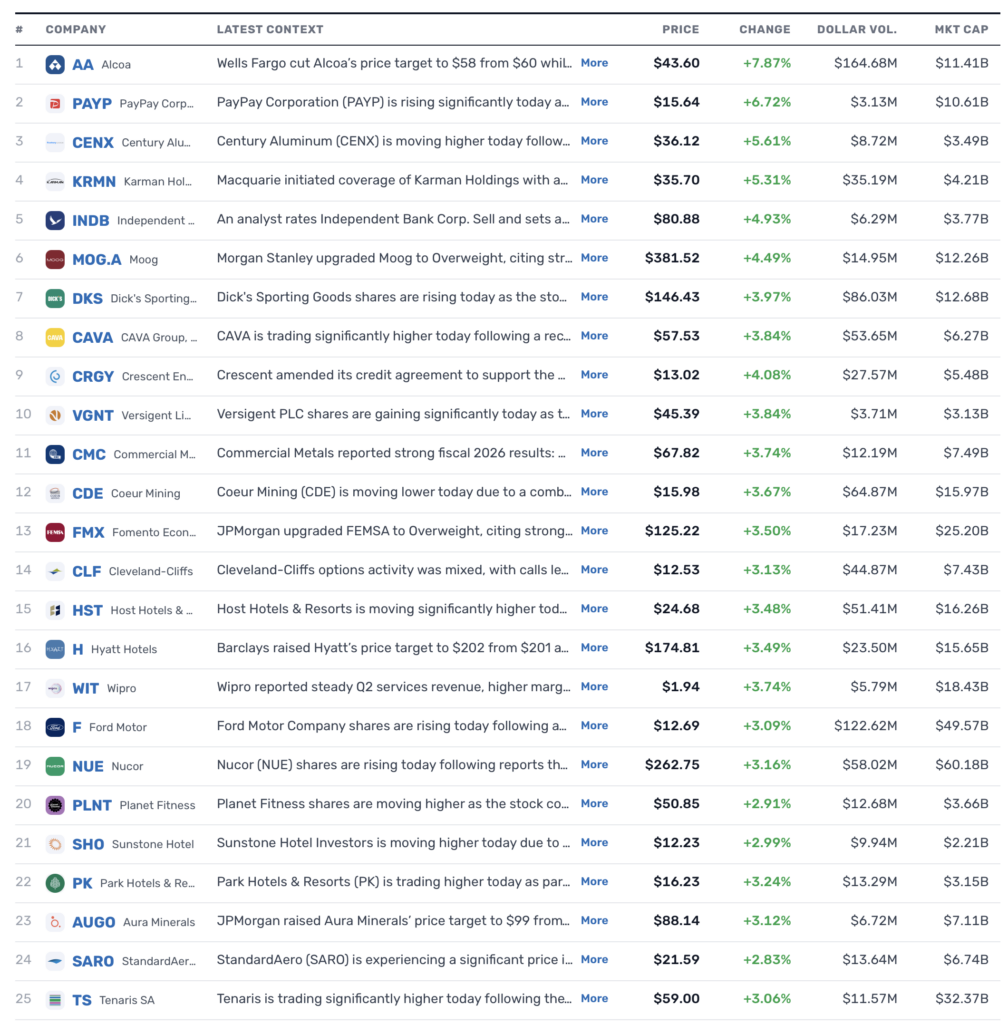
% Movers
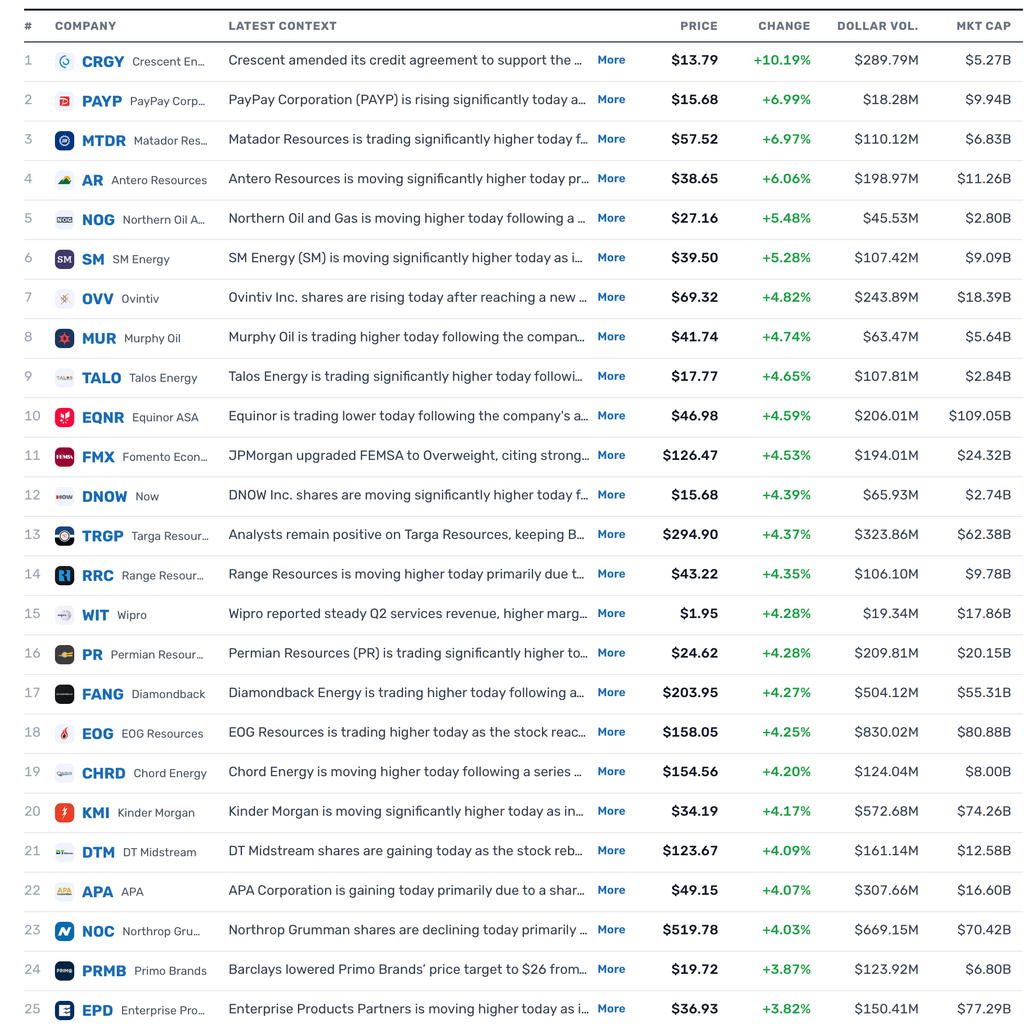
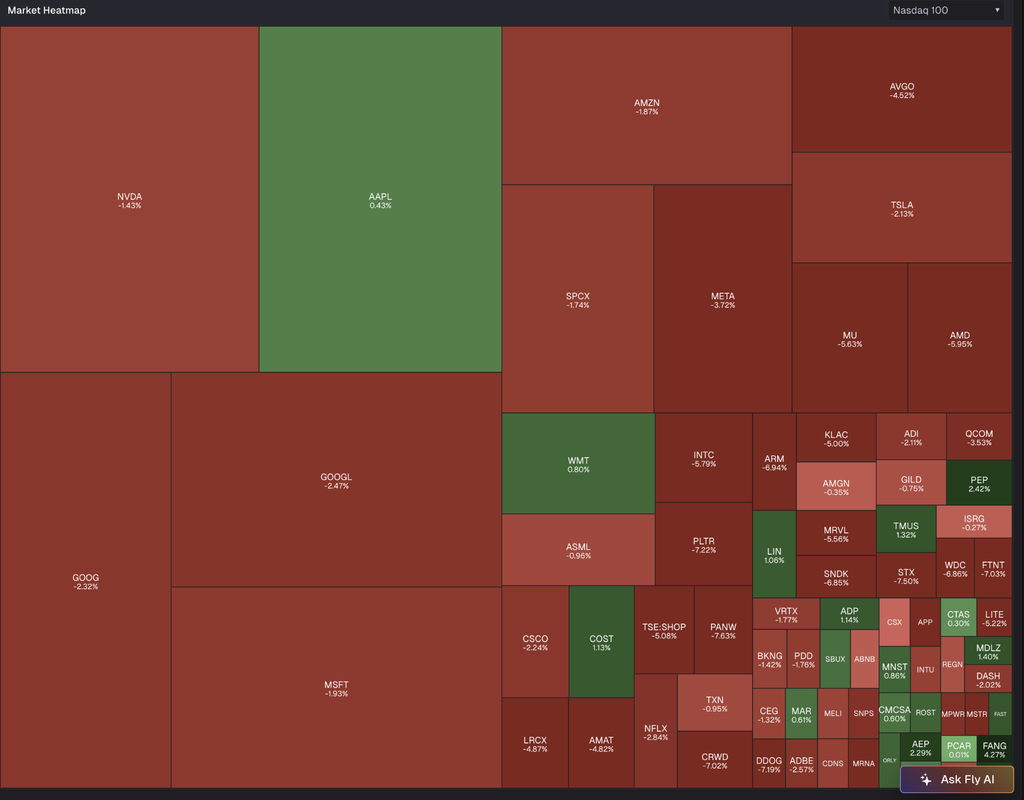
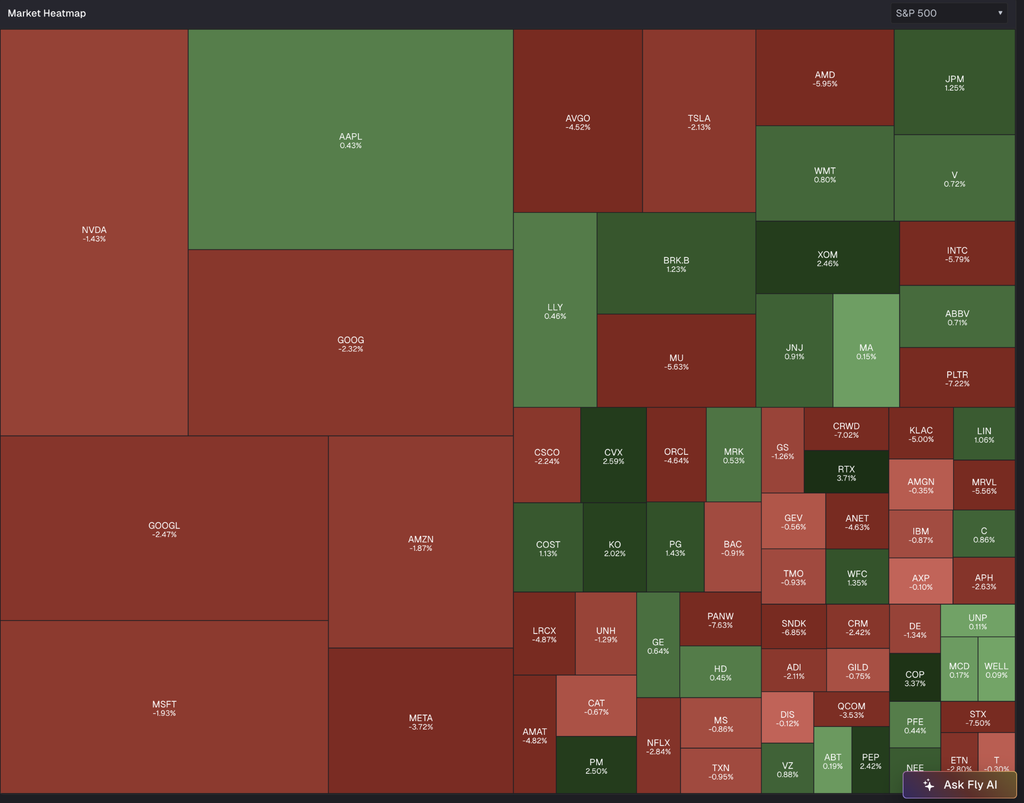
Heat Maps
Position: None
BY Doug Kass · Oct 16, 2026, 4:47 PM EDT
I am leaving early for the weekend as I have much to do regarding my return to Florida.
Thanks for reading my Diary.
I hope my output was helpful.
Enjoy the weekend.
Be safe.
Position: None
BY Doug Kass · Oct 16, 2026, 3:45 PM EDT
No trades today since my index rental.
Position: None
BY Doug Kass · Oct 16, 2026, 2:35 PM EDT
Position: None
BY Doug Kass · Oct 16, 2026, 2:21 PM EDT
Position: Long MSOS common (VL), calls (VS)
BY Doug Kass · Oct 16, 2026, 1:49 PM EDT
A few observations:
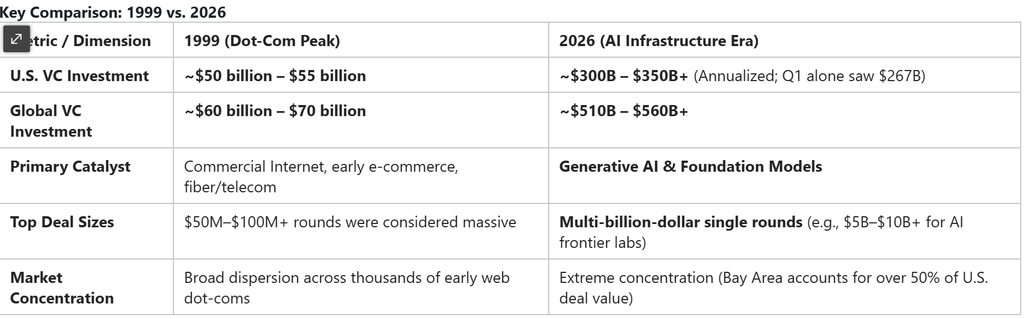
* Per my previous “Tales” in which I made the point regarding the low-quality revenue in this space due to a lot of it coming from venture-backed firms that have no future like Character AI, here is some data. Tweet and subtweet. The first tweet claims 80% of Anthropic’s and Open AI’s revenue comes from startups. I have no idea if this is true or not, but it seems plausible, when you see what these startups are actually doing both on the revenue and expense side. The subtweet from Chamath Palihapitiya of all people verifies these numbers. Then the bar graph he includes also indicates 80% of all venture funding is now going into the AI space. In dollar terms, that is a massive number, and dwarfs the $ invested in the dot-com cycle per the data below, and is also much more concentrated. The scale at which they and private capital now invest in these startups is now at another level.
A giant hunk of OpenAI and Anthropic revenue is coming from garbage that has no economics, does not need to exist, and only exists due to greater fool theory investing, and will eventually not exist, just like Character AI, which went from $2.7 billion to almost $0 in an instant. Same thing that happened in the dot-com era and sent Exodus and a lot of other things to $0. On top of that, another giant hunk of the revenue that remains for Anthropic and OpenAI comes from distillation, which will have to slow because everything for the most part has already been stolen. Even Meta (META) apparently did it to build their new model, and has now cut it off, which is funny and ironic.
Silicon Valley really did create its own circular self-fulfilling money-recycling machine. That is one more reason they are all so promotional about this stuff. There is no underlying economics, the only thing they have to rely on is the next greater fool.
* Nvidia’s (NVDA) Jensen Huang saves the day yesterday by claiming he doesn’t need to backstop CoreWeave (CRWV), “because their cost of capital is decreasing.” There was a time when you would lose all credibility for saying something obviously that stupid, wrong, and untrue. Because of that, nobody even would even say that sort of thing. Now, it is the exact opposite world. The more crazy and outlandish a statement, the more one is rewarded for it. These guys, and their circle, have become worse than politicians.
He then went on to extol the virtues of CRWV. If CRWV is so great, why doesn’t NVDA just buy them, capture the value, and solve the whole problem? Because none of it is true and if NVDA were to buy CRWV, they inherit all of the losses, and the balance sheet, and lose the ability to sell into them and recognize all the revenue without the offsetting expense. For all intents and purposes, CRWV is really just an SPV that was created to consume NVDA parts. It is an accounting vehicle built to inflate NVDA revenue and profits, in my view. NVDA invested $100 million into CRWV privately in 2023, and anchored the actual IPO with $250 million, and without their participation, the deal might not have even gotten done.
It is amazing to me GAAP allows for all of this shenanigans. If it didn’t, the internet bubble implosion, where the same stuff was done to lesser of a degree, may not have happened as well. When it is all over, the history books will reference this stuff, but nothing will probably change, and then it will happen all over again with something else in another 10-20 years.
CoreWeave’s CEO claimed his stock was going down due to the market selling his stock irrationally. If it is irrational for the market to sell his stock, why do he and all the insiders there sell it like nobody’s business? The amount of insider selling there is staggering.
“Before CoreWeave imploded, its three co-founders had been busy dumping stock, a lot of it, totaling $3.3 billion since the company’s March 2025 IPO. Michael Intrator, Brian Venturo and Brannin McBee sold $2.4 billion this year alone, according to Bloomberg’s new report on corporate filings. Intrator has sold more than $907 million in shares this year. McBee’s sales since the IPO total $1.06 billion, equivalent to 40.4% of his undiluted stake at the listing. Venturo has sold more than $1.2 billion, representing over 35% of his original holding.”
https://www.zerohedge.com/markets/coreweave-founders-cashed-out-33-billion-meltdown
If it is so irrational to sell the stock, where is the press release from them indicating ALL insider selling will now stop, and the 10b5’s are cancelled? Diversification is no longer an excuse. They have taken enough money out. I will cut these guys a break. The stock peaked at $184. I will give them a break and allow them to include the term that no selling is allowed until the stock gets back to $150, which is still well below the all time high.
Position: Short CRWV (S)
BY Doug Kass · Oct 16, 2026, 12:30 PM EDT
– NYSE volume 15% above its one-month average;
– Nasdaq volume 10% above its one-month average;
– VIX index: down 4.37% to 15.74
SOURCE: Barchart
SOURCE: Barchart
SOURCE: TheStreet Pro
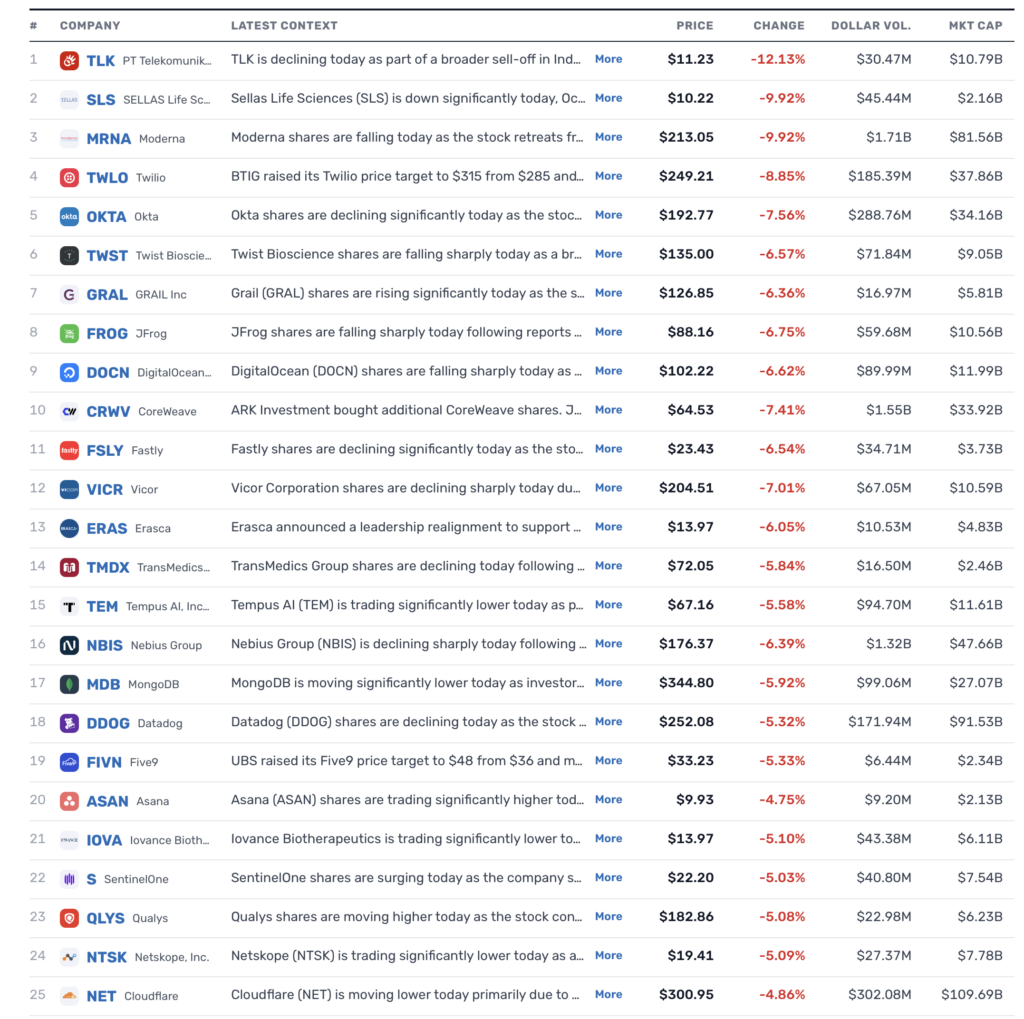
SOURCE TheFly
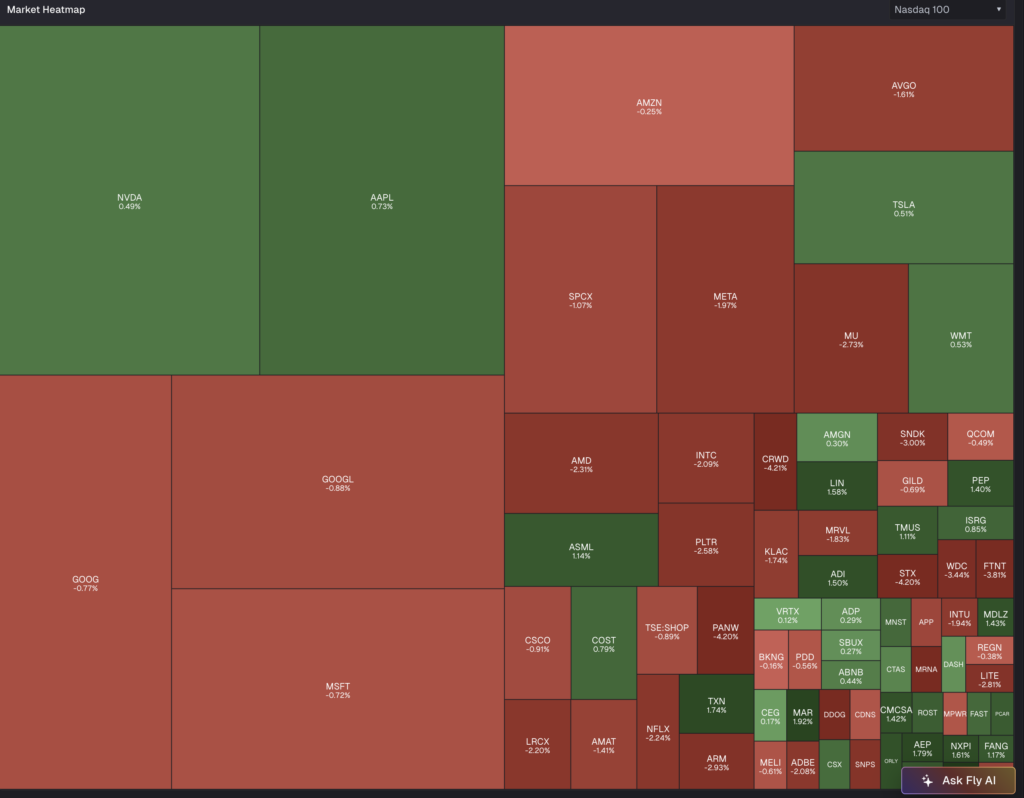
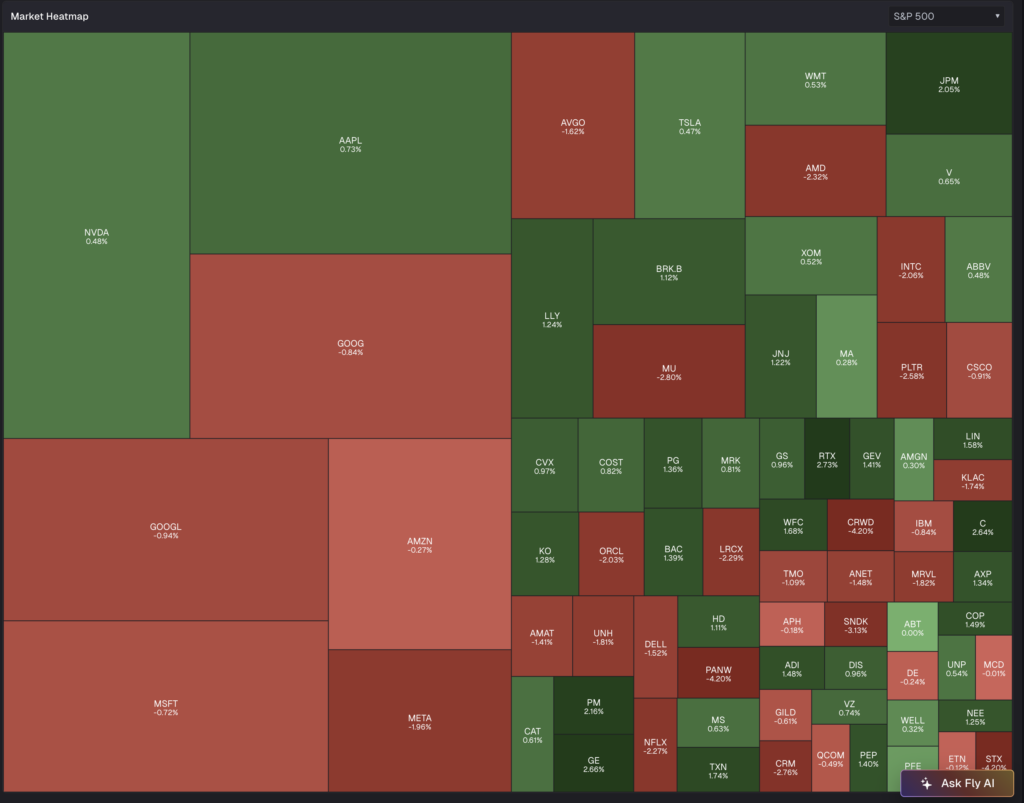
BY Doug Kass · Oct 16, 2026, 11:01 AM EDT
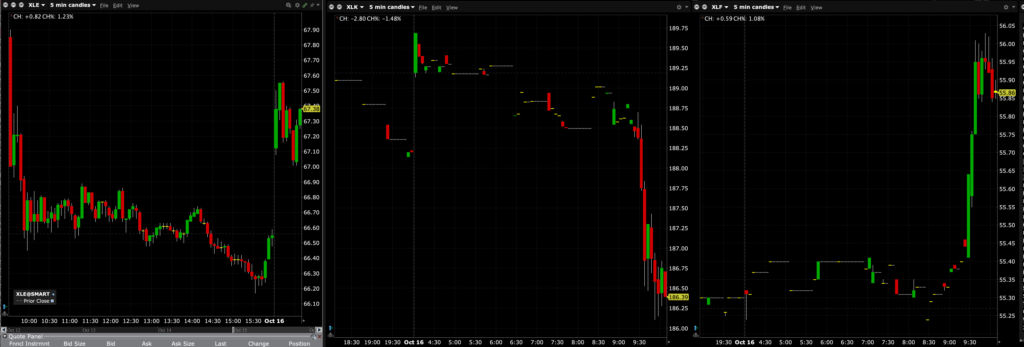
Chart from 10:07 a.m. ET
BY Doug Kass · Oct 16, 2026, 10:40 AM EDT
The following is from Peter Boockvar:
If there ever was a time since the GenAI tech trade started to accelerate in 2023 for investors to fully reevaluate their exposure, it is now. As large as the concentration is in this space in the indices, there is thus a large part that is not and that is ripe for opportunities and I’m talking globally. The question of whether the AI CapEx binge slows is not if but when and you can be sure that the stocks exposed to it peak well before the CapEx does. I still believe that from here, the benefits of the incredible technology being created will accrue to the rest of us and not to the infrastructure builders, similar to what we saw with the internet buildout.
My favorite two sectors that we own remain commodity stocks, particularly in energy, precious metals, ag and uranium and also the beaten and battered consumer staples stocks with some of the best dividend yields in the market. As I also believe the fate of the US dollar is in the hands of this AI trade, having international stock and bond exposure I think is important too with a lot of cheap stuff overseas, like in the UK, Brazil, Singapore, Vietnam, China and even France.
As expected, Kevin Warsh speaking in Thailand said nothing market moving and rate hike odds for October are now at just 14% with the December meeting still holding its high likelihood at 88%. While long rates are up today, I still think we’ve seen the peak short term. Longer term, I still expect us to be in a rising rate backdrop.
It is quiet elsewhere so we’ll just jump right to some earnings calls.
Manpower stock got slammed by 16% yesterday after they missed earnings expectations, and from them of note though they didn’t say much on the macro:
“Commercial staffing remained very positive, while professional staffing returned to growth during the quarter.”
In the US, “We saw continued solid demand across consumer goods, notably food manufacturing and logistics, as well as opportunities tied to automation and reshoring, which are driving demand for specialized technical talent.”
They have a French business too and “from what our clients are telling us and from what employers are doing, the labor market remains stable.”
From JB Hunt who slightly missed both earnings estimates while revenue beat and is down pre-market:
The top line jumped by 20% but operating income was only higher by 2%. “At an investor conference in September, we identified three primary cost headwinds this quarter, driver related investments, volatile fuel prices, and higher claims and medical cost. Driver related costs include recruiting, onboarding, training, sign-on bonuses, and targeted wage actions.”
“Capacity remains contrained, operating costs continue to move higher, and supply chains are seeking out providers that can deliver reliable capacity at scale. Most importantly, customers have gained a much clearer understanding of these realities.”
And helping to mitigate the jump in costs, “we’re asking for larger rate increases certainly than what we’ve shown so far… At the end of the day, our pricing has to outpace our inflationary costs or we have to find methods of taking costs out. I think as we went through 2025, we were very effective in our lowering our cost-to-serve initiatives and we saw success…So it is more about price at this point….Margin repair remains a top priority.”
From Prologis, the industrial warehouse owner:
“several long-term trends continue to drive demand for logistics real estate. E-commerce, advanced manufacturing, and the build out of the data center supply chain are all critical to the modern economy. Taken together, we expect demand to remain resilient even in a higher rate environment.”
“On the supply side, the bar for new development is going up. Construction costs are escalating, financing is more expensive, and return requirements are trending higher. That makes projects harder to pencil at today’s rents. All else equal, we expect fewer starts and a more favorable supply environment. That creates an attractive setup for rents.”
“Today, the rents needed to justify new construction have expanded to 27% above current market levels. That leaves meaningful room for rents to grow before new supply makes economic sense. That said, the capital markets backdrop has become more challenging. We think the recent move in rates will slow transaction activity and could put some pressure on values.”
This is what Commercial Metal, the steel maker, said on its end markets on their call:
“Beginning with infrastructure, demand remains elevated. Significant federal and state funding conditions to support a multi year pipeline of projects, and with a substantial portion of available funding yet to be spent, we have strong visibility into future activity.”
“Non-residential construction demand varies by market but remains a source of strength for CMC. Activity related to areas like data centers, power generation, utility infrastructure, semiconductor manufacturing, and institutional markets is solid and the Dodge Momentum Index remains near record levels, suggesting a robust and extensive project pipeline.”
They did mention, not surprisingly, that “residential remains mostly muted.”
BY Doug Kass · Oct 16, 2026, 10:30 AM EDT
BY Doug Kass · Oct 16, 2026, 10:05 AM EDT
Positions: None.
BY Doug Kass · Oct 16, 2026, 9:47 AM EDT
* But there are important differences which will likely produce more muted downside to the hyperscalers and more muted upside to consumer staples…
“History doesn’t repeat itself, but it often rhymes.”
– (Attributed to) Mark Twain
The U.S. stock market is starting to look like the spring of 2000 when the dot-com boom came to a halt and technology began a steep slide. At the same time, consumer non-durable (staples) stocks (as well as Berkshire Hathaway (BRK.A BRK.B) have began to perform well both absolutely and relatively.
There are, however, deep differences in both periods of time.
* Today’s large-cap technology stocks (as opposed to the dot-com stocks) have deep moats and though their commitment to massive AI spending has transformed some of the tech equities from capital light to capital intensive, they have maintained strong operating and profit profiles. Unlike 26 years ago, the Mag 7 represents a large percentage of the indices — which, amid a backdrop of passive products and strategies (ETFs, quants), means that investor inflows go into and directly/steadily support/buoy the shares of Nvidia (NVDA), Amazon (AMZN), Microsoft (MSFT), Alphabet (GOOGL), Micron (MU), Sandisk (SNDK) and Meta (META).
* Today’s defensive consumer staples have faced the competitive threat of generic and unbranded products over the last 15 years. In more recent years, they’ve encountered the introduction of GLP-1 agonists (a new class of medications that can help manage Type 2 diabetes and obesity (by reducing appetite). Unlike 26 years ago, a combination of these two factors are pressuring consumer staples’ top and bottom lines.
As a result of these differences, the downside to the Mag 7 constituents (and memory and semiconductors) is much more muted than 2 1/2 decades ago (vis a vis dot-com ‘ers). And the upside to the classically defensive consumer non-durables is also more limited than 2 1/2 decades ago.
Importantly, given the rise in the risk-free rate of return (using the 10-year Treasury note) to almost 5.3% suggests to me that rather than find a home in the consumer staples space, it is more likely that market participants will seek refuge in fixed income.
Though hyperscalers and semis/memory stocks are beneficiaries of a changed market structure, we own no large-cap tech stocks (and are short some on the periphery of Mag 7) because of our AI reservations and concerns. (See our 260 issues of the “More Tales From Nvidia” series).
We have previously taken a position in consumer staples — Kimberly-Clark (KMB), PepsiCo (PEP), Coca-Cola (KO) and Procter & Gamble (PG). But, given the profit threats, we have treated the space more as “trading sardines” and have recently trimmed all four on strength. (Earlier in the week we got lucky and sold the sharp ramp in PEP shares and sold out of the very small balance yesterday on news that KFC has ditched PepsiCo for Coca- Cola.)
Position: Long KMB (VS), KO (VS), PG (VS)
BY Doug Kass · Oct 16, 2026, 9:30 AM EDT
KKR: Morgan Stanley lowered the firm’s price target on KKR to $138 from $147 and keeps an Overweight rating on the shares. With alts down about 27% year-to-date and positioning light, the firm sees upside for alternative asset managers despite near-term realization headwinds. Easing wealth redemption requests, robust institutional demand and resilient fee growth support the firm’s 2027 outlook and re-rating, the analyst tells investors in a research note.
BX: Morgan Stanley analyst Michael Cyprys lowered the firm’s price target on Blackstone to $165 from $184 and keeps an Overweight rating on the shares. With alts down about 27% year-to-date and positioning light, the firm sees upside for alternative asset managers despite near-term realization headwinds. Easing wealth redemption requests, robust institutional demand and resilient fee growth support the firm’s 2027 outlook and re-rating, the analyst tells investors in a research note.
APO: Morgan Stanley lowered the firm’s price target on Apollo Global to $150 from $164 and keeps an Overweight rating on the shares. With alts down about 27% year-to-date and positioning light, the firm sees upside for alternative asset managers despite near-term realization headwinds. Easing wealth redemption requests, robust institutional demand and resilient fee growth support the firm’s 2027 outlook and re-rating, the analyst tells investors in a research note.
AAPL: UBS tells investors in a research note that Apple iPhone availability data shows year-over-year wait times down about 4 days for the Pro and flat for Pro Max, with recent week-over-week declines of 1 and 5 days, respectively, signaling limited estimate upside and potential demand elasticity concerns following Apple’s price increases. The firm maintains a Neutral rating and $296 price target.
TSLA: JPMorgan keeps a Neutral rating on Tesla after the company unveiled its second-generation Roadster. The car “combines conventional automotive engineering with rocket propulsion technology,” the analyst tells investors in a research note. JPMorgan says production is targeted for 2028, compared with the original 2020 delivery target announced when the vehicle was first unveiled in 2017. Tesla did not disclose final pricing, battery capacity, driving range or anticipated production volumes, adds the firm. It points out that Tesla indicated the Roadster would eventually become its only manually driven vehicle as the broader portfolio transitions toward full autonomy.
KO: Barclays raised the firm’s price target on Coca-Cola to $98 from $93 and keeps an Overweight rating on the shares. The firm adjusted targets in the consumer staples group as part of a Q3 earnings preview. The “band of interest” within consumer staples remains “quite narrow” as few companies offer a “dependably defensive outlook and attractive valuation,” the analyst tells investors in a research note.
Note: I covered all of my private equity shorts (BX, KKR and APO) on Wednesday at lower prices than Thursday’s close. Yesterday I sold down my small KO long on the Kentucky Fried Chicken/Pepsico news and as the shares of Coca Cola hit an all-time high.
Positions: Long KO VS
BY Doug Kass · Oct 16, 2026, 9:23 AM EDT
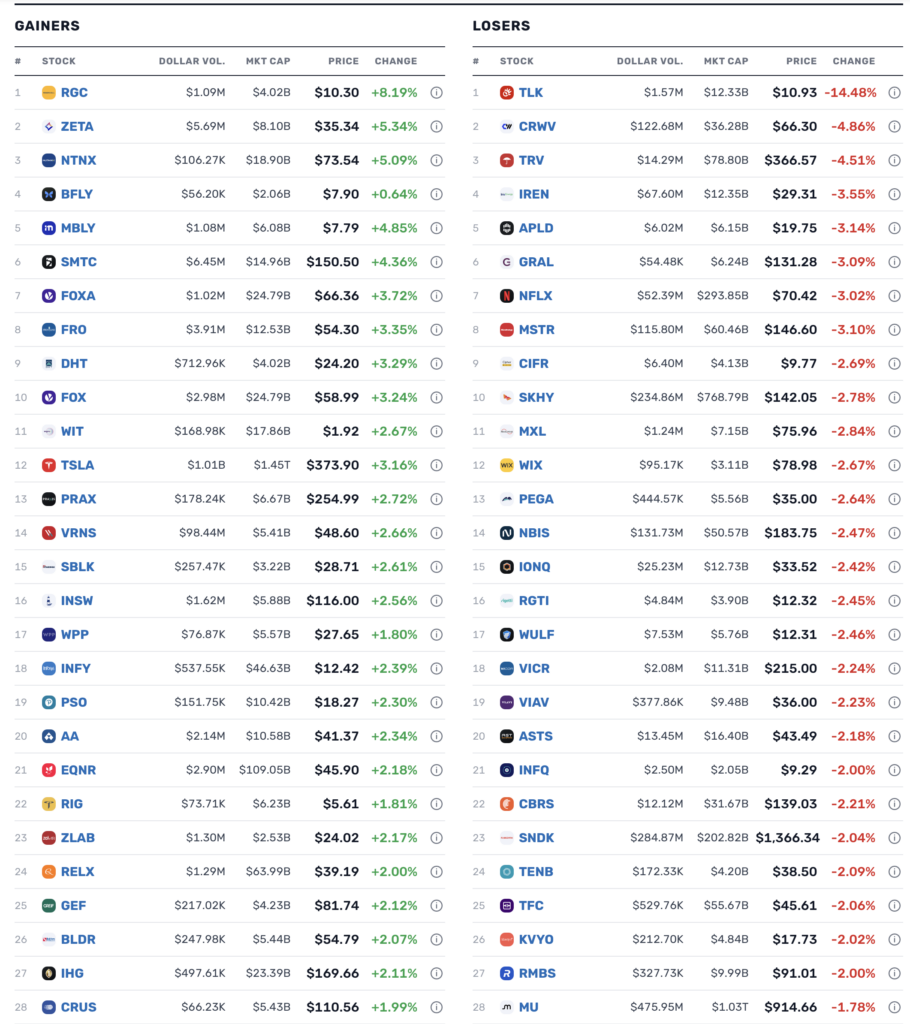
– TCRT +25.0% (extends its surge after closing a PAH-focused biotech acquisition and securing about $350M of financing)
– NCPL +19.0% (regains Nasdaq minimum-bid compliance)
– SITC +18.0% (declares a $3.00 special cash distribution after an asset sale and plans to delist from the NYSE)
– FFR +9.0% (launches the $2,490 FF Nova humanoid robot and outlines a proposed roughly $200M robotics combination)
– ASM +6.5% (Roth/MKM upgrades to Buy from Neutral and raises its target to $8)
– SMTC +4.0% (raises Q3 sales, operating-margin and EPS outlooks at its data-center analyst day)
– TSLA +3.0% (unveils a redesigned Roadster featuring rocket-style thrusters)
– STLA +3.0% (better-than-feared Q3 shipment update showed consolidated volumes down just 1% year over year)
– FRO +3.0% (tanker shares rebound as geopolitical disruption continues to support shipping rates)
– RBRK +3.0%, VRNS +2.5% (cybersecurity names rise after VRNS agreed to a $6.3B all-cash acquisition)
– NOK +2.5%, AAOI +2.0% (networking and optical names gain after SMTC raised its data-center outlook)
– GUTS -53.0% (REMAIN-1 met its six-month co-primary endpoint, but 5.1% weight regain versus 8.2% for sham and a still-pending one-year co-primary fell short of elevated expectations)
– JAGX -29.0% (special preferred-stock dividend was paid, with each preferred share set to convert into five common shares on November 2, intensifying dilution concerns)
– MDXH -17.0% (suspends FY revenue guidance after preliminary Q3 revenue of about $22.7M)
– TLK -15.0% (Indonesia ADR slumps after a warning that the country could face an emerging-market index downgrade)
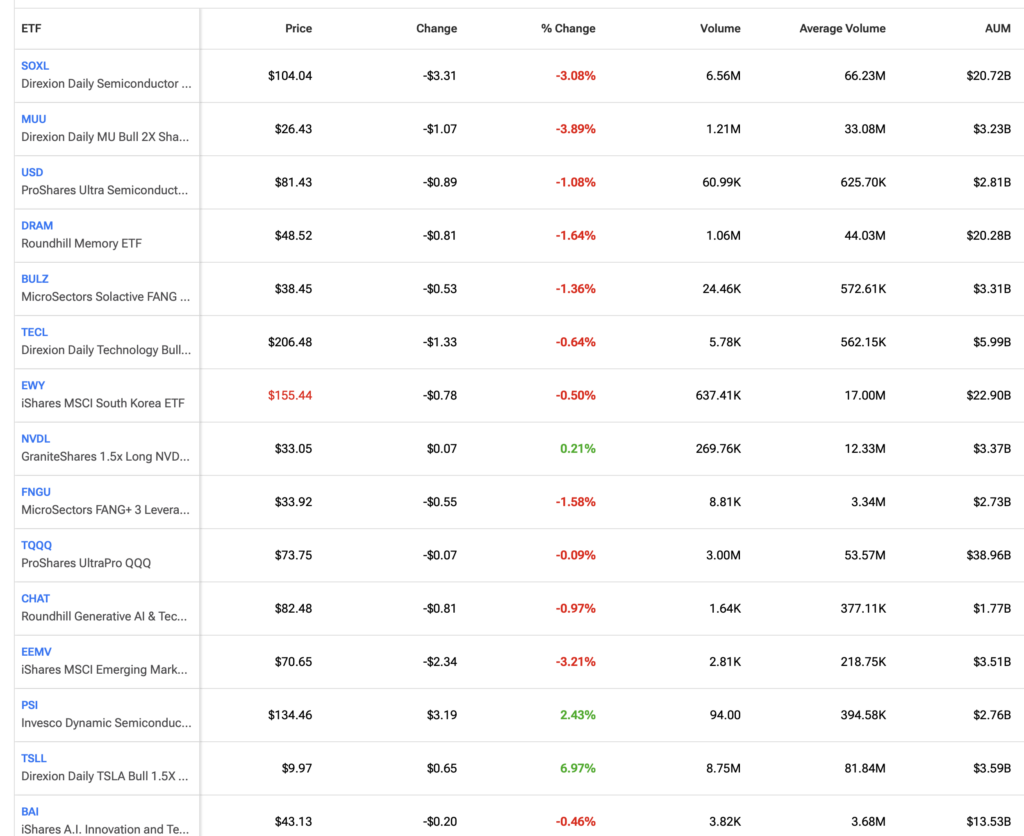
– CRWV -5.0%, IREN -3.5%, NBIS -2.5% (AI-infrastructure names extend their selloff on debt-funded buildout and profitability concerns)
– TRV -4.0% (Q3 beat with lower-than-expected catastrophe losses, but shares sell the news after elevated expectations)
– SKHY -3.5%, SNDK -2.5%, MU -2.5%, ALAB -2.5%, WDC -2.0%, AMD -2.0% (chip and storage names weaken as the AI trade de-risks amid higher-rate concerns)
– IONQ -2.5%, ASTS -2.5% (speculative long-duration growth names weaken as rate-hike expectations rise)
– MSTR -2.5%, HUT -2.0%, CRCL -1.5% (crypto-linked shares trade lower amid broad risk-off positioning)
BY Doug Kass · Oct 16, 2026, 9:00 AM EDT
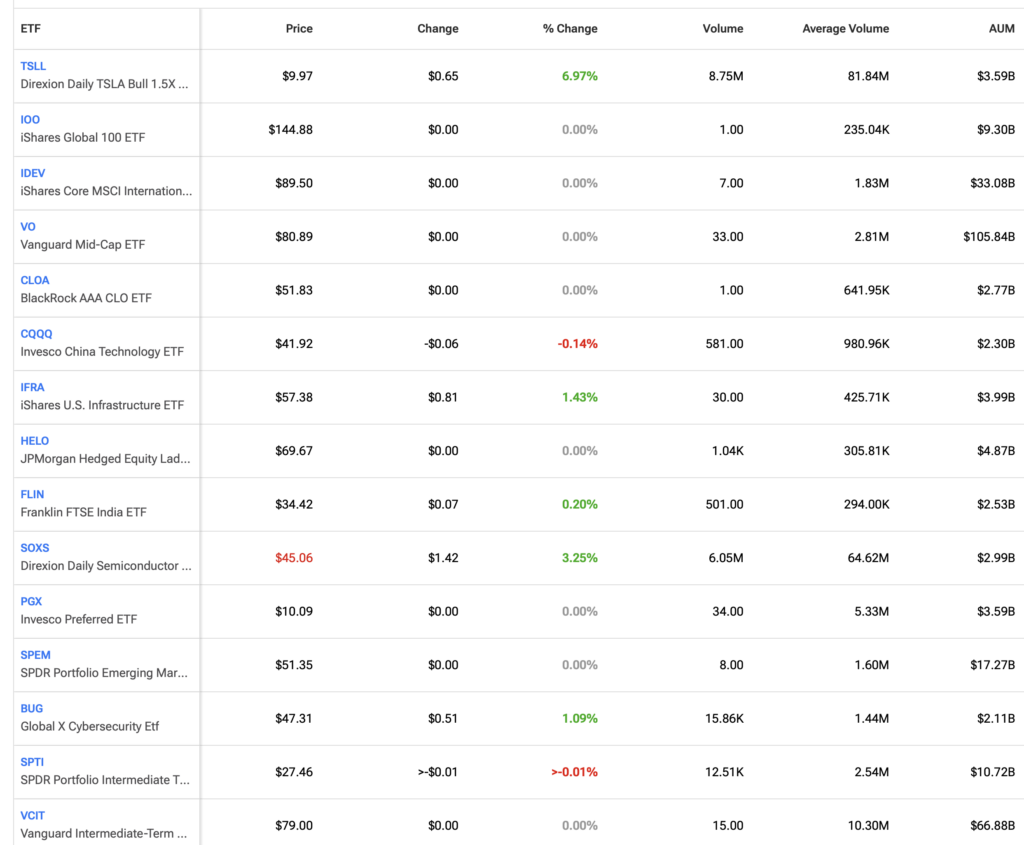
Source: TheStreet Pro
BY Doug Kass · Oct 16, 2026, 8:45 AM EDT
Source: TheStreet Pro
BY Doug Kass · Oct 16, 2026, 8:28 AM EDT
BY Doug Kass · Oct 16, 2026, 8:19 AM EDT
Central Banks Cannot Fix The Sovereign Debt Bubble
Position: None
BY Doug Kass · Oct 16, 2026, 8:10 AM EDT
Position: None
BY Doug Kass · Oct 16, 2026, 7:57 AM EDT
Position: None
BY Doug Kass · Oct 16, 2026, 7:30 AM EDT
Position: None
BY Doug Kass · Oct 16, 2026, 7:21 AM EDT
Position: None
BY Doug Kass · Oct 16, 2026, 7:10 AM EDT
I am back shorting SPY at $773.35.
Position: Short SPY (S)
BY Doug Kass · Oct 16, 2026, 6:57 AM EDT
* But more to the left!
The volatility of certain sectors demonstrated yesterday — particularly semiconductors and memory — is growing extreme and (to be honest) I am not sure what it portends for the near or intermediate term.
I do know when Micron (MU) trades down to $858 and closes at $931 (+$17 on the day) and Sandisk (SNDK) trades down to $1,276 and closes at $1,391 (-$12) such wide intraday swings render trading difficult to impossible.
This extreme intraday volatility has become routine in a market that now more resembles a casino than a capital market.
As would be said on “American Bandstand” — I give it a 78 I am not sure of the beat but it’s hard to dance to.
American Bandstand – Record Review Beatle Edition
This sort of extreme volatility likely indicates a lot of uncertainty and depending on your risk appetite and profile, most should pass on trading these stocks. And if you are trading the QQQs one might reconsider VAR (“value at risk’) and reducing the size of your trading (and investing) positions.
I know I am.
Position: None
BY Doug Kass · Oct 16, 2026, 6:45 AM EDT
Position: None
BY Doug Kass · Oct 16, 2026, 6:35 AM EDT
Position: None
BY Doug Kass · Oct 16, 2026, 6:25 AM EDT
Position: None
BY Doug Kass · Oct 16, 2026, 6:12 AM EDT
Dougie Kass
With S and P cash + 33 vhandles. I am back shorting SPY at $772.58
Dougie Kass
Covered SPY short at $770.86 for a small profit – its just too volatile for my taste into the weekend (as I will discuss in opener).
Position: None
BY Doug Kass · Oct 16, 2026, 5:55 AM EDT
The S&P Short Range Oscillator stands at 0.74% (modestly overbought) vs. -0.41% (slightly oversold).
I have no index positions on.
Position: None
BY Doug Kass · Oct 16, 2026, 5:45 AM EDT
rumours that VARA AI fund is getting blown up Here are its holdings lol

Dumb da dumb dumb da. The CoreWeave selloff shows a pressure point from climbing borrowing costs wsj.com/finance/stocks… via @WSJ Show more
Deutsche Bank: "CoreWeave no doubt will need additional capital to fund existing backlog over the next 12-18 months," with NTM operating cash flow of ~$10 billion against required capex of $45 billion. That is a $35 billion funding gap: if even half of it had to be raised at the Show more


From my newsletter from Monday wheresyoured.at/annualized-enr…


I suspect 70-80% of revenues at AI companies are from other AI companies who’ve raised money from the Venture industry. This is not a circular revenue problem but it is a revenue quality problem. We’ve seen this before in the SaaS cycle in the early/mid 2010s.
Oh dear. Sept PPI came in at 1.3% m/m, significantly above the est for 0.6% and the highest since March 2022, the first full month of the Russia-Ukraine war. And it wasn't just oil--without Energy's contribution, the m/m rate would have still been over 0.6%.

AI manics are desperately extrapolating Anthropic's q/q growth without recognizing most of the surge happened *within* 2Q26 driven by a period of tokenmaxxing and low competition that will never exist again. The four months since look very different. x.com/BobEUnlimited/…

AI manics set to panic as Anthropic confirms *flat* ARR in 3Q. If Jul 26 ARR was 65bln, and total 3Q26 Revenue was 67.2bln, then basically no ARR growth. Even worse than the @tickerplus
VOLUME: big acceleration during big Tech's selloff yesterday

Talked to Michael from Coreweave about debt six months ago: 18:18–23:43: Jason asks about CoreWeave’s debt; Michael answers (cleaned of filler words and stutters, otherwise as spoken) JASON: How does all that debt work? That is something you guys specialize in. Corporate Show more


