Boockvar Recaps the Week
The following is from Peter Boockvar:
Succinct Summation of the Week’s Events:
Positives,
1) What a Thanksgiving day of family, food and great football games.
2) Weekly jobless claims fell to 189k from 202k and that was 11k below expectations. Continuing claims totaled 1.697mm after the jump to 1.792mm in the week before.
3) Personal income rose .7% m/o/m, almost twice the estimate of up .4%. Private sector wage growth in particular was up .5% m/o/m. As this was above the more muted pace of personal spending, the savings rate rose to 4.1% from 3.6%.
4) Mortgage applications for purchases jumped 10.2% w/o/w after a 2.5% drop in the week before. Refi’s were little changed, up .5%. This with an average 30 yr mortgage rate of 7.38%.
5) October core durable goods orders rose 1.2% m/o/m, exceeding the estimate of up .7% and September was revised up by 2 tenths to an .8% gain. Data center build is of course helping out with a 1.8% rise in machinery orders and by 16.7% y/o/y and a .4% gain in electrical equipment and up by 4.2% y/o/y. Primary metals orders were down slightly but up 19% y/o/y. Computer products fell 1% but after jumping by 4.3% in September and 2.4% in August. Orders for vehicles/parts grew by .9% m/o/m and 7% y/o/y.
6) The November consumer confidence index from the Conference Board jumped to 103.3 from 91.9 with both the Present Situation and Expectations components contributing to the gain. One yr inflation expectations were little changed at 5.7% vs 5.8% in October. Helping confidence was the 4.6 pt rise in those saying jobs were Plentiful to the best since May 2025 and 3 pt fall in those saying they are Hard to Get to the least since October 2025. Also, those that foresee ‘more jobs’ in the coming six months rose by 2.8 pts to also the highest since May 2025. Income expectations were unchanged. Spending intentions improved too for the big ticket things like autos and homes along with major appliances. With services it was more “mixed.” The Conference Board said “Write-in responses in November were slightly less negative than previous months. While consumers continued to express frustration with high prices and rising costs, some comments cited hope for the general economy. Comments about war and conflict ticked up slightly, along with mixed feelings about elections, politics, and the direction of the labor market.”
7) The November Richmond manufacturing index bounced back above zero at +3 vs -2 in October. Prices paid and received both remained very elevated.
8) Ocean container shipping prices continue to weaken after the sharp rise since February. The Shanghai to LA trip fell 8.4% and lower for a 3rd week to the lowest since August at $6,437 for a 40 foot container. It was though at $2,191 at the end of February. The route to NY declined for a 5th week and by 7% to $7,615, the cheapest since late July but still compares with $2,771 in February.
9) Old news as we’re about 2/3 done with Q4 but Q3 GDP was revised up to 4.3% q/o/q annualized growth, up from 3.5%. Contributing 4 tenths to that was the downward revision of 4 tenths to the GDP deflator. The other help was the 3 tenths upward revision to personal consumption. GDP growth was up 2.3% y/o/y. Sifting out the AI contribution, ‘software’ and ‘info processing’ added 146 bps to GDP and ‘industrial equipment’ added another 23 bps.
10) From Dell: “Infrastructure demand continues to outpace supply. As we look into next year, the gap between component supply and end user demand continues to widen…In fact, we think the demand is further ahead of supply in calendar ‘27 than it’s been in ‘26.”
11) From HP Enterprise: “Orders growth continues to reflect strong demand across the portfolio, driven by AI infrastructure spending in data center switching and routing.”
12) From Dick’s Sporting Goods: “Our consumer is remaining really strong, and so, as we’ve talked about for many quarters now, we are seeing growth in our overall database…So again, the consumer is going through a lot right now, but they are still prioritizing health and wellness, and they’re certainly gravitating toward performance and newness and technicity. And that’s true across the entire portfolio.”
13) From Best Buy: Comps jumped 6.1%, “our highest in five years…Our top line strength was broad based across almost all product categories, our service offerings in both digital and store channels.”
14) From Dollar Tree: “Traffic is accelerating as our assortment, store execution, and marketing come together to strengthen our appeal to customers…As we said in August, consumers are under pressure, and they are increasingly selective about where and how they spend. When under pressure, shoppers prioritize value and buy closer to need. They are also more selective with their purchases. And when customers make those choices, more of them are choosing Dollar Tree…our business is still the lower income customer, but we’re seeing a lot of growth in the middle and higher income customer.”
15) From Kohl’s: Comps rose 1.2% “As we make steady progress on our strategic initiatives, our customers are responding favorably, driving broad based improvements across the business…I would also like acknowledge that we are operating in a challenging macroeconomic environment. The core customers that we serve are facing inflationary pressures in their daily expenses that are altering their behaviors when shopping discretionary categories. And while customers have remained resilient, it’s clear that they’re migrating to value with their purchases.”
16) From Williams Sonoma: Helping to drive comp growth in a “housing market that has gotten worse” they said, “We continue to take market share in the fragmented home furnishings industry, while increasing our penetration of the full price selling and delivering strong earnings growth.”
17) From BJ Wholesale: Comps ex gasoline rose 4.1% y/o/y. “Turning to the broader environment, our consumer remains resilient. This quarter, more members shopped with us and spent more across every income level, with a growing share choosing higher tier memberships. We also continued to gain share.”
18) The November German IFO business confidence index rose .5 pt m/o/m to 90.6 with both the Current Assessment and Expectations components higher. That’s the highest since May 2023. The IFO said simply “The recovery of the German economy is proceeding, but it lacks breadth.”
19) India remains an economic bright spot with its November manufacturing PMI at 56 vs 54.7 and services at 55.3 vs 55.8.
20) The preliminary November Eurozone PMI was unchanged at 51.7 with manufacturing up slightly at 52.9 while services slipped a touch to 51.2. France was particularly weak in both, offset by above 50 prints for each component in Germany. S&P Global said, “While growth in Germany has accelerated to the fastest for four and a half years, as its manufacturing sector enjoys a growth spurt of the likes not seen for over five years, France is suffering a deepening downturn.” Further, “Just as manufacturers of business equipment and machinery are enjoying their day in the sun amid surging investment spending on defence and AI-related technologies, boosting Germany’s economy in particular, uncertainty about the pollical environment, social unrest and the high cost of living are hitting service providers especially hard, especially for consumer-facing businesses, dampening growth both in France and across the rest of the region as a whole.”
21) France’s November CPI slowed to 3.2% y/o/y vs 3.7% in October and less than the estimate of up 3.6%. Spain too with its CPI coming in at 4.1%, still hot, but vs 4.9% last month and vs the consensus of 4.7%.
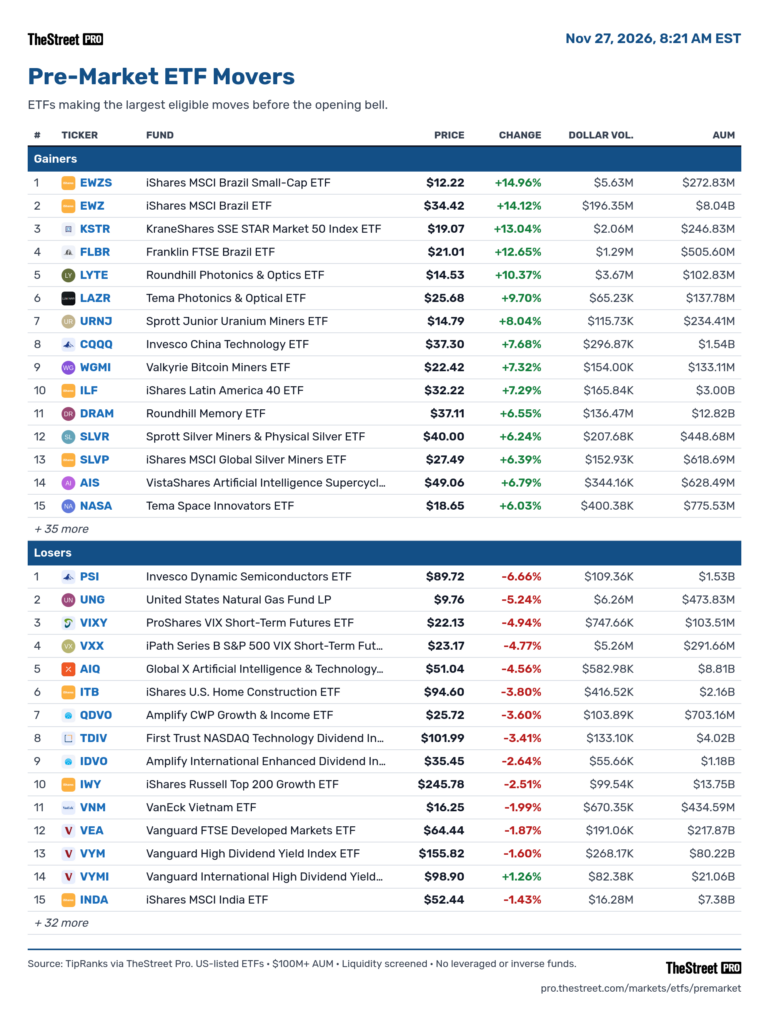
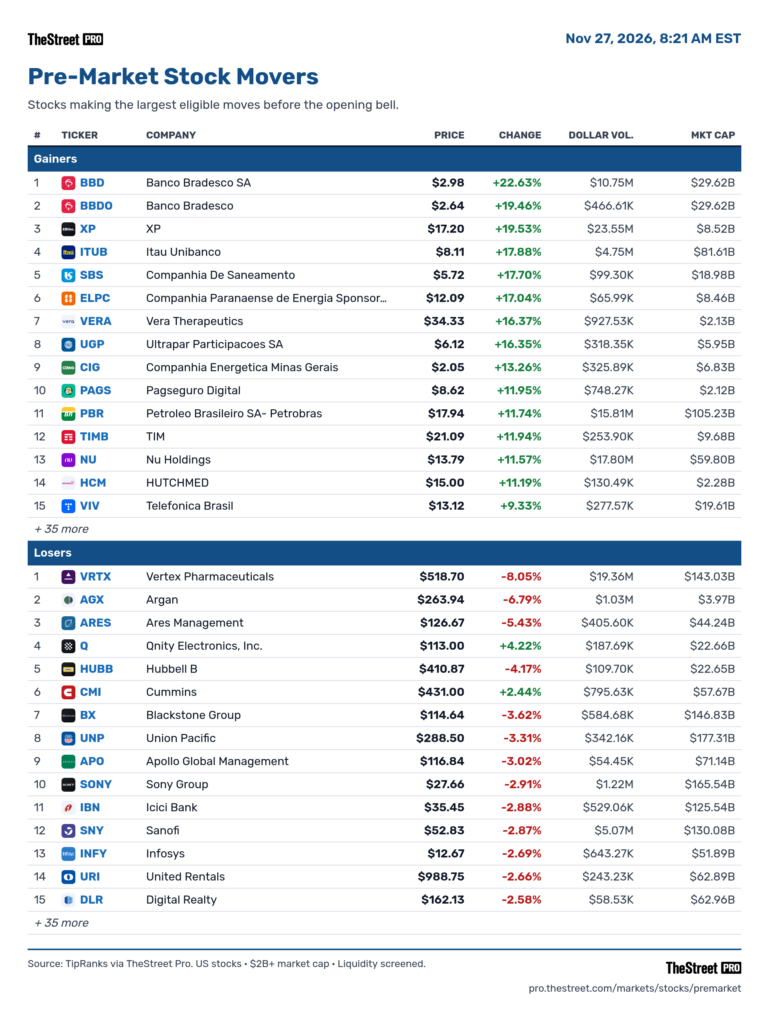
22) Brazilian markets rallied sharply after Lula appointed a very reputable Carlos Trabuco to be his finance minister.
23) Still remaining well above the BoJ overnight rate, Tokyo CPI in November rose 2.5% y/o/y, 2 tenths below expectations while the headline rate of 2.8% was 3 tenths less than the estimates.
24) Helped by the AI hardware suppliers, Taiwan’s economy grew by 14.4% in Q3 y/o/y as forecasted.
Negatives,
1) More tariffs?
2) Still sounds like a 2 ish % type economic growth rate in the US. From the Beige Book: “Eight of the twelve Federal Reserve Districts reported growth in the slight to moderate range, while four Districts reported no change. Consumer spending was little changed, as households remained price sensitive and were increasingly selective in discretionary purchases.”
3) More from the Beige Book: “Auto sales softened, which contacts attributed to elevated fuel prices and higher interest rates. Residential real estate activity weakened as affordability challenges suppressed demand, while commercial real estate activity was mixed. Construction activity declined amid higher borrowing costs and elevated construction costs. Manufacturing activity grew modestly overall, as robust demand in several industrial segments offset weakness in consumer-facing and housing-related goods.”
4) The Beige Book on the labor market: “Employment levels rose slightly on balance, with many firms reporting stable head counts and hiring primarily to replace for attrition, while only a minority noted meaningful increases. Contacts across several sectors cited steady or rising labor demand, though many also described hesitancy to hire amid uncertainty and weakened consumer spending.”
5) The Beige Book on prices, still a problem: “Prices increased moderately overall, as in the prior reporting period. Contacts across a range of sectors reported sustained cost pressure from energy, transportation, healthcare, insurance, and tariff-related expenses. Raw materials, metals, freight, and specialized imports also contributed to operating cost pressures. Input cost growth generally outpaced increases in selling prices, as competitive pressures and customer price sensitivity limited firms’ ability to fully pass through higher costs. Contacts expected both expenses and prices to continue rising in the coming months.”
6) The PCE inflation stats were as expected for October as they usually are since it comes weeks after the CPI and PPI figures. Both headline and core rose .3% m/o/m and by 3.8% and 3.3% respectively.
7) Personal spending in October rose .3% m/o/m but that only kept pace with inflation.
8) According to Liquid Compute, excess computing capacity is hitting the market as many facilities in Southeast Asia lose China as a customer. Good for those in need of compute, not good for the infrastructure builders.
9) Good for those that own a home but not for those looking to buy and for the pace of transactions, home prices rose nationally by 2.1% in September y/o/y according to S&P Cotality, a similar pace seen in August. This index is up 59% over the past 7 years and helps to explain why so many young people are angry.
10) The November US manufacturing PMI fell to 54.5 from 54.9. S&P Global said of note, “While new orders placed at factories grew at a marginally faster rate, the pace of order book growth was the second weakest seen over the past eight months. Output growth moderated accordingly, down to a three-month low, and the rate of job creation ticked lower, though notably remained the second strongest since July 2021. Suppliers’ delivery times meanwhile lengthened to a degree not seen since August 2022, boosting the PMI, but the first fall in inventories of purchases since February acted as a drag.”
11) From HP Enterprise: “as you think about ‘26, we had significant double digit increases in commodities and we just expect that the level of that increase is going to moderate…And yes, we will continue to pass those price increases through. So, we are not going to stop doing that.”
12) From Dell: In their client solutions group, “Revenue grew 3% in a softer PC unit market as the industry adjusts to higher price points. Customers are prioritizing their budgets near term to servers and storage, electing to defer some PC related refresh.”
13) From Burlington Stores: Comp growth was just 1%. “Candidly, we are disappointed with this result. We came into the quarter believing that we had an opportunity to drive stronger comp growth. The quarter started slowly with modest comp growth in August. We then built nice momentum in September as the weather began to turn more seasonable. However, much warmer weather in October had a significant impact on our store traffic and sales trend. This weather unfavourability and softness in the comp trend has continued into November month-to-date.” They think weather had “a negative 300 bp impact on our comp in the third quarter.”
14) The RBA has been hawkish as they’ve taken their benchmark rate above where it peaked a few years ago with its rate at 4.85%. October trimmed mean CPI rose 3.8% y/o/y, above the estimate of 3.6%.
15) In Australia, things were soft with their November manufacturing PMI at 48.7 vs 49.6 in October and services falling to 46.2 from 48.5.
16) Japan’s November manufacturing component lifted to 53.7 from 53.3 but services slipped to 50.5 from 51.7. Manufacturing “continues to be supported by strong demand conditions, particularly across the semiconductor and wider electronics industry,” said S&P Global. And, the new export business was up at the “second sharpest rate since January 2018 (after August 2026) , with firms noting robust demand across other major Asian economies in particular.” With costs, “Inflationary pressures meanwhile remained substantial, despite rates of both input cost and output charge inflation edging lower from the highs seen earlier in the year.”
17) The Bank of Korea hiked rates by 25 bps to 3.25% but as expected. The Governor said “By acting preemptively, we can limit the degree of tightening needed later and reap the benefits of acting early. We expect consumer price inflation to converge to our target only in 2028.”
18) In the UK, the composite PMI index was lower with services falling to 52 from 52.8 while manufacturing was little changed at 52.7. S&P Global said, “Encouragingly, business confidence has improved, with optimism about the year ahead regaining the levels seen prior to the outbreak of war in the Middle East back in February, indicating that the recent Budget has been generally well received by the business community.”
19) German unemployment in November rose by 9k people, twice the estimate. Their unemployment rate though held at 6.4%.
20) The November Eurozone Economic Confidence index fell to 95.8 from 96.5 and below the estimate of 97.2. Manufacturing softened after 5 months of improvements. Services confidence was unchanged, rose for consumer and retail and slipped in construction.
BY Doug Kass · Nov 27, 2026, 9:55 AM EST