Israel Votes Today in Its Most Consequential Election in Decades, but It May Take Months to Settle
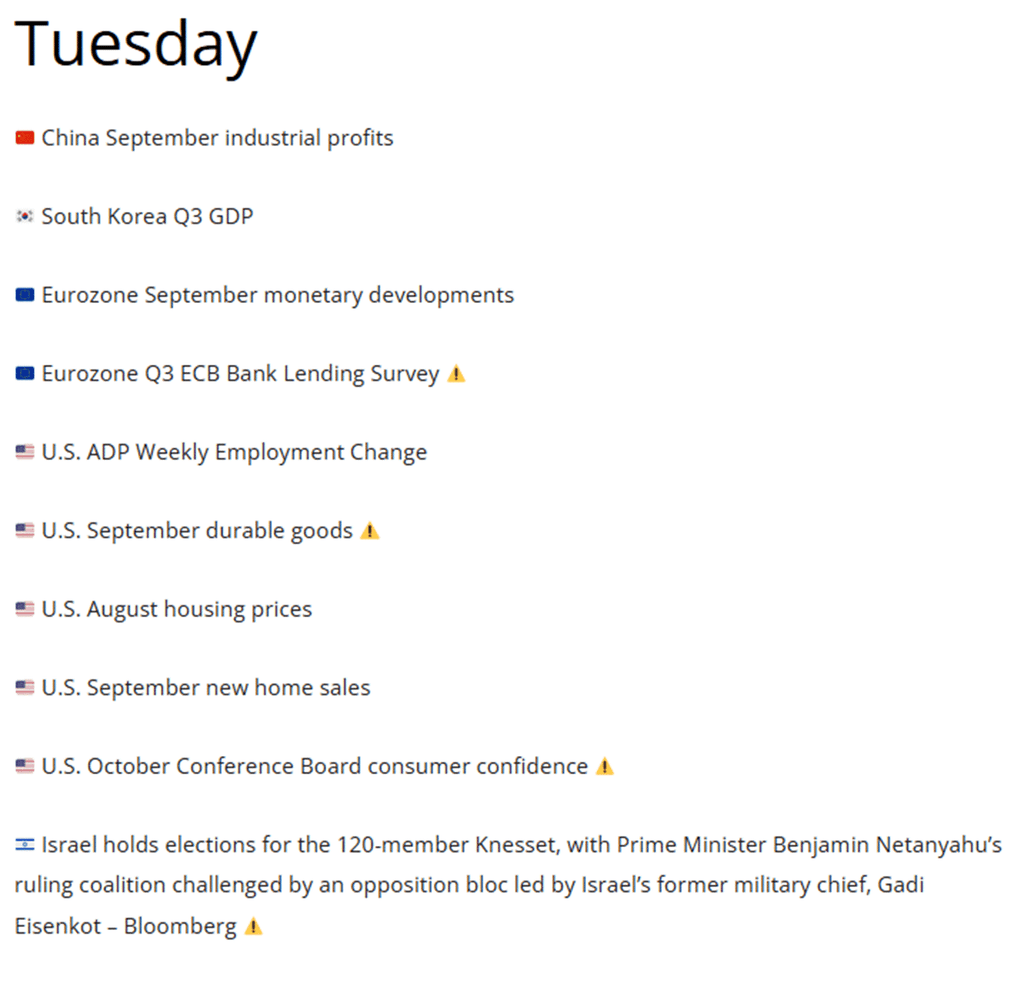
Israelis are voting today in what many on both sides call the most consequential election in the country’s history. It’s the first since the Oct. 7, 2023, Hamas attack and the wars in Gaza, Lebanon and Iran that followed, and turnout is running at the fastest pace in nearly half a century, per Reuters.
The choice is stark. Prime Minister Benjamin Netanyahu, Israel’s longest-serving leader, is running on his record against Hamas, Hezbollah and Iran, backed by an endorsement from President Trump, and says only he can keep the country safe. His main challenger, former military chief Gadi Eisenkot, is campaigning on accountability for Oct. 7, per the FT. That includes a state inquiry that Netanyahu’s coalition has resisted, reversing parts of the judicial overhaul and ending the military-service exemption for ultra-Orthodox men. On security, though, the gap is narrower. Both oppose a Palestinian state, and Eisenkot has pledged to end Hamas’s rule in Gaza within 18 months, per the WSJ.
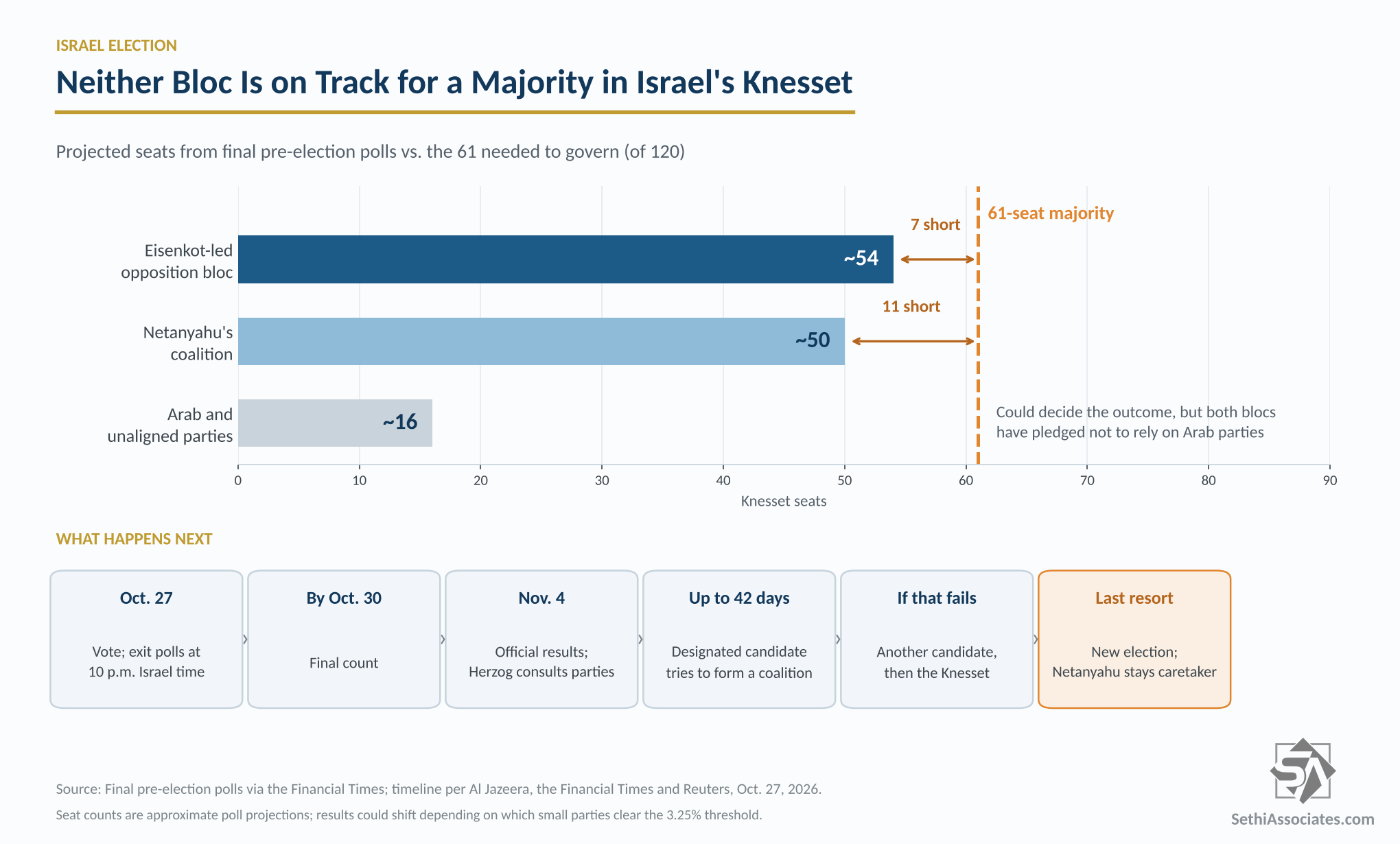
What the vote probably won’t deliver quickly is a government. Final polls had Eisenkot’s bloc at about 54 seats and Netanyahu’s coalition at about 50, both short of the 61 needed for a majority in the 120-seat Knesset, with Arab and unaligned parties holding the rest, per the FT. Both camps have pledged not to rely on the Arab parties. The final count is expected by Friday, with official results on Nov. 4. President Isaac Herzog will then designate a candidate, who gets up to 42 days to build a coalition, per Al Jazeera. If that fails, the process can pass to another candidate and then to parliament before new elections are called. That sequence produced four inconclusive elections between 2019 and 2021. Netanyahu would remain caretaker prime minister throughout, leaving him free to act on his pledge to resume the war with Iran, Bloomberg notes. Herzog has said he’ll try to avoid a repeat, raising the prospect that he pushes for a national unity government, per the FT.
Prediction markets lean toward change: Polymarket bettors gave Eisenkot about a 60% chance of becoming prime minister and Netanyahu 27%. As Brazil showed on Sunday, though, they can be quite wrong.
For markets, some investors see a prolonged deadlock as a bigger risk than either outcome, per Reuters. Tel Aviv stocks are up about 130% since Oct. 7, 2023, versus about 80% for Wall Street, and roughly 12% this year. The shekel has gained about 25% since then, though both stocks and the shekel are down about 10% since May. In past elections, Tel Aviv volatility rose as much as 45% in the weeks after the vote, but initial losses were usually recovered within a month, per Tel Aviv Stock Exchange research.
Conversation 0 Comments
One ongoing discussion across all days. Everyone can read; sign in to take part.
Your voice matters. Discussions are moderated for civility. Read our guidelines .
Log in to join the conversation