Jobs Reports Goes Negative, Shifting Rate Cut Expectations
The decline in average earnings data supports our thinking on these three holdings.
You've reached your free article limit
You've read 0 of 1 free Pro articles.
The highly anticipated July Employment Report is out and it surprised with a big miss relative to market expectations to the downside. Compared to the 80,000 jobs the market was calling for, the report showed a loss of 23,000 and contained large downward revisions in the number of jobs created for May and June.
In our opening comments on Friday morning, we shared that we would:
…be looking for in that figure as well as any revisions for prior months is anything that might challenge a stable labor market and keep the Fed on the monetary policy sidelines, especially as Treasury yields have moved higher over the last month.
The negative jobs print and 103,000 fewer jobs created in May and June is giving the market a reason to reconsider the odds of rate hike later this year. A quick glance at the CME FedWatch Tool now shows the odds of the Fed standing pat in September at 56%, up from 45% on Thursday and 33% on July 31. That is giving some lift to U.S. equity futures as well as more interest rate sensitive parts of the market, including our position in Builders FirstSource (BLDR).
Once again, bad news is good news for the market.
While the market reacts to those jobs figures and their implications, let’s also consider the ramifications of that slower pace of job creation and what we see in the average earnings data. On a year-over-year basis, average earnings came in 3.2% in July, below the 3.5% consensus figure and the lowest reading in the last five years. On the one hand, that means less wage inflation pressure.
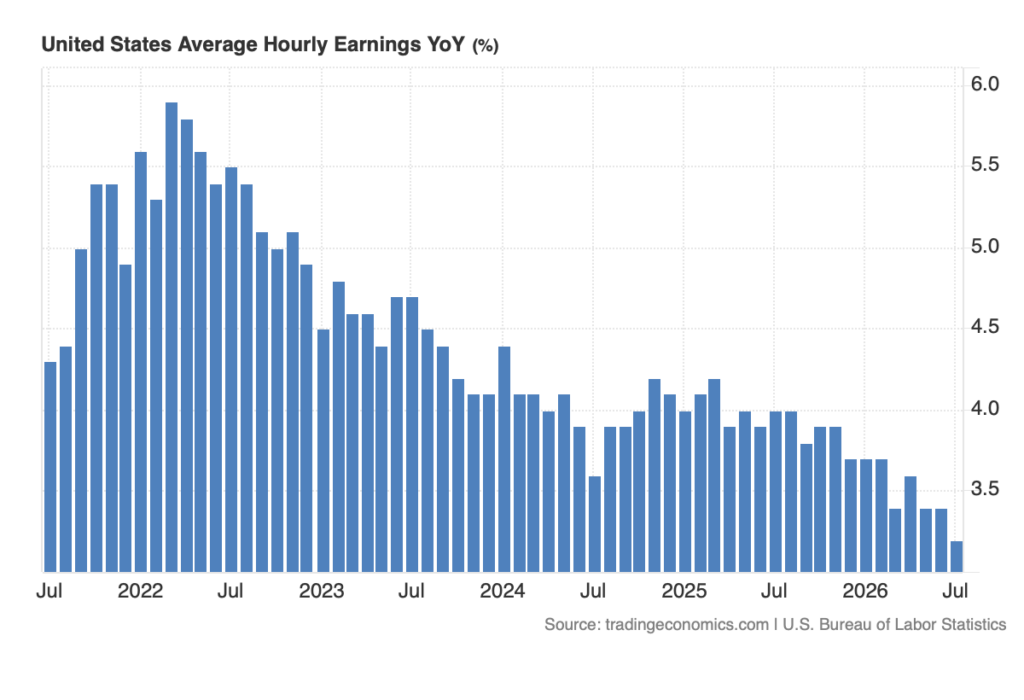
On the other, measured against higher energy prices, their flow through across the economy, and other inflation pressures, slower average earnings growth means we are likely to see the average consumer cinch up their belts another notch, especially amid slower job creation. As we see it, that combination helps explain the strong July comps sales figures we saw at Costco (COST) earlier this week. It also keeps us bullish on the Portfolio’s positions in TJX (TJX) and Amazon (AMZN).
Two things we’ll be keeping in mind: The negative July jobs print is but one figure, and as we’ve seen ample times in the past, the monthly figures are subject to revisions, sometimes big ones. We will also be getting more than a few additional pieces of data about the pace of job creation and inflation pressures before the Fed concludes its next policy meeting on September 16.
Next week brings the July CPI and PPI reports and, before we know it, the Flash August PMI data from S&P Global will be here on August 21. And yes, that is before Fed Chair Kevin Warsh delivers his Jackson Hole address.
While we enjoy the market reaction to Friday’s jobs print, we will continue to follow the data and what it says about the prospects for Fed policy later this year.
More Pro Portfolio
- We’re Initiating New Positions in 2 ETFs
- 29 Signals We’re Tracking Across 11 Portfolio Strategies
- July Monthly Roundup: Keeping Our Lead After a Wild Ride
At the time of publication, TheStreet Pro Portfolio is long AMZN, BLDR, COST and TJX.