Luxury Brands Are Selling You More Than Just Physical Goods
The market for luxury goods remains strong, and CEOs appear to be optimistic. Here’s what I learned from speaking with the CEO of JLR.
You've reached your free article limit
You've read 0 of 1 free Pro articles.
This is the second in my series on what I learned about economic strength from this year’s Monterey Car Week. The first, on the Monterey collector car auctions, can be seen here. I hope you enjoy this slightly different way of looking at the economy.
JLR, or Jaguar Land Rover, is not a public company. And their parent company, Tata Motors, is based in India. So, why write about them here on TheStreet Pro? Because I have questions about the luxury goods side of the economy, and JLR management is gracious enough to speak with me. I think what they have to say is of interest here and can help us, as investors, to understand more about the economy. Plus, I love cars and will take any opportunity to talk with car people. In a moment, I’ll tell you all about my conversation with the now CEO of JLR for North America.
My 2025 Defender Road Trip and Conversation with Jaguar Management
But first, some background. Last year, JLR brought me to Monterey to learn more about their electrification strategy and their controversial prototype, the Type 00. I was able to interview the man in charge, Rawdon Glover, where I learned that “The Internet Has It All Wrong About Jaguar’s Rebrand.” You see, Jaguar had been in trouble for years. The electrification strategy wasn’t just an attempt to reboot a storied brand. No, it was part of a global strategy for JLR and Tata to develop the next generation of software-defined electric vehicles-the future of the automobile.
JLR also gave me a Defender 130 to cruise around California in. I did nearly everything in the car that most people do. I road tripped it, from LA to Monterey. Drove it in dense traffic. Picked up 10 (yes, 10) people and dropped them off at the Pebble Beach Concours d’Elegance. And I even loaded my youngest daughter’s worldly possessions into it and drove her off to college.
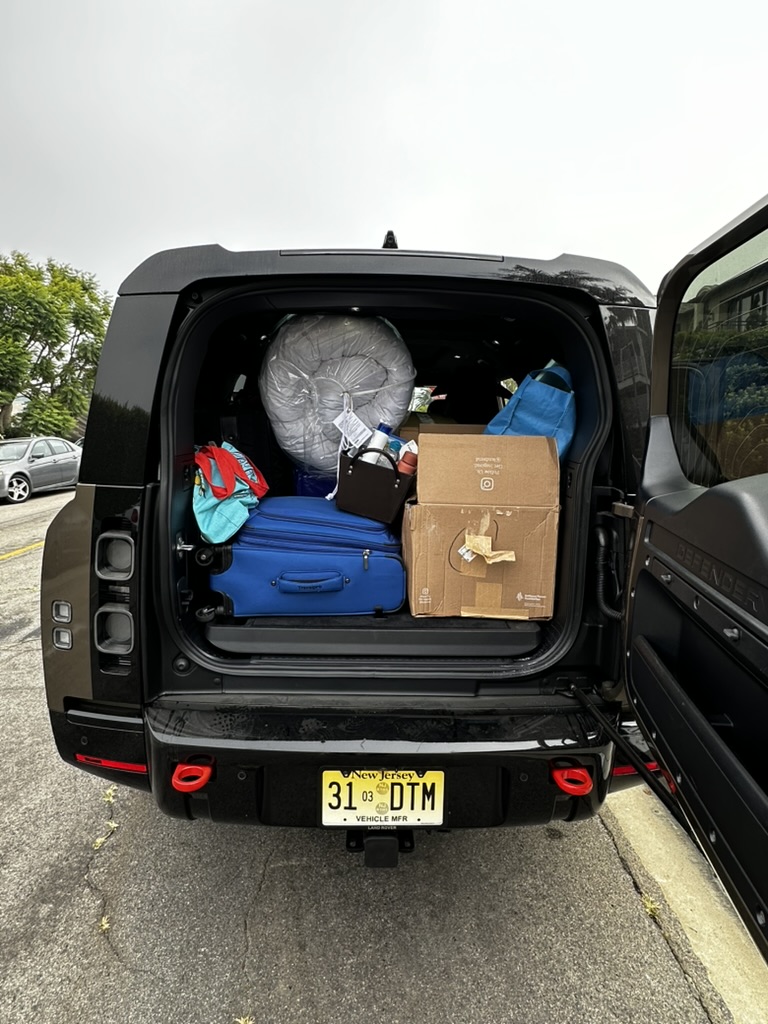
Putting my auto journalist hat on for a moment, I can tell you that the Defender 130 is everything I hoped it would be. It’s driver-focused, with a high seating position offering great visibility. It’s very capable on or off-road and has excellent road feel for an SUV with fat tires. And the engine, despite being the base model, had lots of power. It cruises easily at illegal speeds and overall feels smaller than it is, yet large enough to haul whatever you’ve got. If I needed a car like that right now, it would be high on my list.
The only thing I didn’t do with it was take it off-road.
Fast forward to 2026. I went back to Monterey and sampled the Defender on the grounds of The Quail Lodge, home to the Land Rover Experience Center. Since this was during one of Car Week’s hottest parties, The Quail, A Motorsports Gathering, my time in the Defender was short, only about 15 minutes. But I came away impressed. The Defender tackled forested terrain that had it rocking on two wheels, descending hills that scared me, and moving across steep terrain that would have rolled a lesser car.
If you buy a Defender, you probably won’t do any of those things. But you could. And that peace of mind is helpful when you’re cresting Vail Pass on a snowy winter morning, kids resting cozily in the back seat before a day of skiing.
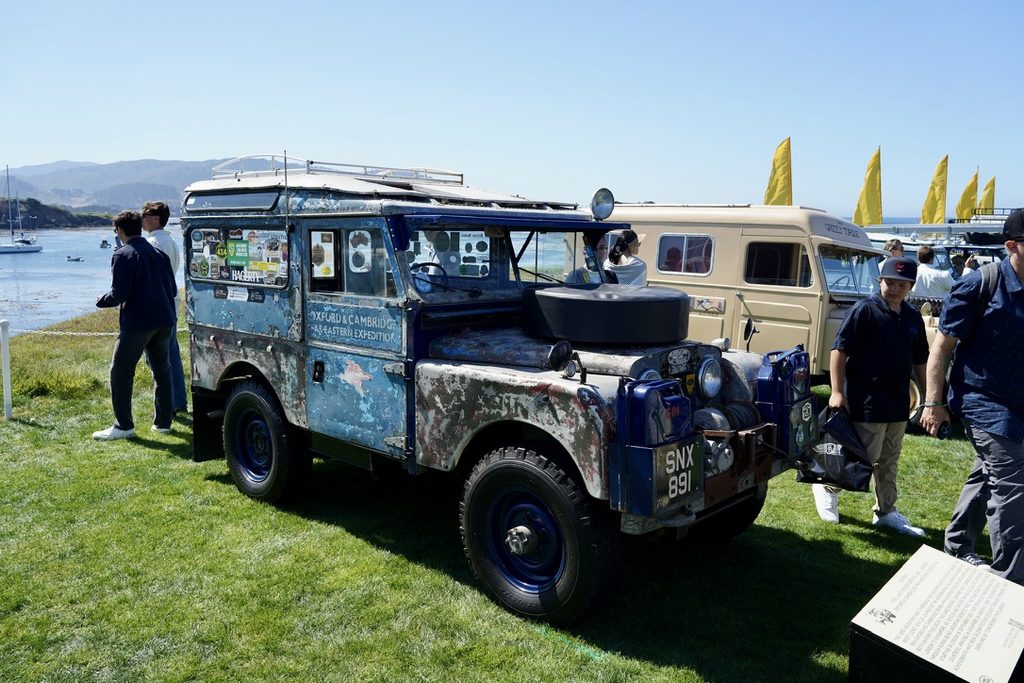
Heritage is also key to everything at JLR. It’s part of what they’re selling and part of the culture that consumers buy into when they purchase a JLR product. In 2025, I was offered the opportunity to drive onto the Pebble Beach show field in a Defender. Land Rover brought out a display of their most historic Land Rovers, some of which had traversed the globe. Oh, the stories these cars told.
My Conversation with Mark Cameron, JLR North America CEO
With that background, let’s talk about my interview with Mark Cameron. At the time, Mark was the Managing Director for Defender and Discovery. However, he’d just been promoted to CEO of JLR North America. Because the promotion was new, we focused our conversation on Defender, and I’d like to share my learnings and what I think they tell us about the luxury end of the economy.
First of all, let’s talk about the product itself. Defender is the ruggedest of Land Rover’s offerings, and Mark tells me that it’s the kind of vehicle that can be stretched to fill many different market needs. There’s a unifying theme across all markets for the Defender: a sense of adventure. As I experienced, Defenders are hugely capable in nearly any situation you throw at them. Mark says that they engineer integrity into every single one.
In the US, we think of it as a car for suburban families. But in the UK, it’s a work truck. Land Rover is currently negotiating with the UK Ministry of Defense to replace their current fleet with the newest offering. It’s also a commercial vehicle. Mark says you can take out the rear seats and install a bulkhead, and it becomes a van. It’s the choice of “expert users” like mountain rescue, the Red Cross, and police forces in the UK and elsewhere.
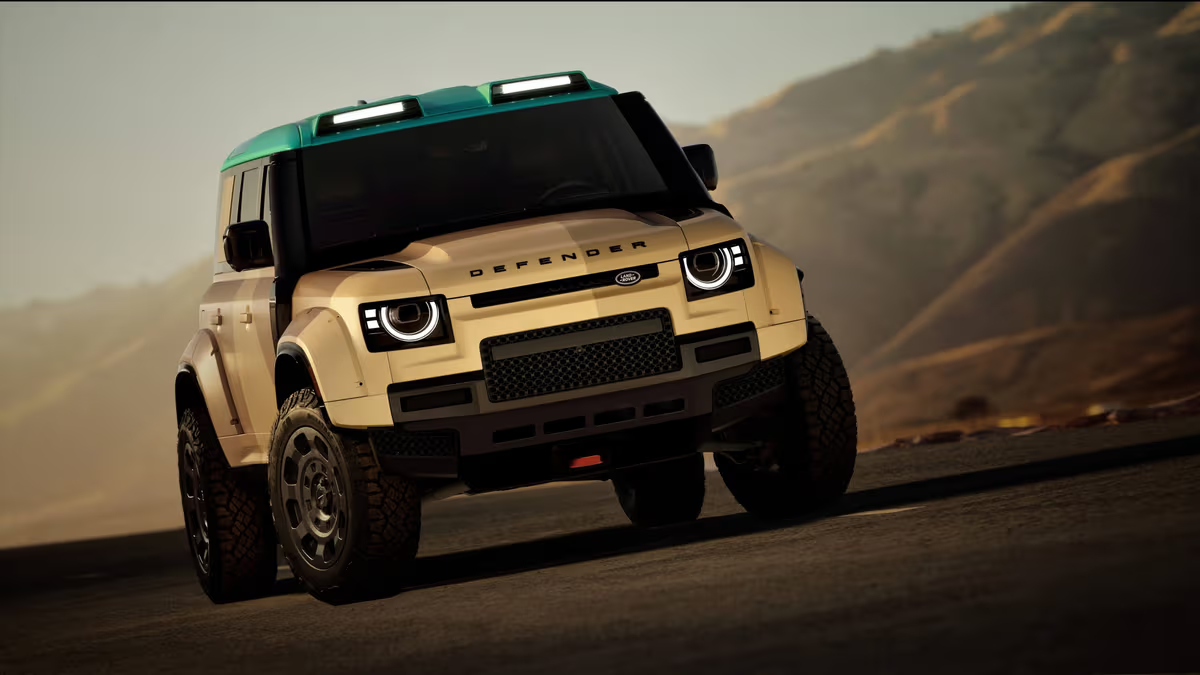
These commercial vehicles make up about a third of Defender sales. You’d never know that as an American. It’s also a racecar. The Defender won its class at the Dakar Rally this year, and Land Rover will be selling a new “Dakar Defender” that will allow those with means to live out their Dakar Rally fantasies. Yeah, I want one. More on the Dakar Defender below.
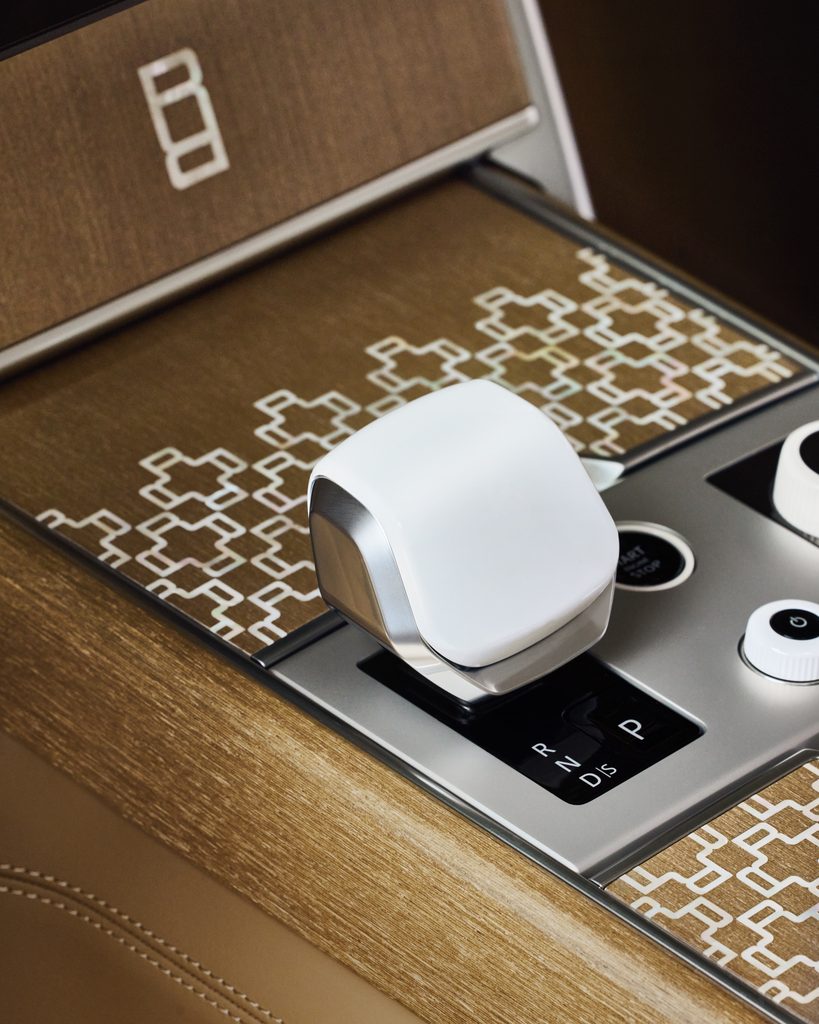
Why does JLR focus on the luxury side of the market here in the US? Because they can. Mark says that the luxury market is high-margin and the US offers lots of opportunities. In fact, each year for Car Week, JLR builds a bespoke Range Rover to highlight the company’s craftsmanship and design capabilities. They invite their best customers to bid on the car. Those that don’t win are probably tempted to build their own one-off Range Rover.
I mean, check out the detailing on this year’s bespoke Range Rover “Pearl Luster,” which includes the new double R logo, inlaid into the console:
Economic Forecasting and Product Considerations
So, yeah, we Americans make up a chunk of the high-margin side of the business. But we’re not alone. JLR sees India as an opportunity. They believe that India is where China was 30 years ago, with strong increases in GDP and wealth. Specifically, a growing middle class breeds new JLR customers each year. It’s also a sign of economic health.
They also believe that the economy is strong and will continue to be. They look at growth in millionaires and billionaires as well as wealth transfer and believe that these trends will continue to benefit the luxury end of the marketplace.
One challenge for JLR is that the global market is becoming decentralized. It’s harder now to build a global car in one factory. There’s friction on trade barriers, tariffs, and non-uniformity of homologation standards like emissions. And, of course, politics. The tariffs haven’t been easy to navigate. The uncertainty is one issue. The other is that JLR has had to absorb the cost, rather than being able to pass it along to consumers. This is a disadvantage of producing out of a single factory in the UK and not in the US. Plus, the UK is no longer part of the EU.
Defending Profits by Selling a Lifestyle
Back to the Dakar. The Dakar is built on top of a Defender Okta, the $170,000 sports-truck of the Defender line. They will take that vehicle and basically turn it into a road-going version of the truck that won the grueling Dakar rally. It will take more than 150 hours of customization, including hand-built modifications like a race suspension, race seats, and a half roll cage.
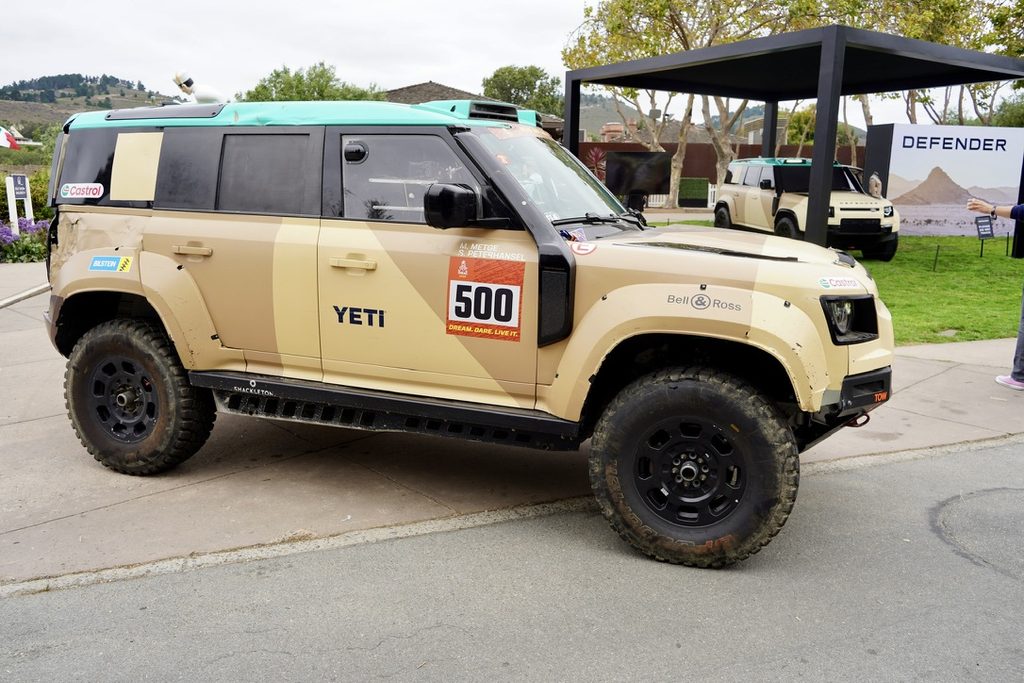
But that’s just the beginning. Nobody needs a Dakar version of the Defender. Where it comes in handy is when Land Rover begins to offer owner experiences centered around the Dakar. Like a multi-day desert trip to drive an off-road course, plus a meet and greet with Land Rover’s racing drivers. Essentially, Land Rover doesn’t just want to sell you a truck; they want to sell you a lifestyle. The truck is central, but it’s only the vessel to which the experiences (and profits) can be layered on.
Land Rover isn’t the first to do this. Ferrari offers a race series for its clients. Porsche offers myriad ways to become enmeshed in the brand. Away from cars and at a more approachable tier of the luxury spectrum, Nordstrom and Design Within Reach offer special pre-sale events for good customers.
It’s not just adventure that JLR is selling. Their branded Range Rover Houses in places like Monterey and Park City become showrooms for their best clients to feel welcomed as they are encouraged to build bespoke machines. It’s a way of increasing loyalty.
Brands need to stand out today more than ever. And there’s enough money sloshing around among luxury buyers that these companies feel the investment will pay off. After all, they’re all fighting to attract those young and newly minted SpaceX and AI millionaires. What says you’ve made it more than a bespoke car?
Final Thoughts
Look, corporate managers are paid to be optimistic about the future, especially when talking to the media. Mark Cameron is certainly optimistic in words as well as in action. If he weren’t, we wouldn’t be seeing Land Rover competing in off-road racing and building race trucks for the well-heeled. Instead, they’d be leaning into the “expert user” side of the market; the workmen who need a rugged van, or rescue workers, and the Red Cross. Maybe he’s wrong, but like the Monterey auction results I wrote about (here), this is another data point showing that the economy remains healthy, at least at the top end of the market.