Political Trades Seem Obvious After Elections. That’s What Makes Them Dangerous.
The rotation continues, with a new cast of winners and losers.
You've reached your free article limit
You've read 0 of 1 free Pro articles.
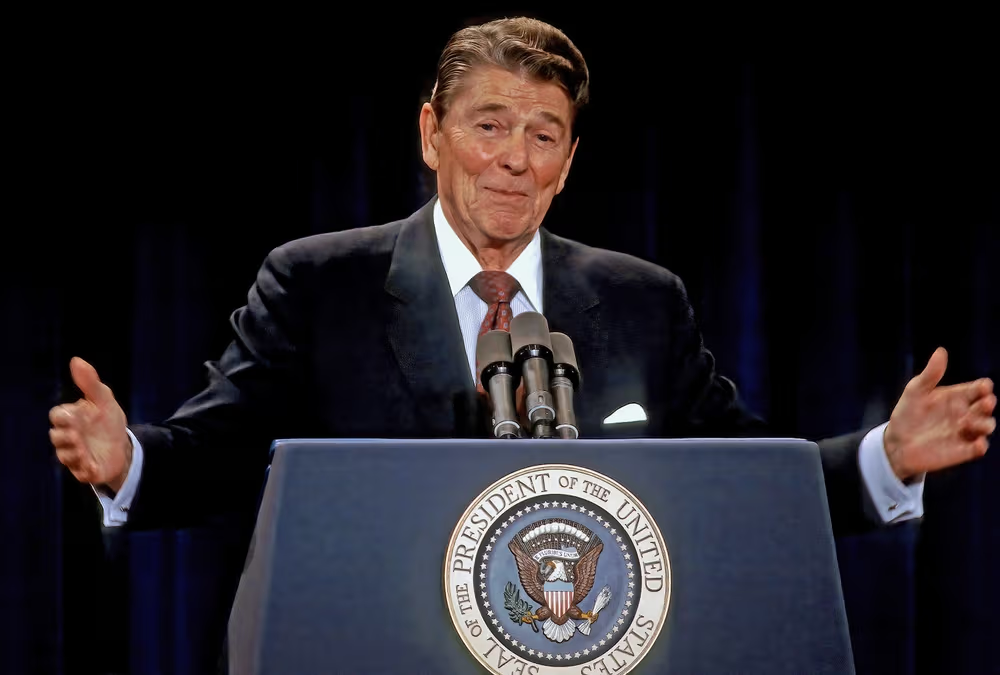
When Ronald Reagan won the presidency in 1980, buying defense stocks was the most obvious trade imaginable. War was raging in the Middle East, Reagan was an avowed military hawk, and he had campaigned on higher defense spending. Defense stocks rose 10% the week after the election. Two months later, they had given back all of their gains, and by March 1982 they had nearly halved from their high.
When it comes to politics and the markets, no one knows anything. The Wall Street Journal notes that post-election trades often seem so obvious that few could disagree, and then they lose money. Trump Media & Technology (DJT) jumped after the 2024 election and is now down 88% from that point. Private prison stocks and the America First bet on U.S. stocks over the rest of the world followed the same path.
Rotation remains the main theme, but it has a new axis. For most of the fall, the trade was simple: sell AI and buy everything else. Now the market is trying to sort out which winners and losers will emerge from a Democratic Congress and a new set of governors. That sorting is far from finished, and the first answers are unlikely to be the final ones.
The Consensus Could Be Wrong
Last week the consensus decided the election was a disaster for data centers. Micron Technology (MU) fell 23% in two days, CoreWeave (CRWV) 19%, and Nvidia (NVDA) and Broadcom (AVGO) 12% each. Those moves only make sense if data-center construction nearly shuts down.
There are good reasons for concern. The new governors in Texas, Ohio and Georgia all campaigned on restricting data centers, and states don’t need to worry about a presidential veto. In Ohio, Senator-elect Sherrod Brown wants to cap utility rate increases, making it harder for utilities to pass data-center costs on to households.
But there are several ways the consensus could be wrong. Building bans may become bargaining tools to extract better terms from developers rather than permanent stops. Projects may move to states that want the business, or overseas. Data centers may get more expensive to build and less profitable, but if the demand for AI is there, they will be built somewhere.
The selling may also have been right for the wrong reason. Chip stocks had been deflating since the summer, and positioning was crowded. The election may simply have been the moment everyone recognized they had bet too much on one theme.
Where Policy Can Actually Move
Some policy has a better chance than the headlines suggest. Reversing last year’s Medicaid cuts and restoring the expired ACA subsidies is first on House Democrats’ agenda, and some Republicans who survived the rout may go along. That would help hospitals and insurers that depend on Medicaid and the ACA exchanges. A bipartisan bill to speed up permits for energy projects is also making progress. At the state level, Michigan’s incoming governor plans a drug affordability board with the power to approve price increases, which puts pressure on high-priced drugs.
The complication in all these issues is inflation. Expanding benefits without offsetting tax increases adds to the deficit, and inflation is already 3.7%. Friday’s hot jobs report kept a December Fed rate hike firmly on the table, and inflation data comes out on Tuesday and Friday. The election may keep rates higher, which is a headwind for small-caps that need lower rates to lead.
Rotation Inside the Chips
The big headline this morning is Nvidia, which is down about 5% premarket. The company’s board launched an independent investigation after reports that Chief Executive Jensen Huang had a relationship with a former executive of Megaspeed, a Singapore data-center company and one of Nvidia’s biggest customers in Southeast Asia, who U.S. intelligence officials believe is a Chinese intelligence asset, according to The New York Times. The board said it has no reason to believe the company’s secrets or national security were compromised, and Huang said he supports the investigation and will cooperate fully.
The rest of the chip group is up. The money isn’t leaving semiconductors. It is moving away from Nvidia and into the other names. The timing hurts Nvidia, because a national-security question involving China hits just as a new Democratic Congress gets ready to call AI executives to testify. Even if the investigation finds nothing, the story will keep coming up in Washington.
The broader market is calmer. Dow futures are up about 0.6% and S&P 500 futures are up slightly, while the Nasdaq is flat. Taiwan’s market jumped 4.9% and Japan’s Nikkei rose 2.3%. Oil is falling, with Brent down about 2% to around $96, after President Trump said new strikes on Iran are unlikely as long as negotiations progress.
Game Plan
Friday’s bounce lacked energy, and Monday’s morning’s strength is concentrated. A bounce still isn’t a bottom. I’m watching whether the semiconductors can build on Friday’s gains without Nvidia leading, and whether breadth improves. I’m also not going to assume the first read on the election is the right one. The most obvious political trades are often the ones that fail.
There are still a number of small-cap earnings reports on the docket, like Paysign (PAYS), which reports after the close tonight, and I’ll be looking at chart development in many stocks that have suffered elevated volatility due to earnings and politics.
Are you ready for some positive seasonality?
At the time of publication, Rev Shark was long PAYS.