Nvidia’s Report Is Great for Nvidia, but It’s Complicated for Everyone Else
Robust demand for Nvidia products continues, but someone is paying a hefty price.
You've reached your free article limit
You've read 0 of 1 free Pro articles.
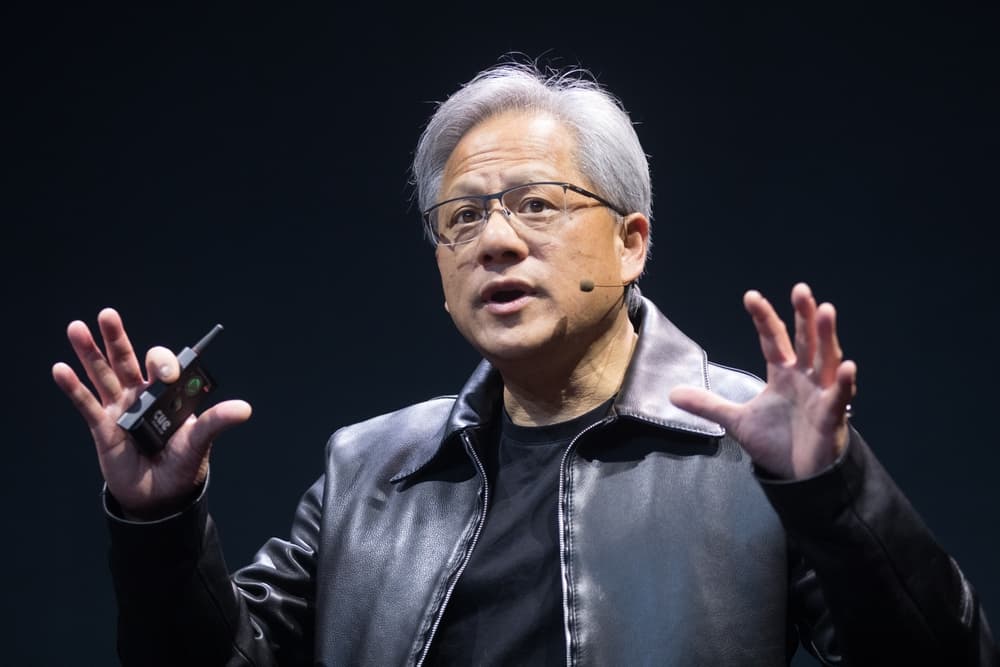
Nvidia (NVDA) delivered quarterly results that were unambiguously good for Nvidia. The stock is up more than 6% in premarket trading Thursday after reporting earnings per share of $2.22 versus a $2.09 estimate and revenues of $96.22 billion versus the $92.27 billion expected.
The stock traded lower on the initial report, but what reversed the reaction was the earnings conference call. The CFO guided fiscal 2028 revenue growth to a robust 70% versus the consensus view of 45%, and described that outlook as supply-constrained, meaning the guidance already reflects what the company can physically deliver. Nvidia also said cloud industry backlog now exceeds $2 trillion and that capital spending by the top-five hyperscalers should reach nearly $800 billion in 2026 and $1.3 trillion in 2027.
Nvidia also announced an expanded partnership with Amazon Web Services to deploy two million additional GPUs across AWS infrastructure in 2027 and 2028. Separately, it agreed to buy the open-source AI platform Hugging Face for $12.9 billion. Hugging Face is a platform where AI developers go to find, download, and share AI models.
That sort of guidance from Nvidia is about as good as it gets for one company. The much more difficult question, though, is whether it is good for anyone else.
Nvidia Just Confirmed the Inflation Problem
One small issue in Nvidia’s report was that margins are expected to fall slightly next quarter to 74% from 75%, then to a range of 71% to 72% in the fiscal fourth quarter, before settling around 72% to 73%. This is because memory chip prices are rising faster than the company predicted.
What that means is that even with the enormous pricing power Nvidia possesses, it still cannot escape higher prices for the basic chips it needs to produce its products. Nvidia has to deal with inflationary pressures, and it not only passes that inflation on to its customers but adds to it.
As I’ve indicated in recent columns, chip prices are feeding inflation across the economy and not just benefiting chip makers. Nvidia confirmed that in this report and also signaled that demand for its products is so great that buyers are forced to increase capex spending even more.
The Financing Problem Just Doubled
The four largest hyperscalers recently guided to somewhere between $720 billion and $745 billion in spending this year. That is an increase of about 75% from $410 billion in 2025. Nvidia now says the top five will spend nearly $800 billion in 2026 and $1.3 trillion in 2027.
That is another enormous increase in spending, and it has to be funded. The hyperscalers have already borrowed more than $200 billion this year with another $115 billion in announced equity raises. Meta’s 40-year bonds have fallen enough to push their yields near 7%, which is a big reason that bonds are struggling. A jump to $1.3 trillion means the bond market absorbs even more supply at exactly the same time that government demand is pressuring yields worldwide.
The global bond situation is even worse than what is happening in the U.S. Countries with large debt burdens, such as France, Italy, the United Kingdom, and Japan, have come under heavy pressure in recent months on renewed inflation fears, fiscal problems, and currency pressure.
AI is competing with the capital needs of nations around the world, and Nvidia just indicated that the competition for capital will intensify substantially next year.
Nvidia Addressed Circular Financing Directly
Nvidia short-sellers have been highly critical of what is being called circular financing, where Nvidia provides financing to companies that then use the money to buy Nvidia products. Nvidia doesn’t see that as a problem and expects excellent equity returns on its invested capital. The argument is that the companies Nvidia is financing will become the biggest technology companies in history and they just need a little help overcoming the bottleneck in having enough compute to be in position to realize significant profits.
Maybe so, but Nvidia is now underwriting its own demand at enormous scale with a $500 billion partial guarantee program with Wall Street firms and the backstop on OpenAI’s Ohio data center project.
The problem, and it is a big one, is that there is a significant gap between what companies are spending on infrastructure and how quickly profits from AI products are being recognized. Many businesses are having a hard time putting AI plans into production. Costs are rising and profits are delayed.
What This Means for the Market
For chips and the AI infrastructure names, the Nvidia report is good news. Demand is not a problem.
For the hyperscalers, it is much more difficult. They now face $1.3 trillion of spending in 2027 while their own margins are already under pressure and their financing costs keep climbing. The market punished Meta Platforms (META) for this issue in July. The margin pressure that Nvidia is seeing is not going to be isolated to the technology sector.
Jackson Hole
The market’s focus is going to quickly shift to Kevin Warsh, who speaks Friday morning in Jackson Hole.
The market just heard the largest company in the world confirm that component inflation is running ahead of expectations. Warsh will have little choice but to acknowledge the inflationary pressures that are building.
Game Plan
My positioning remains largely the same with high cash levels and very selective buying. My focus is on my shopping list, which I expect to offer many opportunities in the next six weeks as we move through seasonality and await third-quarter earnings.
At the time of publication, Rev Shark had no positions in any securities mentioned.