Fed Not Alone as Asia Braces Itself for Higher Rates
What will the change in stance to a ‘hawkish hike’ by central banks around the world mean for equity markets?
You've reached your free article limit
You've read 0 of 1 free Pro articles.
While Thursday’s markets are driven by the U.S. Federal Reserve’s decision to raise rates by 25 basis points, it’s not just the Fed that’s grinding the monetary-policy gears into action. It seems the whole world is raising rates.
Hong Kong’s central-bank equivalent, the Hong Kong Monetary Authority, immediately raised its overnight rate to 4.25%, in response to the Fed. The Hong Kong dollar is pegged to its U.S. counterpart, so the city effectively “imports” U.S. rates.
Even though the city’s biggest banks – HSBC (HSBC) (HK:005), Standard Chartered Bank (SCBFY) (HK:2888) and Bank of China (BHKLY) (HK:3988) – kept their best lending rates steady at 5.0% or 5.25%, they will be under pressure to inch that up or see profit margins slip.
FX Effects
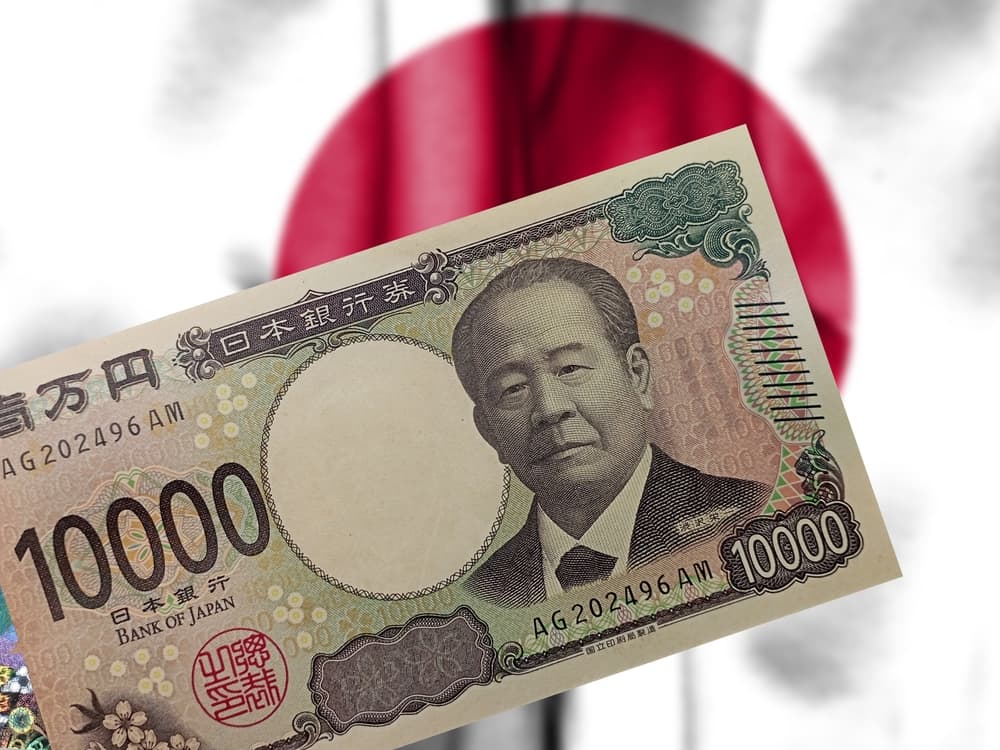
Readers will know that I’ve been watching this week’s central-bank action to see the response in global foreign-exchange markets. I recently wrote that this week marks an opportunity for the Bank of Japan (BoJ) to narrow the interest-rate gap between the United States and Japan.
Not anymore. It makes just as little sense to guess the Fed as it does to fight the Fed.
It is still a virtual certainty that the BoJ will raise rates as its monetary-policy meeting ends on Friday. That would take them to 1.25% and a 31-year high.
But the rate differential is still there. It has not narrowed.
So we see the Japanese yen slip against the U.S. dollar once more, albeit in a measured way, briefly back above ¥156. It had on Sunday strengthened below ¥153 for the first time since February.
A Bad Bet on the Yen?
I was betting on yen strength before last week’s producer and consumer prices came in “hot.” Prior to that data, it looked like a 50-50 coin toss as to whether we would see a rate increase from the U.S. Federal Reserve. Just before Wednesday’s decision, though, the odds on the prediction market Kalshi had risen close to 90%.
If the BoJ acts and the Fed had held its ground, it would make the case for holding yen assets. U.S. investors should seek out unhedged Japanese-equity holdings that would benefit from a strengthening Japanese currency.
But it does not yet seem we will see an unwinding of the carry trade that’s behind the yen weakness. We now have instead a unanimous Fed decision to raise the Fed Funds rate to a range of 3.75% to 4.0%.
What’s more, it’s a “hawkish hike” that implies further rate increases later this year and into next. Of the 18 Fed officials that submitted projections for the “dot plot,” 16 expect at least one more hike by the end of 2026.
It would take even-more hawkish language from the BoJ if foreign-exchange markets are going to bid up the yen. This would already be the swiftest rate rise under BoJ Governor Kazuo Ueda. How fast will he indicate the next rise should come?
A Procession of Bankers Walking Rates Higher
The Fed is part of a procession of central bankers who are walking rates higher.
We also had a rate rise last week from the European Central Bank. Taking the main rate to 2.5% brings it to Europe’s highest level since March 2025.
Investors were spooked by the hawkish tone of the ECB’s report. It warns that inflation in Europe is likely to average 3.0% this year.
The driving force behind all these rate actions is inflation. And the root cause of much of that traces back to higher fuel and energy costs due to the U.S.-Israel-Iran conflict in the Middle East.
That’s not an issue central bankers can do anything about. And while U.S. President Donald Trump may berate Fed Chair Kevin Walsh for raising rates, he only has himself to blame for that conflict – and its apparently never-ending nature.
Fuel Spike Root Cause
The benchmark price for Brent crude peaked in March at $112. It had dipped down to $72 per barrel in June – but is back near $104 once more.
Diesel is now setting another all-time record in the United States, per the AAA, at $6.40 per gallon – hiking costs for trucking, shipping, industry and agriculture, and sure to result in priced hikes down the line. Regular unleaded is averaging $4.44, hitting regular folks right in the pocketbook, right now.
Nomura now forecasts another Fed hike by the end of the year, and two more increases from the ECB, one in December and one in March.
The Japanese investment bank anticipates a hike this week from the BoJ, as well as rate increases in January and April next year. There could even be four rate increases if the Japanese yen continues to remain so weak.
Asian Central Banks Also Raising Rates
Most other Asian central banks are hawkish. Besides higher fuel costs in a region that imports much of its oil, Asian nations are also contending with a “Super El Niño” effect that sees intense warming in the central and eastern Pacific Ocean. The extra heat will magnify weather effects, and virtually assures that 2027 will be the hottest year on record for the planet.
It is likely that prolonged dry spells will threaten rice harvests across Thailand, Vietnam and Indonesia. A toxic haze from burning peatland fires and out of control wildfires has already spread across much of Southeast Asia. (The U.S. West Coast on the other hand is likely to experience torrential downfalls).
Disrupted agriculture leads to higher food prices, compounding higher fuel costs. Indonesia already got ahead of the trend with three surprise interest-rate increases, in May and then June to raise rates by a hefty 100 basis points, and may move again in October and November. South Korea, India, the Philippines, Australia and New Zealand are all likely to hike interest rates by year-end.
To lift all the interest-rate and inflation doom and gloom, I should note that these rate rises are coming from a position of strength. Average real GDP growth for Asia ex-Japan is running at an average of 5.4%, easily outpacing average 2.2%. Even anemic Japan is producing real economic growth of 0.9%, encouraging the BoJ that it can raise rates without disrupting the economy.
One key problem is that central banks tend to act too late, and keep rates high for too long. For now, equity markets are taking these rate rises in their stride.
Watch, though, for any economic disruption or spiking inflation due to high oil, disastrous harvests – and the geopolitical turmoil that’s been pitting Western democracies against a Russia-China-Iran-North Korea axis.
Interest rates are on the rise. And these are interesting times indeed …
At the time of publication, McMillan was long the Japanese yen.