VIDEO: Fed, Oil and AI Are the Key Market Forces
Why we’re following where capital is flowing.
You've reached your free article limit
You've read 0 of 1 free Pro articles.
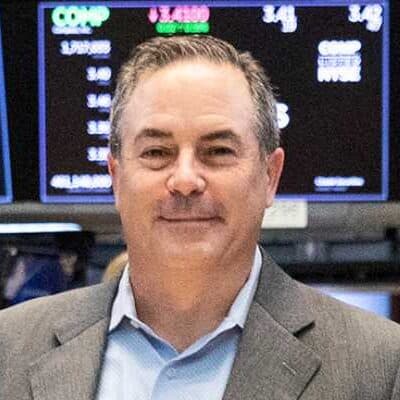
Chris Versace sat down with Julie Gillespie at TipRanks to unpack this week’s Fed rate hike and xhair Warsh’s hawkish tone.
They covered the key S&P 500 support level to watch ahead of Friday’s triple witching, why Chris has built up up cash in the Pro Portfolio. The two also discuss the oil-driven pressure hitting airlines like American Airlines (AAL), United Airlines (UAL) and Southwest Airlines (LUV) and how a $22 billion AI infrastructure loan tied to Google (GOOGL) TPUs is setting up Broadcom (AVGO) and Marvell (MRVL) heading into Marvell’s investor day.
More Pro Portfolio
- Closing Out This Position as Fed Rate Hike Odds Rise
- 26 Signals Across 9 Portfolio Themes
- Weekly Roundup: A Good Week to Lose Less as Market Stumbles
Transcript
Julie G
Hey everyone, it is Julie here with TipRanks, and I had the pleasure of being joined by the wonderful Chris Versace from TheStreet Pro, where we’re going to be diving into key items moving the markets this week. Chris, thank you so much for joining me today.
Chris Versace
Always a pleasure, Julie.
Julie G
Now we’re going to start off with the Fed. They delivered a rate hike this week, and Chair Warsh’s comments moved the market. So what was your read on the tone coming out of the meeting and some of the big highlights?
Chris Versace
Well, look, the market was widely expecting the rate hike that we got. So, to me, the greater focus was really on the updated set of economic projections, or the SEP. What did we see there? The economy looks a little bit better, right? But the Fed now sees inflation lingering even longer. And I think that explains not only the rate hike that we got yesterday, but the updated SEP showing that there’s likely at least another rate hike in the cards before the end of the year.
Now we’ve just got to simply watch and see: do inflation pressures continue to cause problems for not only everyday America, but also lead the Fed to take another step further?
Key to that, Julie, is going to be oil. And, you know, as we’re having this conversation today, we are seeing oil trade off a little bit as some fears about Saudi capacity are falling. But to me, the real issue is going to be what happens between the U.S. and Iran and simply how much longer oil prices remain at elevated levels. TBD, in other words.
Julie G
Absolutely. Now we did see the market sag pretty quickly during his remarks yesterday. They have rebounded a bit this morning, but why do you think investors reacted that way, especially since this hike was largely expected?
Chris Versace
Well, coming into the event, right? Again, as you just said, the widely held expectation, just look at the CME FedWatch tool, was that they were going to deliver a rate hike. They did, but at the same time, myself and many, many others were saying that it’s going to be the commentary that Warsh gives that will really determine the market’s reaction.
If he was more dovish, the market probably would have rallied. If he was incrementally hawkish, the market was likely to sell off.
He reiterated the fact that the Fed is committed to getting inflation down to 2%, and the reality is that he even sees policy, current policy, as relatively accommodative. Like he said yesterday, they removed a dose of accommodation. And that just kind of says that, more likely than not, the Fed is leaning incrementally more hawkish going forward. But again, as I just said, whether or not we get that additional rate hike is TBD based on what we see on all these inflationary data points that are in and around us these days.
Julie G
Sure. And then you flagged the S&P 500’s 100-day moving average around 7,511 as a key level to watch. So walk us through why that line matters right now.
Chris Versace
Well, look, when we’re taking a look at the reaction to major market events, we want to keep in mind where support levels are. And it just so happens that, going into yesterday, that 100-day moving average for the S&P 500 was the next key layer of support. And it was important for the market to hold that, or hold it, I say that, because we have a triple-witching event coming on Friday. So, a lot of volatility in the marketplace. So we want to make sure that we hold that level.
If we are able to bounce off that, I think that gives folks a little bit of a sigh of relief. And the fact that we are seeing oil come down a little bit, President Trump is once again saying, perhaps, perhaps there’s a sooner-than-expected end to the war. We’ll see. So that gives the market some reason to be optimistic.
I still have some longer concerns around consensus EPS numbers for the S&P 500, given some of the warnings that we’ve had this week. But the key is, if we hold that 100-day level with the S&P 500, great. If we do not, and there is no positive follow-through test, that tells us that there’s a wider drop to go in the marketplace. So that’s really why we’re watching that 100-day moving average for the S&P 500.
Julie G
And speaking of potential volatility, you did mention that you’ve been building up cash levels in the Pro Portfolio. So is this a signal that you think there is some more downside coming before better entry points show up?
Chris Versace
Well, you have to remember, right? The second half of September is one of the seasonally weakest times of the year, and sometimes that can kind of creep into October. We also had to sit back and say, look, we are seeing the rise in oil prices, but also the rise in diesel prices, interest rates going higher, the 10-year Treasury in particular, mortgage rates moving higher, questions over project demand, incremental housing demand.
So when you look at the positions that we kind of exited early in September, Builders FirstSource, we cleared out United Rentals. We still see construction or non-residential construction being favorable. Higher rates could mean project hurdle costs or project hurdle rates are incrementally higher. So the risk is maybe a little bit of a slower buildout there than was previously expected.
And we also saw that OpenAI is pushing out its IPO into 2027. There’s another nuclear IPO that’s just pulled itself. So we have some concerns about that part of the market and private capital raising with higher Treasury yields. So that led us to exit the position of NeoStellar.
The point I’m making is that there were very specific reasons that we exited the positions that we did to build up cash. What we want to do is be prepared for when we clear this period of seasonal market volatility and we get into the seasonally stronger time of the year, that tends to be October, November, December.
We also have the midterms we need to be mindful of. And then finally, Julie, as I mentioned, I’m still concerned about S&P 500 consensus EPS numbers. J.B. Hunt, right? Norfolk Southern, and then some of the airlines gave us some reasons to think that there is some downside risk to those numbers.
So, near term, as we head into the September quarter earnings season, we’ve got a little more cushion. But again, if we see the market move lower, take some of the pressure off, we have the cash ready to go.
Julie G
Now you mentioned airlines, so we are shifting to that sector that is definitely feeling a bit of a pinch. American, United, and Southwest are all scaling back their flight schedules because of the fuel price spikes. So how much of this is a rate inflation story versus something very specific to our oil markets right now?
Chris Versace
I think it’s exactly the latter. I say that because, you know, just if we take a look at where diesel prices in particular have moved, almost doubled year over year. And then we take a look at where diesel is used: heavy machinery, for example, ag equipment. Then we think about the move higher in oil prices, just gas prices, it’s not surprising the flow-through that we’re starting to see.
So I would argue that this is very much oil-supply-driven, diesel-driven, and I would be surprised if we don’t see other companies kind of flag this. And it doesn’t say that demand isn’t strong. This is just more the cost side of the equation, which we always have to be mindful of because there are a lot of different levers that can influence margins in a company’s bottom line. This time around, it’s the cost side.
Julie G
Well, that brings me right to my next question. I was going to say that the demand does still sound strong, even with fare increases that we’ve seen. So does that change how you think about airline stocks here, or is the cost pressure still the bigger story?
Chris Versace
I think in the near term, it’s going to be the cost pressures because we don’t really know where oil is likely to settle out. Therefore, jet fuel, diesel prices, and some of these others.
And the expectation is that even though, as I mentioned when we first started our conversation today, we are seeing oil trade off a little bit as concerns over Saudi supply kind of fall to the wayside, they’re still at very elevated levels, right? We’re just coming off a four-month high.
Still extremely high relative to where we have been. And I think we need to let that flow through the system. Let those expectations for airlines get reset, right? Because we don’t know exactly how many flights they’re doing or how long jet fuel prices are going to remain elevated. So let’s let that ripple through.
And if the demand side is still there and we see oil prices fall, then we can start to get a little more excited about that sector.
Julie G
Makes sense. Now, another big story from this week is a group of 10 banks backing a $22 billion loan for Blackstone’s Crux AI Cloud Venture, which is tied to buying Google’s TPUs. So what does a debt deal of that size tell you about how the capital is flowing into AI infrastructure right now?
Chris Versace
It tells us that there is still demand for those types of deals. When we take a look at the expectation for the AI and data center buildout, despite all the headlines, there is still demand there. We don’t know exactly the terms of those loans. Maybe they’re a little more onerous than they were in the past. But still, capital is flowing.
And from my perspective, when we see something like that, we like to really connect the dots. In the case of Google TPUs, that means we want to recognize the positive benefit for companies like Marvell and Broadcom that count Google as custom AI silicon customers.
Julie G
Now mentioning Broadcom and Marvell, given their relationship with Google there, how are you thinking about positioning in the network and custom chip names heading into Marvell’s investor day on October sixth?
Chris Versace
Well, you slipped something in there very carefully, Julie, right? So on the one side, the custom silicon business relates to the TPU. What happened yesterday is Ciena came out and they raised their multi-year outlook, calling for a compound annual growth rate of 30% through 2029.
That, to us, just brings support that as we continue to see rising data center capacity, the need for incremental networking equipment.
I could say that a lot of folks are focused then on AI, but from our perspective, I think the larger call here is more data center, right? AI is a driver for data center capacity, but then again, so too is cybersecurity, robotics, the path towards autonomous driving, and others. So we see a lot of demand for data center, not just this year, but continuing.
And that bodes extremely well for networking equipment as well. So are we surprised by what Ciena had to say? Not really. Super nice point of confirmation.
So, to your point, to your question, when you take strong custom silicon demand and strong network chip demand, that’s a positive for Broadcom, and it lays the groundwork for a very, very nice outlook when Marvell hosts its investor day in early August.
Julie G
Perfect. Now to wrap it all up, to summarize here, if someone is watching this and trying to figure out how to position after this week’s Fed move, what is one thing that you tell them to focus on?
Chris Versace
Boy, that’s a big question. I would say that, to start off, you want to be mindful as to where capital is flowing. That could be from companies, right? Are they continuing to spend on AI? It could be for consumers, right? We know consumers are feeling the pinch of higher food prices, higher energy prices. So where are they spending their capital?
We heard this week from Dollar General that they’re seeing greater visits and trade-down from customers, but especially upper-income customers. Dollarama, a discount chain up in Canada, just raised its comp sales forecast.
So I would say, identify where capital’s being spent for consumers. Obviously, that means they’re looking for ways to stretch their dollars. We continue to like TJX and Costco for—
Julie G
Very good. Well, as always, Chris, I so appreciate your words of wisdom and chatting about everything happening in the market with me this week.
Chris Versace
Thanks, Julie.
Julie G
And for all of our viewers, let us know what you’ve been watching in the market in the comments down below. And if you want to read more of Chris’s articles, you can head on over to TheStreet Pro. We will have links in the description below. Thanks for watching.
At the time of publication, TheStreet Pro Portfolio was long AVGO, GOOGL and MRVL.