Consumer Confidence Rebounds to Highest Since June
The Conference Board’s index jumped to 91.7, the highest since June and far above the 81.0 expected, even as consumers planned less spending on services and durable goods.
You've reached your free article limit
You've read 0 of 1 free Pro articles.

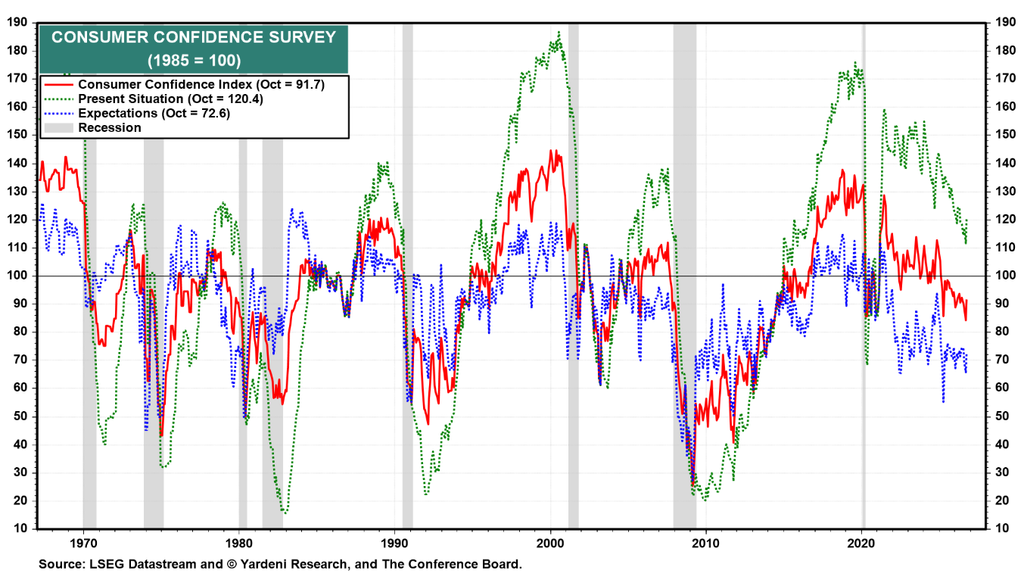
U.S. CB Consumer Confidence Oct: 91.7 (est 81.0; prev 81.9; prev R 84.2)
– Present Situation: 120.4 (est 107.9; prev 109.3; prev R 111.8)
– Expectations: 72.6 (est 62.0; prev 63.6; prev R 65.7)
Executive Summary
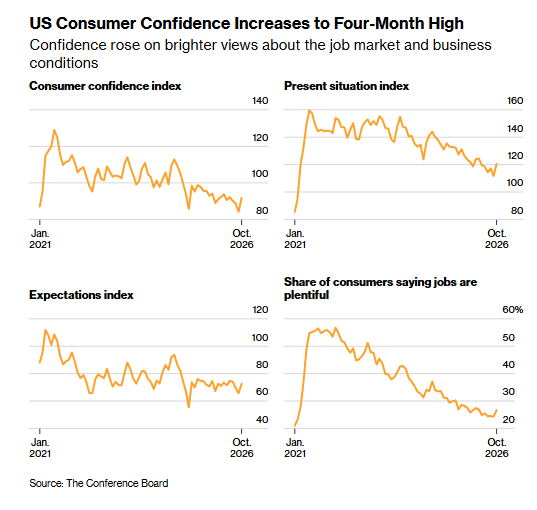
- The Conference Board’s Consumer Confidence Index rose 7.5 points in October to 91.7, the highest since June per Bloomberg, far above the 81.0 expected and the first increase in four months, with September revised up to 84.2 from 81.9. All five components of the index improved, with both Present Situation components and all three Expectations components rising.
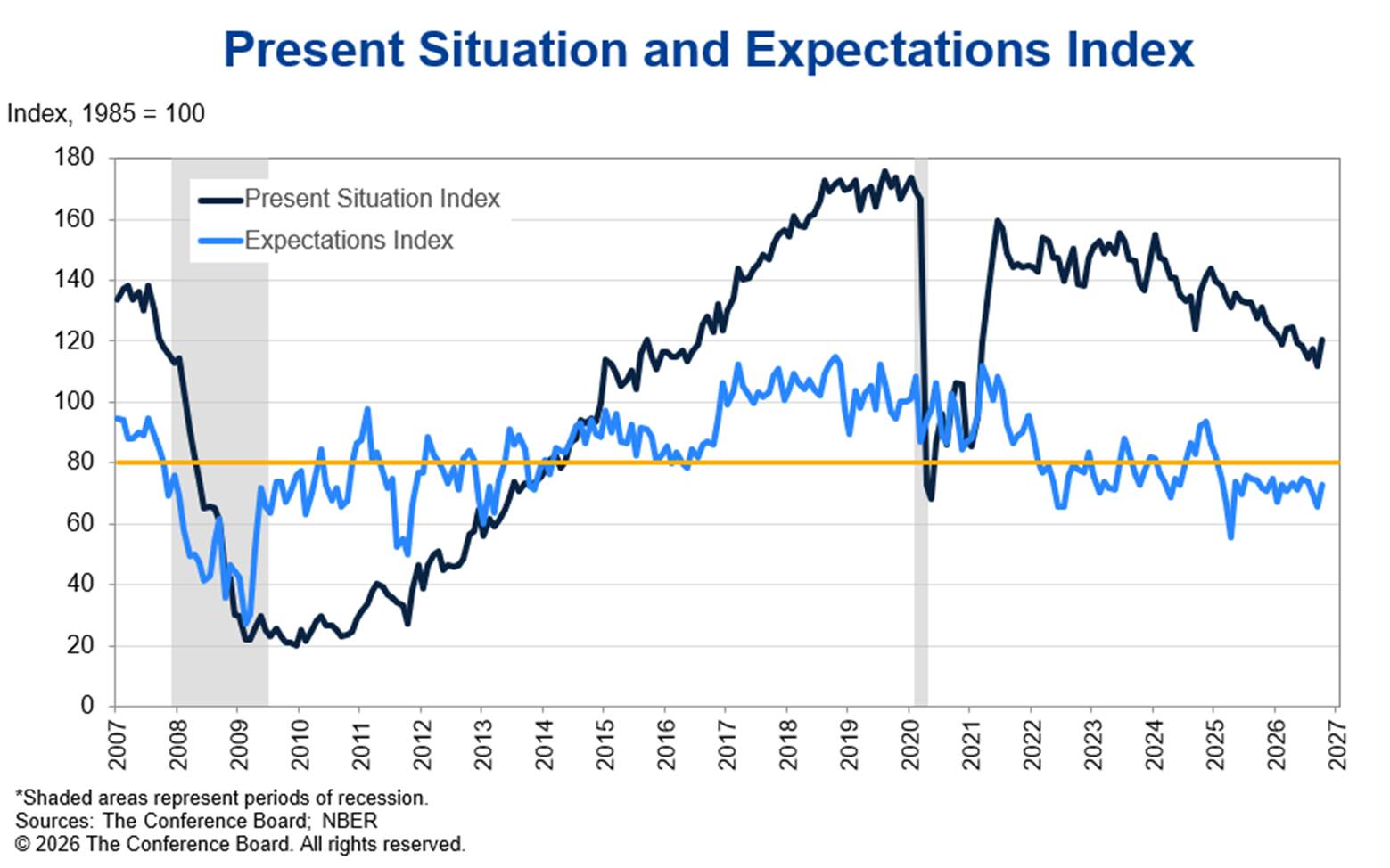
- The Present Situation Index rose 8.6 points to 120.4, a six-month high per Bloomberg, and the Expectations Index “recovered by 6.9 points to 72.6, only partially reversing three consecutive monthly declines,” leaving it below the 80 threshold the Conference Board has said in the past signals a potential recession ahead.
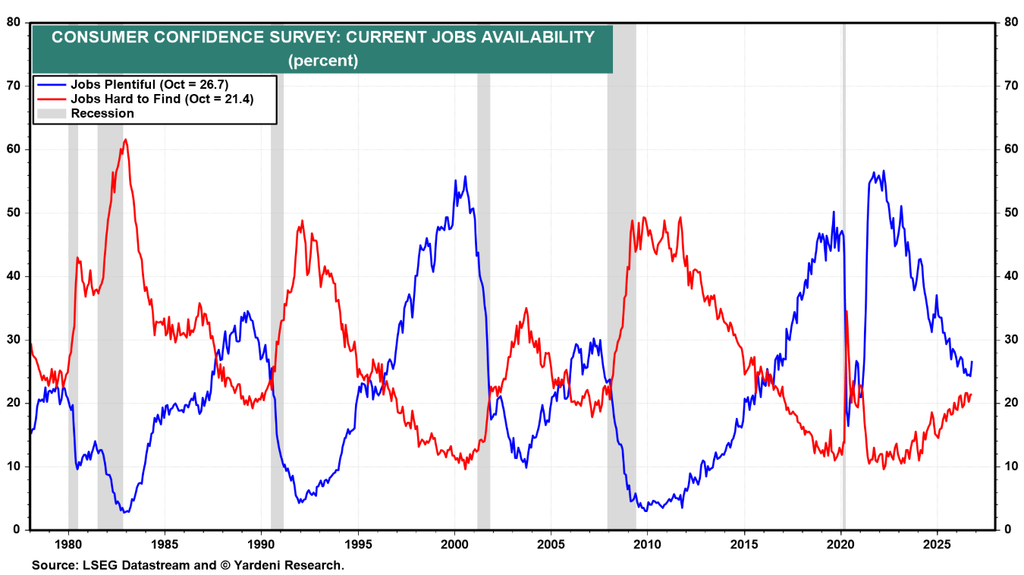
- Net views of current business conditions “increased by 4.8 percentage points to 3.6% following a notably negative reading last month,” while the labor market differential (those saying jobs are plentiful minus those saying jobs are hard to get) improved 2.4 percentage points to +5.3%, with the share saying jobs are plentiful at a six-month high per Bloomberg.
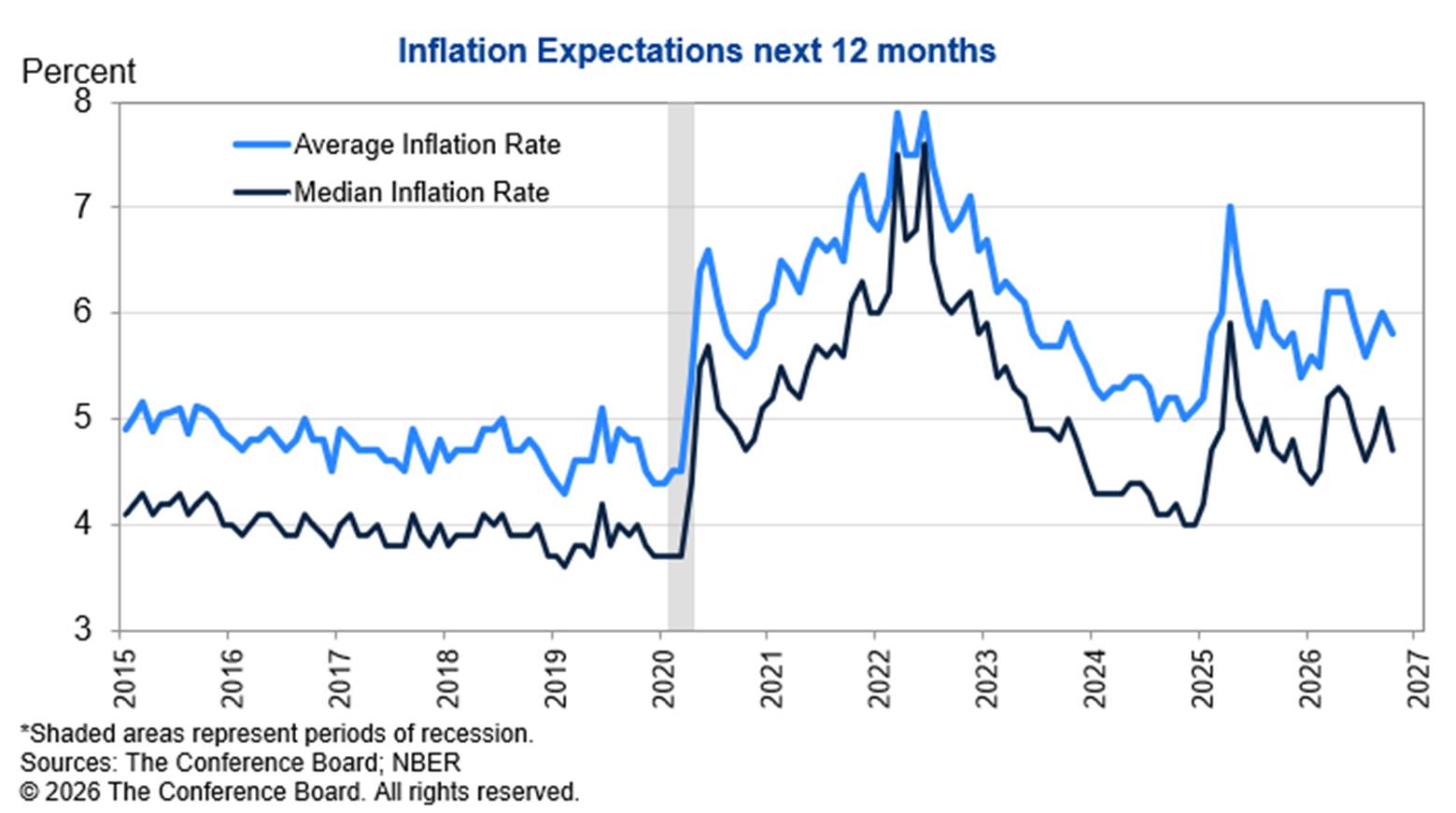
- Average 12-month inflation expectations “declined in October but remained elevated at 5.8%,” and consumers “planned less spending on services and durable goods over the next six months.”
October Consumer Confidence
The Conference Board’s Consumer Confidence Index rose 7.5 points in October to 91.7, the highest since June and the first increase in four months per Bloomberg. It was far above the 81.0 expected, the biggest beat since May 2025 per ZeroHedge, after September was revised up to 84.2 from 81.9.
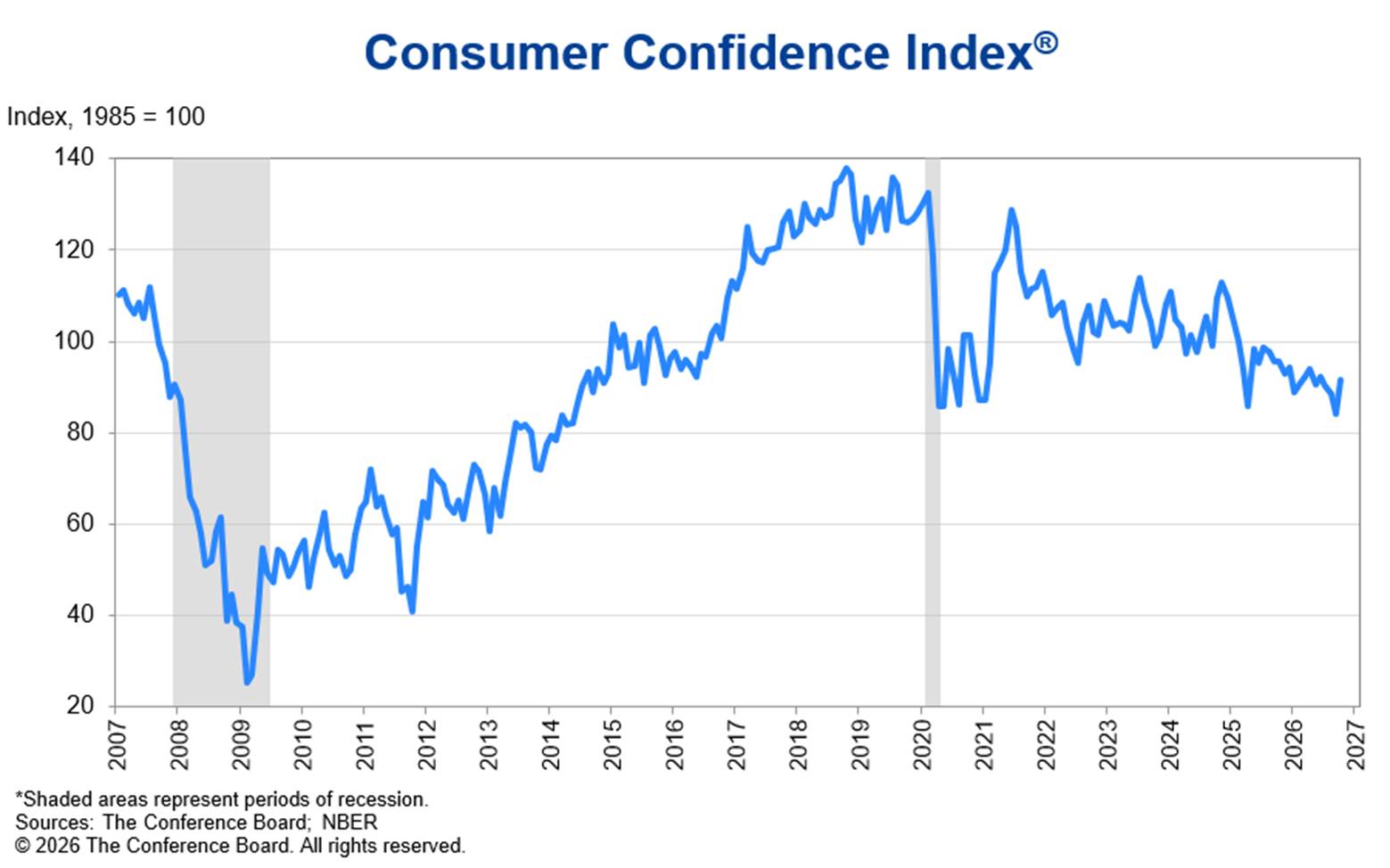
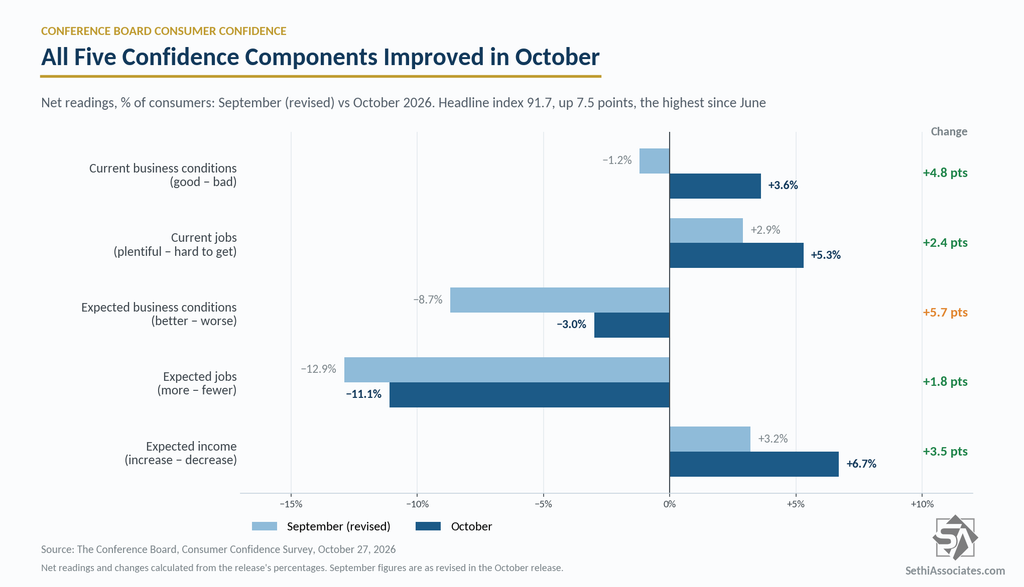
All five components of the index improved, with both Present Situation components and all three Expectations components rising.
“Consumer confidence advanced in October, driven primarily by improved perceptions of current and expected business conditions,” said Fergus McCormick, senior economist, global indicators, at the Conference Board, in the release. “The recovery was in line with retail gasoline prices easing from September to October. Yet, despite the increase in October, consumer confidence remained on the long-term downward trend that’s persisted over the past few years. Consumers planned less spending on services and durable goods over the next six months. This likely reflected higher price levels and persistent inflation, which eroded consumers’ purchasing power.”
McCormick continued: “Among write-in responses in October, consumers continued to express frustration with rising costs. References to prices, the high cost of food and groceries, and oil and diesel prices rose. Comments about war and conflict eased for a second straight month but remained elevated. Mentions of jobs and employment as an area of concern also ticked up, though to a lesser extent.”
The Present Situation
The Present Situation Index increased 8.6 points to 120.4, a six-month high per Bloomberg.
From the release: “Net views of current business conditions—the share saying conditions are ‘good’ versus ‘bad’—increased by 4.8 percentage points to 3.6% following a notably negative reading last month. Perceptions of current employment conditions were moderately more favorable, with the labor market differential—the share of consumers saying jobs are ‘plentiful’ minus the share saying jobs are ‘hard to get’—improving by 2.4 ppts to +5.3%.”
The share saying jobs are “plentiful” rose to 26.7% from 24.3%, a six-month high per Bloomberg, while the share saying jobs are “hard to get” was unchanged at 21.4%. The differential had narrowed to the least since February 2021 in September’s initial reading (after revisions, July’s +2.7% is now the narrowest this year).
Expectations
The Expectations Index “recovered by 6.9 points to 72.6, only partially reversing three consecutive monthly declines.” It remains below the 80 threshold the Conference Board has said in the past signals a potential recession ahead, though the index has spent long stretches below that level since the pandemic without a recession following.
Per the release, the index “was less pessimistic in October as all three of its components saw improvements”:
- “Net expectations for business conditions became less morose, rising by 5.7 ppts to –3.0%.”
- “Net expectations for the labor market also became slightly less pessimistic, increasing by 1.8 ppts to –11.1%.”
- “Net expectations for household income improved by 3.5 ppts to +6.7%.”
Demographics
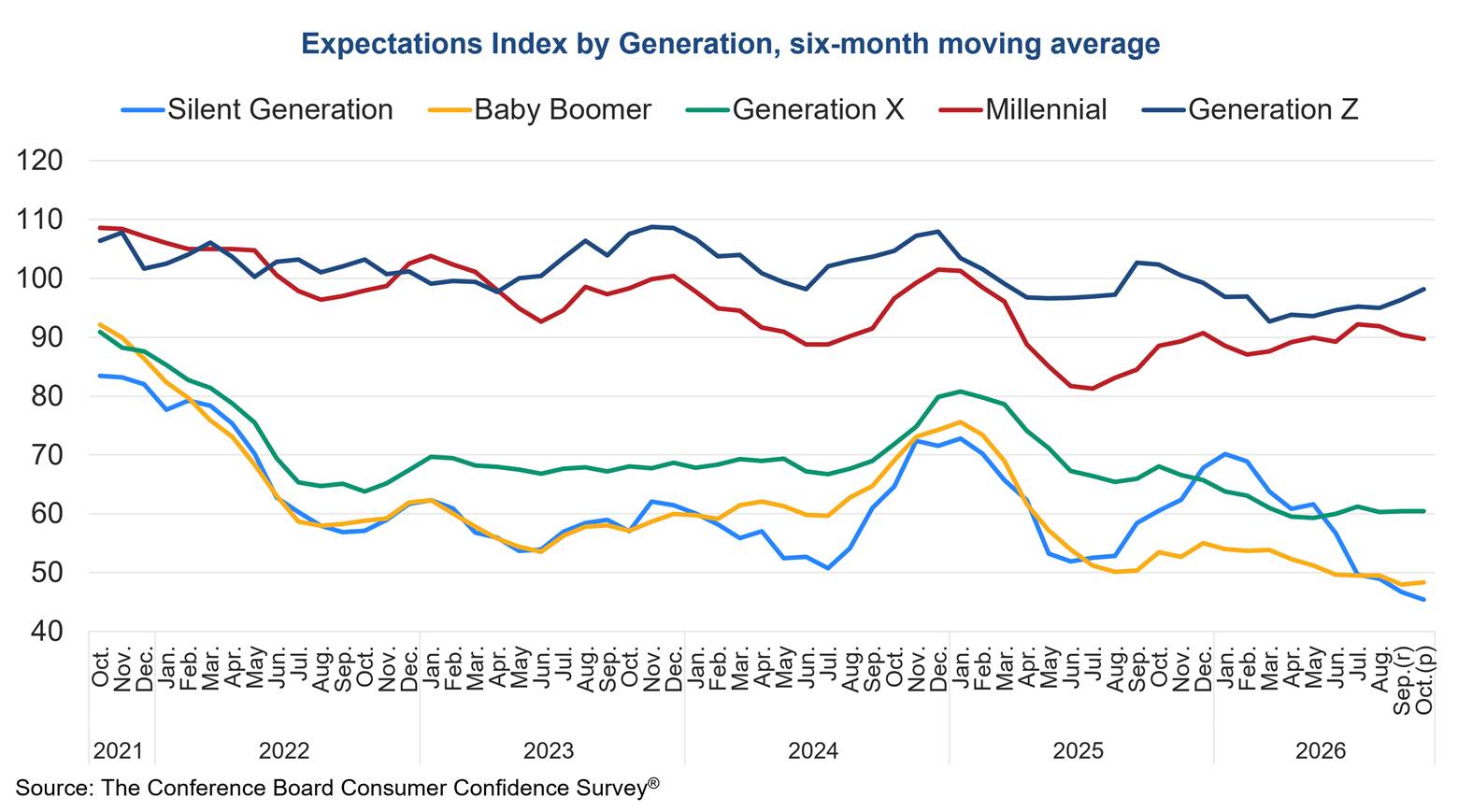
From the release: “On a six-month moving average basis, only consumers under age 35 and those with a household income of $100k or more expressed an increase in confidence. By generation, confidence amongst Gen X, Baby Boomers, and the Silent Generation continued to trail significantly behind Gen Z and Millennials, widening a sharp generational divide that has emerged over the past two years.”
“In October, confidence improved across all political affiliations—but much more so for Republicans.”
Inflation, Rates and Stocks
“Consumers’ average 12-month inflation expectations declined in October but remained elevated at 5.8%.”
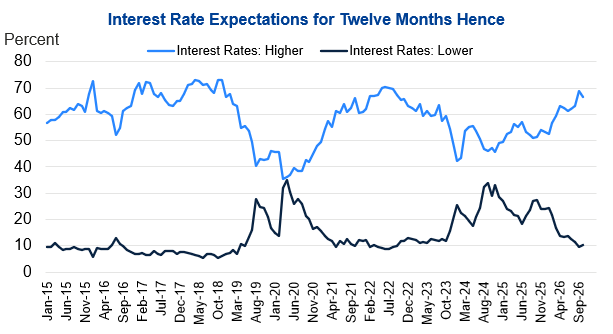
“Consumers still expected higher interest rates over the next 12 months.”
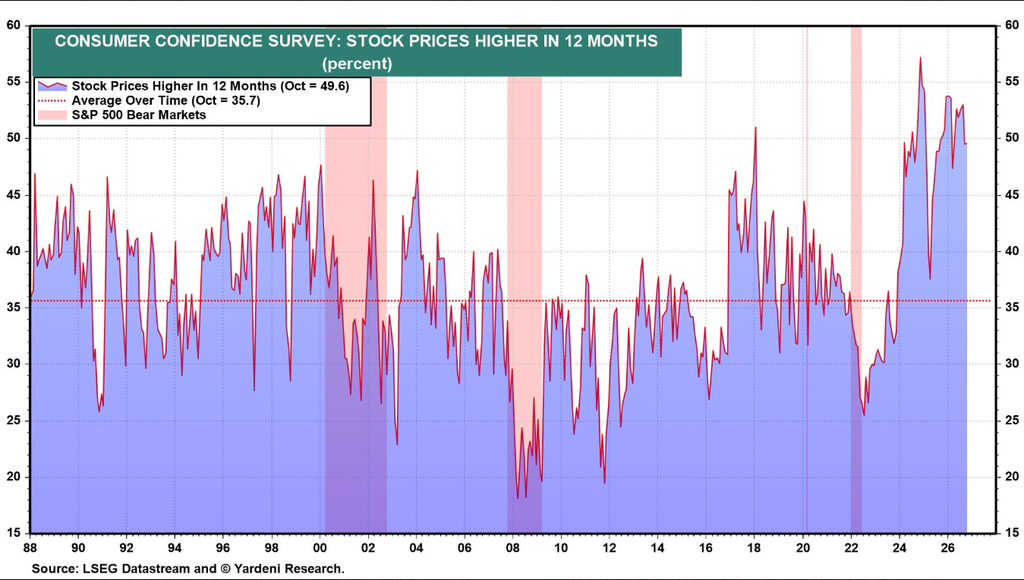
“Overall, more consumers in October expected stock prices to increase rather than decrease in the next 12 months.”
Household Finances and Recession Odds
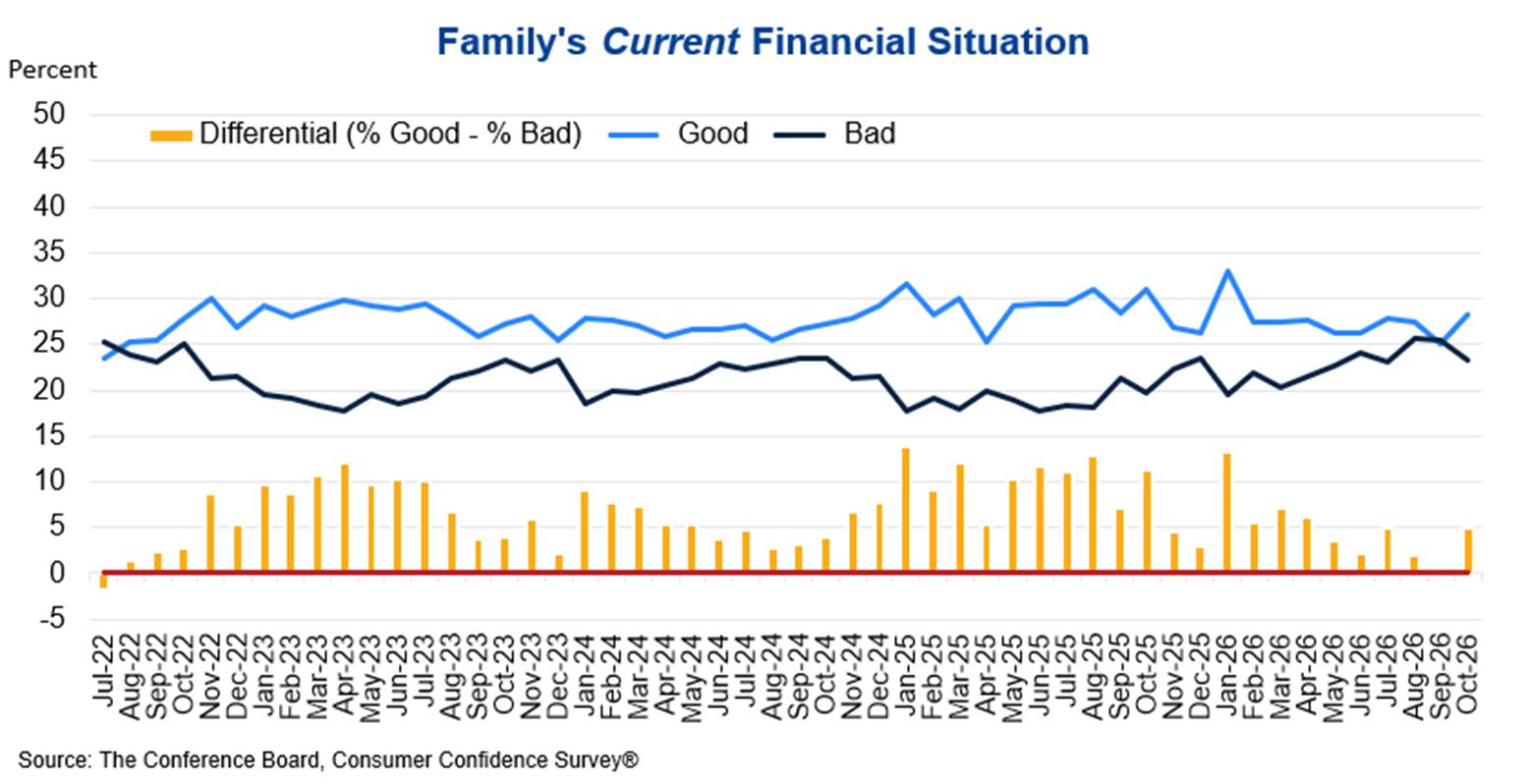
“Consumers felt better about their Family’s Current Financial Situation in October after two weak months.”
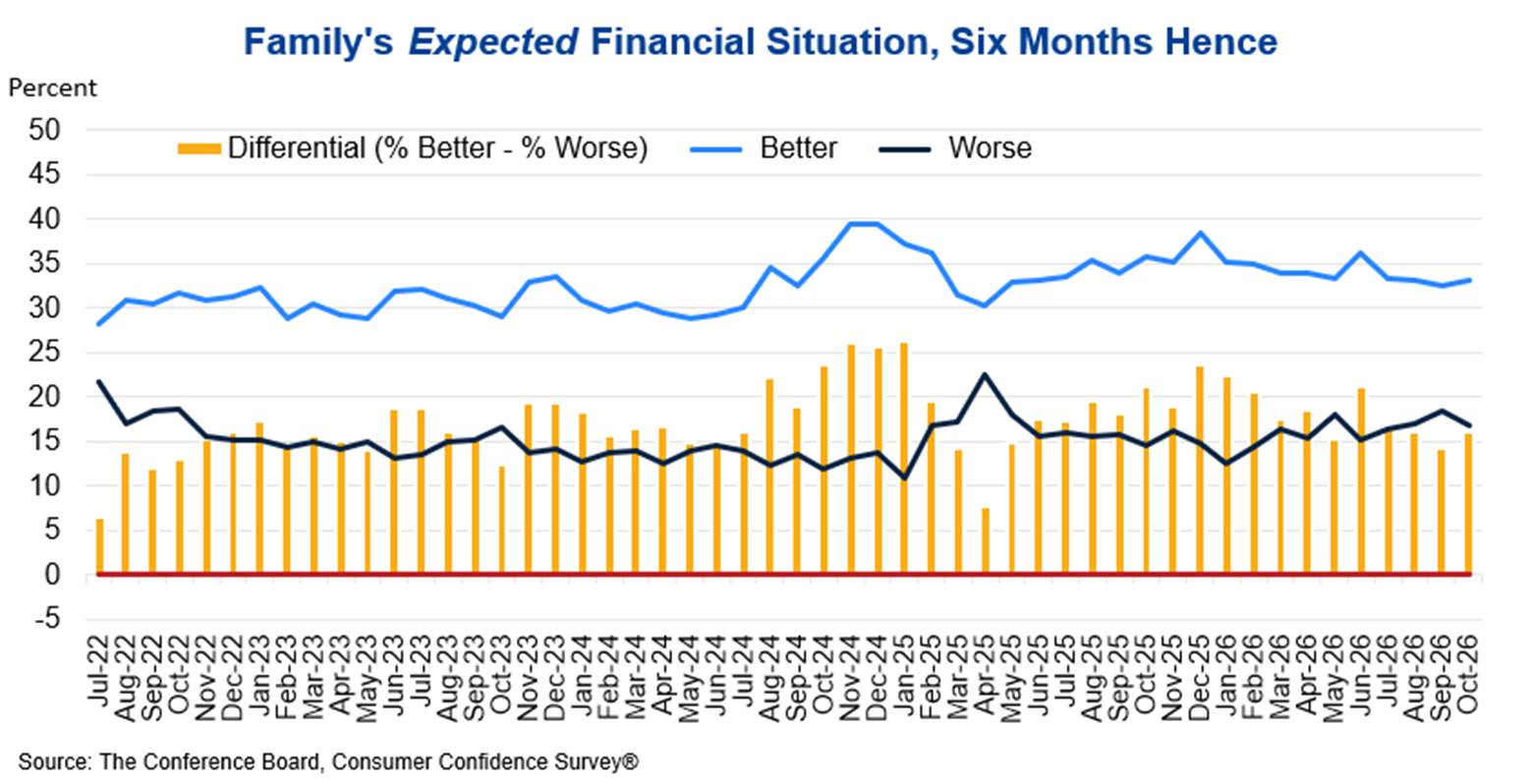
“Views of their Family’s Future Financial Situation over the next six months remained optimistic.”
“Asked to assess the likelihood of a US recession over the next 12 months, ‘somewhat likely’ remained consumers’ most cited answer.” These measures are not included in calculating the headline index.
Spending Plans
Per the release, “on a six-month moving average basis, plans to purchase autos and homes both declined slightly in October. Planned spending on durable goods in the month dropped across the board, with expected purchases of electronics such as smartphones, personal computers, laptops, and tablets pulling back by over 1%.”
“Expected spending on services over the next six months was generally lower, except for movies, theater, live entertainment, and sporting events. The top five spending plans included restaurants, bars, take-out; streaming, internet, mobile services; utilities; health care; and beauty, personal care. Notably, expected spending on beauty, personal care fell from third to fifth place among services categories.”
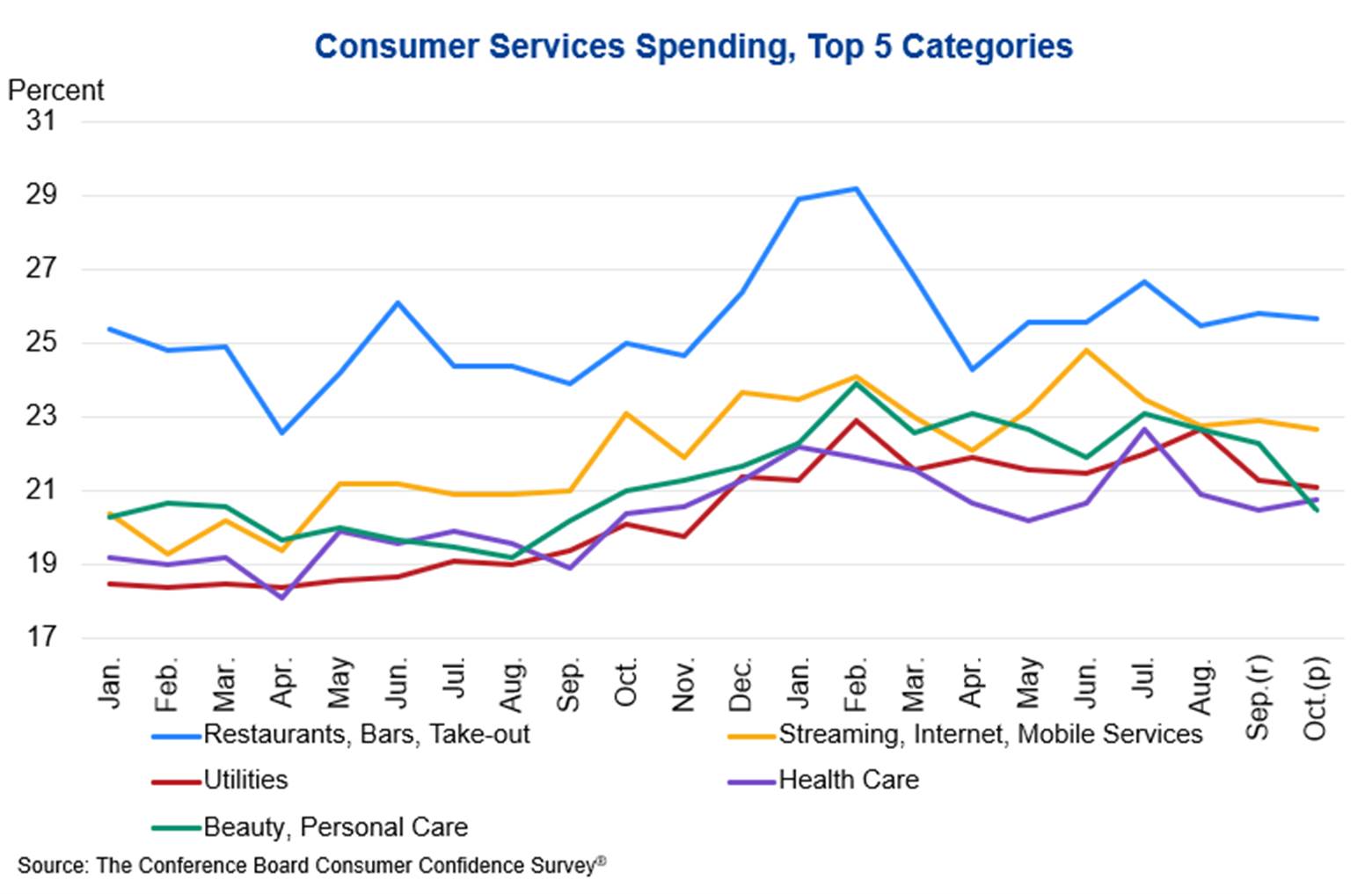
“Anticipated spending on hotels and airfare for personal travel moderated. Likewise, vacation plans dipped, with 43.3% of consumers planning a vacation in the next six months, down 0.9 ppts from an upwardly revised 44.2% in September. More consumers planned domestic trips and fewer planned visits to foreign countries.”
Summary of Details From the Report
Consumers’ views of current business conditions improved in October:
- 21.4% of consumers said business conditions were “good,” up from 18.8% in September.
- 17.8% said business conditions were “bad,” down from 20.0%.
Consumers’ views of the labor market were more positive in October:
- 26.7% of consumers said jobs were “plentiful,” up from 24.3% in September.
- 21.4% of consumers said jobs were “hard to get,” unchanged.
Consumers were less pessimistic about future business conditions in October:
- 17.7% of consumers expected business conditions to improve, up from 16.5% in September.
- 20.7% expected business conditions to worsen, down from 25.2%.
Consumers were also somewhat less negative about the labor market outlook in October:
- 15.2% of consumers expected more jobs to be available, up from 14.7% in September.
- 26.3% expected fewer jobs, down from 27.6%.
Consumers’ assessments of their income prospects also improved in October:
- 18.7% of consumers expected their income to increase, up from 18.1% in September.
- 12.0% expected their income to decline, down from 14.9%.
The full release is available here.