Consumer Confidence Plummets to 12-Year Low
The Conference Board’s consumer confidence index falls to the lowest since April 2014, breaking the pandemic low, as the labor market differential drops to its weakest since early 2021.
You've reached your free article limit
You've read 0 of 1 free Pro articles.
US CB Consumer Confidence September: 81.9 (est 89.0; prev 89.4; prev R 88.6)
- Present Situation: 109.3 (est 120.2; prev 121.2; prev R 117.2)
- Expectations: 63.6 (est 68.5; prev 68.2; prev R 69.5)
Executive Summary
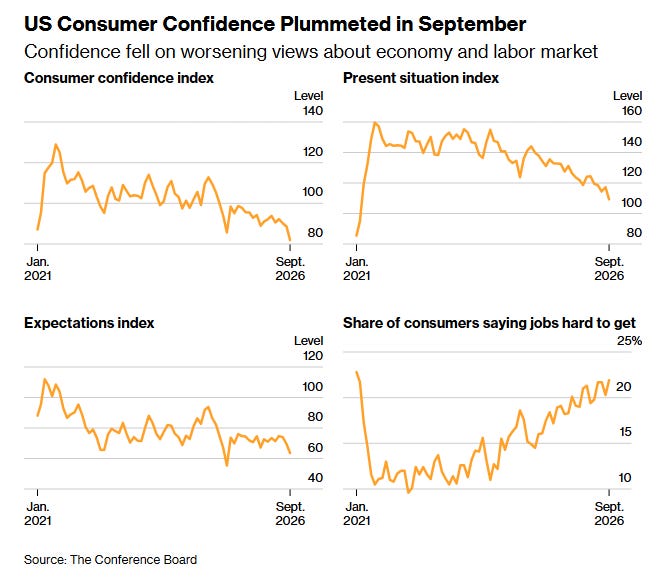
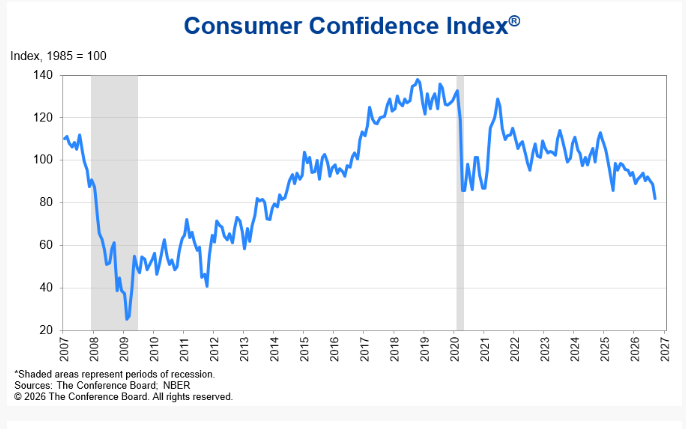
- The Conference Board’s Consumer Confidence Index fell 6.7 points in September to 81.9, the least since April 2014, far below the 89.0 expected (the biggest miss since 2024).
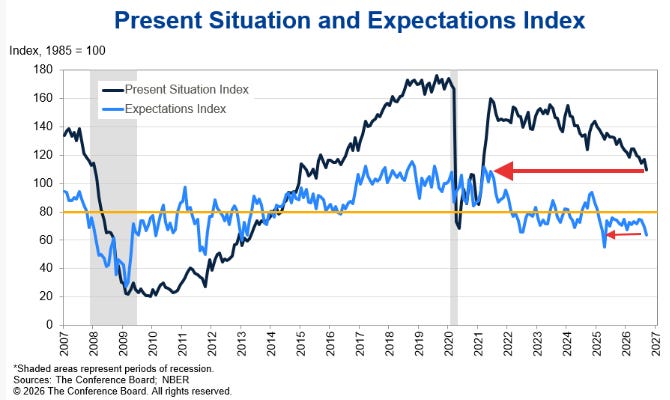
- Unlike August, when a jump in the present situation cushioned a collapse in expectations, both components fell hard. The Present Situation Index retreated 7.9 points to 109.3, its lowest since 2021, and the Expectations Index dropped 5.9 points to 63.6, a more than one-year low and among the lowest readings since 2013, leaving it further below the 80 threshold the Conference Board has said in the past signals a potential recession ahead.
- Consumers’ net view of current business conditions turned negative for the first time since September 2024, at -1.9%, while the labor market differential (those saying jobs are plentiful minus those saying jobs are hard to get) collapsed to just +1.7%, its lowest since February 2021.
- Inflation expectations rose 0.3 percentage points to 6.1% on the average measure, and the share expecting higher interest rates over the next 12 months jumped 5.2 percentage points to 68.4%, the highest in more than four years per Bloomberg, following a Fed Funds rate hike inside the survey window.
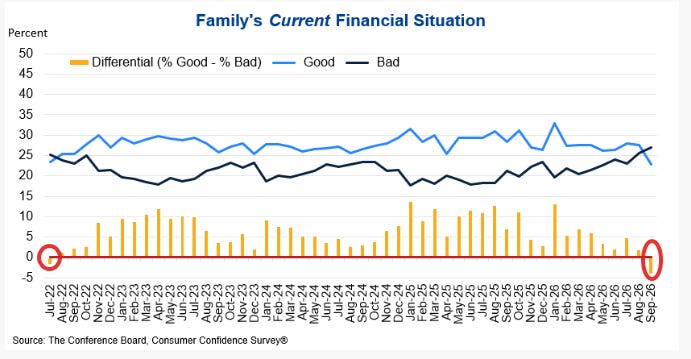
- Households’ net assessment of their own current finances turned negative for only the second time since the question was introduced four years ago.
Now let’s dig deeper with more details and charts.
September Consumer Confidence Falls to 12-Year Low
The Conference Board’s Consumer Confidence Index fell 6.7 points in September to 81.9, the least since April 2014 (so it is now below where the index bottomed during the Covid pandemic). It was the biggest miss vs. the 89.0 median estimate since 2024 per ZeroHedge. August was also revised down to 88.6 from 89.4.
Dana M. Peterson, chief economist at the Conference Board, framed it this way in the release: “The Consumer Confidence Index deteriorated notably in September, following two prior months of softening. The Present Situation Index fell sharply, while the Expectations Index slipped further into negative territory. Consumer appraisals of current business conditions became negative for the first time since September 2024.”
Peterson continued: “Consumers’ write-in responses regarding factors affecting the economy were mostly pessimistic in September. References to prices, the high cost of goods and services, and oil and gas prices in particular, rose to new heights, reflecting September’s surge in fuel costs. Comments about war/conflict eased this month but remained elevated. Consumers also frequently cited politics, trade, and employment in their write-in responses, though to a lesser extent.”
The Present Situation
The Present Situation Index retreated 7.9 points to 109.3, its lowest since 2021.
The net view of current business conditions — the share saying conditions are “good” versus “bad” — declined 3.4 percentage points to -1.9%, negative for the first time since September 2024, driven largely by more consumers reporting that conditions are “bad.”
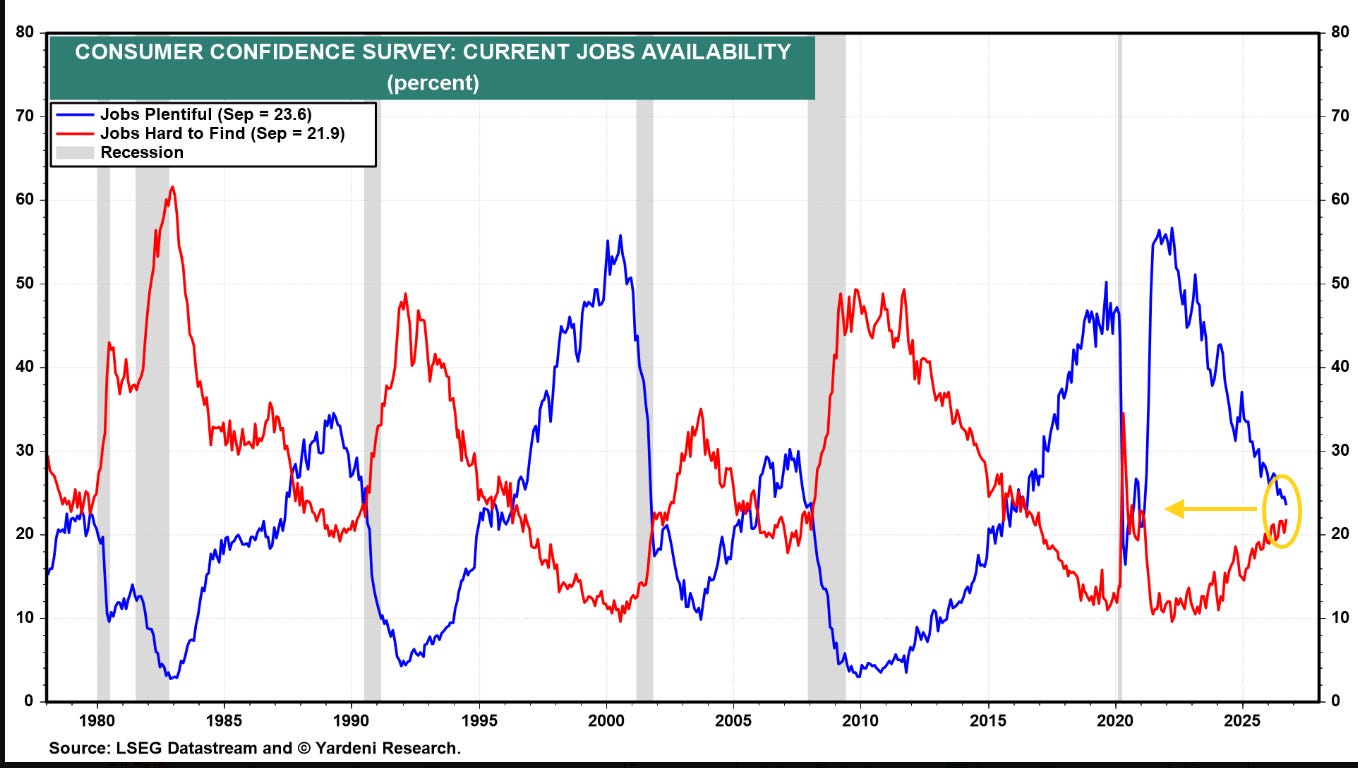
In addition, the labor market differential, the share saying jobs are “plentiful” minus the share saying jobs are “hard to get,” retreated 2.5 percentage points to just +1.7% — its lowest since February 2021. Both sides contributed: the share seeing plentiful jobs fell to 23.6% from 24.5%, while those seeing jobs as hard to get rose to 21.9% from 20.3%, also both the worst readings since early 2021.
Expectations
The Expectations Index fell 5.9 points to 63.6, its third consecutive monthly decline to a more than one-year low per Bloomberg. It remains well below the 80 threshold the Conference Board has said in the past signals a potential recession ahead, though the index has spent long stretches below that level since the pandemic without a recession following.
All three sub-components deteriorated:
- Net expectations for business conditions dipped 3.2 percentage points to -9.5%.
- Net expectations for the labor market declined 3.1 percentage points to -14.4%.
- Net expectations for household income fell 3.0 percentage points to +2.5% — still positive, but down from +5.5% in August.
Demographics
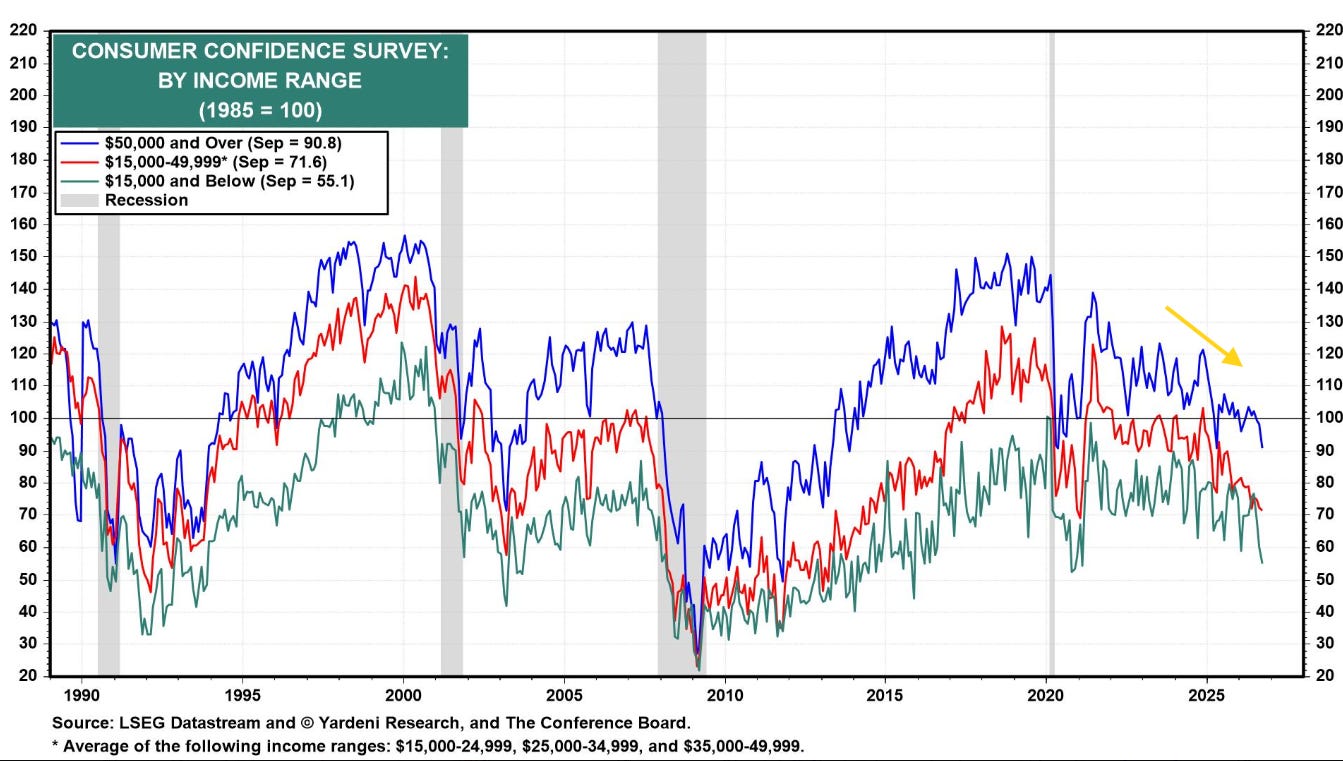
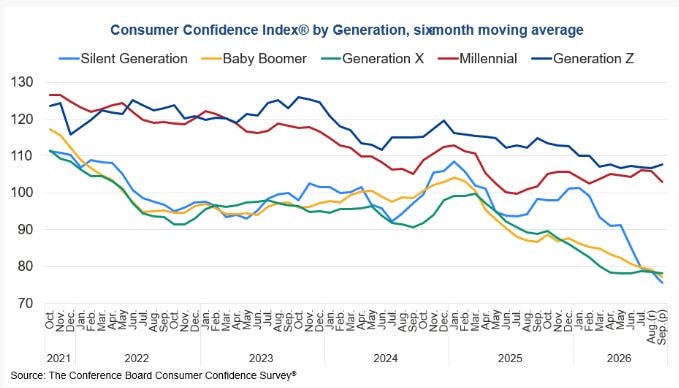
From the release: “On a six-month moving average basis, confidence across all age groups and nearly all income groups trended downward. While higher-income groups remained generally more optimistic, those with a household income of $125,000-$149,000 reported the greatest decline in confidence over the last six months. By generation, confidence for Gen Z, followed by Millennials, remained the highest on a six-month moving average basis. Confidence among the three oldest generations — Generation X, Baby Boomers, and the Silent Generation — continued to weaken.”
Confidence fell in September across all political affiliations — Democrats, Republicans and Independents.
Inflation, Rates and Stocks
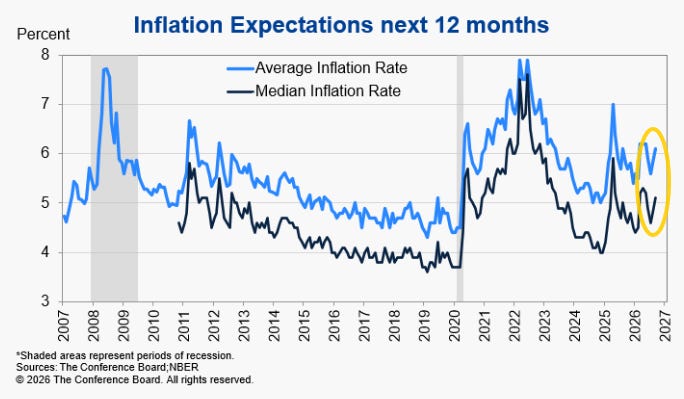
Average and median 12-month inflation expectations both rose 0.3 percentage points in September, to 6.1% and 5.1%, respectively.
And the share of consumers anticipating higher interest rates over the next 12 months jumped 5.2 percentage points to 68.4%, the highest in more than four years per Bloomberg.
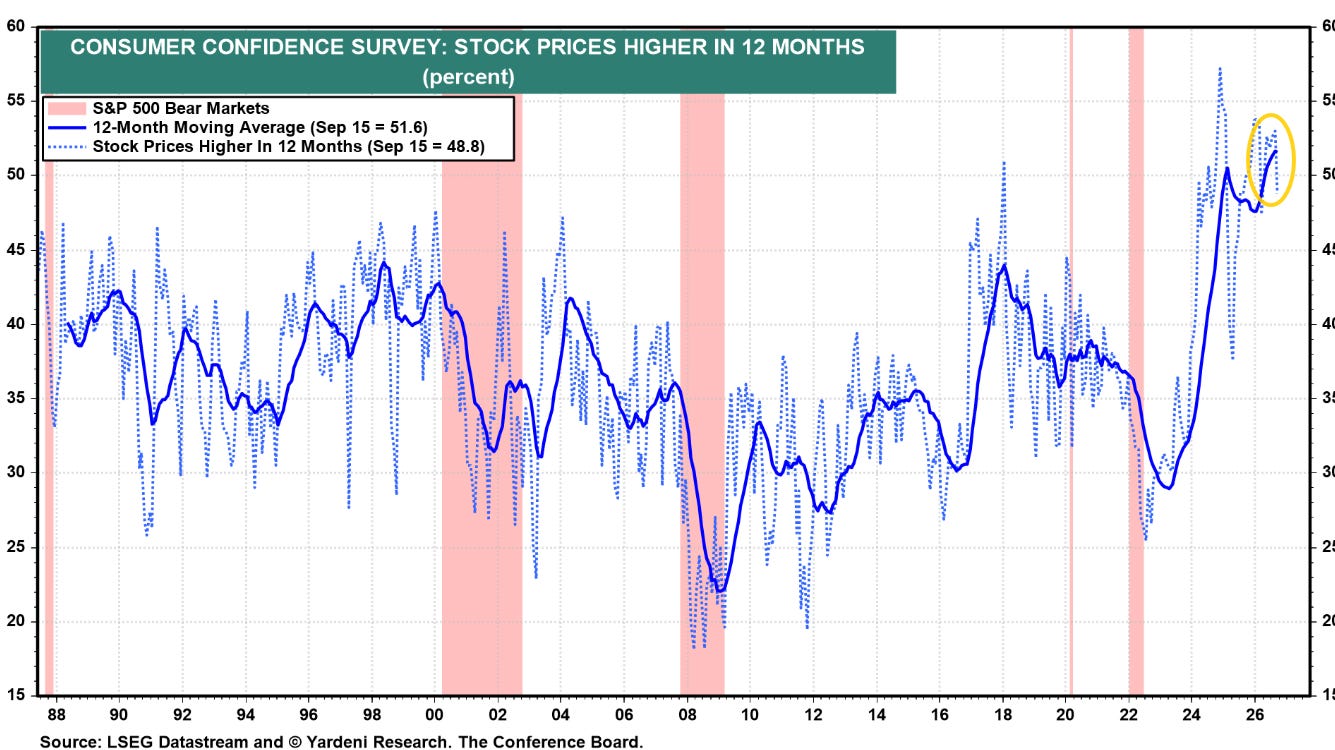
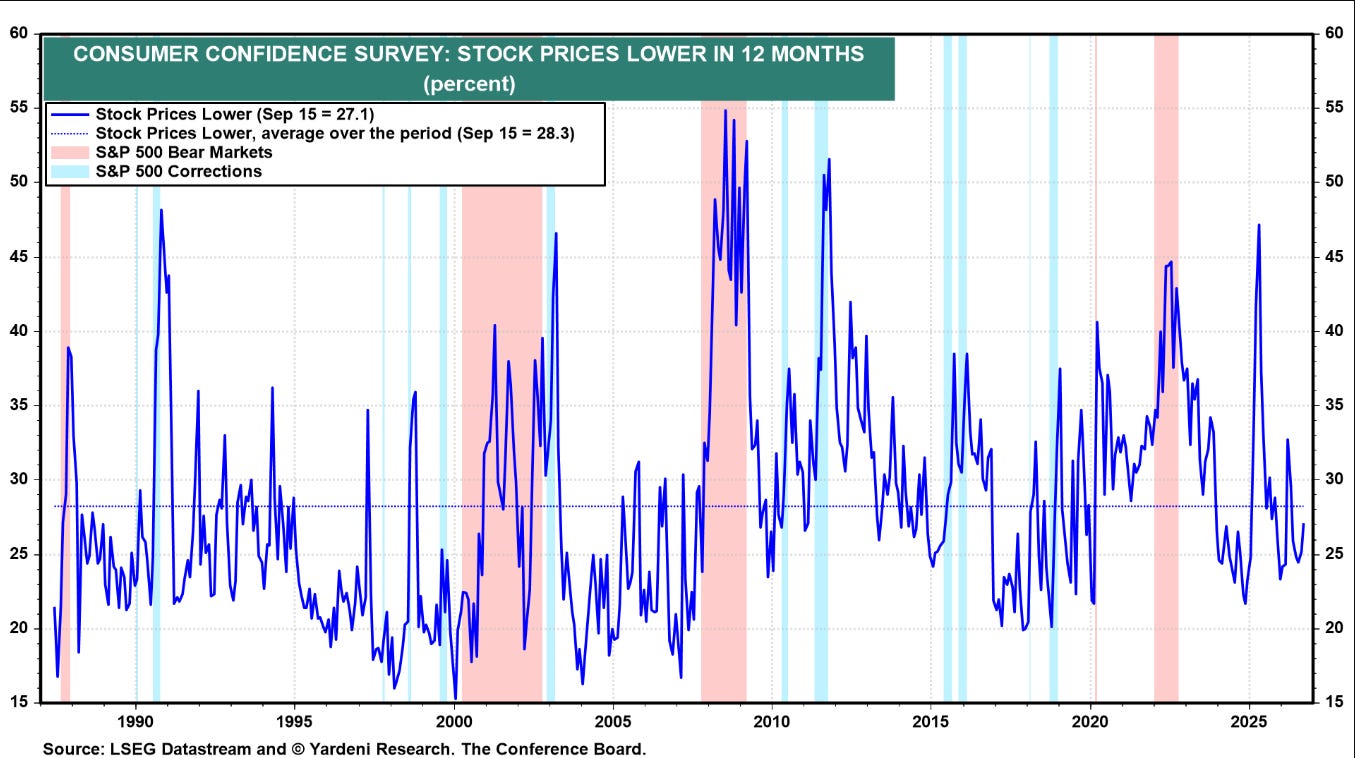
“Consumers still largely expected stock prices to rise in the next 12 months, but optimism moderated in September.” According to Ed Yardeni, the 12-month moving average of the share expecting higher stock prices remains at a record high.
Household Finances and Recession Odds
Consumers’ net view of their family’s current financial situation turned negative in September, as the share saying their finances were “bad” rose to overtake those saying “good.” That’s the first time since the initial month the survey question was initiated in July 2022.
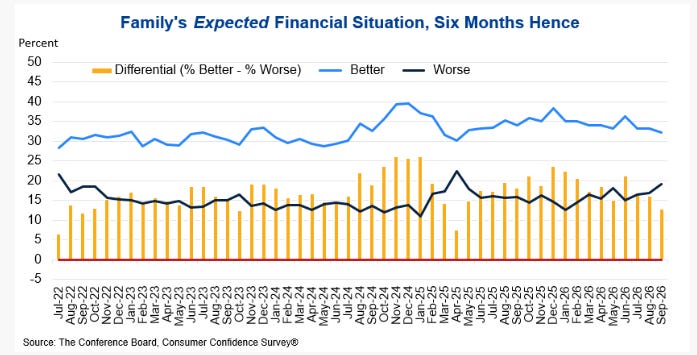
Views of the family’s future financial situation were also “somewhat less optimistic.”
The share believing a U.S. recession over the next 12 months is “somewhat likely” rose, while those saying recession is “not likely” declined. These measures are not included in calculating the headline index.
Spending Plans
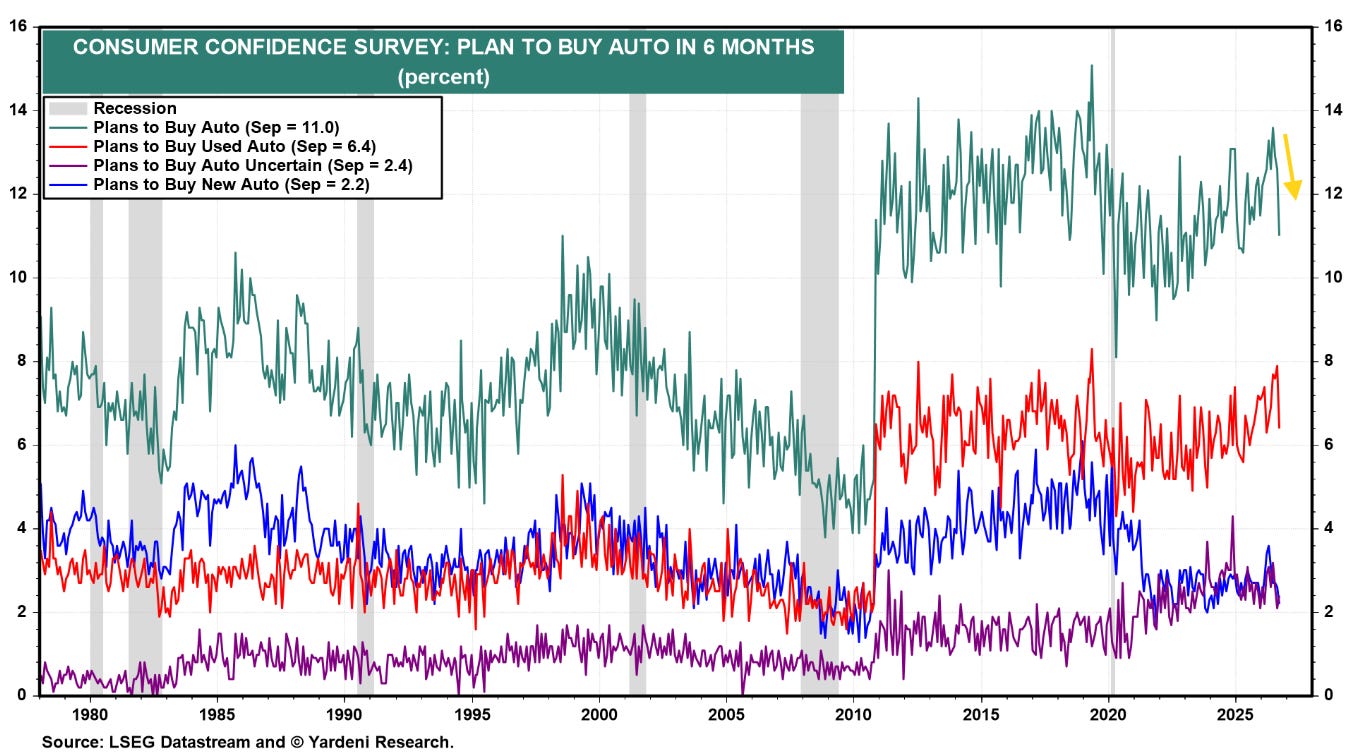
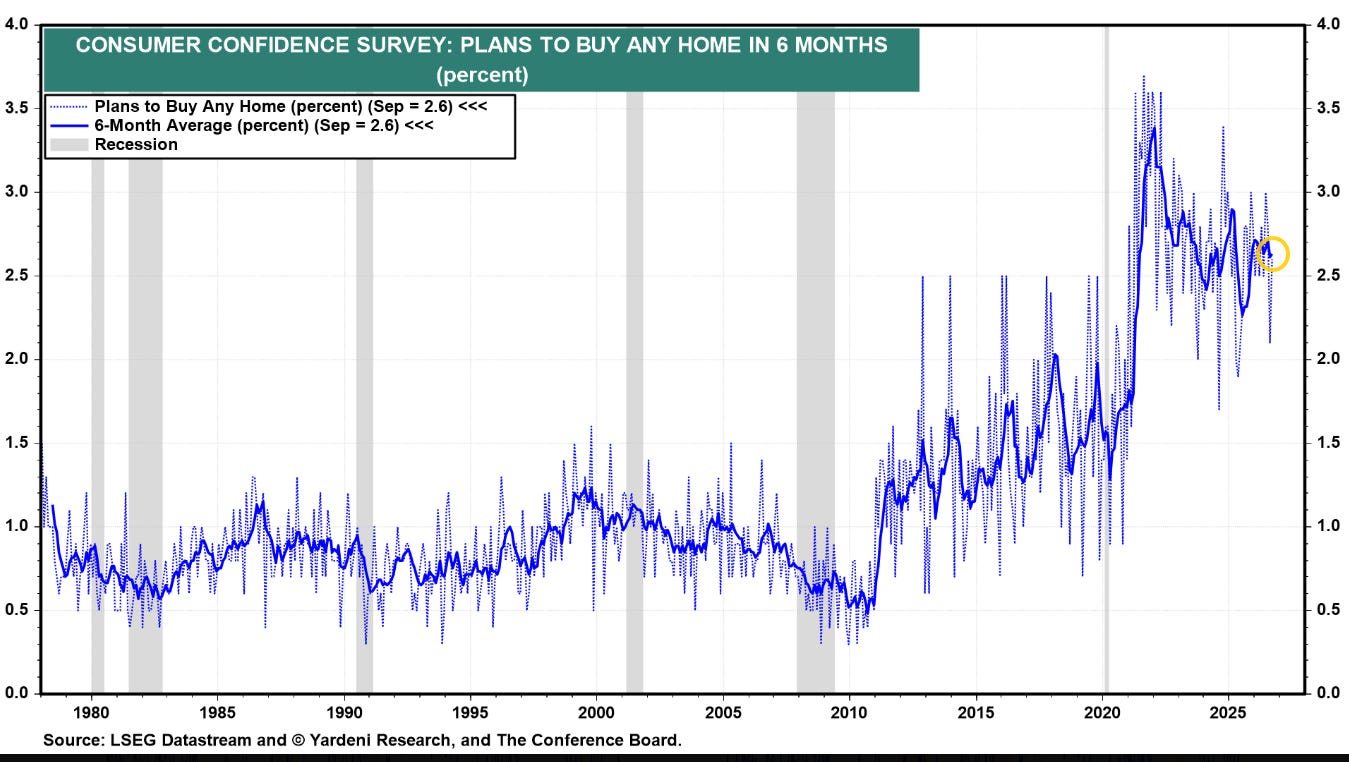
Plans to buy a car fell sharply in September from August. On a six-month moving average basis, plans to purchase both autos and homes declined slightly. Among durable goods, furniture and smartphones remained the top categories consumers wanted to buy over the next six months, while spending plans for refrigerators and television sets fell the most and plans for other durable goods moderated slightly.
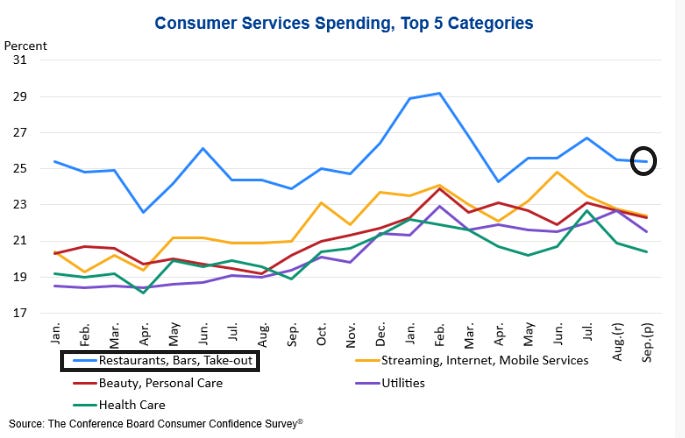
Expected spending on services pared back again in September. The top-five planned categories were restaurants, bars and take-out; streaming, internet and mobile services; beauty and personal care; utilities; and healthcare. Beyond those, the release notes consumers preferred to spend on cheap thrills and necessities, with anticipated spending moderating for hotels, movies, airfare and amusement parks. Household maintenance, financial services and historical sites or museums saw minor increases.
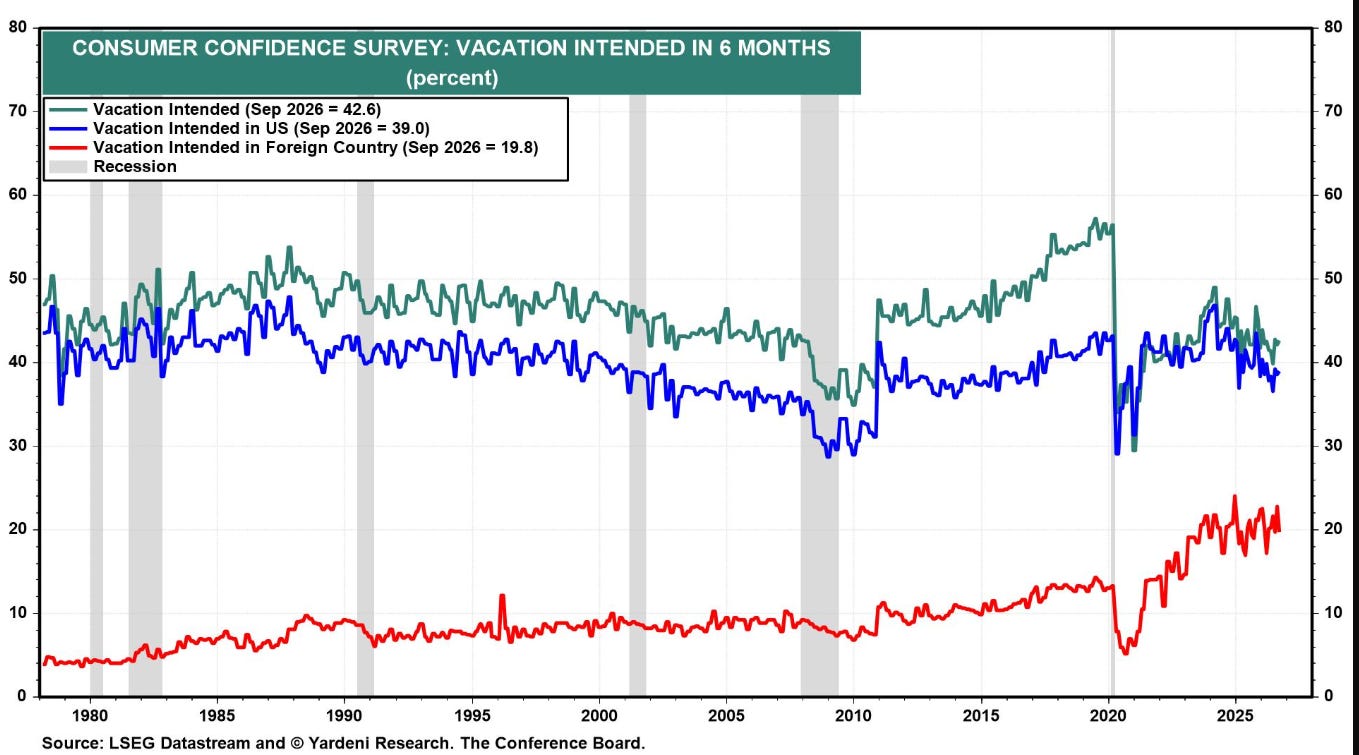
Vacation plans, though, moved higher, with 42.6% of consumers planning a vacation in the next six months, up 0.5 percentage points from August — though the gain was entirely domestic, as planned foreign travel dipped.
Summary of Details From the Report
Consumers’ views of current business conditions fell in September:
- 18.5% of consumers said business conditions were “good,” down from 18.8% in August.
- 20.4% said business conditions were “bad,” up from 17.3%.
Consumers’ views of the labor market softened in September:
- 23.6% of consumers said jobs were “plentiful,” down from 24.5% in August.
- 21.9% of consumers said jobs were “hard to get,” up from 20.3%.
Consumers were more pessimistic about future business conditions in September:
- 15.9% of consumers expected business conditions to improve, down from 17.0% in August.
- 25.4% expected business conditions to worsen, up from 23.3%.
Consumers were also more negative about the labor market outlook in September:
- 14.0% of consumers expected more jobs to be available, down from 14.8% in August.
- 28.4% expected fewer jobs, up from 26.1%.
Consumers’ assessment of their income prospects was also less optimistic in September:
- 17.9% of consumers expected their income to increase, down from 19.0% in August.
- 15.4% expected their income to decline, up from 13.5%.
The full release is available from the Conference Board here.