Caution Ahead: Credit Markets Flash Yellow
As AI enters its mania stage, my focus is on deteriorating credit and debt markets and rising yields.
You've reached your free article limit
You've read 0 of 1 free Pro articles.

The market is starting to weaken a bit now that second-quarter earnings season is for the most part over. The S&P 500 had its third-straight losing session in trading on Tuesday. The Nasdaq fell a bit over 1.3% on the day as the Philadelphia Semiconductor Index (SOX) dropped some 5% yesterday.
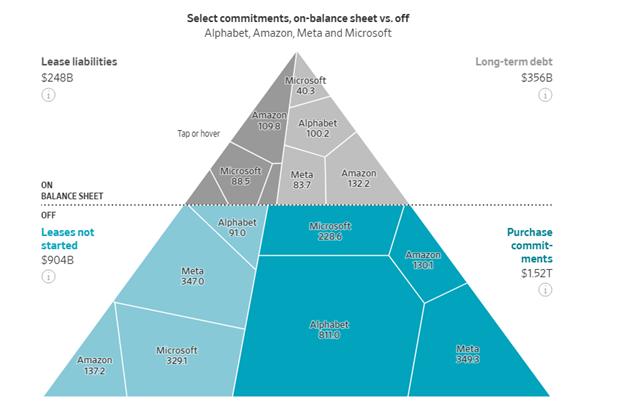
It feels like the AI Revolution has entered its mania stage or is close to doing so. The Wall Street Journal came out with an article on Monday highlighting the five major hyperscalers have now accumulated a combined $3 trillion of off-balance sheet liabilities for such items as future data center leases. This is up from Nikkei’s projection of $1.65 trillion earlier this summer. This is in addition to over $1.3 trillion in debt that is one these firms are carrying on their balance sheets. Oracle’s (ORCL) debt has been downgraded to one level above junk status by S&P Global. Will the future revenues their managements are envisioning in making these massive investments materialize in the coming years? That is a question that investors are likely to increasingly ponder in the weeks and months ahead.
This is especially timely in light of deteriorating credit and debt markets. Sovereign debt yields continue to move higher. U.S. long-dated treasuries have hit levels not seen since 2007, right before the Great Financial Crisis. In Japan, they have hit multi-decade highs. In the United Kingdom, 10-Year gilts have moved over the 5% threshold and are one full percentage point over 10-Year Italian sovereign debt yields. Something that would have seemed impossible a decade and a half ago during the European debt crisis.
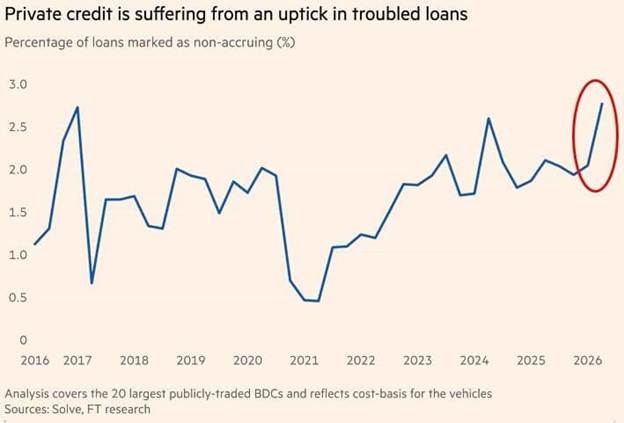
And rising yields will have second-level impacts and higher rates will likely expose plenty of “naked swimmers” stealing a quip from Warren Buffett. The sharp rise in Japanese debt yields have left Japanese life insurers with nearly $200 billion in unrealized losses on their bond portfolios. A recent piece in the Financial Times noted how trouble loans at private credit funds have seen a considerable uptick. Fitch Ratings also has stated that default rates in these funds have reached record levels in Q2.
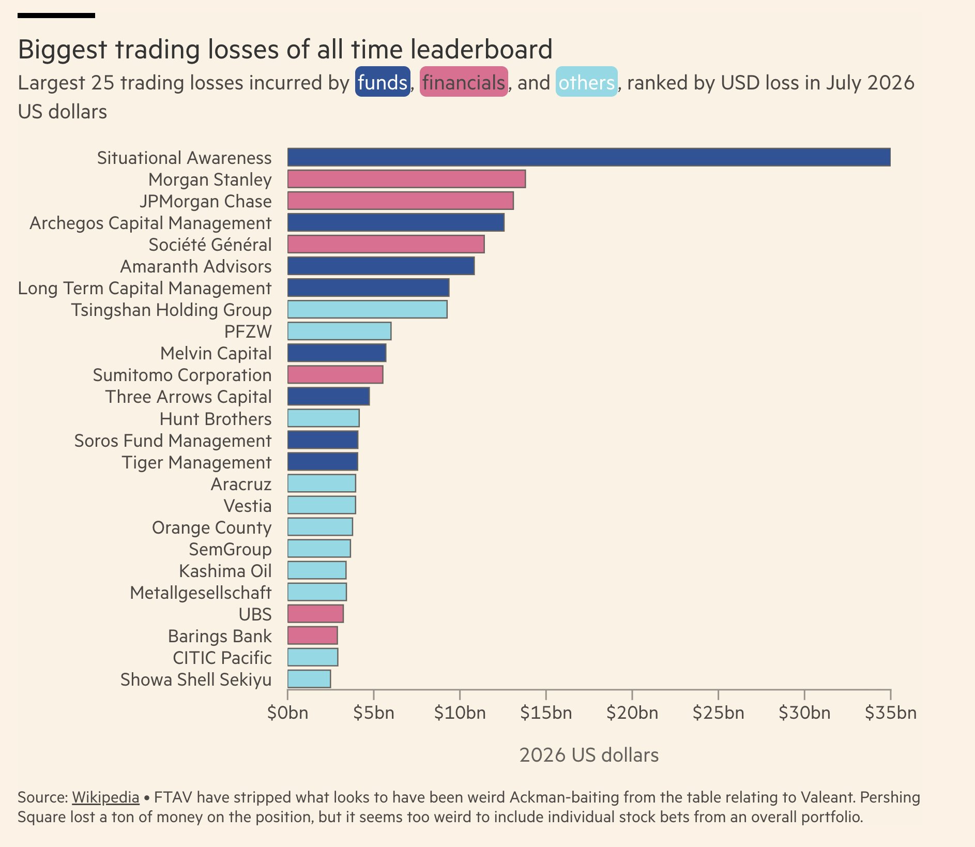
A hedge fund ironically named Situational Awareness had a massive blow up recently thanks to huge leverage this summer. Huge mortgage lender United Wholesale Mortgage disclosed earlier this month that it is taking a just over $600 million hit due to wrong bet on the direction of mortgage rates. Which is the worst decision the owner of the firm has made since trading Mikal Bridges, Cam Johnson and four first round picks for an aging Kevin Durant a few years ago as owner of the Phoenix Suns.
Meanwhile, the owner of the Los Angeles Dodgers is reportedly facing multiple investigations, and his insurance company has had to reclassify a large volume of the private credit investments on its books as affiliated or related-party assets.
What other credit problems will emerge thanks to the deteriorating environment? Unfortunately, I think investors will increasingly find out together.
At the time of publication, Jensen had no position in any security mentioned.