Another Trump-Xi Meeting Disappoints, Though China Can Claim Win
Investors have little to cheer about after five summits between the leaders.
You've reached your free article limit
You've read 0 of 1 free Pro articles.
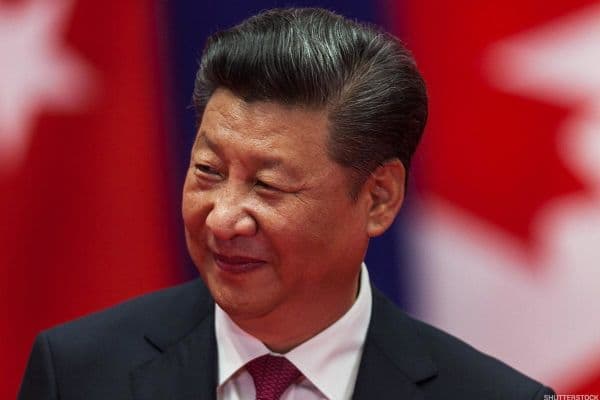
The summit between Chinese President Xi Jinping and his U.S. counterpart, President Donald Trump, delivered the bare minimum. Sure, it’s good to see the leaders of the world’s largest economies meet in person. But you’d expect more in the way of tangible results.
This is the third time the two men have met in the last year. Their one-day summit on October 30, 2025, in Busan, South Korea, broke the ice, their first face time in six years. Now we have the likelihood that they will confab five times in just over a year.
Both men are under political pressure. Trump has midterms to worry about, not to mention that we will be slipping into the second half of his second term: the lame-duck period.
Xi meanwhile is overseeing a country that has lost its head of economic steam. We just got new figures showing that industrial-profit growth slowed sharply to a nine-month low in August, to 4.2% from the 11.2% rate in July. Total GDP growth for Q2 slowed to 4.3%, below the 4.5% to 5.0% target range for this year.
China Cuts Rates
More broadly, exports are the only shining light in a country that has, all this decade, been contending with a death spiral in property prices that has resulted in a dearth of consumer confidence.
The People’s Bank of China on Tuesday cut interest rates at a time that most central banks are shifting to a hawkish stance, trimming its one-year pledged supplemental lending rate to 1.5% from 1.75%. That’s a rate used for the central bank to lend to state-owned policy banks, mainly to stimulate initiatives like urban renovation and infrastructure construction.
For first-time homebuyers, the government says it will subsidize interest payments on new home loans. But eligible properties must cost no more than C¥1.5 million ($225,000), which essentially rules out most major cities.
The 30-for-30 Deal That’s No Deal
What did we get in the way of tangible results out of Xi’s three-day trip to Washington? Trump rated his meeting with Xi a “12” on a 10-point scale, but the results are more fantasy than fantastic.
We have confirmation out of the summit that the two sides agree to lower tariffs on $60 billion in trade in “non-sensitive” goods.
The newly formed U.S.-China Board of Trade, announced when Trump visited China in May, is taking its first actions with this “30-for-30” deal.
It aims to reduce import taxes by an as-yet unspecified amount on a long roster of products that, on the U.S. side, starts with China-made fireworks and covers 77 types of goods, through vacuum flasks and vessels.
The long, long Chinese list kicks off with breeding horses, donkeys and mules, then itemizes 1,615 products down to dental chairs and X-ray tubes.
We can’t really say even this is pinned down. Negotiations continue as to what those tariff reductions will be.
Better Access for 30% of U.S. Exports?
U.S. Trade Representative Jamieson Greer insisted that the deal is “unlocking improved market access” for about 30% of all U.S. exports to China. U.S. consumers, meanwhile, get cheap toys and appliances in return, “products that the United States generally does not import from other countries.”
Still, there’s no sign of the “bigger deal” that U.S. Treasury Secretary Scott Bessent said the two sides are exploring. This is the very definition of a “series of smaller things” that the two sides have been able to agree so far.
Bessent and Chinese Vice Premier He Lifeng, who met twice in New York before the Washington summit, had already agreed to push the can down the road on tariffs. Before Xi and Trump met, Bessent and He announced a two-month extension to the tariff-war truce that will extend the suspension of tariffs as high as 145% on the U.S. side and 125% from China through January 10.
Most observers expected a longer shelving of the tariffs. Instead, we get a short extension that essentially covers the period when Donald Trump is likely to travel to Shenzhen for the APEC summit on November 18 to 19. It also covers the period when Xi is likely to return to the United States for the G20 meeting in Doral, Fla., on December 14 to 15.
Trump insisted on social media that he’ll travel to Shenzhen. But the Chinese foreign ministry said only that the two countries “maintain communication on interactions between the two heads of state” about potential U.S.-China discussions on the sidelines of the APEC and G20 leaders’ meetings.
No Progress on AI and Chips
There was no agreement on how to handle the governance of artificial intelligence. No announcement of big business deals for the likes of Boeing (BA), which secured a deal for Chinese airlines to buy 200 planes when Trump went to China in May. No deal for China to increase purchases of U.S. farm goods or other imports — with China yet to follow through on its prior pledge to buy $17 billion in agriculture products by the end of 2028.
Aside from the 30-30 deal, we had pageantry, and the gift of a bald-eagle statue to Xi. China has meanwhile delivered two pandas, live and breathing, to the Atlanta zoo. That replaces two older pandas and their two offspring, who returned to China in October 2024 as a 25-year agreement expired.
China may consider the Xi trip a “win” given that Xi and Trump treat each other as equals. It cements China’s position on the world stage as a geopolitical alternative to the U.S.-led democratic world order. China has also sought to extend tariff negotiations as long as possible, giving away as little as possible, and now has the knowledge that Trump is entering the twilight of his presidency, at a time U.S. courts have ruled most of his tariffs illegal.
But Xi could do with an economic win himself. One of the chief promises of the Chinese Communist Party is that it will take care of politics, but deliver the conditions for strong economic growth. Right now, Chinese citizens feel it is not able to deliver.
Stocks Unmoved Ahead of Week-Long Break
There’s been no boost to Chinese markets out of the summit. The CSI 300 index of the largest mainland listings is basically flat, with a 0.1% gain on Tuesday. The benchmark is down 7.9% year to date. Hong Kong’s market slipped 0.5% on Tuesday, and is down a similar 6.9%.
I’m disappointed by this lack of progress. We can’t really hold out hope for significant progress at the November and December meetings, if Xi and Trump do indeed meet. Maybe Bessent is right that there’s a bigger deal in the works, but even he sounds like he needs convincing on that front.
China’s markets will be closed for a week as of Thursday for the “Golden Week” celebrating the country’s national day on October 1, with trading resuming on October 8. Markets will also be shuttered on Thursday in Hong Kong.
Will Trump Sell Arms to China Instead of Taiwan?
We did have the worrying suggestion from the U.S. ambassador to China, David Perdue, that Trump offered to sell weapons to China. The White House did at least respond that any such deal would break U.S. law.
Still, it will have worried the administration in Taiwan. The Trump administration continues to hold up a $14 billion arms deal, approved by Congress, but that Trump has called a “very good negotiating chip” with China. Where, then, is the payoff from holding back on a legal obligation for the United States to help Taiwan defend itself?
One interesting aside is that the October 1 date celebrates the founding of the People’s Republic of China, the Communist version, which Mao Zedong formally proclaimed in 1949.
Taiwan Pushes Back on World War II History
During Xi’s state visit, the White House issued a “fact sheet” stating that both Xi and Trump “recalled that the United States and China were allies in World War II and fought side by side to win the war.”
Taiwan is pushing back on those “facts.” During World War II, China was led by the Nationalist government, led by Chiang Kai-shek, as the Republic of China. That’s the administration that fought Japan, but fled to Taiwan in 1949 as it lost the civil war against the Communists.
Taiwan is still officially known as the Republic of China, and claimed for many years that it remained the legitimate government of the country. The discrepancy explains why the People’s Republic of China, which has never been a U.S. ally and has never functioned as the government of Taiwan, is so desperate to claim Taiwan as its territory.
Taiwanese officials say they will stress the “true history” and resist China’s attempts to re-write the World War II narrative. “China is trying to replace the Republic of China’s role during World War II,” Taiwan deputy foreign minister Francois Wu said. “This is something we should feel very sad about.”