A Global Bond Rout and a Third Central Bank Turns Hawkish
The market is under severe pressure as oil remains elevated and yields are rising everywhere at once.
You've reached your free article limit
You've read 0 of 1 free Pro articles.
The selling that was triggered on Friday by Fed Chair Kevin Warsh continues Wednesday morning with futures lower again. The primary pressure is coming from bond markets overseas.
The U.S. 10-year Treasury yield is at 4.812%, which is the highest level since October 2023. Brent crude sits near $95, roughly $20 above where it traded before the war started. Those two issues are closely connected and they are driving the entire story right now.
Japan Is the Epicenter
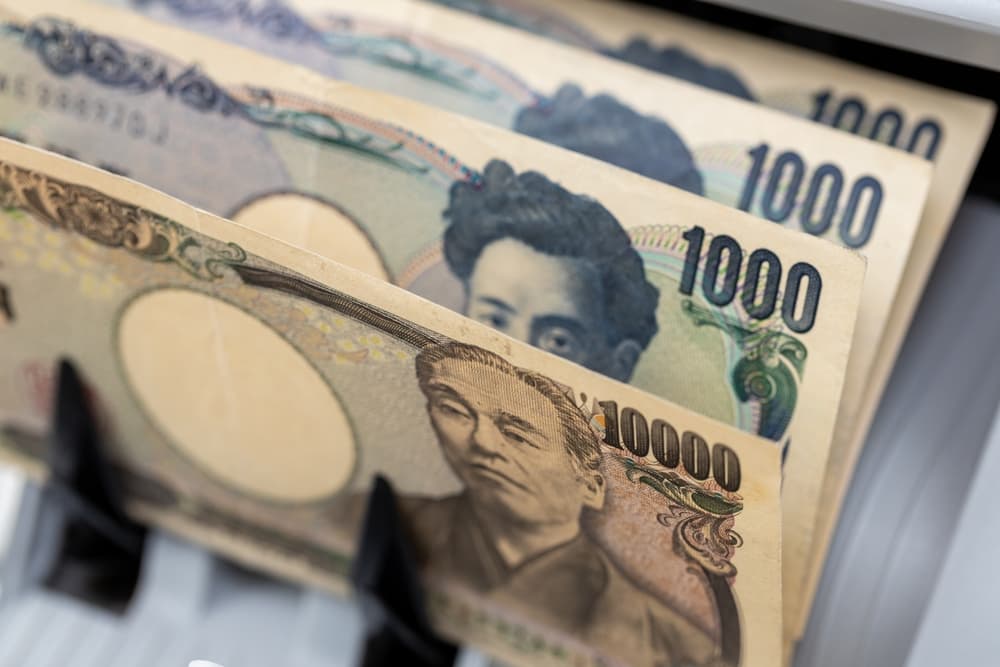
The 10-year Japanese government bond just hit 3% for the first time since 1996 and the 2-year touched a 31-year high of 1.81%. Bank of Japan Governor Kazuo Ueda said this week that policymakers need to pay greater attention to upside price risks, which the market read as indicating a rate increase later this month.
The Nikkei fell 2.6%, and tech-heavy indexes in Japan and South Korea both dropped about 3%. Australia, China, and Hong Kong were all lower as well.
The U.S. has long benefited from low interest rates in Japan. Japanese investors parked cash in U.S. Treasuries for decades because domestic yields were near zero. However, when Japan can get 3% at home, some of that money comes back, and it pushes U.S. yields higher regardless of what the Fed might do.
Japan repricing from near zero to 3% is one of the larger shifts in global finance in decades and it has worldwide repercussions.
Three Central Banks Now
I wrote yesterday that two major central banks were leaning hawkish at the same time. Now it is three.
The European Central Bank is fully priced for a quarter-point hike on September 10 after European inflation hit a three-year high. The Bank of Japan is now indicating a move later this month. And the Fed has three dissenters who wanted to hike in July, along with a chair who leaned hawkish at Jackson Hole on Friday.
Germany’s 10-year bond rose to its highest close in 15 years. U.K. 10-year gilts are at the highest since June 2008. French and Japanese borrowing costs are also moving steadily higher. The pressure on bonds is a global issue.
Developed nations that do not have the AI-fueled growth powering the American economy are getting hit harder, because they have the inflation and the fiscal burden without the offsetting economic growth.
The U.S. is the best house in a deteriorating neighborhood due to the strong earnings and AI growth but that doesn’t mean the market can withstand the pressure of inflation and higher interest rates.
Dell Sets the Bar
Dell Technologies (DELL) reported after Tuesday’s close and the numbers were extraordinary. Second-quarter revenue of $47 billion beat the $44.51 billion consensus estimate, and the company raised full-year revenue guidance by $25 billion to $192 billion against a $173 billion consensus. Full-year earnings guidance went to $25.50 per share at the midpoint from $17.90.
The AI server business booked a record $60.9 billion in orders with a record $95 billion backlog. Traditional servers and networking were up 122%, storage up 26%, and client solutions up 20%.
One of the big differences from the recent Nvidia (NVDA) results is that margins went up rather than down. Dell was able to raise prices and passed the memory cost through to customers rather than absorbing it. That means that the inflation pressure lands on the buyer and is not absorbed by Dell.
The larger question is whether a beat like this can generate sustained momentum or whether it acts the way Nvidia did, popping and then fading. Hewlett Packard Enterprise (HPE) reports after the close Wednesday and competes directly in AI servers, so Dell just raised expectations for that report.
Six Changes in Five Weeks
Investor’s Business Daily cut its recommended exposure back to 40% to 60% from 60% to 80% on Tuesday. That is the sixth change since July 29, when the model sat at its lowest possible reading of 0% to 20%. It went to the maximum by mid-August, cut twice, went back up last Thursday, and has now cut again. I have been tracking this because their system is purely reactive to index price action, and it does that job exactly as designed.
The reasoning this time is that the S&P 500 has slipped back below its 21-day exponential moving average and looks set to test 7600, a level that was resistance on the way up. Its cushion above the 50-day line is the thinnest since July 31. The Nasdaq stopped just short of breaking its own 50-day. So the major indexes look technically vulnerable and IBD is reacting to that.
IBD described the Russell 2000’s (IWM) three-session decline as having the look of furious selling and raised the question of whether the index is still in an uptrend at all. The levels to watch are 2,900 and the July 31 low of 2,902.47. A shakeout in small-caps isn’t a surprise and that is where I see the best opportunities eventually developing.
The IBD model has reversed itself six times in five weeks. That is not a flaw in the system. It is reacting to a market where the index signal has stopped being reliable, which is the argument I have been making since June. I have always believed that the indexes are a poor way to measure the health of the market and the IBD system is providing a live example of why.
Don’t Fight This Action
My best advice right now is don’t fight this. There has been a clear change in trend and the instinct most investors have at this point is to try to predict where it ends.
Downtrends are fueled by failed bounces. That is the mechanism to watch and it explains why these things last longer than anyone expects.
People keep trying to catch the turn. They buy what looks like a bottom, get a two-day pop, and then watch it fail. Then they do it again a little lower, with a little less conviction and a little more capital committed. The pattern repeats until enough of them give up in disgust, and that is when the actual bottoming action starts.
The bottom does not arrive when the news improves. It arrives when the people who kept trying to buy it finally stop. As I’ve often written, bad markets don’t scare you out, they wear you out.
That is why there is no reward for rushing. Every failed bounce from here takes out another group of buyers, and the setups I want will not develop until that process has run further than it has. My job is to still have capital and patience when it does.
I am trading around the HPE position ahead of tonight’s report and otherwise working the shopping list rather than worrying about the indexes.
Position: Long HPE