Daily Diary

Doug KassDoug Kass
DATE:

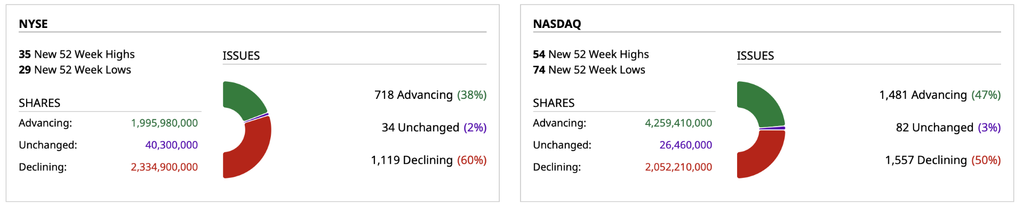
Bad Breadth

“One last thing.”

– Lt. Columbo

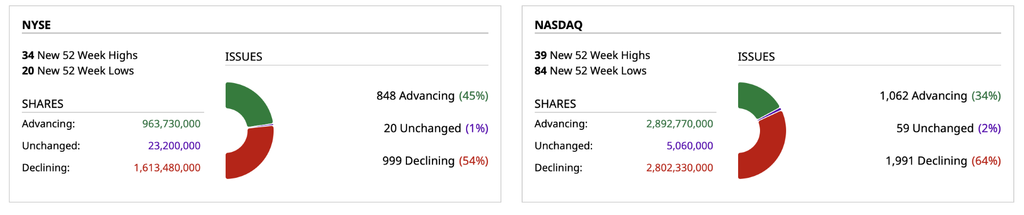
Late in the day yesterday I cautioned that market breadth was punk relative to the rise in the indices.

Well, today, the indices declined and breadth deteriorated (especially on the Nasdaq):

Position: None

BY Doug Kass · Aug 28, 2026, 4:40 PM EDT

Closing Market Data for Friday

Closing Volume

– NYSE volume 9% below its one-month average 

– NASDAQ volume 5% above its one-month average 

– VIX index: down 0.83% to 14.39

Breadth

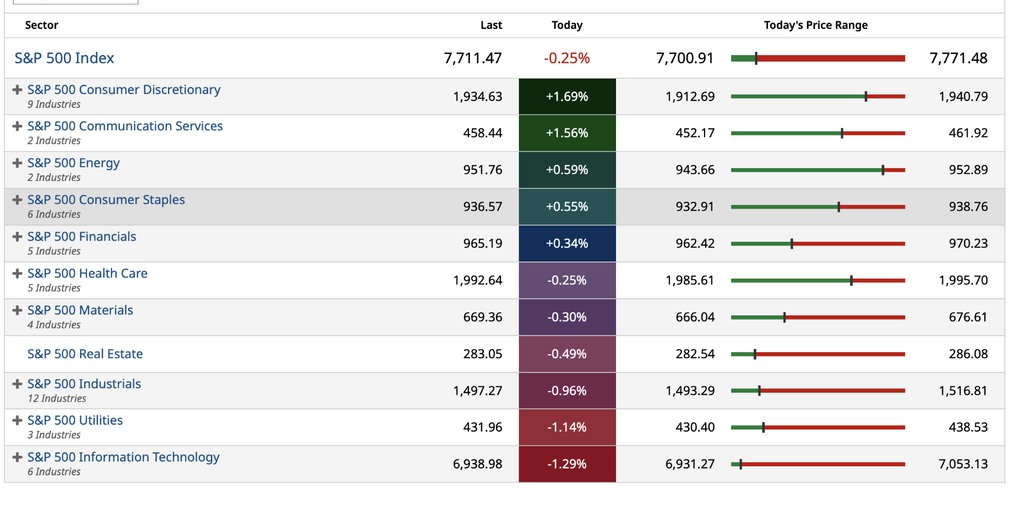
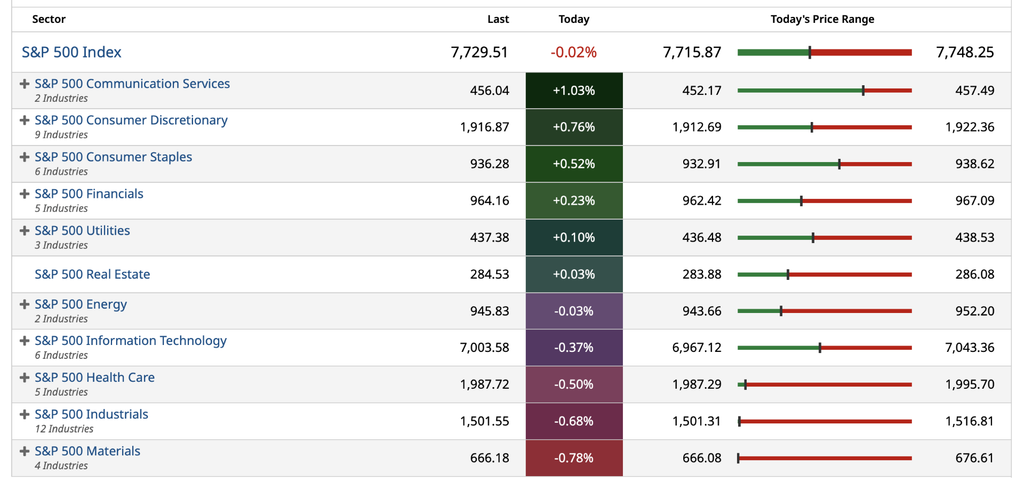
Sectors

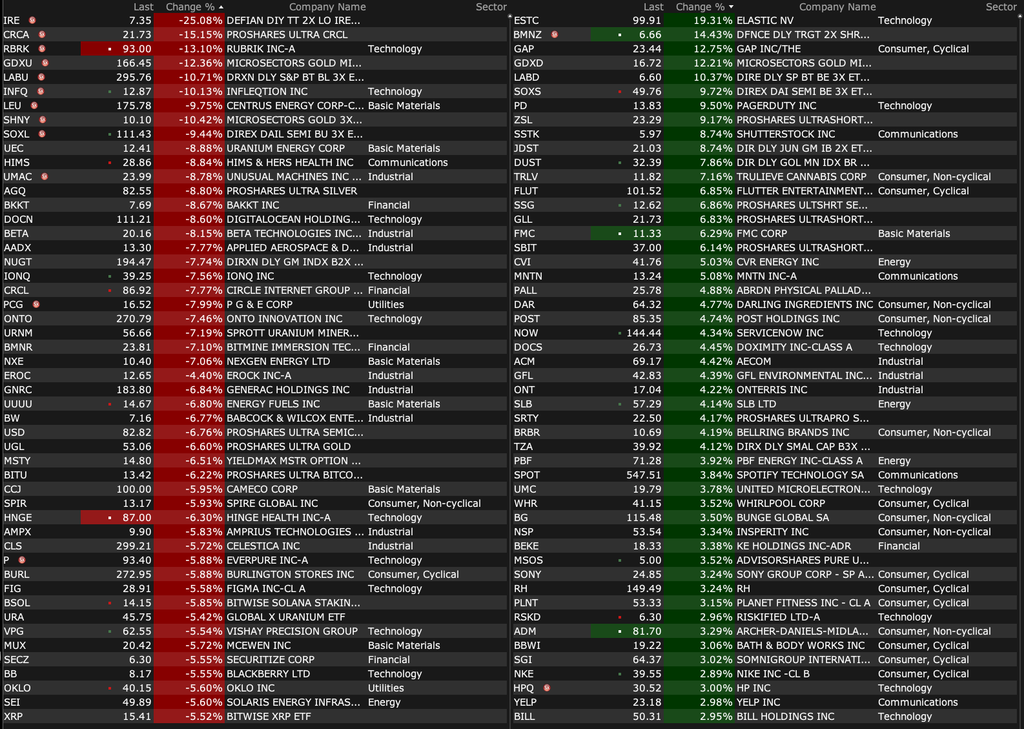
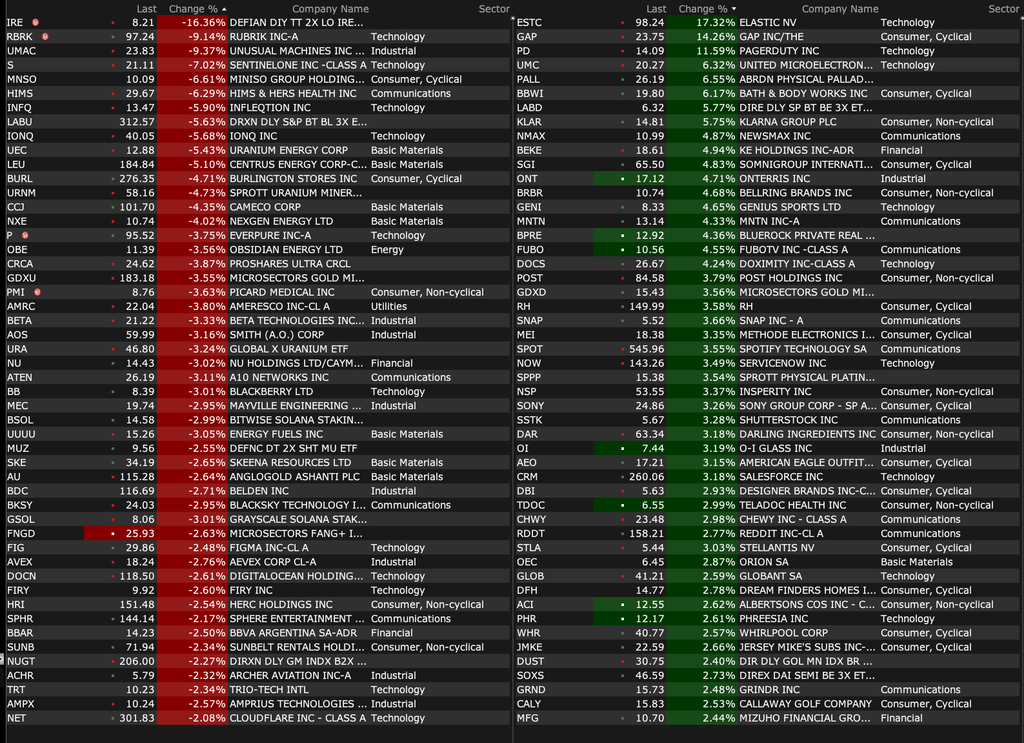
% Movers

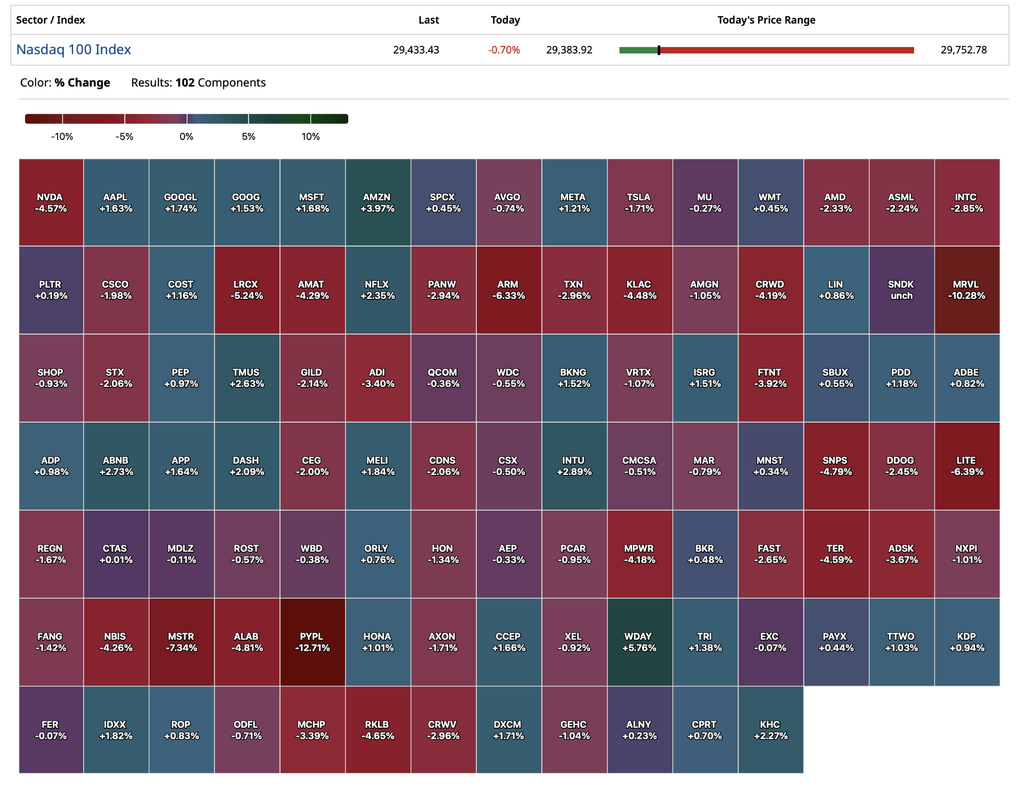
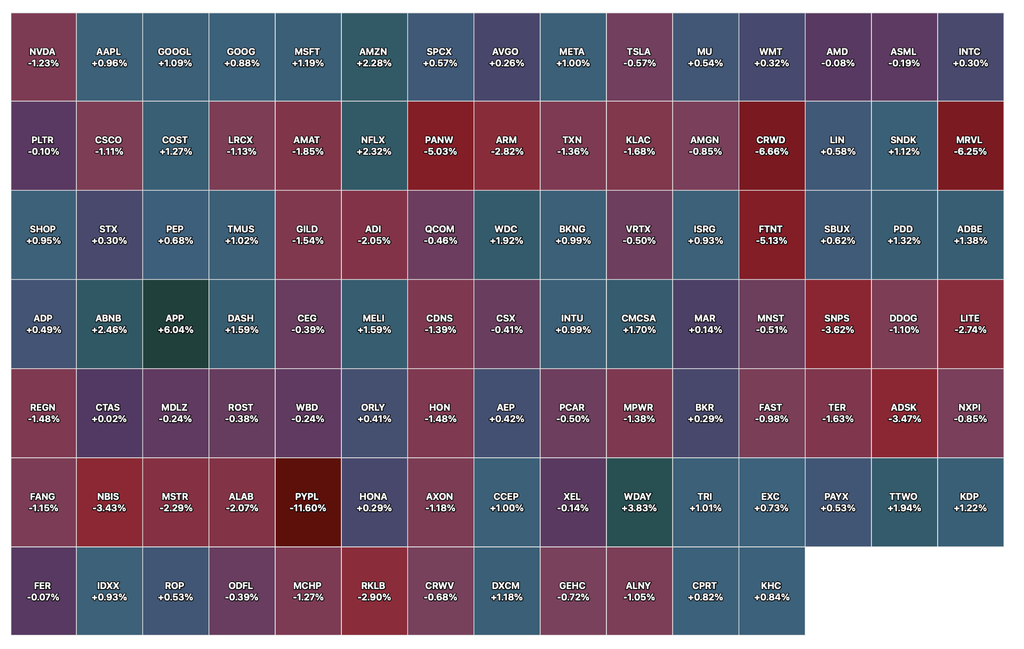
Nasdaq 100 Heat Map

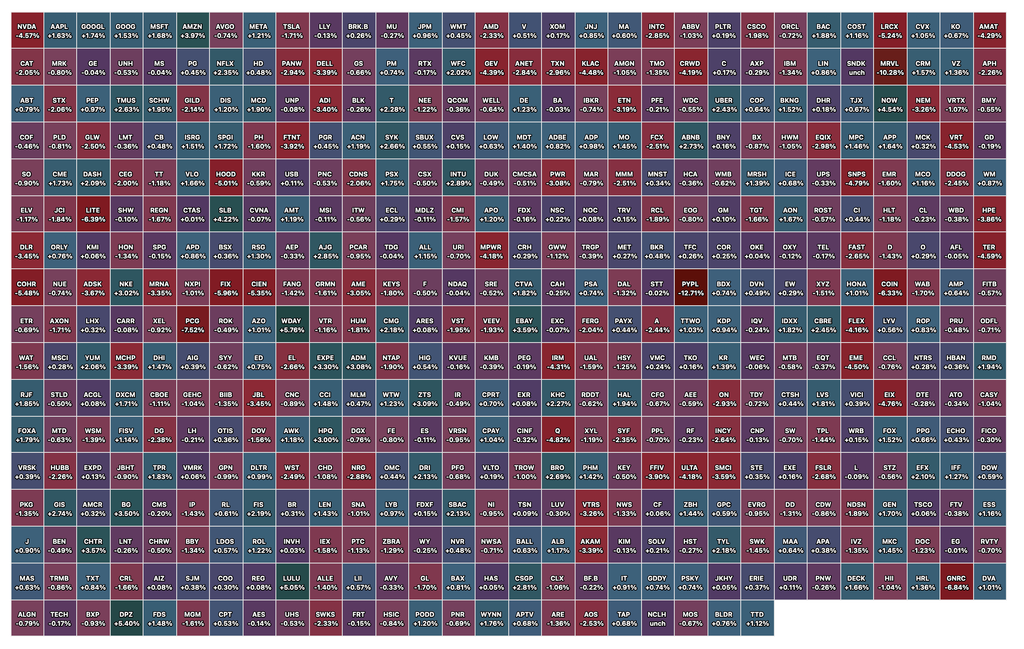
Closing S&P 500 Heat Map

Position: None

BY Doug Kass · Aug 28, 2026, 4:30 PM EDT

Boockvar’s Weekly Summation

From Peter Boockvar:

Positives,

1)  Initial jobless claims were 203k vs 207k last week and remains muted. The estimate was 208k and the 4 week average is now 206k vs 204k last week as a print of 198k drops out. Continuing claims fell to 1.778mm from 1.796mm, below the trend last year of mostly above 1.9mm.

2)  Personal income rose .4% m/o/m in July, double the estimate and spending was higher by .2% and also twice the forecast. That spending figure though was zero on a REAL basis. Combine the two and the savings rate lifted to 3% from the multi year low of 2.6%.

3)  Core durable goods orders in July were as expected when we include the June upward revision. Shipments were better and that could tweak Q4 GDP estimates a touch higher.

4)  Within the final UoM consumer confidence figure, one yr inflation expectations moderated to 4% from 4.2% in June and that is the least since March.

5)  After a further acceleration over the prior three weeks of 25%, the price of a 40 foot container from Shanghai to NY fell 1.8% w/o/w. To LA they were little changed, up .2% and higher by 19% in August from July at $6,818 which compares to $2,191 at the end of February.

6)  The June (thus somewhat dated)   S&P Cotality national home price index showed a 1.5% y/o/y price gain after a 1.2% rise in May. The strongest markets are those with the most limited inventory like Chicago, New York, Cleveland, San Francisco, and Boston. Prices fell in Las Vegas, Seattle, Denver, Tampa, Phoenix, Dallas and Portland. Thus, of the top 20 cities where these mentioned are included, the price situation is pretty bifurcated.

7)  The July new home sales figure totaled 607k annualized, 13k less than expected but June was revised up by 50k to 678k. Smoothing out this volatile data set puts the 3 month average at 638k vs the 6 month average of 641k and which compares with the 12 month average of 664k.

8)  The August Richmond manufacturing index was little changed but stayed above zero at +4 vs +5 in July.

9)  From JM Smucker: “net sales increased 5%, including a 1 percentage point contribution from volume/mix” with the balance driven by higher prices of 4%, “primarily driven by higher net pricing for coffee.” Uncrustables by the way saw 12% sales growth which is great for a consumer products food brand with most driven by volume/mix.

10)  From Best Buy: Comps grew 4.1% “with positive comps across almost all our major product categories” and with “computing growth” leading the way “driven by a combination of customer need to upgrade and replace and product innovation…Consistent with the past several quarters, we see a customer who is still spending, but is value focused and attracted to sales moments. Importantly, while customers continue to be thoughtful about big ticket purchases, they are willing to spend on high price point products when they need to, or when there is technology innovation.”

11)  From Dollar General: “Same store sales increased 3.5% during the quarter, driven by customer traffic growth of 2% and average basket growth of 1.5%. Notably, this marks the 5th consecutive quarter of growth in customer traffic as we continue to build on the momentum in our business with both new and existing customers” and “the growth rate in non-consumables, once again, outpacing consumables.”

12)  From Dollar Tree: “Customers continue managing household budgets carefully, shopping with purpose, and prioritizing value and affordability. Our data shows we grew sales across all income cohorts. Households we served were up nicely y/o/y, with gains skewing to the middle and higher income households. Comp strength was broad based across the assortment, with personal care and toys notable outperformers. Discretionary performed well, and consumables delivered exceptional comp growth.”

13)  From Burlington Stores: They got back $55 million in tariff refunds and “We intend to fully reinvest these refunds into the business in the back half to deliver even sharper values to our customers. So, we expect the direct impact of these tariff refunds to be neutral to full year earnings.”

14)  From Abercrombie & Fitch: “While we benefited from tariff refunds in the quarter, we beat our outlook by more than the refund on both operating margin and earnings per share.” Both Abercrombie and Hollister brands saw record Q2 net sales.

15)  From Ulta Beauty: Comps rose 3.8% y/o/y. “Importantly, our sales outpaced the US beauty market in a dynamic environment. We increased our share of prestige beauty while holding mass share flat, according to Circana…We’ve not seen any notable changes in consumer behavior in the quarter and that means both the demographics from an age perspective and also from an income perspective is that we’re seeing increases in spend across the broader segmentations. So we’ve not seen trade down behavior happening.”

16)  From Williams Sonoma: “The home furnishings industry was essentially flat in the quarter. So effectively, all our growth was market share gain, and we took that share while increasing our penetration of full price selling. We are driving growth and market share gains without discounting.”

17)  From BJ Wholesale: “Taking a step back to assess the consumer environment, the K-shaped economy persists, though we did see some sequential improvement during the quarter. We drove comp growth across all income cohorts, which is encouraging, and our value proposition continues to resonate broadly. That said, the vast majority of our growth continues to be driven by our higher income members, which is consistent with what we’ve seen for some time now.”

18)  From Affirm: GMV is up sharply as more people use BNPL. And “Recent cohorts of monthly installment loans are tracking towards approximately 3.5% ultimate net charge-offs as a percent of cohort GMV, which is in-line with expectations and consistent with the performance of historic loan cohorts.”

19)  From Nvidia: “The surge in AI demand is driving a global infrastructure buildout, supported by an expanding and diverse set of growth opportunities spanning hyperscalers, AI labs, AI natives, enterprises, and sovereign customers. We expect to grow revenue by approximately 70% in fiscal 2028. This is a supply constrained outlook.”

20)  From Marvel Technology: “The increase in our revenue outlook continues to be driven by our data center business, which we now expect to grow by approximately 60% this fiscal year, up from our prior expectation of approximately 50%.”

21)  From Salesforce: The biggest message from Marc Benioff, “This nonsense of this SaaSpocalypse, I think it’s time to stop…AI is delivering value across every layer of our platform. We’re seeing incredible demand for our AI and data products, with ARR about to cross $4 billion.”

22)  Hong Kong’s July exports skyrocketed by 51% y/o/y and imports were higher by 41% driven by AI related products.

23)  In Germany, the August IFO business confidence index was 88.8, up from 86.7 in the month before with both Expectations and the Current Assessment higher. IFO said succinctly and positively, “Despite another rise in energy prices, the Germany economy is recovering.” Evidence that the manufacturing lift is global, “In manufacturing, the index rose noticeably.” Also, “In the service sector, the business climate improved” but, “While IT service providers were more confident about their future development, the situation in the transportation and logistics sector remains difficult.” The trade and construction components also rose.

Negatives,

1)  The July PCE price index rose by .2% both headline and core with the former one tenth above the estimate while the core rate was as anticipated. The y/o/y gains were 3.7% and 3.3% respectively, the same pace seen in June.

2)  The final UoM consumer confidence index for August was 51.7 vs 55.2 in July, though above the initial read of 51. The 5-10 yr guess was 3.3% for a 3rd straight month. The UoM said, “Sentiment declines in August were seen for all political groups and were particularly acute among Republicans. Moreover, groups who are typically less-equipped to absorb increases in cost of living also exhibited stronger decreases in sentiment, including older consumers, lower- and middle-income consumers, and those with no stock holdings. With ongoing policy uncertainty including the Iran conflict, consumers anticipate further increases in gasoline prices both in the short and long run. In addition to the pocketbook issues that have been central to consumers’ views of the economy, they are increasingly worried that prospects elsewhere in the economy could be weakening. Expected year-ahead business conditions fell back 10%, along with a 13% drop for the five-year horizon.”

3)  The Conference Board’s Consumer Confidence index slipped to 89.4 from 90.2 and less than one point below expectations. For perspective, the year-to-date average in this index is 91. The internals were very mixed as the Present Situation rose about 7 pts while Expectations fell by about 6 pts. One year inflation expectations rose to 5.8% from 5.6% in July and vs 5.9% in June. The Conference Board said, “Consumers’ write-in responses on factors affecting the economy were slightly more pessimistic in August. References to prices in general—and oil and gas specifically—remain elevated. Comments about war/conflict, food/groceries, trade, and jobs rose in August.”

4)  The August Chicago manufacturing index fell about 10 pts m/o/m to 47.1 and well under the estimate of 57.9. The decline was driven by drops in new orders, backlogs, production and supplier deliveries (though lower supplier deliveries means an easing of supply chains)  . Employment rose a touch. Prices paid rose to the highest since February 2022 and “Some respondents cited higher metal costs.”

5)  The August KC services index fell to -3 from +14. The August Philly non-manufacturing index flipped back to negative territory at -10.6 vs +7.4 in July. It’s been below zero for 21 of the last 22 months.

6)  Q3 GDP estimates will get a slight trim after the larger than expected July goods trade deficit of $118.8b, about $18b above the estimate and the widest since March 2025. Exports fell 2.9% while imports were higher by 3.7%, led by an 11% rise in ‘capital goods’ and I’d guess much had to do with AI related stuff, particularly semis.

7)  Mortgage applications to buy a home were little changed, down .3% w/o/w and lower by 5.4% y/o/y. Refi’s fell 2% w/o/w and are down by 17% y/o/y. The average 30 yr mortgage rate was also little changed at 6.78% but around the highest in a year.

8)  From RXO: “In the 2nd quarter, spot rates, as measured by the Curve, rose 32.4% y/o/y, up from 16.5% in the 1st quarter, marking the 9th consecutive inflationary reading. The index has not experienced this level of rate inflation since pandemic era surges.” And, “Though overall freight volumes remain muted, shippers are still experiencing significant rate volatility due to decreased carrier capacity…While rising freight rates have helped carriers offset some of their own inflationary pressures, profitability is still challenged.”

9)  From Apartment List: “The national median rent increased by .1% in August and now stands at $1,390. Rents are still down .8% compared to one year ago, but y/o/y rent growth has been inching up and the vacancy rate is inching down, signaling a modest tightening of rental market conditions…we now appear to have hit an inflection point, signaling that the rental market may finally be stabilizing as construction slows and a recent influx of new units gets absorbed.”

10)  From JM Smucker: They are seeing some softness in their convenience store channel. “The traffic dynamic seems to be somewhat persistent. It’s hard to really pin down exactly what’s driving it, but I would submit that gas prices are part of that. Right where folks are filling up their tanks but not necessarily continuing on into the store. I think that is part of the dynamic on the traffic.”

11)  From DICK’S Sporting Goods: “Consumer preferences are evolving, with athletes increasingly responding to newness, innovation, and a broader set of brands. As demand continued to shift during the quarter, inventory built up in parts of the industry, particularly within certain legacy footwear silhouettes and apparel franchises that simply aren’t resonating the way they once did…In response to these changes in the market, we felt it was important to remain competitively priced to protect our leadership position.” And, “Across the company overall, macroeconomic and geopolitical concerns also weighed on profitability during the quarter and impacted fuel, supply chain, health care, and other costs. Along with the marketplace pressures we’ve discussed, this led us to revise our expectations for the balance of the year.”

12)  From Dollar General: “Our core customers continue to be financially constrained, with a variety of factors impacting their budget. Most notably, higher and more volatile fuel prices have forced customers to further prioritize purchases with a focus on value and affordability. As customers have continued to reduce trips and shop closer to home, Dollar General is uniquely positioned to meet their needs, with more than 21,000 stores located within 5 miles of approximately 75% of the US population…For the quarter, we once again experienced strong trade-in across middle and high income cohorts while also driving productivity gains with our low income customers.”

13)  From Dollar Tree: “the inflationary backdrop continues to pressure all household budgets, particularly for lower income consumers. As our customers look for ways to stretch their dollars, they are increasingly turning to Dollar Tree for everyday essentials at compelling opening price points and pack sizes that help them manage their budget.”

14)  From Burlington Stores: Comps rose 2% on top of 5% one year ago, “But candidly, I was hoping for more than a 2% comp in the 2nd quarter.” They are optimistic about the back half of the year “but there are also some reasons to be a little cautious. From a macroeconomic perspective, gas prices rose in the 1st quarter, and that increase has not gone away. And as we look at the full range of retailer results that have been reported over the last couple of weeks, there are some exceptions, but overall, the comp results have been weak…At all, the commentary that we see and hear right now suggest that shoppers are under a lot of pressure. So that gives us some concern about the back half.”

15)  From Kohl’s: “We are operating in an challenging macroeconomic environment where our customers are experiencing persistent financial pressures from inflation in their everyday expenses like gas and food. While their day-to-day priorities may change, the consumer is consistently looking for value, a compelling assortment, and an inspiring experience.”

16)  From Nvidia: “Many of you have expressed concerns regarding our gross margins as component costs have risen significantly. As you are already aware, we are experiencing extreme pricing conditions in memory. The magnitude of the price increase has exceeded our prior expectations and are headed even higher into next year.” From this, they moderated gross margin expectations and “We expect margins to bottom in Q4 in the 71% to 72% range before settling at 72% to 73% in fiscal ‘28 as executed price increases take effect in Q1…Memory scarcity today is being driven in large part by the AI buildout itself and unlike a component that simply raises our costs with no offsetting benefit. Tighter memory supply is a symptom of the same demand surge that’s driving our own growth.”

17)  From HP: “Looking ahead to the remainder of our fiscal year, we continue to expect input costs to rise, putting near term pressure on our operating margins, particularly in Personal Systems…Given the impact of commodity driven price increases, we expect below seasonal revenue performance in Q4.” And, “We continue to expect memory and storage costs to increase further as a percentage of the bill of materials. And as we signaled last quarter, we expect our Q4 margin to be below Q3 levels and then to sequentially improve as we look ahead into FY27.”

18)  The Bank of Korea hiked rates by 25 bps to 3% but as expected and where the Governor said with respect to their reaction to inflation worries, “There’s a Korean saying that if you fail to stop something with a hoe, you’ll end up having to stop it with a shovel, meaning the cost of responding too late is much greater.”

19)  Australia’s July trimmed mean CPI rose 3.6% y/o/y, one tenth more than expected but at the same pace seen in June.

BY Doug Kass · Aug 28, 2026, 3:15 PM EDT

Wrapping Up a Long Week

I am going to leave early today (at 3 PM) as I have had a long few weeks.

Thanks for reading my Diary today, all week and since 1997.

Be safe.

Hug your family.

Position: None

BY Doug Kass · Aug 28, 2026, 3:00 PM EDT

Dispersion Divergence

Position: None

BY Doug Kass · Aug 28, 2026, 2:40 PM EDT

Ed Zitron (Part Deux)

Position: None

BY Doug Kass · Aug 28, 2026, 2:25 PM EDT

My Tweet of the Day (Part Deux)

Position: Long MSOS common (VL), calls (S)

BY Doug Kass · Aug 28, 2026, 2:05 PM EDT

I’ve Been Buying MSOS Today

I was a large buyer of MSOS at $4.78 today.

Position: Long MSOS common (VL), calls (S)

BY Doug Kass · Aug 28, 2026, 1:40 PM EDT

Trading Update

S&P futures are -27 and Nasdaq futures are -245, which is a big reversal from the earlier market strength.

I have covered my SPY short at $768.70 on the belief we might have some month-end markups.

I plan to re-short strength if we see markups near the close today. 

From earlier today:

Even More…

I shorted more SPY at $755.18.

If it wasn’t for month-end I would go large-sized short SPY.

Position: Short SPY (M)

BY Doug Kass · Aug 28, 2026, 11:10 AM EDT

Shorting More SPY

I added to SPY short at $774.01.

Position: Short SPY (M)

BY Doug Kass · Aug 28, 2026, 11:02 AM EDT

Position: None

BY Doug Kass · Aug 28, 2026, 1:22 PM EDT

Covered the Rest of My Nvidia Short

I covered the balance of my Nvidia (NVDA) short at $218.83 (-$9 on the day).

Position: None 

BY Doug Kass · Aug 28, 2026, 1:06 PM EDT

Memo to Dan Niles

Position: Short NVDA

BY Doug Kass · Aug 28, 2026, 12:59 PM EDT

Boockvar Breaks Down Warsh’s Speech

From Peter Boockvar

Finally a playbook on what will guide policy from here & tackling inflation right now is his main focus

In response to the Warsh speech, Treasury yields are moving higher with the 2 yr in particular up 8 bps from where it stood right before it was released. The 10 yr yield is up just 2 bps and the 30 yr yield is down 1 bp. I believe he did a very good job of laying out a pathway, a framework, a playbook and the rules of his road on what he’s watching out for and what will guide him in terms of properly calibrating monetary policy as best he can. Here are some of the key quotes from it:

“Here is a quick overview of what I’ll cover in my remarks this morning. You can call it an outline . . . you can call it a trail map . . . just don’t call it forward guidance.”

“The potential for substantially higher growth is on the rise. Ever-expanding pools of capital are pouring into AI-related infrastructure of all sorts.”

“Will the application of AI cause a significant, sustained rise in productivity across the economy? And if so, when? Will token usage be complementary or competitive to labor? Will the next generation of AI models demand even greater capital intensity, or will the models themselves help devise a capital-light solution?”

“Among the other yet unknowns is the resulting market structure. It’s not obvious where the returns on capital will land or on what timescale. Early on, how much of the surplus goes to owners of scarce assets—AI labs, chipmakers, energy producers, and cloud providers? Over time, how much of that value accrues to businesses and consumers? What are the broad implications for workers and for the employment side of the Fed’s mandate?”

A jab to Scott Bessent? “To get policy right, we also need to get the relationship right between financial markets and the central bank. The Fed needs clear market signals, as unfiltered as possible . . . from market internals . . . the level and change in asset prices across sectors . . . the prices and trading volumes of Treasury securities. . . the foreign exchange value of the dollar . . . the cost and availability of credit . . . and the price of a broad set of commodities.” I bolded to highlight.

“These and other indicators should inform the Fed’s near-term outlook on economic activity and inflation throughout the business cycle. They should also reveal the state of broader financial conditions . . . and the risks and uncertainties in the financial cycle.”

Here is how he’s currently assessing the economy:

“Business capital expenditures—the seed corn of future economic growth—are rising rapidly…More than half of the cap-ex growth this year can likely be ascribed to the buildout related to AI.”

He even mentioned the stock market, “For firms in the S&P 500, profits have grown by more than 20 percent over the past year. Profit margins are quite elevated, relative to history. Overall equity market volatility is low. We’re staying keenly focused on market internals, watching performance across sectors.”

And further utilizing his markets experience, “Credit spreads on corporate bonds and leveraged loans are near the low ends of their historical ranges, and issuance volumes in these markets have been quite strong this year. Looking beyond fixed-income markets to the banking business, in the July Senior Loan Officer Opinion Survey on Bank Lending Practices, banks tell us that standards for commercial and industrial loans are on the easier end of their historical range. That helps explain the growth we’ve seen this year in those loans. Credit and loan markets are showing few signs of policy restraint.”

“Certain sectors—like housing and agriculture—are showing strains. But, on balance, I would be hard pressed to describe broad financial conditions as restrictive.” I highlighted with bold.

“Real consumer spending has been healthy despite the shocks, increasing more than 2 percent over the past four quarters.”

“Labor markets are quite stable. The jobless rate, at 4.1 percent, remains low by historical standards and has not changed much for a couple of years. Unemployment claims, on a four-week average—an empirically robust real-time indicator—are near their lowest level in decades.”

This his main concern, “But on the price-stability side of our mandate, the numbers are more concerning…And while this summer’s PCE and CPI readings were better than expected, they do not tell me that underlying trends have meaningfully improved.”

And to those who just look at wage growth to determine their inflation outlook, “The data also show moderate wage growth. But in tracking underlying inflation, wage growth has not proven a reliable indicator of future inflation for a very long time.”

“Over the past 12 months, 54 percent of goods and services in the PCE basket showed price increases above 3 percent. This is well below the post-pandemic highs of about 77 percent, but it remains well above the level of 32 percent in the two decades that preceded the pandemic.”

And something I’m watching closely too, “The recent rise in overall commodity prices also bears watching. What we need to judge is whether trends indicate upside inflation risks.”

And back to using his market chops, “It matters, too, whether the inflation readings of the past five-plus years have seeped into expectations. The good news is that measures of inflation expectations in the medium term, by and large, look stable. And inflation compensation measures from the swaps market send a strong and similar message.”

His bottom line right now and the place of his main focus, “Here is my standard: We must be confident that underlying inflation is moving to our objective, clearly and at sufficient speed. Otherwise, we have work to do. That’s our job . . . our mandate . . . and our charge to keep.

Rate hike odds for September have moved up to 48% from 36% yesterday. By year end, odds of one hike are at 100% and the chances of a 2nd at 24%.

Position: None

BY Doug Kass · Aug 28, 2026, 12:45 PM EDT

Covered Part of My NVDA Short

I covered one-third of my NVDA short at $220.86 (-$7.15 today).

I will re-short on strength. 

Position: Short NVDA

BY Doug Kass · Aug 28, 2026, 12:16 PM EDT

More Granny Shorts

I’m shorting more GRNY at $28.09.

Position: Short GRNY (M)

BY Doug Kass · Aug 28, 2026, 12:10 PM EDT

Niles Shares My Concerns

On CNBC, Dan Niles expressed my exact concerns about double and tripling ordering (Nvidia (NVDA)) and the unprecedented +70% revenue growth forecast next year.

Position: Short NVDA (VS)

BY Doug Kass · Aug 28, 2026, 12:05 PM EDT

Not Broadening

SPY    +0.44%

QQQ  +0.26%

IWM   -0.58%

RSP    -0.04%

Position: Short SPY (M)

BY Doug Kass · Aug 28, 2026, 11:35 AM EDT

Friday Morning Market Stats

Breadth

Sectors

% Movers

Nasdaq 100 Heat Map

Position: None

BY Doug Kass · Aug 28, 2026, 11:30 AM EDT

El-Erian on Warsh Speech

Position: None

BY Doug Kass · Aug 28, 2026, 11:20 AM EDT

Even More…

I shorted more SPY at $755.18.

If it wasn’t for month-end I would go large-sized short SPY.

Position: Short SPY (M)

BY Doug Kass · Aug 28, 2026, 11:10 AM EDT

Shorting More SPY

I added to SPY short at $774.01.

Position: Short SPY (M)

BY Doug Kass · Aug 28, 2026, 11:02 AM EDT

Tweet of the Day (Part Deux)

Position: None

BY Doug Kass · Aug 28, 2026, 11:00 AM EDT

My Bunny Had a Good Nose

Position: None

BY Doug Kass · Aug 28, 2026, 10:35 AM EDT

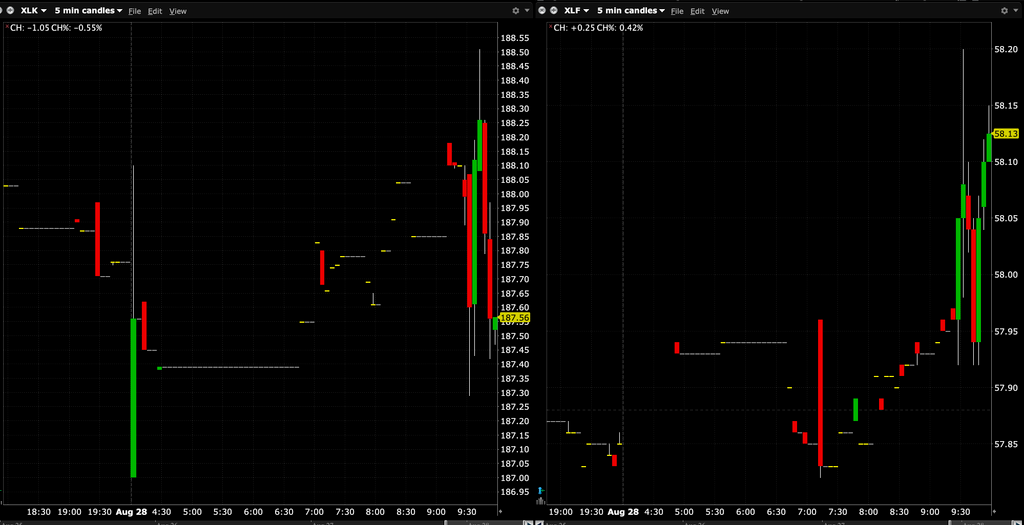
Tech vs Financials Ahead of Warsh’s Jackson Hole Speech

Tech (XLK) vs. Financials (XLF) at 9:56 a.m. ahead of Warsh’s Jackson Hole speech:

Position: None

BY Doug Kass · Aug 28, 2026, 10:15 AM EDT

My Fed Tweet of the Day

Position: None

BY Doug Kass · Aug 28, 2026, 10:07 AM EDT

Controlling Prices

Warsh will focus on controlling prices, according to the summary I received.

Position: None

BY Doug Kass · Aug 28, 2026, 10:05 AM EDT

Boockvar on Rents, Bond Yields and the U.S. Consumer

From Peter Boockvar:

I’m looking forward to hearing what Kevin Warsh has to say in his speech but I have to say that I see the Fed as the least relevant in decades in terms of their market influence because elevated inflation relative to pre-Covid trends continues to put them in a box with limited flexibility. The rest of the yield curve, particularly 10s, is where the action is as the market really now sets the cost of capital, notwithstanding the Treasury’s attempt to tame that.

I’ve been of the belief all year that the slowdown in new rental growth this year was going to begin to reverse in the latter part of 2026 and more so in 2027. Apartment List released its August data a few days ago and said this about new leases, not renewals which always trend much higher:

“The national median rent increased by .1% in August, and now stands at $1,390. Rents are still down .8% compared to one year ago, but y/o/y rent growth has been inching up and the vacancy rate is inching down, signaling a modest tightening of rental market conditions.”

“we now appear to have hit an inflection point, signaling that the rental market may finally be stabilizing as construction slows and a recent influx of new units gets absorbed.”

“Despite being at the tail end of the construction boom, the market had still been struggling to absorb the swell of new inventory. That is now finally changing, as we see multifamily occupancy also hitting an inflection point in tandem with rent growth.”

San Francisco is the best market in the country right now with rental growth up by 11% y/o/y. San Antonio is the worst with rents down 5.7%.

Bottom line, every month that passes and buying home is not affordable for some, rental absorption is only going to continue and we thus move closer to new rental growth reaccelerating again. Apartment List’s bottom line, “The market is definitely turning the corner, but the shift is occurring gradually.”

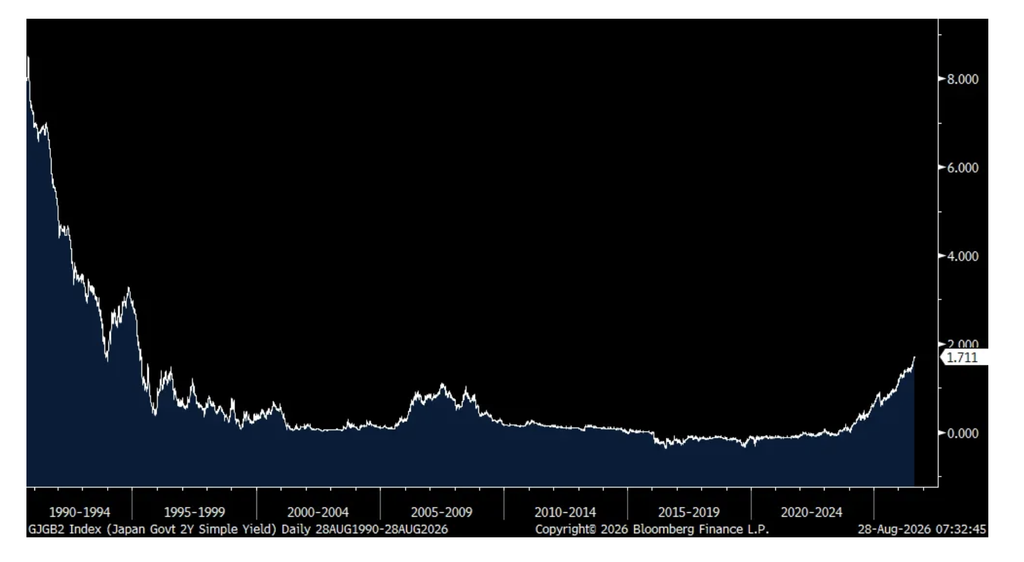
Global bond yields are rising again after a soft Japanese 2 yr note auction as the market gears up for a rate hike in a few weeks from the BoJ. The 2 yr JGB yield is at a fresh 31 yr high. Also, the August Tokyo CPI rose 2% ex food and energy, as expected but up from 1.8% in July.

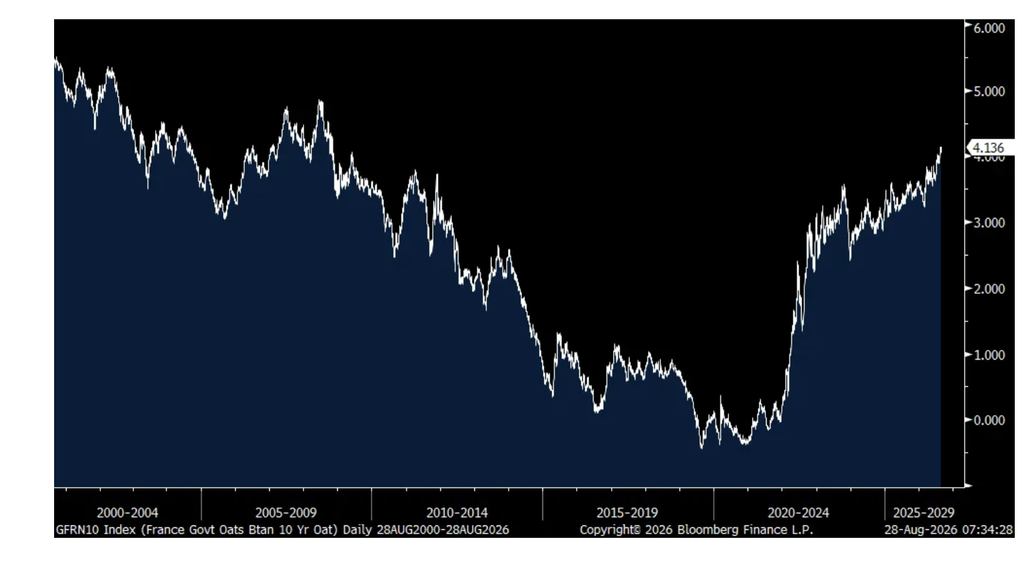
Keep your eye too on French oats as their 10 yr yield rose to an 18 year high at 4.14%.

2 yr JGB Yield

French 10 yr Yield

A lot of earnings calls to go through.

From Best Buy, down 4.4% yesterday:

Comps grew 4.1% “with positive comps across almost all our major product categories” and with “computing growth” leading the way “driven by a combination of customer need to upgrade and replace and product innovation.”

“Home theater was the 2nd biggest weighted comp driver this quarter.” And, “We saw continued strong growth in the group of newer and emerging categories, including AI glasses, trading cards, and health rings.”

“Consistent with the past several quarters, we see a customer who is still spending, but is value focused and attracted to sales moments. Importantly, while customers continue to be thoughtful about big ticket purchases, they are willing to spend on high price point products when they need to, or when there is technology innovation.”

On the budget conscious consumer side, from Dollar General, up 2.5% yesterday:

“We were especially pleased to see our share gains accelerate in the quarter, which we believe demonstrates the strength and broad appeal of our unique combination of value and convenience, particularly in rural communities across America.”

“Same store sales increased 3.5% during the quarter, driven by customer traffic growth of 2% and average basket growth of 1.5%. Notably, this marks the 5th consecutive quarter of growth in customer traffic as we continue to build on the momentum in our business with both new and existing customers” and “the growth rate in non-consumables, once again, outpacing consumables.”

“Our core customers continue to be financially constrained, with a variety of factors impacting their budget. Most notably, higher and more volatile fuel prices have forced customers to further prioritize purchases with a focus on value and affordability. As customers have continued to reduce trips and shop closer to home, Dollar General is uniquely positioned to meet their needs, with more than 21,000 stores located within 5 miles of approximately 75% of the US population.”

“For the quarter, we once again experienced strong trade-in across middle and high income cohorts while also driving productivity gains with our low income customers.”

From Dollar Tree who pretty much said the same thing but whose stock fell for a 3rd day:

Comps rose 3.7% as “Customer traffic was positive .4%, while average ticket increased 3.3%.”

“Customers continue managing household budgets carefully, shopping with purpose, and prioritizing value and affordability. Our data shows we grew sales across all income cohorts. Households we served were up nicely y/o/y, with gains skewing to the middle and higher income households. Comp strength was broad based across the assortment, with personal care and toys notable outperformers. Discretionary performed well, and consumables delivered exceptional comp growth.”

“the inflationary backdrop continues to pressure all household budgets, particularly for lower income consumers. As our customers look for ways to stretch their dollars, they are increasingly turning to Dollar Tree for everyday essentials at compelling opening price points and pack sizes that help them manage their budget.”

The value retailer Burlington Stores, down 7.6% yesterday said this:

They got back $55 million in tariff refunds and “We intend to fully reinvest these refunds into the business in the back half to deliver even sharper values to our customers. So, we expect the direct impact of these tariff refunds to be neutral to full year earnings.”

Comps rose 2% on top of 5% one year ago, “But candidly, I was hoping for more than a 2% comp in the 2nd quarter.”

They are optimistic about the back half of the year “but there are also some reasons to be a little cautious. From a macroeconomic perspective, gas prices rose in the 1st quarter, and that increase has not gone away. And as we look at the full range of retailer results that have been reported over the last couple of weeks, there are some exceptions, but overall, the comp results have been weak.”

“At all, the commentary that we see and hear right now suggest that shoppers are under a lot of pressure. So that gives us some concern about the back half.”

From Ulta Beauty and whose stock is down pre-market:

Comps rose 3.8% y/o/y. “Importantly, our sales outpaced the US beauty market in a dynamic environment. We increased our share of prestige beauty while holding mass share flat, according to Circana.”

“Fragrance continued to be our strongest category this quarter.” The upper income spender helped broadly too and they saw “strength in our core luxury brands, Prada, Carolina Herrera, and YSL” among others.

And to the bifurcated consumer, “Comp sales in the makeup category were approximately flat, with growth in prestige makeup offset by a decrease in mass makeup.” Though Ulta did not attribute the mass as customer related.

“value is an increasingly important consideration for the guest as they are facing some heightened economic uncertainty and everybody is watching their pocketbook. The overall promotional environment did tick up a little bit in the market and we were a little bit more promotional y/o/y. But what I would say is that we were really strategic in our promotional plan and we were very thoughtful in how we participated.”

“We’ve not seen any notable changes in consumer behavior in the quarter and that means both the demographics from an age perspective and also from an income perspective is that we’re seeing increases in spend across the broader segmentations. So we’ve not seen trade down behavior happening.”

From Affirm and whose stock is jumping more than 10% pre-market as gross merchandise value continues to grow:

The use of BNPL continues to grow notably. But they also said “30+ day delinquencies excluding Peloton and Pay in X loans increased 19 bps y/o/y and decreased 26 bps q/o/q to 2.5%. Allowance for credit losses as a percent of loans held for investment was 5.9%, up from 5.6% in FQ4 ‘25 and down from 6% in FQ3 ‘26.”

“Recent cohorts of monthly installment loans are tracking towards approximately 3.5% ultimate net charge-offs as a percent of cohort GMV, which is in-line with expectations and consistent with the performance of historic loan cohorts.”

Marvell Technology stock is down sharply pre-market as good wasn’t good enough:

“The increase in our revenue outlook continues to be driven by our data center business, which we now expect to grow by approximately 60% this fiscal year, up from our prior expectation of approximately 50%.”

“For communications and other end-markets, the trajectory remains largely as expected.”

BY Doug Kass · Aug 28, 2026, 10:00 AM EDT

My Tweet of the Day

Position: None

BY Doug Kass · Aug 28, 2026, 9:45 AM EDT

Jackson Hole Scoreboard

I don’t think this has any value but I am passing it on nonetheless:

Position: None

BY Doug Kass · Aug 28, 2026, 9:40 AM EDT

Tweet of the Day

Position: None

BY Doug Kass · Aug 28, 2026, 9:30 AM EDT

Shorted More SPY

I shorted more SPY at $772.33 in the premarket.

Position: Short SPY (M)

BY Doug Kass · Aug 28, 2026, 9:20 AM EDT

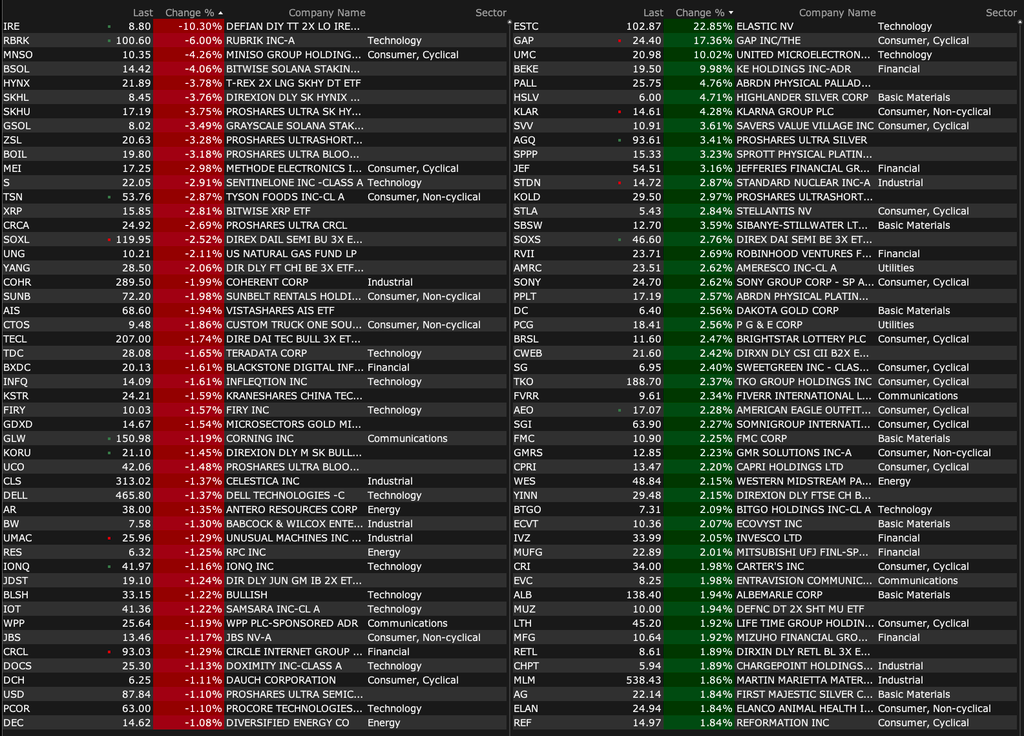
Select Premarket Movers

Upside:
-QNRX +36% (reports Phase 2/3 interim data for QRX003 in Netherton Syndrome met primary endpoint; agrees to $30.8M private placement of 6,305,300 ADSs at $4.88/shr)
-ESTC +24% (earnings, guidance)
-TNON +24% (prices $3M private placement of 597,610 shares or pre-funded warrants at $5.02/shr)
-GAP +17% (earnings, guidance)
-SOLS +15% (terminates agreement to acquire Element Solutions; affirms outlook)
-AFRM +13% (earnings, guidance)
-RGNX +6.7% (appoints Gregory Ciongoli to Board who discloses 102.6K common share purchase)
-KLAR +4.3% (CEO Sebastian Siemiatkowski buys 692,506 shares for $9.9M at $14.37/shr)
-TTWO +2.7% (momentum following GTA release date confirmation)

Downside:
-PYPL -14% (Advent, Stripe consortium reportedly said to drop pursuit of PayPal)
-MRVL -7.5% (earnings, guidance)
-BLRX -7.4% (offers 1.35M ADSs at $2.78/shr for $3.75M gross)
-RBRK -6.2% (earnings, guidance)
-ALNY -5.0% (weakness following heart trial presentation by rivals AstraZeneca and Ionis Pharmaceuticals at the European Society of Cardiology Congress)
-IREN -5.0% (earnings, color)
-ADSK -4.8% (earnings, guidance)
-S -2.5% (earnings, guidance)

Position: None

BY Doug Kass · Aug 28, 2026, 9:15 AM EDT

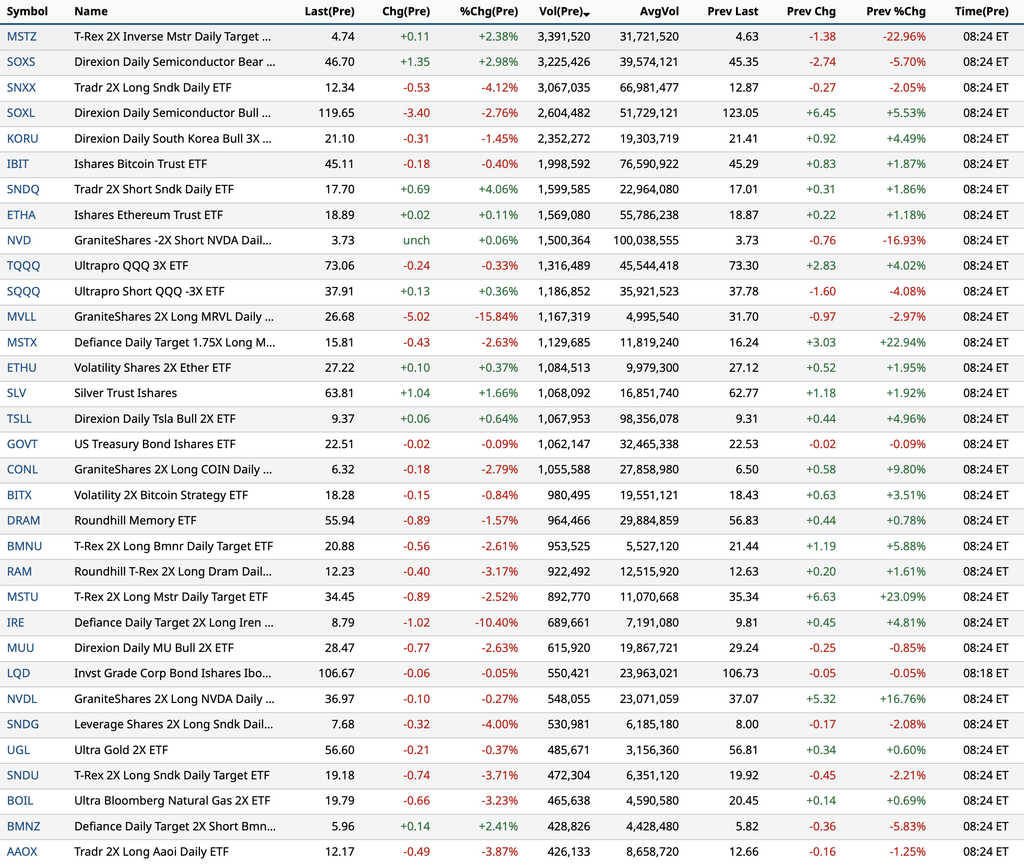
Most Active Premarket ETFs

As of 8:24 AM:

Position: None

BY Doug Kass · Aug 28, 2026, 9:05 AM EDT

Premarket % Movers

At 8:30 AM:

Position: None

BY Doug Kass · Aug 28, 2026, 8:55 AM EDT

Fed Speakers and Econ Calendar

FED SPEAKERS 

10:00AM: Federal Reserve Chair Kevin Warsh gives keynote remarks before the 2026 Jackson Hole Economic Policy Symposium, “Financial Innovation: Implications for Payments and Policy,” WY. 

12:40PM: Federal Reserve Bank of Chicago President Austan Goolsbee (Non-Voter) Television Appearance — CNBC. 

8/29: Morning: Federal Reserve Bank of Chicago President Austan Goolsbee (Non-Voter) Podcast Appearance — Odd Lots (Anticipated-Pending production timeline, the episode may instead publish Monday, 8/31).

ECON CALENDAR

Position: None

BY Doug Kass · Aug 28, 2026, 8:45 AM EDT

Quoth The Dougie

* Doug Kass: The AI Funding Boom Has Peaked

From Quoth The Raven:

Doug Kass: The AI Funding Boom Has Peaked

I’ve known Doug Kass for a while now. He’s a veteran investor, and someone readers of TheStreet will know well from his years of sharp, independent market commentary. He also writes a great blog, and this week I read one of his better pieces yet on the artificial intelligence boom.

I thought it would be a great supplement to my recent piece on why I think the AI crash could start as soon as this year:

The Real AI Crash Will Start This Year

In his note, Doug makes it clear that he believes the funding cycle for artificial intelligence may already have peaked. Doug thinks that one of the clearest signals is the apparent urgency with which OpenAI and Anthropic are moving toward the public markets.

After years in which AI companies enjoyed abundant private capital, rapidly rising valuations, enormous strategic investments, and relatively little quarterly financial scrutiny, the obvious question is: Why the rush to go public now?

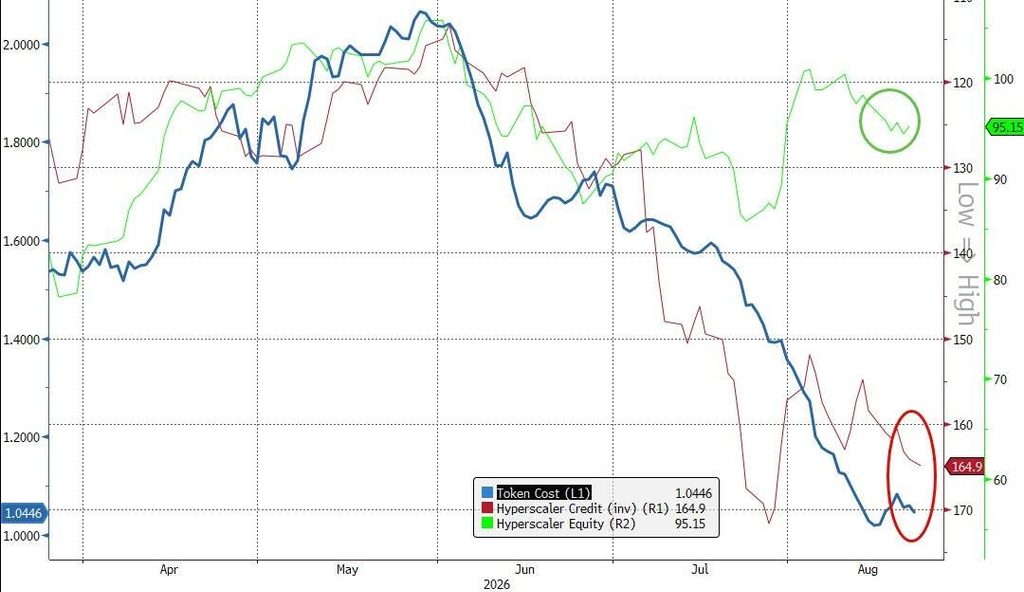
I’ll do my best to sum up Doug’s note. His concern is that beneath the extraordinary valuations and breathtaking capital expenditures, the economics of the AI business may be becoming considerably less attractive. Token growth is slowing, token prices are falling dramatically, competition is increasing, open-source models are improving, and the amount of capital required to keep the ecosystem expanding is staggering. This chart and writeup from Zero Hedge confirms this:

Token Cost Chart via Zero Hedge

That makes the IPO race particularly important. These companies need enormous amounts of capital to sustain their current spending, but going public would also expose their economics to a level of scrutiny they have largely avoided as private companies. Once OpenAI or Anthropic is publicly traded, investors will be able to examine revenue growth, operating losses, cash burn, capital requirements, and customer economics quarter after quarter. The story will have to collide with the numbers.

There is also a compelling explanation for why the AI trade accelerated again after initially appearing to lose momentum. Massive government support for AI infrastructure helped provide one catalyst. So did soaring equity valuations and extraordinary levels of circular financing throughout the industry. Higher valuations encouraged more investment. More investment generated more spending. More spending created revenue for AI infrastructure companies. That revenue then helped justify still higher valuations.

The result was a reflexive investment and stock-price momentum boom. The problem with reflexive booms is that the feedback loop must continue for the boom to sustain itself, and several parts of that loop now appear to be weakening. Political enthusiasm for massive AI infrastructure investment is encountering resistance. Hyperscalers are spending astonishing amounts of money. Debt and off-balance-sheet commitments are growing. AI-related companies continue issuing both debt and equity. And the aggregate market capitalization attached to the ecosystem has become enormous.

At some point, somebody has to finance all of it.

That is why the funding cycle matters more than whether AI itself succeeds or fails. The argument isn’t that artificial intelligence is going away. It is that the rate at which incremental capital can continue flooding into AI may have peaked. In market terms, the second derivative may be turning negative. Even if investment and spending remain enormous in absolute terms, a slowdown in their rate of growth can have major consequences for valuations built around expectations of continued acceleration.

Another underappreciated issue is the industry’s use of ARR, or annualized recurring revenue. Wall Street generally places a premium on genuinely recurring revenue because subscription businesses tend to have predictable customer relationships, contractual commitments, meaningful switching costs, and relatively durable cash flows. Those characteristics can justify much higher valuation multiples.

But it is far from clear that frontier AI revenue deserves to be treated the same way.

Customers can switch models. Open-source alternatives continue to improve. Prices are falling. Workloads that run on one frontier model today could potentially migrate somewhere else tomorrow. Technological improvements could also produce smaller and cheaper models that dramatically reduce the need for gigantic frontier models. Revenue generated under those circumstances may be valuable, but it doesn’t necessarily possess the characteristics investors normally associate with an annuity-like recurring revenue stream.

That distinction becomes especially important if frontier AI companies are preparing IPOs. Whether Wall Street treats billions of dollars of AI sales as ordinary revenue or high-quality recurring revenue could have an enormous impact on the multiples investors are willing to pay.

All of which brings the argument back to the original question: Why now?

If frontier AI economics are rapidly improving, demand is exploding, pricing is durable, competitive advantages are strengthening, and these businesses are heading toward tremendous profitability, there should theoretically be less urgency to access the public markets. The apparent rush itself may therefore be telling us something about where the industry’s funding cycle stands.

The larger point extends well beyond any individual IPO. Markets rarely turn because investors collectively decide that an important new technology is worthless. The internet didn’t disappear when the dot-com bubble burst. Fiber-optic networks didn’t disappear. E-commerce didn’t disappear. Many of those technologies ultimately became even more important than their biggest boosters imagined.

What disappeared was the willingness to finance virtually anything associated with those technologies at virtually any price.

That is the distinction investors need to understand today. AI can change the world and still be an investment bubble. And if the marginal dollar available to finance that bubble has already peaked, the consequences could extend far beyond OpenAI and Anthropic. Kass concluded:

My view, the revenue the frontier models have is no different than the revenue Netscape, Yahoo, We Work, Nike, Kodak, Zerox, Polaroid, Mikes Buggy Whip Company or Pete’s Vinyl Record Company had. It is not ARR and should not be quoted that way. Nor should the auditors or bankers allow for that in my opinion.

Further, I have argued (above) that these companies do not belong public and should not be public but are rushing to go public because they (and their investors including the circular ones) have all of the exact same concerns I do. I ask again, what is the rush? I think their own behavior in this regard speaks volumes.

For the most part, I agree with Doug. AI can be revolutionary technology while the financial ecosystem surrounding it can still be batshit insane. When companies invest in one another, buy from one another, lend to one another, and then point to the resulting revenue as proof that everybody deserves a higher valuation, you don’t have to be Jim Simons, barefoot, smoking a cigarette and pacing around the Renaissance offices to understand why the math may not be sustainable…

Where I’d push back slightly is on timing. Doug knows this, but I’ll say it anyway. Ponzi schemes can run for years. Credit has an almost supernatural ability to materialize whenever enough bankers, investors and politicians need the casino to stay open. Just look at our national debt. “This can’t go on forever” is almost always true. The problem is that forever has a remarkable ability to get refinanced.

So I think Doug is right to keep asking, “What is the rush?”. I’ve already gone on record and said Nvidia could be the market’s next black swan and that I’d never in a million years own CoreWeave. If the economics are really this magnificent, why is everybody suddenly racing for the exits marked IPO? But bubbles don’t end because a few people notice the math looks “a little questionable”. They end when somebody is bludgeoned in the face with reality, when they finally ask for their money back and they discover hoping for a check from the next guy’s checkbook was the entire business model. Wall Street is exceptionally talented at finding one more dollar to keep the machine running, right up until the morning it suddenly can’t.

You can follow Doug Kass’ blog here.

BY Doug Kass · Aug 28, 2026, 8:05 AM EDT

Things I Did Yesterday

Here are Thursday’s things:

*I shorted CRWV at $92.32 and covered at $87.98.

* I added to GRNY short at $28.03.

* I shorted more JPM at $456.76 and covered my entire position at $362.82.

* New short CRM at $252.54.

* Shorted NVDA $226.08 and covered NVDA at $224.04.

* Added to VRNO at $5.87, to MSOS long at $4.79 and initiated short-dated call options in MSOS.

* Covered QQQ short at $715.98.

* Shorted more SPY $771.22

Position: Long VRNO (M), MSOS (VL), MSOS calls (S); Short SPY (M), NVDA (VS), GRNY (M), CRM (S) 

BY Doug Kass · Aug 28, 2026, 6:35 AM EDT

Oscillator Moves to Oversold

The S&P Short Range Oscillator moved into oversold territory at -0.85% vs. 0.05%.

Position: Short SPY (M)

BY Doug Kass · Aug 28, 2026, 6:29 AM EDT

Ed Zitron on Nvidia

Position: None

BY Doug Kass · Aug 28, 2026, 6:14 AM EDT