From Peter Boockvar:
Positives,
1) Initial jobless claims were 203k vs 207k last week and remains muted. The estimate was 208k and the 4 week average is now 206k vs 204k last week as a print of 198k drops out. Continuing claims fell to 1.778mm from 1.796mm, below the trend last year of mostly above 1.9mm.
2) Personal income rose .4% m/o/m in July, double the estimate and spending was higher by .2% and also twice the forecast. That spending figure though was zero on a REAL basis. Combine the two and the savings rate lifted to 3% from the multi year low of 2.6%.
3) Core durable goods orders in July were as expected when we include the June upward revision. Shipments were better and that could tweak Q4 GDP estimates a touch higher.
4) Within the final UoM consumer confidence figure, one yr inflation expectations moderated to 4% from 4.2% in June and that is the least since March.
5) After a further acceleration over the prior three weeks of 25%, the price of a 40 foot container from Shanghai to NY fell 1.8% w/o/w. To LA they were little changed, up .2% and higher by 19% in August from July at $6,818 which compares to $2,191 at the end of February.
6) The June (thus somewhat dated) S&P Cotality national home price index showed a 1.5% y/o/y price gain after a 1.2% rise in May. The strongest markets are those with the most limited inventory like Chicago, New York, Cleveland, San Francisco, and Boston. Prices fell in Las Vegas, Seattle, Denver, Tampa, Phoenix, Dallas and Portland. Thus, of the top 20 cities where these mentioned are included, the price situation is pretty bifurcated.
7) The July new home sales figure totaled 607k annualized, 13k less than expected but June was revised up by 50k to 678k. Smoothing out this volatile data set puts the 3 month average at 638k vs the 6 month average of 641k and which compares with the 12 month average of 664k.
8) The August Richmond manufacturing index was little changed but stayed above zero at +4 vs +5 in July.
9) From JM Smucker: “net sales increased 5%, including a 1 percentage point contribution from volume/mix” with the balance driven by higher prices of 4%, “primarily driven by higher net pricing for coffee.” Uncrustables by the way saw 12% sales growth which is great for a consumer products food brand with most driven by volume/mix.
10) From Best Buy: Comps grew 4.1% “with positive comps across almost all our major product categories” and with “computing growth” leading the way “driven by a combination of customer need to upgrade and replace and product innovation…Consistent with the past several quarters, we see a customer who is still spending, but is value focused and attracted to sales moments. Importantly, while customers continue to be thoughtful about big ticket purchases, they are willing to spend on high price point products when they need to, or when there is technology innovation.”
11) From Dollar General: “Same store sales increased 3.5% during the quarter, driven by customer traffic growth of 2% and average basket growth of 1.5%. Notably, this marks the 5th consecutive quarter of growth in customer traffic as we continue to build on the momentum in our business with both new and existing customers” and “the growth rate in non-consumables, once again, outpacing consumables.”
12) From Dollar Tree: “Customers continue managing household budgets carefully, shopping with purpose, and prioritizing value and affordability. Our data shows we grew sales across all income cohorts. Households we served were up nicely y/o/y, with gains skewing to the middle and higher income households. Comp strength was broad based across the assortment, with personal care and toys notable outperformers. Discretionary performed well, and consumables delivered exceptional comp growth.”
13) From Burlington Stores: They got back $55 million in tariff refunds and “We intend to fully reinvest these refunds into the business in the back half to deliver even sharper values to our customers. So, we expect the direct impact of these tariff refunds to be neutral to full year earnings.”
14) From Abercrombie & Fitch: “While we benefited from tariff refunds in the quarter, we beat our outlook by more than the refund on both operating margin and earnings per share.” Both Abercrombie and Hollister brands saw record Q2 net sales.
15) From Ulta Beauty: Comps rose 3.8% y/o/y. “Importantly, our sales outpaced the US beauty market in a dynamic environment. We increased our share of prestige beauty while holding mass share flat, according to Circana…We’ve not seen any notable changes in consumer behavior in the quarter and that means both the demographics from an age perspective and also from an income perspective is that we’re seeing increases in spend across the broader segmentations. So we’ve not seen trade down behavior happening.”
16) From Williams Sonoma: “The home furnishings industry was essentially flat in the quarter. So effectively, all our growth was market share gain, and we took that share while increasing our penetration of full price selling. We are driving growth and market share gains without discounting.”
17) From BJ Wholesale: “Taking a step back to assess the consumer environment, the K-shaped economy persists, though we did see some sequential improvement during the quarter. We drove comp growth across all income cohorts, which is encouraging, and our value proposition continues to resonate broadly. That said, the vast majority of our growth continues to be driven by our higher income members, which is consistent with what we’ve seen for some time now.”
18) From Affirm: GMV is up sharply as more people use BNPL. And “Recent cohorts of monthly installment loans are tracking towards approximately 3.5% ultimate net charge-offs as a percent of cohort GMV, which is in-line with expectations and consistent with the performance of historic loan cohorts.”
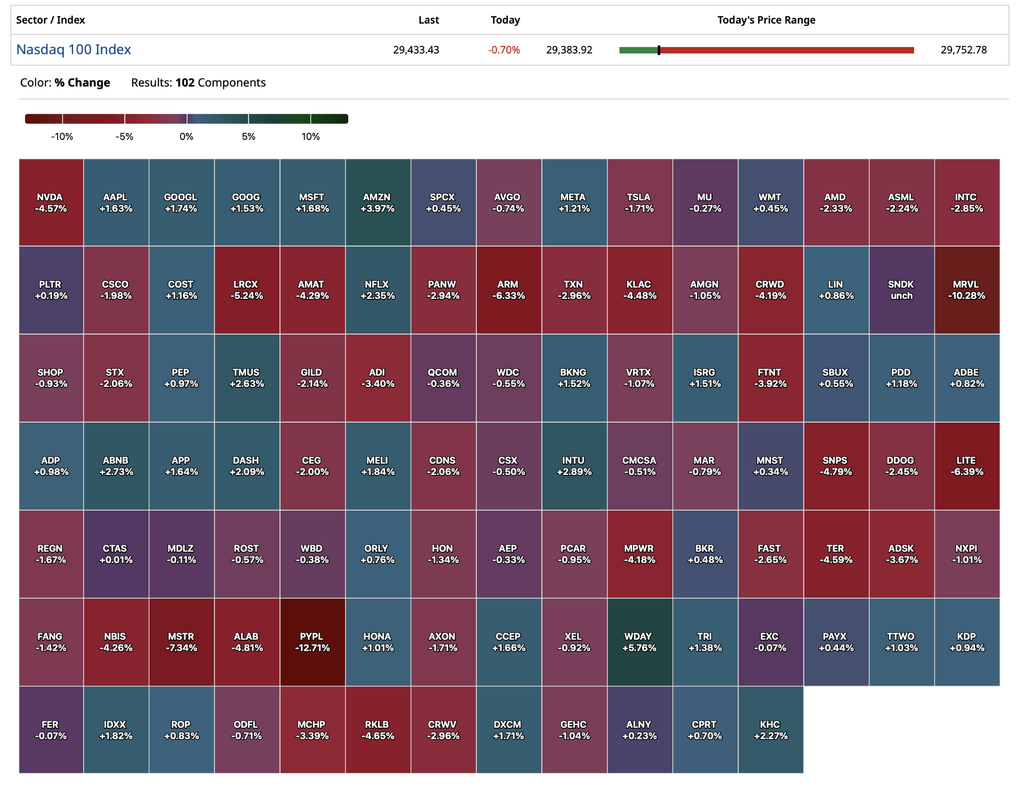
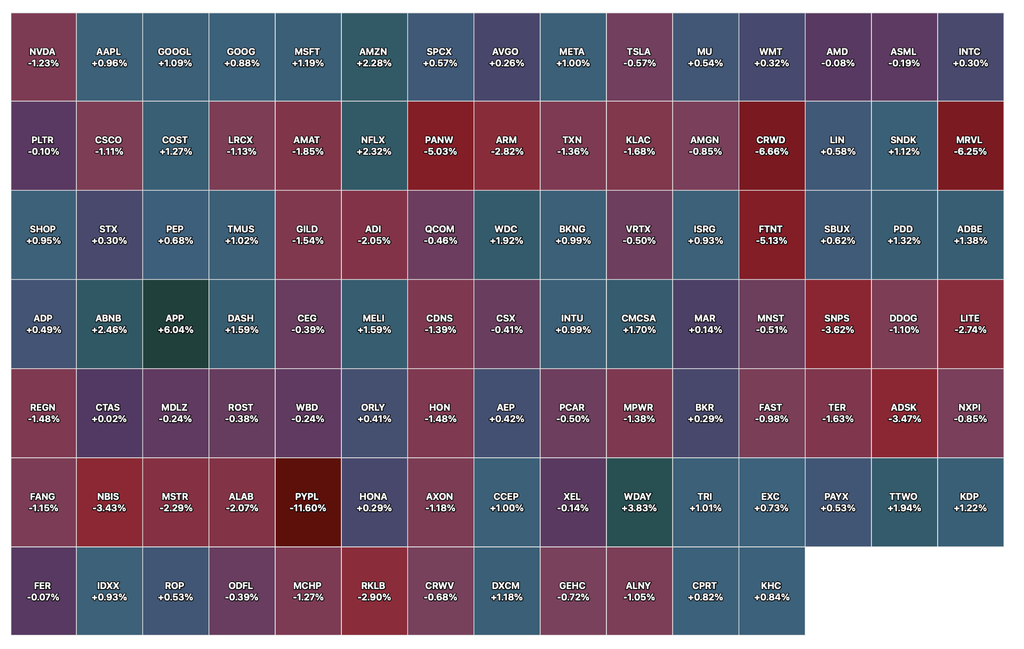
19) From Nvidia: “The surge in AI demand is driving a global infrastructure buildout, supported by an expanding and diverse set of growth opportunities spanning hyperscalers, AI labs, AI natives, enterprises, and sovereign customers. We expect to grow revenue by approximately 70% in fiscal 2028. This is a supply constrained outlook.”
20) From Marvel Technology: “The increase in our revenue outlook continues to be driven by our data center business, which we now expect to grow by approximately 60% this fiscal year, up from our prior expectation of approximately 50%.”
21) From Salesforce: The biggest message from Marc Benioff, “This nonsense of this SaaSpocalypse, I think it’s time to stop…AI is delivering value across every layer of our platform. We’re seeing incredible demand for our AI and data products, with ARR about to cross $4 billion.”
22) Hong Kong’s July exports skyrocketed by 51% y/o/y and imports were higher by 41% driven by AI related products.
23) In Germany, the August IFO business confidence index was 88.8, up from 86.7 in the month before with both Expectations and the Current Assessment higher. IFO said succinctly and positively, “Despite another rise in energy prices, the Germany economy is recovering.” Evidence that the manufacturing lift is global, “In manufacturing, the index rose noticeably.” Also, “In the service sector, the business climate improved” but, “While IT service providers were more confident about their future development, the situation in the transportation and logistics sector remains difficult.” The trade and construction components also rose.
Negatives,
1) The July PCE price index rose by .2% both headline and core with the former one tenth above the estimate while the core rate was as anticipated. The y/o/y gains were 3.7% and 3.3% respectively, the same pace seen in June.
2) The final UoM consumer confidence index for August was 51.7 vs 55.2 in July, though above the initial read of 51. The 5-10 yr guess was 3.3% for a 3rd straight month. The UoM said, “Sentiment declines in August were seen for all political groups and were particularly acute among Republicans. Moreover, groups who are typically less-equipped to absorb increases in cost of living also exhibited stronger decreases in sentiment, including older consumers, lower- and middle-income consumers, and those with no stock holdings. With ongoing policy uncertainty including the Iran conflict, consumers anticipate further increases in gasoline prices both in the short and long run. In addition to the pocketbook issues that have been central to consumers’ views of the economy, they are increasingly worried that prospects elsewhere in the economy could be weakening. Expected year-ahead business conditions fell back 10%, along with a 13% drop for the five-year horizon.”
3) The Conference Board’s Consumer Confidence index slipped to 89.4 from 90.2 and less than one point below expectations. For perspective, the year-to-date average in this index is 91. The internals were very mixed as the Present Situation rose about 7 pts while Expectations fell by about 6 pts. One year inflation expectations rose to 5.8% from 5.6% in July and vs 5.9% in June. The Conference Board said, “Consumers’ write-in responses on factors affecting the economy were slightly more pessimistic in August. References to prices in general—and oil and gas specifically—remain elevated. Comments about war/conflict, food/groceries, trade, and jobs rose in August.”
4) The August Chicago manufacturing index fell about 10 pts m/o/m to 47.1 and well under the estimate of 57.9. The decline was driven by drops in new orders, backlogs, production and supplier deliveries (though lower supplier deliveries means an easing of supply chains) . Employment rose a touch. Prices paid rose to the highest since February 2022 and “Some respondents cited higher metal costs.”
5) The August KC services index fell to -3 from +14. The August Philly non-manufacturing index flipped back to negative territory at -10.6 vs +7.4 in July. It’s been below zero for 21 of the last 22 months.
6) Q3 GDP estimates will get a slight trim after the larger than expected July goods trade deficit of $118.8b, about $18b above the estimate and the widest since March 2025. Exports fell 2.9% while imports were higher by 3.7%, led by an 11% rise in ‘capital goods’ and I’d guess much had to do with AI related stuff, particularly semis.
7) Mortgage applications to buy a home were little changed, down .3% w/o/w and lower by 5.4% y/o/y. Refi’s fell 2% w/o/w and are down by 17% y/o/y. The average 30 yr mortgage rate was also little changed at 6.78% but around the highest in a year.
8) From RXO: “In the 2nd quarter, spot rates, as measured by the Curve, rose 32.4% y/o/y, up from 16.5% in the 1st quarter, marking the 9th consecutive inflationary reading. The index has not experienced this level of rate inflation since pandemic era surges.” And, “Though overall freight volumes remain muted, shippers are still experiencing significant rate volatility due to decreased carrier capacity…While rising freight rates have helped carriers offset some of their own inflationary pressures, profitability is still challenged.”
9) From Apartment List: “The national median rent increased by .1% in August and now stands at $1,390. Rents are still down .8% compared to one year ago, but y/o/y rent growth has been inching up and the vacancy rate is inching down, signaling a modest tightening of rental market conditions…we now appear to have hit an inflection point, signaling that the rental market may finally be stabilizing as construction slows and a recent influx of new units gets absorbed.”
10) From JM Smucker: They are seeing some softness in their convenience store channel. “The traffic dynamic seems to be somewhat persistent. It’s hard to really pin down exactly what’s driving it, but I would submit that gas prices are part of that. Right where folks are filling up their tanks but not necessarily continuing on into the store. I think that is part of the dynamic on the traffic.”
11) From DICK’S Sporting Goods: “Consumer preferences are evolving, with athletes increasingly responding to newness, innovation, and a broader set of brands. As demand continued to shift during the quarter, inventory built up in parts of the industry, particularly within certain legacy footwear silhouettes and apparel franchises that simply aren’t resonating the way they once did…In response to these changes in the market, we felt it was important to remain competitively priced to protect our leadership position.” And, “Across the company overall, macroeconomic and geopolitical concerns also weighed on profitability during the quarter and impacted fuel, supply chain, health care, and other costs. Along with the marketplace pressures we’ve discussed, this led us to revise our expectations for the balance of the year.”
12) From Dollar General: “Our core customers continue to be financially constrained, with a variety of factors impacting their budget. Most notably, higher and more volatile fuel prices have forced customers to further prioritize purchases with a focus on value and affordability. As customers have continued to reduce trips and shop closer to home, Dollar General is uniquely positioned to meet their needs, with more than 21,000 stores located within 5 miles of approximately 75% of the US population…For the quarter, we once again experienced strong trade-in across middle and high income cohorts while also driving productivity gains with our low income customers.”
13) From Dollar Tree: “the inflationary backdrop continues to pressure all household budgets, particularly for lower income consumers. As our customers look for ways to stretch their dollars, they are increasingly turning to Dollar Tree for everyday essentials at compelling opening price points and pack sizes that help them manage their budget.”
14) From Burlington Stores: Comps rose 2% on top of 5% one year ago, “But candidly, I was hoping for more than a 2% comp in the 2nd quarter.” They are optimistic about the back half of the year “but there are also some reasons to be a little cautious. From a macroeconomic perspective, gas prices rose in the 1st quarter, and that increase has not gone away. And as we look at the full range of retailer results that have been reported over the last couple of weeks, there are some exceptions, but overall, the comp results have been weak…At all, the commentary that we see and hear right now suggest that shoppers are under a lot of pressure. So that gives us some concern about the back half.”
15) From Kohl’s: “We are operating in an challenging macroeconomic environment where our customers are experiencing persistent financial pressures from inflation in their everyday expenses like gas and food. While their day-to-day priorities may change, the consumer is consistently looking for value, a compelling assortment, and an inspiring experience.”
16) From Nvidia: “Many of you have expressed concerns regarding our gross margins as component costs have risen significantly. As you are already aware, we are experiencing extreme pricing conditions in memory. The magnitude of the price increase has exceeded our prior expectations and are headed even higher into next year.” From this, they moderated gross margin expectations and “We expect margins to bottom in Q4 in the 71% to 72% range before settling at 72% to 73% in fiscal ‘28 as executed price increases take effect in Q1…Memory scarcity today is being driven in large part by the AI buildout itself and unlike a component that simply raises our costs with no offsetting benefit. Tighter memory supply is a symptom of the same demand surge that’s driving our own growth.”
17) From HP: “Looking ahead to the remainder of our fiscal year, we continue to expect input costs to rise, putting near term pressure on our operating margins, particularly in Personal Systems…Given the impact of commodity driven price increases, we expect below seasonal revenue performance in Q4.” And, “We continue to expect memory and storage costs to increase further as a percentage of the bill of materials. And as we signaled last quarter, we expect our Q4 margin to be below Q3 levels and then to sequentially improve as we look ahead into FY27.”
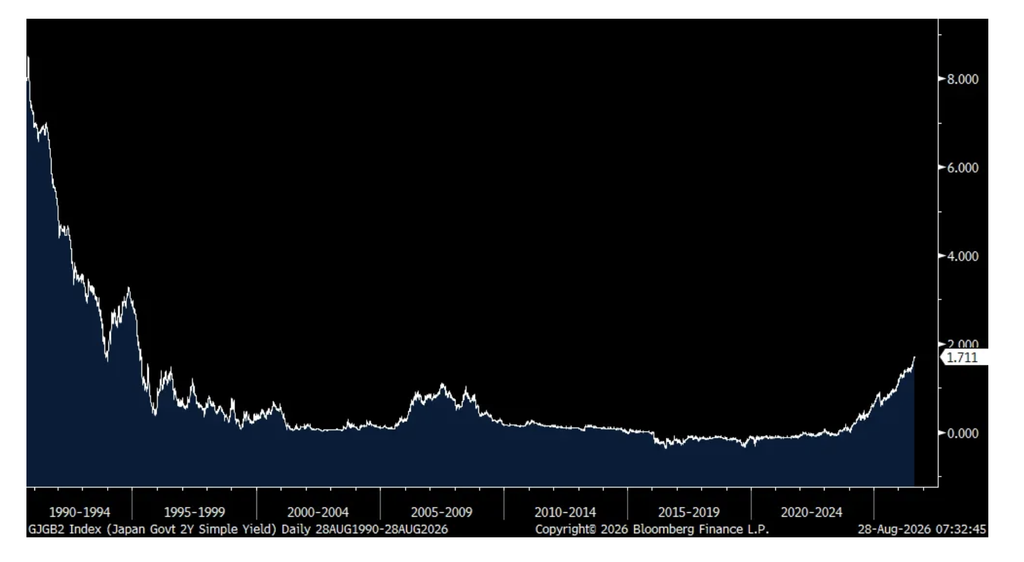
18) The Bank of Korea hiked rates by 25 bps to 3% but as expected and where the Governor said with respect to their reaction to inflation worries, “There’s a Korean saying that if you fail to stop something with a hoe, you’ll end up having to stop it with a shovel, meaning the cost of responding too late is much greater.”
19) Australia’s July trimmed mean CPI rose 3.6% y/o/y, one tenth more than expected but at the same pace seen in June.






![[NVIDIA Company Meeting, the present day, YMCA playing]
JENSEN HUANG: We love NVIDIA, don’t we folks? We’re the biggest, most-beautiful semiconductor company, we make the biggest, hottest GPUs for Clammy Sammy and Wario Amodei’s huge, beautiful AI labs, but they can’t afford them because they’re losing so much money! [crowd booing]
It’s okay! It’s okay! Big strong men, the biggest muscles, big, beautiful, strong men like Satya Nadella are calling me, begging — they’re begging, can you believe it? — they’re begging me, “Sir, Sir, please ship me Vera Rubin sir! I can’t get enough!” [crowd braying] they can’t get enough of Vera Rubin! They’re begging me to get Vera over there! Vera! Where’s Vera! [scanning crowd] get her up here! No, no, don’t do it, she’s too shy!
We love Grace too, [voice turning gravely] Grace Blackwell, what a gal! I told them all we’re going to ship a trillion dollars of Grace Blackwell and Vera Rubin by the end of 2027, our beautiful girls Grace and Vera, they’r](https://pbs.twimg.com/media/HQ07Kh6XMAAPSCd?format=jpg&name=small)


