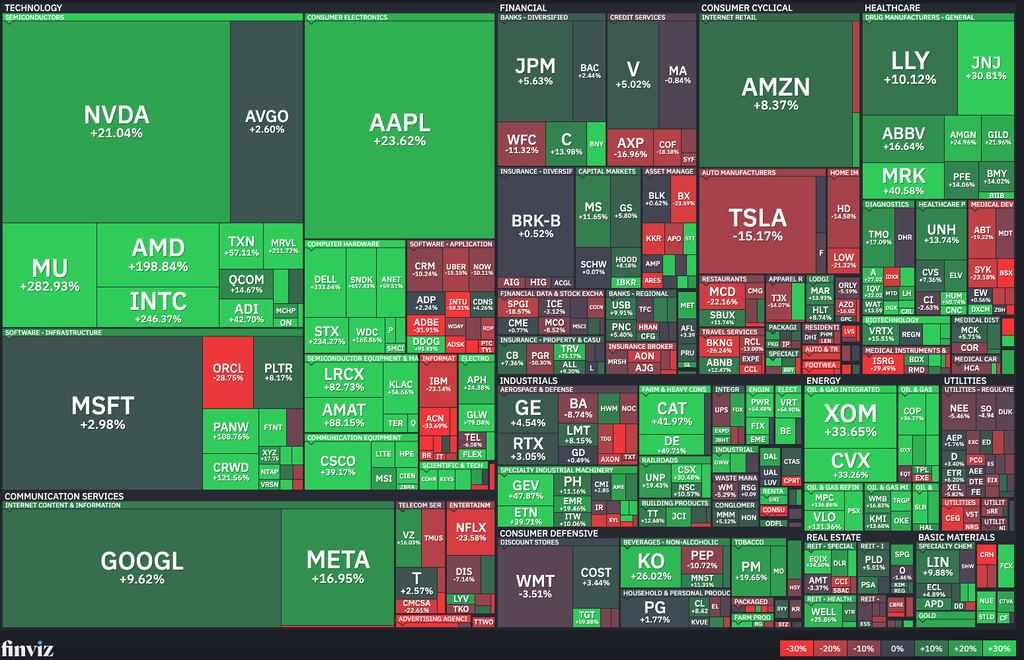
I still question this logic. Yes, the market may go higher, but what about the stocks you own? It’s a narrow rally, and the spoils go to the best stock pickers. Diversification need not apply.
High beta breaking out relative to low vol and staples breaking down relative to the S&P 500.
These aren't things you'd expect to see if the market was about to fall apart. Yes, breadth is weak, but there are many positives out there.
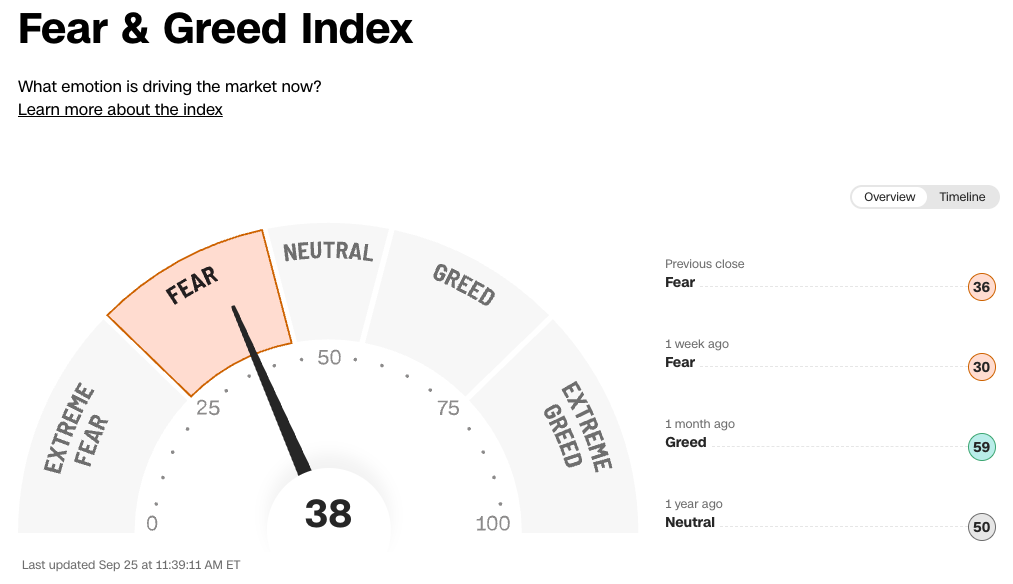
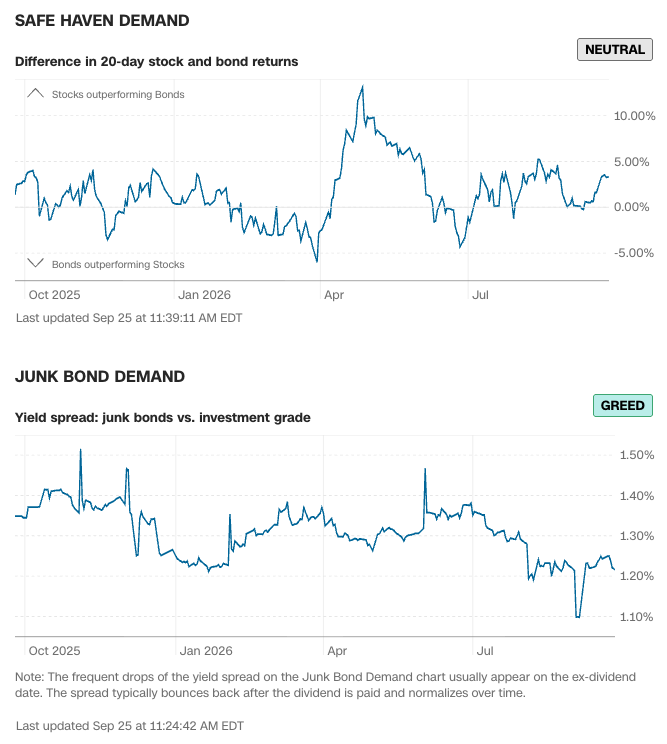
It’s been a while since I provided an update on CNN’s (mine) Fear & Greed Index. So, let’s do it!
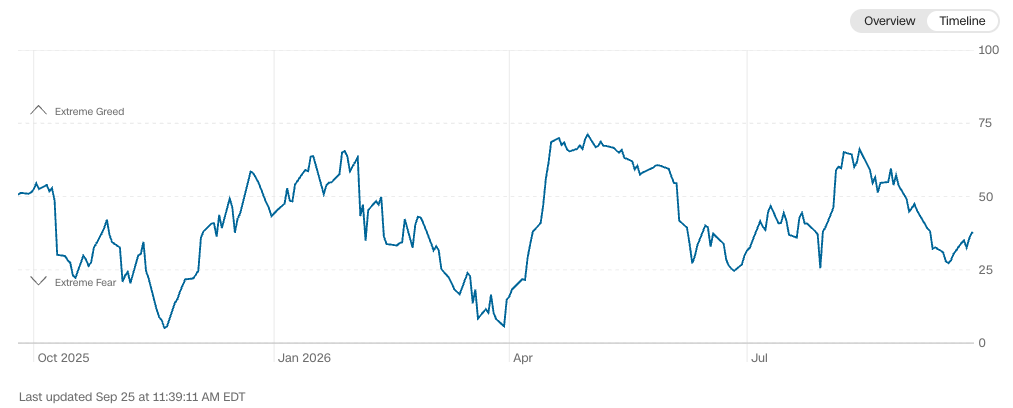
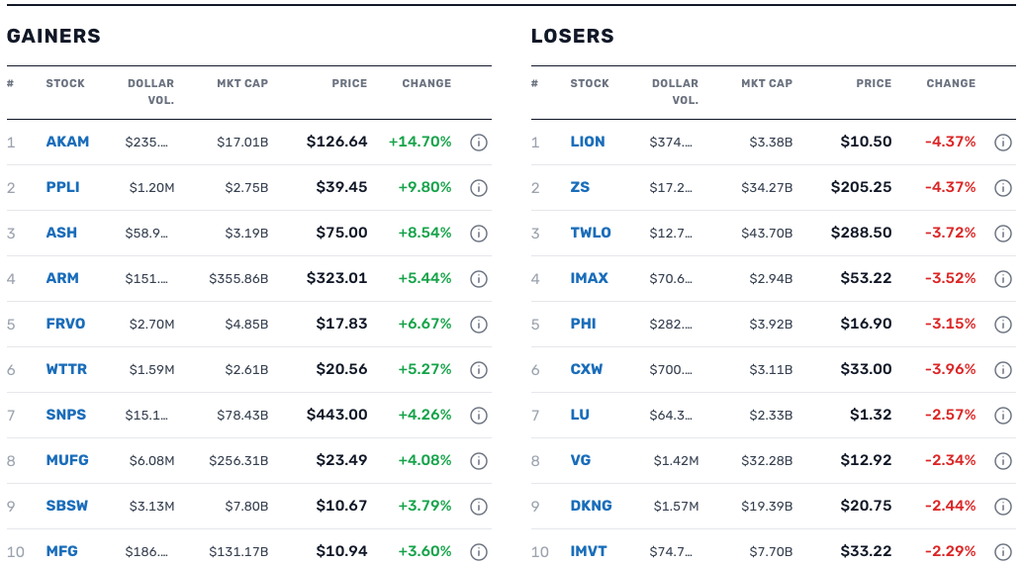
The headline number of 38 is 11 points off the low of 27 set on 9/16. The stock market is up a bit in that time, too, but are we feeling less fearful? The stocks that drove those gains are the same ones we’ve all been focused on this year, the mega-cap techs. Specifically, NVDA, META, & AAPL. Not all of the big names have been participating, though. In fact, NVDA, while it did rally off the 9/16 low, is still stuck, having set its yearly high in May.
Stocks:
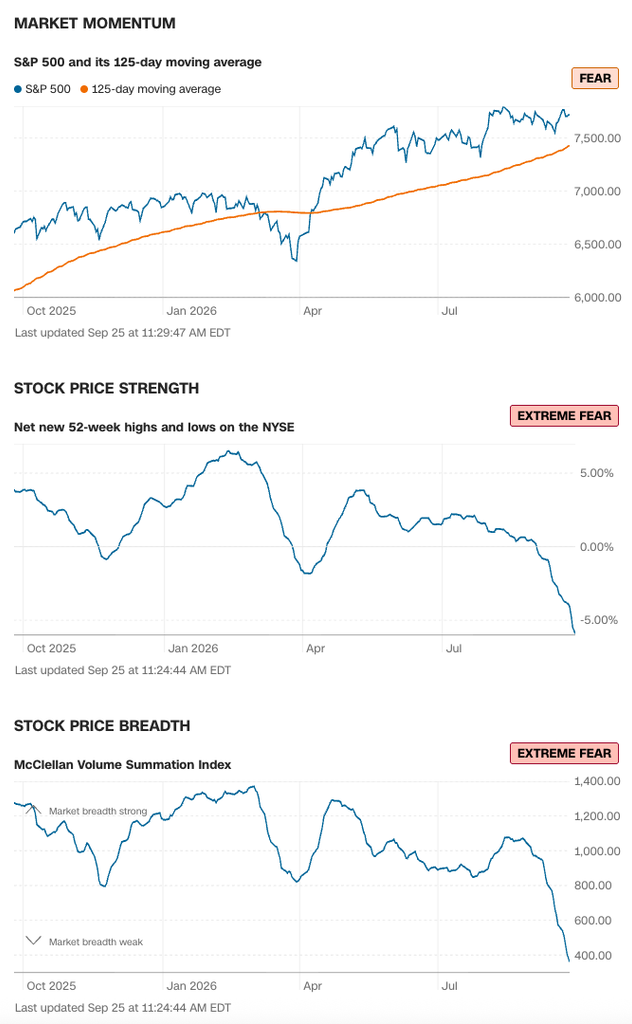
Overall, breadth remains narrow, with net new 52-week lows dominating new highs by a big margin on the NYSE. Downside volume has swamped upside volume, too. As a result, even though the S&P 500 is near all-time highs, it’s gone sideways for the last 6 weeks.
Options
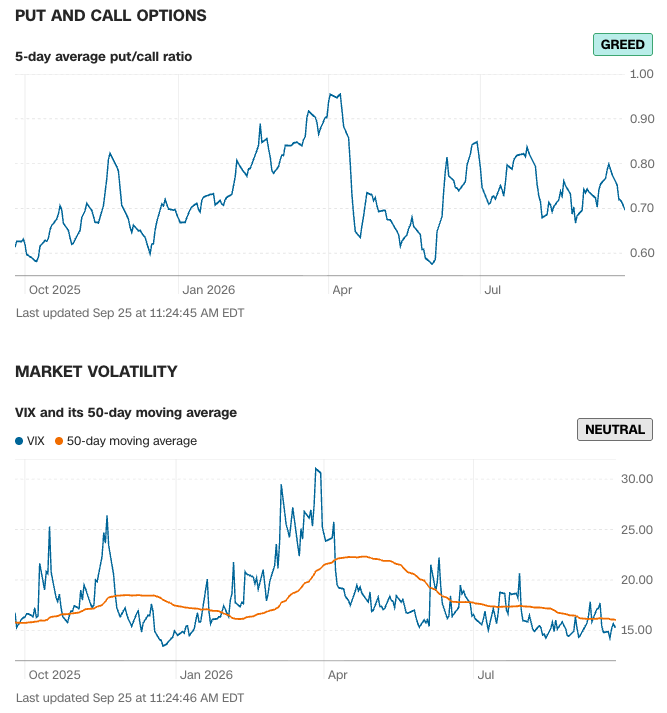
The options indicators have gone sideways and show no fear. They seem to reflect only the performance of the mega-caps and not the performance of the other 490ish stocks. RSP is down about 6% since August, and small caps (RUT) are off 7%. Helene Meisler says that investors are getting complacent, and I don’t disagree.
Bonds
So, how are bonds doing? The Safe Haven Demand indicator includes treasuries, while the Junk Bond Demand indicator is corporate-focused, high-yield corporates (HYG) vs. investment-grade (LQD), so the treasury decline isn’t reflected there. What we see is that stocks are beating bonds. No surprise. Small surprise, however, is that Junk is beating Investment Grade. Not by much, and both are down, but Junk has the edge.
Final Thoughts
So, like Helene said, investors are complacent in the face of a market that is not holding up as well as the big-cap weighted indexes would have us believe.
Fear & Greed hasn’t been over 60 since last spring, and that’s my line in the sand. Until we can get above that level, stocks may rally, but it will likely be narrow and not be a healthy rally.
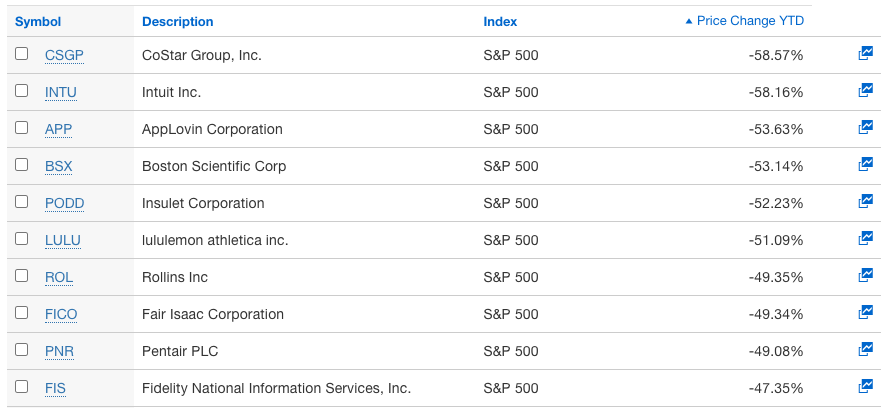
Bringing this back to the Diary, as Crazy1 said this morning, there could be some good tax loss harvesting opportunities this fall.
DIESEL EXPORT BAN: A number of big business groups in the U.S. sent a letter to U.S. President Donald Trump arguing against the president’s proposed diesel export ban. “On behalf of U.S. businesses, manufacturers, refiners, and oil & gas producers, thank you for your continuing commitment to an unsurpassed U.S. energy industry,” the letter reads. “More American energy means a stronger economy, greater energy security, and less leverage for our adversaries. Your policies have helped the U.S. lead the world in the production of oil and refined products. In service of this shared goal, we urge you to reject calls to ban or otherwise limit the exports of diesel and other products that have made the U.S. energy industry so strong.
“Export bans would lead to less fuel production, tighter supplies, and rising costs for American families, farmers, and truckers. With 10 percent of global refining capacity offline, U.S. refiners are running at full capacity to supply the U.S. and to help stabilize global fuel markets. The U.S. produces more diesel than it consumes, allowing us to meet domestic demand and to supply our allies in Latin America and Europe. U.S. crude oil exports have likewise helped keep refineries running in other parts of the world as disruptions occurred through the Strait of Hormuz. You have been asked by some to ban or limit the export of diesel to help lower prices, when in fact the opposite would occur.
“We, and indeed virtually every expert in the fuels market, fully agree with Secretaries Wright and Burgum that an export ban would force reductions in refining utilization, increase prices for gasoline and jet fuel, and lead to retaliatory actions from other countries. Exports allow U.S. refineries to balance their systems and maximize production. An export ban would require refineries to throttle utilization to reduce diesel production to equal domestic demand. Falling utilization would result in less gasoline and jet fuel production and higher prices for those products as well.
“Meanwhile, areas of the U.S. that import fuel (primarily the Northeast) would face higher prices for all fuels that would now be in even shorter supply globally. This could not come at a worse time for consumers as home heating oil season is about to begin. Beyond price impacts, restricting exports would be a gift to our competitors. American energy dominance comes from being a reliable supplier to the world. If we pull back, other countries will step in, our influence will shrink, and our adversaries will gain ground. America’s energy exports are a source of economic and geopolitical strength. While we understand the urge for a silver bullet, there are no easy answers.
“We encourage you to continue the positive steps this Administration has taken to tamp down energy prices. For instance, targeted Jones Act waivers have helped keep more than 50 million gallons of fuel in the U.S. and helped to back out imports. Longer term, continuing to work with global partners on bringing more fuel supply back to the market and reducing barriers to producing and moving energy is critical, and will help attract more investment in refining capacity. The U.S. energy industry is the largest and most efficient in the world, and an indispensable economic and national security asset. We urge you to help maintain this advantage and to reject calls to ban the export of our products.” The U.S. Chamber of Commerce, Business Roundtable, National Association of Manufacturers, and American Petroleum Institute are among signatories of the letter. Publicly-traded companies in the refining space include Delek US (DK), HF Sinclair(DINO), Marathon Petroleum(MPC), Phillips 66(PSX) and Valero(VLO).
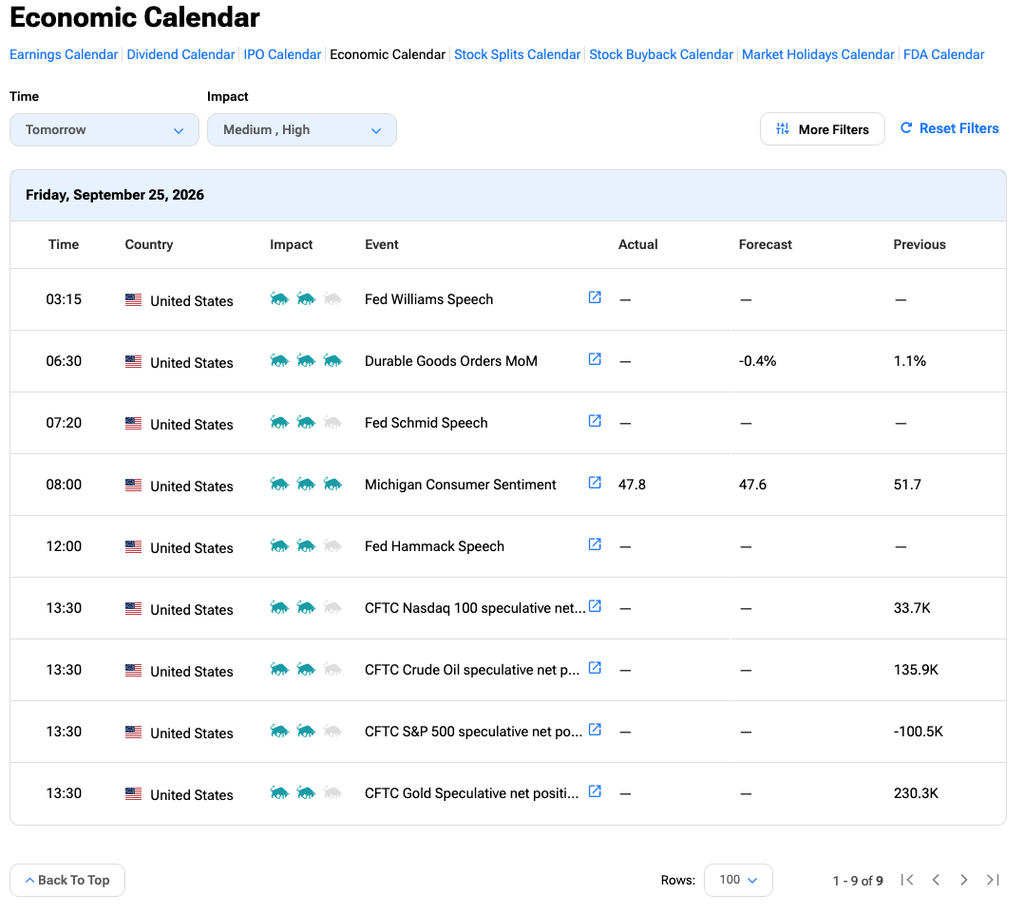
New orders for U.S. made durable goods were largely flat month-over-month at $338.6B in August, following two consecutive monthly increases and compared to market forecasts for a 0.4% decrease. Excluding transportation, durable goods orders went up by 0.3%, below the expected 0.6% gain. Meanwhile, orders for non-defense capital goods excluding aircraft, a closely watched proxy for business spending plans, grew by 1.6%, topping market forecasts for a 0.5% advance.
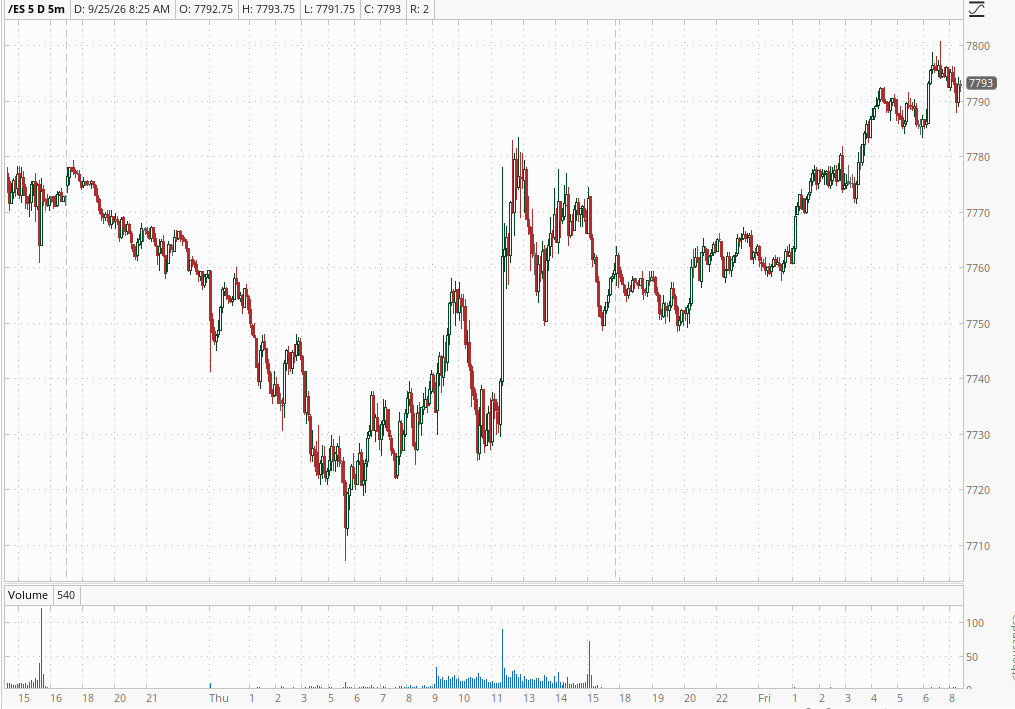
Stock futures were already off their highs of the morning before the report and have continued lower. The initial reaction, however, was a short-lived drop, then pop, in the SPX futures.
Here’s what’s brewing for today. We’ll be watching for Durable Goods and UMich Cons Sentiment. If I can find it, I’ll dig up some old research I did on the UMich report. It was included in an early version of the Fear & Greed Index, but I removed it because it didn’t update frequently enough.
It’s your old friend JMesh filling in for Dougie today.
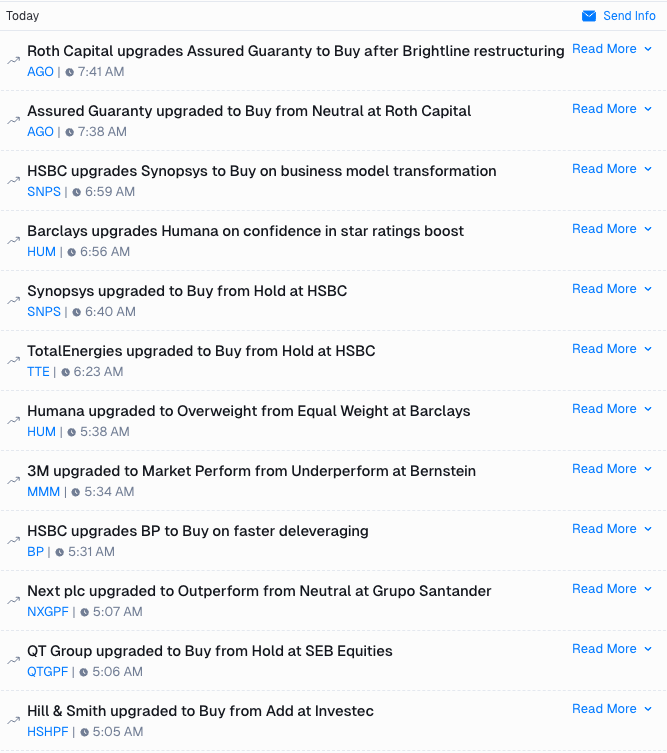
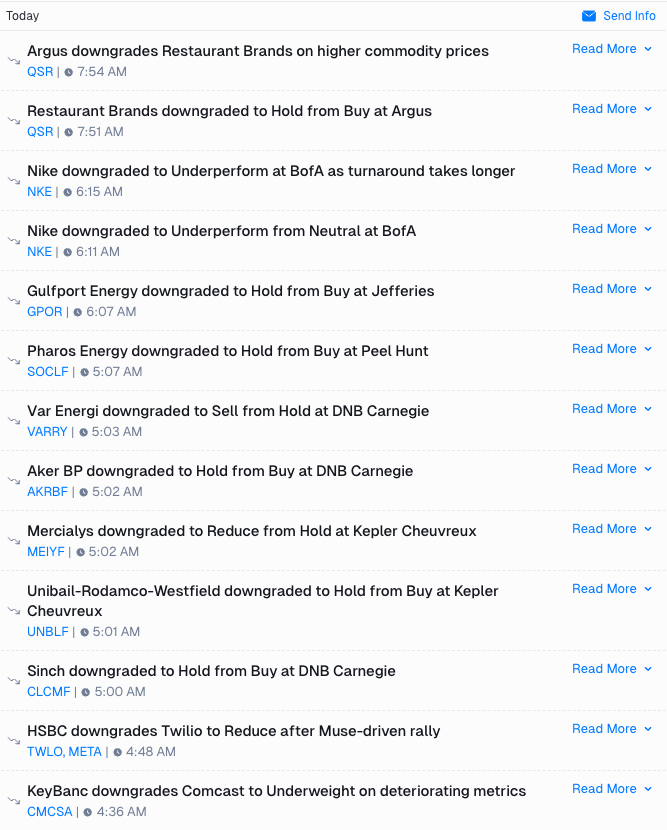
One of my goals for the day will be to share content that I find on our sister sites, TheFly and TipRanks, to see what we can think about bringing over. Make requests if you’ve got ’em.
High beta breaking out relative to low vol and staples breaking down relative to the S&P 500.
These aren't things you'd expect to see if the market was about to fall apart. Yes, breadth is weak, but there are many positives out there.
Nice one @TheChartReport