Why Has Tech Been So Volatile?
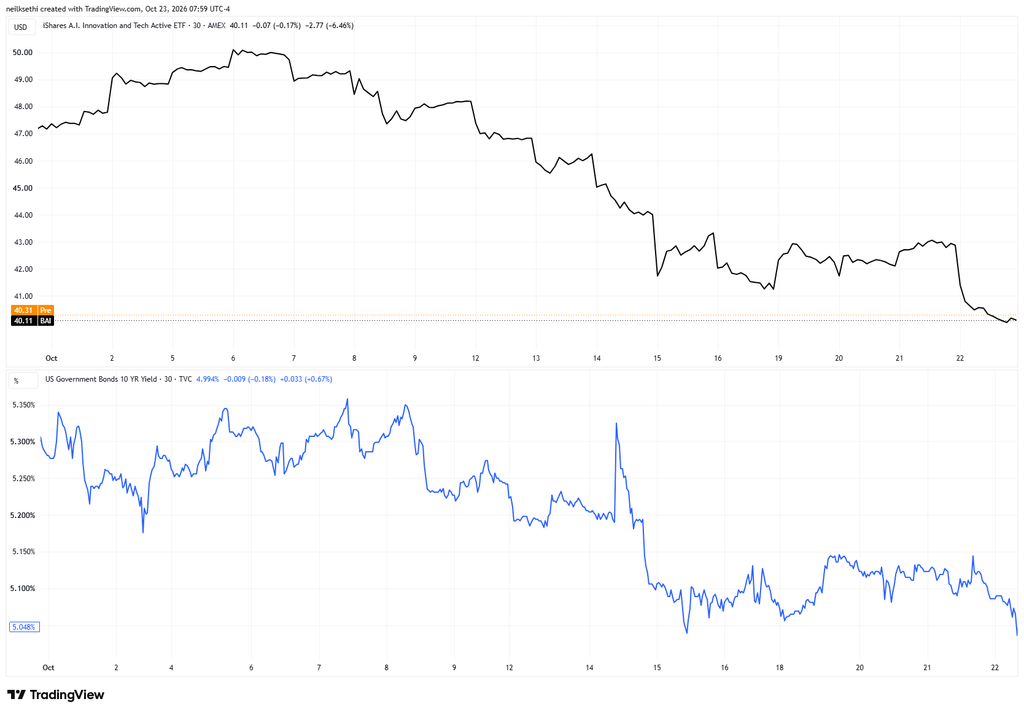
If you’re searching for an explanation for why Tech, particularly semiconductors, has been so volatile, you can in part blame the overall negative gamma* regime in the market as Tier1Alpha indicated earlier this week.
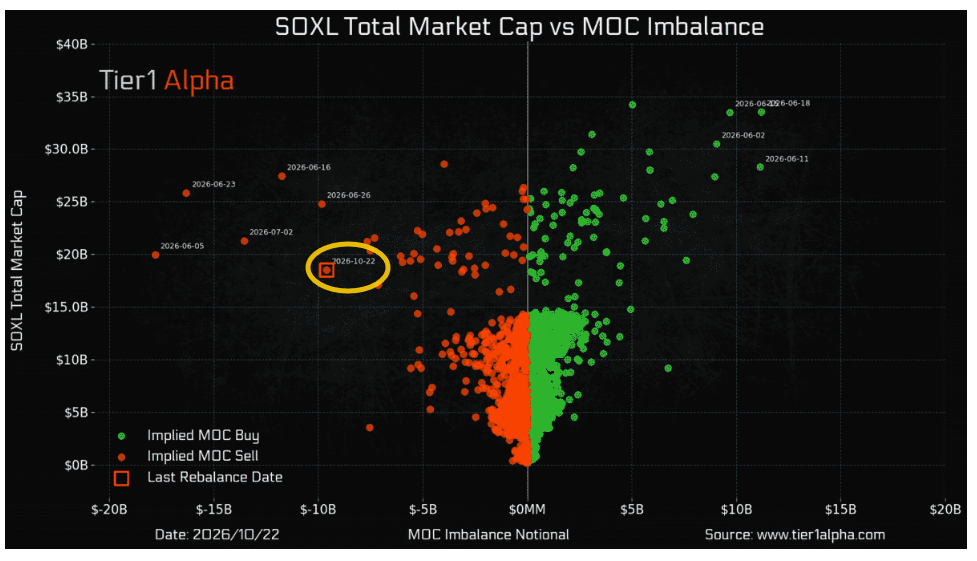
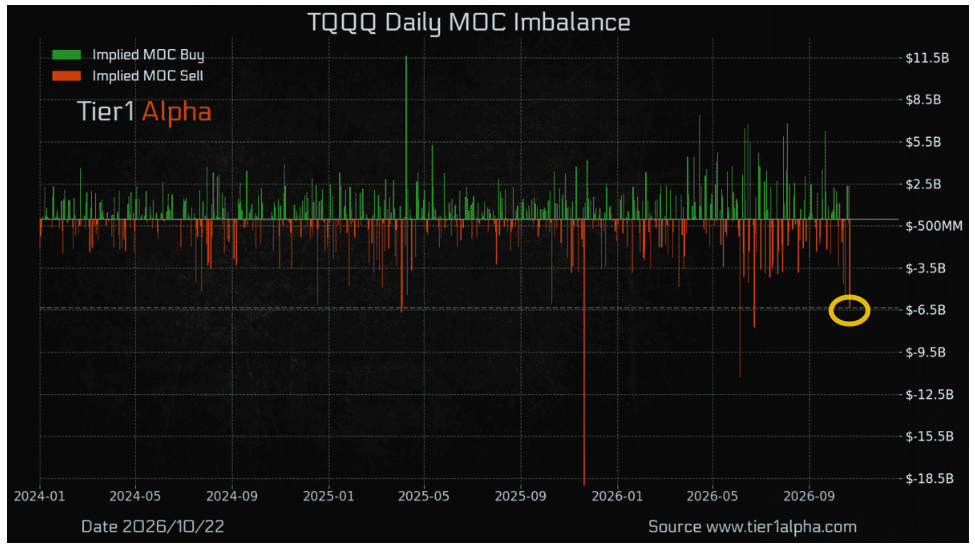
But semis have an added pseudo-negative-gamma source in the huge amount of assets in leveraged ETFs tied to the space, which must rebalance near the close by buying or selling in the direction of each day’s move.
As Tier1Alpha notes: “we suspect these funds were the largest non-discretionary agents in the market yesterday.” The two biggest are the Direxion Daily Semiconductor Bull 3X ETF (SOXL) and the ProShares UltraPro QQQ (TQQQ) [‘the largest levered fund in the industry by market cap’], which together hold about $60 billion in assets.”
They estimate SOXL’s 20% decline forced a $9.5 billion market-on-close (MOC) sell imbalance, while TQQQ “contributed another $6.5 billion in MOC selling.”
*Gamma plays an important, if nebulous, role in market volatility. Positive gamma means options market makers buy and sell against price moves, which dampens volatility. Negative gamma means the reverse: market makers trade with the move, accelerating rallies and selloffs and adding to volatility.
Conversation 0 Comments
One ongoing discussion across all days. Everyone can read; sign in to take part.
Your voice matters. Discussions are moderated for civility. Read our guidelines .
Log in to join the conversation