VIDEO: Host Digital on Speed to Power and the AI Infrastructure Buildout
A differentiated AI infrastructure model can benefit from vibrant demand.
You've reached your free article limit
You've read 0 of 1 free Pro articles.
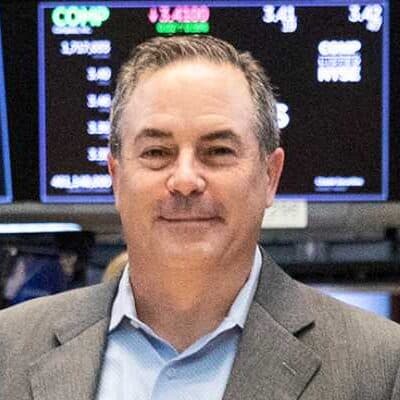
With another big week of hyperscaler earnings putting backlogs, capex plans and free cash flow under the microscope, Chris Versace sat down with Shawn Matthews, chairman, and Harmol Samra, CEO, of newly public micro-cap Host Digital (HOST)
Host Digital builds built-to-suit AI data centers for tenants on long-term, take-or-pay leases of 12-to-15-plus years, focusing on investment-grade-backed counterparties rather than short-term chip leasing. Its edge is speed to power: the company targets 20-to-100-megawatt sites that are already energized or close to it, such as former mining sites and paper mills, allowing delivery in roughly 10 to 14 months. The first site carries roughly $1.25 billion in contracted revenue over 15 years, and a pipeline of four to five sites sit behind it.
Both Matthews and Samra argued that demand remains intact while constraints in equipment, labor, local opposition and power are real. They add that froth is concentrated in the app and model layers rather than in the contracted build-out layer. From his perspective, Matthews said some cooling is healthy, but as we learn it’s just moving the slope of the demand line by a few degrees, and it still remains steep.
For more on Host Digital, see its latest Investor Presentation.
More Pro Portfolio
- Adding to 2 Holdings After Earnings, PMI Updates
- Tracking 49 Signals Across 11 Portfolio Investment Themes
- Weekly Roundup: Renewed AI Concerns Weigh on the Market and Portfolio
Transcript
Chris Versace: Hey everyone, Chris Versace here, portfolio manager of TheStreet Pro Portfolio. Boy, we have another big week of hyperscaler earnings, which will put the microscope on their quarterly results, backlog levels, capex plans and free cash flow. But as we’ve talked about time and again, several gating factors are restraining the build-out of AI infrastructure: components, chips and power, among a few others.
To help us understand the importance of power and the demand for AI infrastructure today, I’m proud to say we’re chatting with Shawn Matthews, Chairman, and Harmol Samra, CEO, of microcap company Host Digital, which trades on the NYSE American exchange under the ticker symbol HOST. Gentlemen, your timing is impeccable. Thank you so much for joining us today.
Before we get started, a quick question. You’re relatively new to the public markets. Between the two of you, can you tell us a little about the company, where it’s been and where you think it’s going?
Shawn Matthews: Look, the company is relatively new from our perspective. On the Host Digital side, it’s all about building out a process for doing one deal after another and making it repeatable. The marketplace will bifurcate into the people who understand capital and capital markets, as well as power, water and all the things Harmol will talk about, and those who don’t. It’s about doing something you can repeat over and over and delivering a high return on equity to shareholders is a key component of a successful company. That, we understand.
Chris Versace: So, Shawn, when you say deal after deal, it sounds like you’re talking about AI infrastructure and data centers, site after site after site. Correct?
Shawn Matthews: That is correct.
Chris Versace: Harmol?
Harmol Samra: To build on Shawn’s point, we are relatively new because we’ve only really announced one site. But there’s a pipeline of assets right behind it that we’ve touched on in our materials and in previous conversations. From our perspective, the road from here looks like, as Shawn mentioned, multiple sites: executing on them and seeing them through, because the base fundamentals don’t change. We underwrite the sites for what they are, given the revenues, the expenses and the quality of the tenants that come with them.
Hyperscalers, Neoclouds and the Demand Picture
Chris Versace: It’s interesting timing, because today is Monday as we’re talking. On the one hand, last Friday Amazon CEO Andy Jassy said AWS is capacity constrained into 2028. On the flip side, you’ve got SpaceX’s Elon Musk, who’s never shy about having an opinion, saying, “Neoclouds, forget it.” Help me understand what the real landscape is today from your perspective, and why companies like yours that are pursuing this strategy outside the hyperscalers still have opportunities.
Harmol Samra: I’d like to clarify a couple of things. Both Andy Jassy’s and Elon’s comments could be true at the same time. As for where we sit relative to neoclouds and hyperscalers, we build AI data centers and AI infrastructure. We’re the base layer. We build data centers that could be leased to a hyperscaler, to a neocloud with investment-grade backing, or to a direct end user.
Harmol Samra: What we’re solving for is the highest quality of revenue, which is tied to investment-grade offtakers. That’s the underlying thing. We are not in the business of leasing out chips on a short-term basis. We do long-term leases of 12 to 15-plus years, all of them basically take-or-pay. We do built-to-suit; we don’t do a colocation model.
Harmol Samra: But to your point, Chris, Andy is definitely correct. Demand is way outpacing supply today. They’re constrained even on the builds they do themselves. Elon’s point on neoclouds might be more tied to the macro issues we have right now, such as the cost of debt neoclouds can access versus what a hyperscaler can access, given the diversity of its revenue and whether it has already achieved an investment-grade credit rating.
Harmol Samra: Where Shawn and I find comfort is the demand side of things. Demand is intact, and it’s not changing. Using that demand picture, our pipeline and the assets we’re acquiring into the public company, what matters is who the counterparty is. Do we really want to take on pure neocloud exposure? No, given the financing issues we think we’ll also face as data center developers. We want the high-quality revenue of someone with a diversified portfolio and resilience, and a contract with them.
Shawn Matthews: As a developer, what we’re trying to do is de-risk the trade as much as possible. We’re not taking outsized risk anywhere in the chain. We’re putting all the pieces together, and if you think about it, that’s a really interesting skill, and in some ways an art: we take the connectivity we have in each individual area, leverage it to our best advantage and then turn around and create a project. There are multiple areas you have to bring together to create this opportunity, and not many people have a team that can actually do that. I think we have a unique team with the ability to de-risk a trade in which some people are taking a lot of risk. We don’t want to take that risk. We’re developers building out platforms on long-term contracts.
The Team
Chris Versace: I appreciate you mentioning the team, Shawn, because that was my next question. Since you’re newly public, I’m trying to understand the backgrounds of the key members. I’m going from memory here, but I believe your materials pointed out that you have not only building and financing experience but also experience delivering large amounts of megawatts to medium and large-scale clients, including Tier 1 clients. To help listeners get more comfortable with who you are, can you talk to your experience?
Harmol Samra: Definitely. My career is shorter than Shawn’s, so I’ll be quicker. For the last decade or so, Chris, I have been entirely focused on private equity, starting and scaling infrastructure and real estate platforms. Most recently, before coming over to Host, I was at ICONIQ, involved in data center platforms there. Prior to that, I was at Starwood and Starwood Digital Ventures.
Harmol Samra: Most of the team we’ve brought on comes from that institutional background and understands three main things. One is sourcing power as effectively as possible. Two is leasing it to Tier 1 clients for the highest-quality revenue we can get. Three is financing. At the end of the day, these are infrastructure and real estate assets that have to be financed very efficiently. That’s been my entire background, and the team we’ve brought on comes from my previous interactions with them, whether we worked together or sat on opposite sides of deals. I’ll let Shawn touch on his background as well.
Shawn Matthews: I’m a finance guy. I came from the world of Wall Street, where I was CEO of Cantor Fitzgerald for over a decade. I left and have run a family office for about eight years now, and I’ve been intimately involved on the power side of the business at several firms as well. So, I bring the other side of the business, which is capital markets efficiency and understanding how to get deals done.
Shawn Matthews: Connectivity is also a key component, because this is a trust business in a lot of ways. People are asking who is going to take care of their money most efficiently at a time when there’s a lot of noise out there. So, you go to the people you trust and respect, and you want to make sure they’re going to be good stewards of your account.
Speed to Power
Chris Versace: You both mentioned power when talking about your backgrounds, which is interesting to me because we know power is a major gating factor, and the electric utilities have upsized their multi-year capital spending plans. Yet your materials mention speed to power. What are you getting at, and how does that play into your competitive position?
Harmol Samra: Chris, power is the business we’re in. We’re in the business of taking electrons as efficiently and as quickly as possible and delivering them to our clients so they can turn out tokens as quickly as possible. That’s why speed matters. The front end of our pipeline is focused on what we call right-sized assets: 20 to 100 megawatts that are either energized today or can be energized in the very near future, so our customer can deliver tokens on the other side in roughly 10 to 14 months.
Harmol Samra: We’re taking assets where power is already flowing, because there was an old mining operation there, an old paper mill being retrofitted, or someone had applied for power to build a manufacturing facility. They have the power and the grid connection, and we’re taking over those assets and repurposing them into data centers faster. That’s the focus at the front end of our pipeline.
Harmol Samra: We’ve found that resonates with end clients, because where they can most confidently tell you their demand lies is the next 12 months. Of course, they want to build for 24- and 36-month and five-year contracts, but they’re very descriptive and prescriptive about what they need in the next year. That’s where we’re meeting them with this pipeline: at the point when they want capacity delivered.
Shawn Matthews: Speed to market is so important because, at the end of the day, if your project gets pushed out five years, you don’t know where you’re going to be, as Harmol said. You also can’t really plan your own business if you don’t know what’s going to happen. So, we look at it from the perspective of how we get deals done in a really time-efficient manner, which allows our counterparties to feel good about being up and running, as opposed to potentially up and running. That’s a drastically different model.
Chris Versace: Think about it this way: if you’re Microsoft, planning, according to some reports, to triple capacity by 2032, and some of your project partners aren’t getting the power they thought they would, you have to go somewhere else to shore up any shortfall in your planning. So, I think your strategy of being able to turn on capacity at sites that already have power stands out against others that are trying to bring capacity on stream but have to wait for power. Correct?
Harmol Samra: For sure. To Shawn’s point, we know we can build a diversified pipeline that delivers 500 megawatts across three assets because the power is there today, rather than focusing on a single asset with 500 megawatts of power in one geography that won’t come online for three years, and taking on all the risks associated with a single site and a single geography.
Chris Versace: As well as any hiccups along the way in getting that power in place.
Harmol Samra: Exactly.
Fiber, Latency and Site Selection
Chris Versace: Harmol, when you look at paper plants and similar sites, what’s the balance? They obviously need power, but they also need a high-speed pipe into the facility, correct?
Harmol Samra: High-speed connectivity? Fiber?
Chris Versace: Yes. What I’m getting at is that there are certain locations, like Northern Virginia, where I happen to live and which is data center heaven, with a very robust backbone that has allowed all these data centers to be built. So, in addition to power, how do you balance access to that backbone and the other factors? And do you still have a robust target environment?
Harmol Samra: Yes and no. Traditionally, you’re correct. It was all Northern Virginia, and that was the data center alley not just of the United States but of the world. That’s where the fiber landing cables were, along with everything related to them. Because we’re so constrained on power and the supply-demand imbalance is so mismatched, the model has changed. We do have to be close enough to a dark or lit fiber line that we can extend it into the site. The site has to have fiber connectivity.
Harmol Samra: What has gone away over time are the latency envelopes and availability zones we used to talk about: are we 10 milliseconds from a major metro, or 20? The reality now is that where most of our data center development, and the rest of the country’s, is heading, you’re close enough to enough of the fiber network that you can serve anyone in the United States from anywhere in the United States, given today’s AI workloads, which are mostly chat, video transcription and similar tasks. The cloud worked very differently. We used it for storage and recall rather than the way we’re using AI today.
Harmol Samra: That has opened up where these data centers can be located, widening the latency envelope we used to work within from roughly 5 to 15 milliseconds to closer to 25 or 30. Some of our customers have said they can be anywhere in the United States and serve anyone in the United States as long as they have fiber connectivity, which means you can be in a 45 to 50 millisecond envelope too.
Pipeline, Contracts and Timing
Chris Versace: If I remember correctly, your first site, about 43 megawatts, comes on stream in the first quarter of 2027. Given the demand you’re seeing, how many sites do you have earmarked that you haven’t yet started construction on?
Harmol Samra: On the demand side, if I’m understanding your question correctly, it’s why focus on smaller sites and go faster?
Chris Versace: Not quite. I’m connecting it to my prior question. If demand is robust and you want to do deal after deal, you need sites at least earmarked. Do you have three, four, half a dozen sites earmarked so that, as the deals Shawn’s talking about come together, you can quickly ramp available capacity?
Harmol Samra: Yes, we do. That’s the pipeline we’ve shown in our deck, from the private sponsor on which we have a right of first refusal. It’s a set of four to five sites totaling roughly 500 megawatts. They’re all in our target size range of 20 to 100 megawatts. Some might be smaller and some larger, but that’s our target zone.
Chris Versace: And the contracted revenue figure of about $1.25 billion spanning multiple years is based solely on the first site, correct?
Harmol Samra: Correct. That’s one site over 15 years.
Chris Versace: Where are you in construction of that site, given the timetable to come on stream?
Harmol Samra: Many of the base pieces you need for that site are already in place. The power is there, and the shell is there; we’re retrofitting it. We’re finalizing our plans, permitting and access, and we’re in the process of finalizing project financing and kicking off, so we remain on schedule to deliver next year. That data center is earmarked for the second quarter.
Chris Versace: So, people listening understand: when you bring clients in, they’re the ones who specify the racks, the equipment and the components, correct?
Harmol Samra: Correct. We’re not in a colocation model; we’re entirely built-to-suit, single-user. A client comes in the door and tells us the rack infrastructure, rack density and cooling infrastructure they’ll use, all of which, frankly, isn’t that different from one chipmaker to another. But they specify which version they’re going with.
Chris Versace: Sorry for laughing. I think Jensen Huang might take issue with what you just said.
Harmol Samra: No, no. I mean in terms of the base of what we provide. What they get out of it might be very different. We provide power and cooling to the rack, and rack density doesn’t change that much from one provider to another. What they get out of it is a totally different business, and that’s not the business we’re in.
Chris Versace: Understood. But if you were thinking about your own investment portfolio, hypothetically of course, you’d be able to see the volume of contractors and equipment coming in. You’d have a pretty good read on who’s busy and who’s not.
Harmol Samra: Very, very clearly. That’s fair to say, because you’re talking to them every day, and you can tell what’s true and what’s not based on how they’re bidding on things.
Bubble or Build-Out?
Chris Versace: I don’t want you to name names, because I don’t want you to get in trouble with anybody, but what’s the greatest misperception right now about the demand build-out unfolding before us? If you look at the market, some people are extremely bullish, lining up the data points and seeing rising AI adoption, widening usage and massive data creation. Others say no way, it’s a bubble and it’s going to pop. I think the truth is closer to the former than the latter, but I’m curious what you have to say.
Harmol Samra: Again, two things can be true at the same time. We’re not building speculatively, so it’s hard for me to say this will resemble the telecom build-out, because back then there wasn’t a contracted investment-grade offtaker on the other side. These customers contract before we even put a shovel in the ground, committing to take-or-pay for multiple years, sometimes two decades at a time.
Harmol Samra: In terms of what’s real and what’s constrained on the ground, equipment is hard to source because we’re going through a very large build-out all at once. Labor shortages are real. Community pushback against large data centers is also real. We don’t build multiple gigawatts in one spot where communities resist, but local opposition is becoming more and more real. Those are real constraints, and power is constrained. We’re not producing nearly as much power as we need to light up the data centers we want, hence the model we’ve taken.
Harmol Samra: As for AI spending and what looks bubbly, from my perspective that sentiment comes from how much capital is going into the app and model layers rather than the contracted build-out layer. Shawn, I don’t know if you see it differently. We’ve run through this analogy many times.
Shawn Matthews: I agree with that. And as we think about the frothiness of the marketplace, some of that froth will come off. Here’s what happens: everyone has to have something immediately, which lets everyone drive prices higher quickly. That’s slowly coming off now, which is good in general. You’ll see some projects you thought would go through that won’t, and you’ll see some cooling off as a result.
Shawn Matthews: The whole supply chain went into this, rightfully so in the beginning, thinking, “My God, I can see five years out, I have this demand, and I can drive prices up as much as I want because it’s insatiable.” Now that’s starting to change, and that’s actually good for the marketplace in general, because you’re taking off froth that can’t stay there forever. I don’t think this is a drastic change in the trajectory of the business as a whole. Some of it could be pushed out a little, and some of the larger projects may have trouble getting done. But that’s just the general marketplace. It happens all the time when you get into massive spending sprees.
Chris Versace: Shawn, if I think about what you’re saying, it’s as if the slope of that line may have moved a few degrees, but it’s still pretty steep.
Shawn Matthews: Correct. A hundred percent.
Revenue Recognition and Customer Concentration
Chris Versace: For your business model, do you start collecting revenue once you turn the site on? The site obviously has to be fully constructed, but do you turn it on only once 100% of the capacity is sold, or is that wrong?
Harmol Samra: The first part is correct. Revenue turns on when we hand over the data center space to the customer. Sometimes it comes online in phases and sometimes all at once, but even when it’s phased, we’re talking 30 to 60 days. For example, with 55 megawatts of power, we might bring blocks of 15 megawatts online at a time. Some sites also have contracted future expansion, which is obviously a later phase, but for the power immediately available on site, it’s usually all at once or within a 30- to 60-day window.
Chris Versace: In terms of revenue, if someone reads your 10-K a year from now, would they find any customer concentration numbers that might surprise them?
Harmol Samra: No, and that’s why we’re building the portfolio the way we are, with multiple sites rather than a single site and a single customer. We’re being deliberate about which tenants go into which sites and about diversifying those sites geographically, so we’re well insulated from geographic and customer risk. Overall, though, the space itself is concentrated, with a handful of large players, so you’d see most of them represented in our tenant mix. That’s the reality for anyone in the base infrastructure or data center business: your counterparties are fairly limited anyway.
Shawn Matthews: I think Harmol is being a little modest. His team has the ability to find sites that are unique, and that’s the challenge: understanding where they are, whether they’ll work, and working with local governments to make sure projects move through smoothly. There’s no doubt in my mind it’s a real art to get these projects done, and also a skill to put all the pieces together. That combination is really unique. Harmol and his team have done this many times before and were part of the biggest players in what we’ll call Data Center 1.0. Now we’re moving to 2.0 because everything is getting bigger. So that team concept is really important.
Track Record and Unit Economics
Chris Versace: Is there a figure for the megawatts or gigawatts your team, Harmol, has brought on stream in the past?
Harmol Samra: Collectively, more than two gigawatts, delivered with a very similar, diversified model across more than 80 assets.
Chris Versace: Sorry to interrupt, but going from effectively zero to 80 assets, how long did that ramp take?
Harmol Samra: Probably three to four years.
Chris Versace: And when you were done, roughly what revenue were those 80 assets generating?
Harmol Samra: That was a different build-out, so it’s hard to compare. It was more of a powered shell strategy, where you only brought power to the building and let the customers do the rest. What we do now is a more turnkey, full solution for the tenant: we bring power and cooling down to the data hall level, and you just bring in your racks. The revenue per megawatt in the turnkey model is roughly three times what you get in the powered shell model. You obviously spend a bit more capital, but you provide a more complete solution to your tenant. It’s also hard to give an exact number because that was spread across different fund series, whereas this is a single platform. The power and cooling we deliver doesn’t change much from one tenant to the next, so the rent per kilowatt or per megawatt is much higher, but it doesn’t vary much.
Chris Versace: Let me put on my Wall Street equity analyst hat and come at this a little differently. Is the $1.25 billion contracted over 15 years for the first site a fair number to think about for incremental sites as well?
Harmol Samra: I think it establishes a good baseline. Given where debt prices are moving and other changing dynamics, and with even more tightness and demand emerging, I think we could do better. But it’s a very good baseline of roughly $1.6 million to $1.7 million per megawatt per year.
Chris Versace: In your conversations with investors and in what you’ve disclosed publicly, with the first site coming on next year as we’ve discussed, have you said where you hope to be by the end of 2027 or 2028 in terms of the number of sites?
Harmol Samra: It’s less about the number of sites and more about total megawatts. We want to turn on the pipeline we’ve discussed in that timeframe, which is roughly 450 megawatts. That’s nine to ten times growth from where we sit today. But we know how to execute on that and how to de-risk while going through that execution phase. That’s the path we want to put ourselves on.
Closing Thoughts
Chris Versace: Excellent. Gentlemen, I have to say I’m very intrigued, and I’m going to roll up my sleeves and do a little more work on the company. Before we wrap up, is there anything listeners should know that we haven’t touched on?
Shawn Matthews: From my perspective, it’s important to understand that Host is looking at this a little differently than other companies. We’re delivering a service rather than taking outsized risk, so in a lot of ways we’re service providers: we provide a shell with power, you drop in your racks and off you go, as opposed to taking on all the risk associated with it. In the long run, we probably fit best in a potential REIT structure. That wouldn’t be a crazy way to think about us. So, it’s a different mindset, driven by return on equity. How we make money, what it looks like and the residual value of these assets at the end are really important to us, as opposed to building it, hoping they come and seeing how it goes. We probably don’t fit in the typical box out there right now. We think about it from a different standpoint, and with our diverse backgrounds, we have the ability to execute on it in a way others can’t. I think that’s an important thing to consider when you think about Host Digital.
Chris Versace: Excellent. Harmol?
Harmol Samra: I agree. The one point I’d double-click on is that we talk about yield on cost. We talk about debt costs, how we fix them and the spread we earn on that for 15 years. We talk about site selection, geographic risk and how we’ll build hub-and-spoke and land-and-expand. We think about this from an institutional, long-term perspective. The other key differentiator is the message we’ve been trying to get out: what we build is a longer-term trade, essentially a box where you can swap who comes in and out, on a fully contracted basis. We’re not in the business of “build it and they will come.”
Chris Versace: I think that’s an important thing to know. And Shawn, I think the higher-level perspective you shared is one people need to dig into, because it will separate you from some of the other companies out there that are building hog wild, so to speak. I think what you’re signaling, without really saying it, is that you have a much more disciplined model that should allow you to sidestep some of the concerns out there.
Shawn Matthews: I think that’s a fair statement.
Chris Versace: First off, thank you again so much for joining me and sharing more about the company with the audience. We’ll include links to the latest investor presentation in the notes below, but for folks who want to know even more about Host Digital, what’s the best place to go?
Harmol Samra: Our investor decks, along with the shareholder letters and other pieces where Shawn and I share our overall thoughts on the space, are all on our website at hostdigital.ai. We try to link everything back there, and Shawn and I are trying to get into the habit of over-communicating exactly what we think about the space and our model.
Shawn Matthews: Plus, we’re a public company, and the symbol is HOST, so you can always go see the reports we’re putting out. We definitely want to over-communicate. I think that’s one of the ways to gain investor confidence and make sure people understand that we care about their money. You invest with us, and we’re here to take care of your money and grow it.
Chris Versace: I can’t tell you the last time I heard a management team actually say that.
Shawn Matthews: It really is pretty simple, Chris. I don’t know why people don’t.
Chris Versace: I’m just saying you don’t often hear management teams reinforce that they recognize they’re stewards of your capital, Mr. and Mrs. Shareholder. Let’s just say you’ve said a few differentiated, refreshing things today and leave it at that. How about that?
Shawn Matthews: Sounds great.
Chris Versace: Harmol, I’ll take you up on your invitation. We’ll have you back in a couple of months, perhaps toward the end of the first quarter, once you’ve brought site one up, and we can get an update then. With that, gentlemen, thank you so much. And folks, thank you for tuning in. We’ll have another big conversation to share with you shortly. Stay tuned.