Will Warsh Be More Forthcoming About Fed Policy?
The Fed Chair thinks the central bank should communicate less rather than more, but the market is hungry for insight into inflation.
You've reached your free article limit
You've read 0 of 1 free Pro articles.
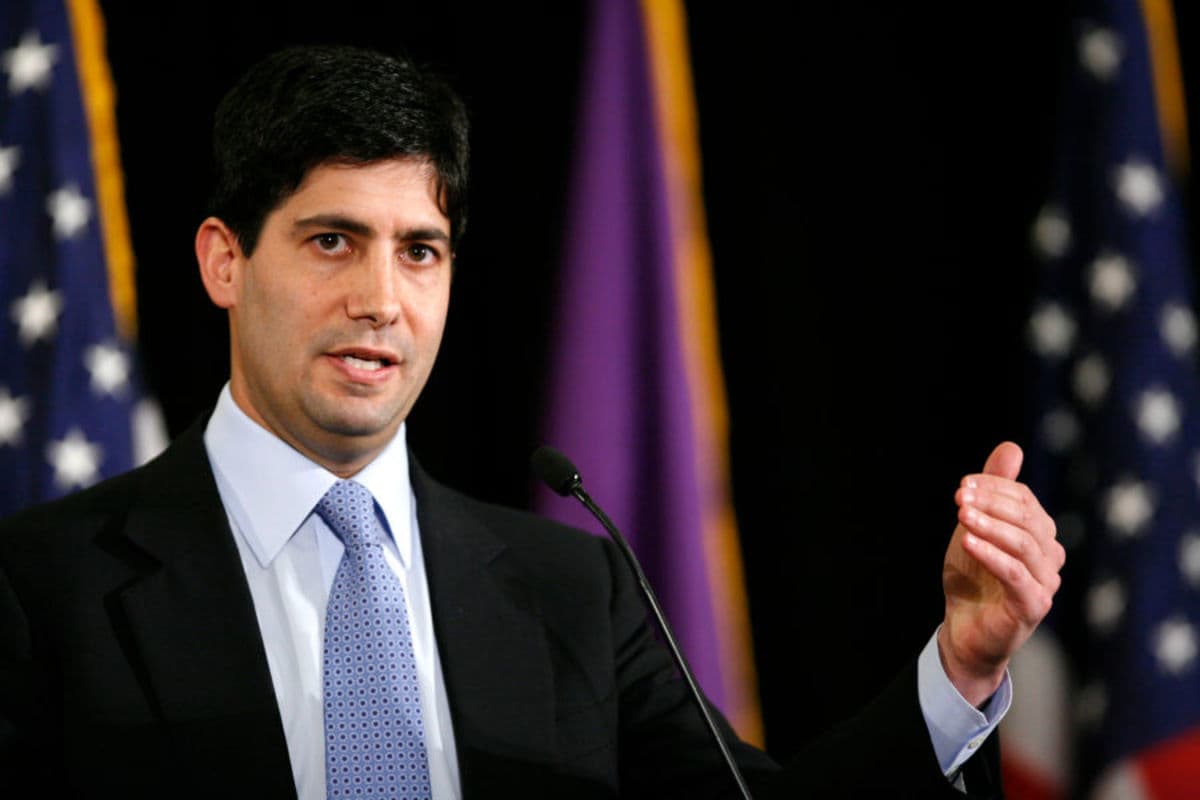
Fed Chair Kevin Warsh speaks at 10 a.m. Eastern on Friday morning from Jackson Hole. This is his first major speech as chair, and the Jackson Hole speech is traditionally where the chair sets the agenda for the coming months.
Warsh is likely to give a speech unlike any from his predecessors. He has made it clear that he believes that the Fed should communicate less rather than more. He believes that central bankers talk too much and that casual comments too often harden into commitments. Whether he holds rigidly to this view of communication is the primary issue and if he does soften it will the market like the message he sends?
The market setup is fragile and a big move with enhanced volatility is not unlikely. A Bank of America survey found 69% of fund managers expect a neutral tone, which means nothing of significance is anticipated, but if Warsh doesn’t follow the script it is likely to be a roller-coaster ride.
The Contradiction Worth Listening For
Warsh has argued that the AI investment boom could prove disinflationary in the longer run as it increases productivity. However that view is called into question in the shorter term after what Nvidia (NVDA) told us Wednesday night.
Nvidia guided gross margins lower, from 75% to 74% next quarter and eventually into the low seventies, because memory chip prices are rising faster than it had predicted. Not only are the prices for chips staying elevated but the demand for them continues to increase. There is no way that is not inflationary.
I have been writing for weeks that the AI infrastructure spending is feeding inflation across the economy rather than just enriching the chip makers. Nvidia confirmed it and now we will see if Warsh confirms it.
The disinflationary argument is not crazy over a long enough horizon. Productivity gains from AI should eventually lower costs across the economy. The problem is that productivity gains will develop much more slowly than the pricing pressure. The capital spending comes first and the productivity comes later, and right now we are in the part where the spending drives up the price of chips, memory, servers, and power without any offsetting gain in output.
If Warsh addresses that gap, it tells us how he is thinking about the most important inflation issue in the economy. If he does not, we are left where we were and the market will have to grapple with some uncertainty.
What He Has to Work With
The FOMC committee is split in its views and that makes the situation more volatile. Three regional presidents dissented in July in favor of a hike, Cleveland’s Beth Hammack, Minneapolis’s Neel Kashkari, and Dallas’s Lorie Logan. That was the first three-way split since 2016 and it happened at his second meeting as chair.
The core question underneath the split is whether inflation is elevated because of one-off issues like tariffs and the Iran war, or because the economy is running too hot. The first requires patience. The second requires action. Warsh has not indicated which way he is leaning.
IBD Raises Exposure Again
Investor’s Business Daily lifted its recommended exposure to 60% to 80% from 40% to 60% after Thursday’s gains in the Nasdaq and S&P 500. That is the fifth change in about four weeks. They were at 0% to 20% on July 29, went to the maximum 80% to 100% by August 14, cut twice over the following week, and are now back up.
I have written about IBD’s system several times because it reacts to index price action rather than to fundamentals and sector rotation. It does the job of reacting to indexes well but it misses what is really going on under the surface quite often.
A model shifting five times in a month is not a failure of the model. It is a market where the indexes have stopped acting as valid indicators. This is the argument I have been making since June and it is why I keep writing about a focus on selective stock picking.
One interesting observation from IBD is the software strength I mentioned last night. The iShares Expanded Tech-Software ETF (IGV) rose nearly 8% on strong volume and cleared a cup-with-handle base. That means the Nvidia guidance flowed beyond the chips into software, which is broader participation and that is positive. As I’ve been saying the AI sector is now focused on sorting out new leaders from the old.
The Jackson Hole Record
Stock performance on Jackson Hole speech days has been all over the map. Over the past decade the S&P rose seven times and fell three, but the losing days were painful. The market dropped 3.4% in 2022 and 2.6% in 2019. The last three years were positive, including a 1.5% gain last year.
Most of the time the speech produces nothing much. Occasionally it produces a very bad day. There is no way to anticipate what will happen.
Game Plan
My positioning has not changed. Cash stays high and I have no interest in guessing at the outcome of a speech.
The Nvidia report was good for Nvidia and complicated for everyone else, and the market has spent a day and a half working through that. Warsh can override all of it in 20 minutes.
Whatever happens Friday, the reaction that matters develops next week. The setups I want come out of the volatility rather than ahead of it, and there is no reward for being early into an event with this distribution of outcomes.
At the time of publication, Rev Shark had no positions in any securities mentioned.