Jaguar’s Bold EV Gamble Could Become the Auto Industry’s Survival Strategy
The Type 01 represents more than a product launch. It’s a test of whether luxury, differentiation, and brand identity can withstand China’s growing dominance.
You've reached your free article limit
You've read 0 of 1 free Pro articles.
Pretend for a moment that you’re in charge of a beloved global brand. But your business is in decline. Your customers are getting older, and you aren’t attracting younger people, despite remaining true to the heritage people say they love.
What would you do?
That’s exactly the scenario that Rawdon Glover, Managing Director of Jaguar, found himself in six years ago. The profile of Jaguar’s client base was “getting smaller and older,” which is, as Glover told me, not a great combination.
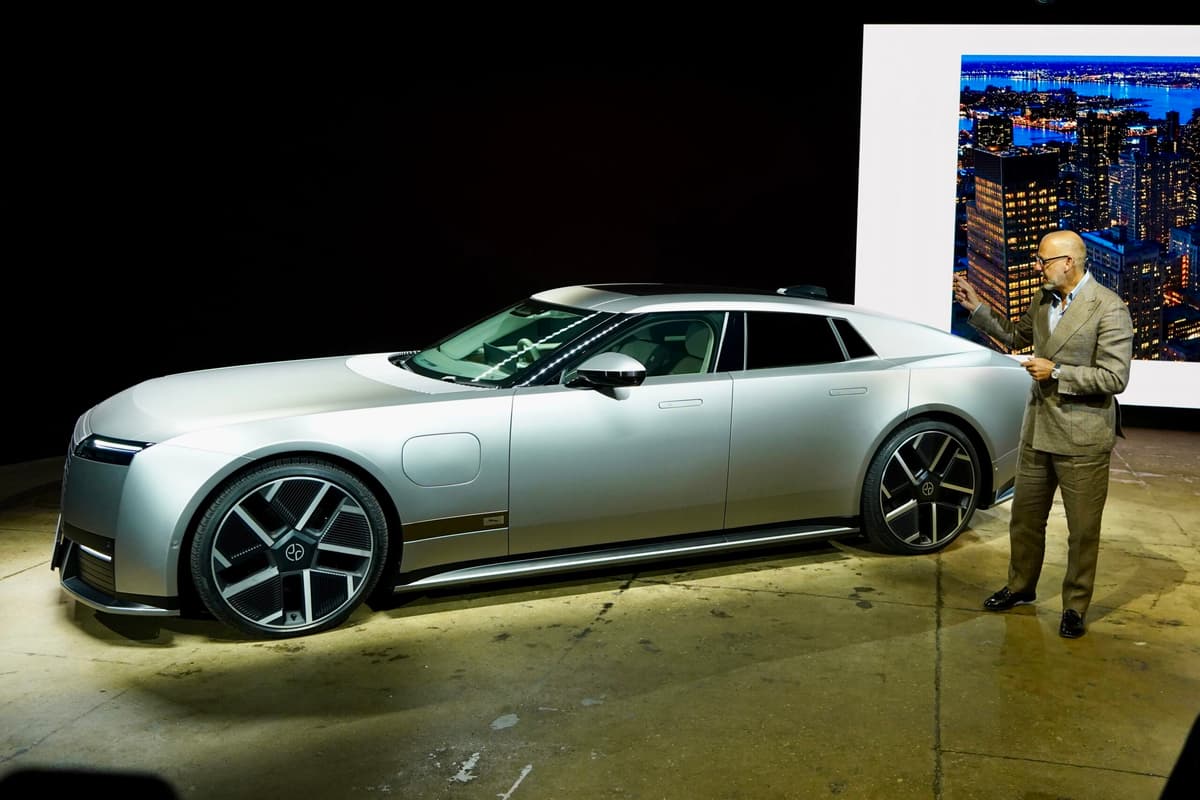
So, he did what any leader wishes they could do in that scenario. He called a time-out. Glover turned off the assembly lines and gave his team permission to design something for the next generation of consumers. The culmination of those next six years took place on a Tuesday night in New York City earlier this month, when Jaguar unveiled the Type 01. I was on hand to learn more about the car and to follow up on my interview with Glover from 2025.
I had two questions:
- Did Jaguar make the right decision?
- Is there a market for this new car?
Time will tell, but with Chinese EVs flooding many markets, Glover’s answers suggest that auto industry leaders need to think more carefully about their corporate strategies and product mix.
Did Jaguar make the right decision?
When the internet complains that Jaguar is making a mistake, it’s good to remember that the internet wasn’t buying Jaguars. And neither was anyone else.
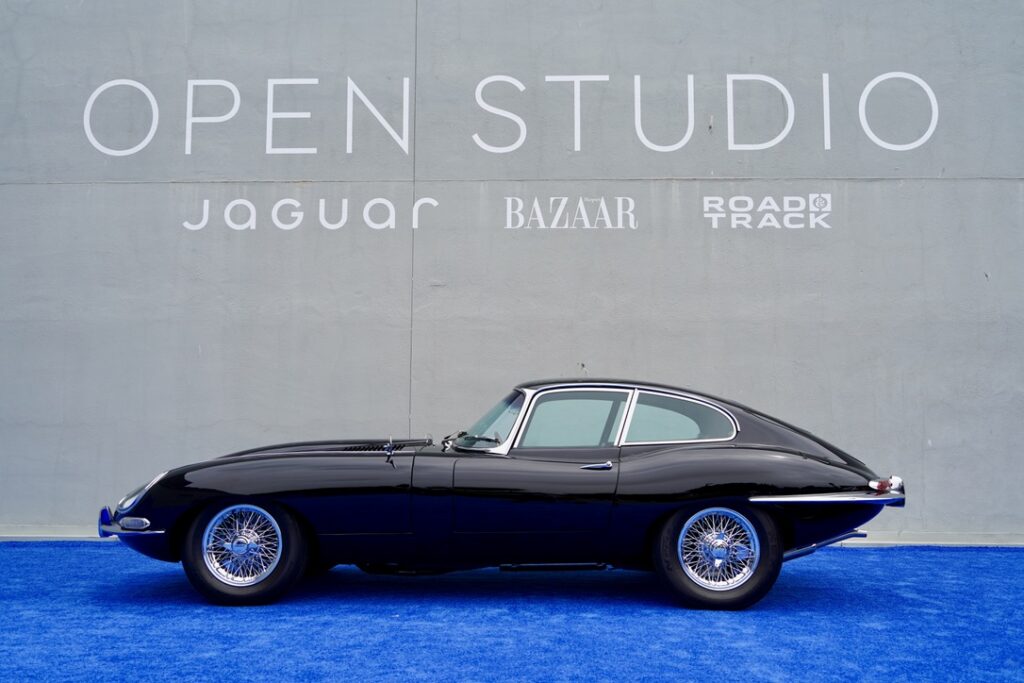
Jaguar was once the reason why Tata bought JLR (Jaguar Land Rover), but tastes changed, and luxury SUVs dominate the market now. Jaguar lost sales despite building cars that remained true to its heritage. For example, the company’s F-Type was a solid sports car that harkened back to the beautiful 1960s E-Type but was unable to lure customers away from the likes of Porsche.
So, my first question was whether Jaguar would even exist today, had he not taken action. After a pause, Glover told me that the company would likely exist, but as a smaller version of what it was five years ago. The company’s client base was growing smaller and older. Jaguar was unable to appeal to a younger demographic.
Another issue was that Jaguar had gone mainstream. As Glover told me in 2025, Jaguar was most successful when it sold a smaller number of vehicles at an elevated price point. The mainstream version of Jaguar was never going to succeed. Certainly not while Waymo-outfitted Jaguar SUVs roamed the streets of Los Angeles.
Importantly, Glover said that what Jaguar was doing was not sustainable.
As for the decision to go electric, while the US may have taken a step back, the rest of the world is still transitioning towards EVs, albeit at a slower pace. In fact, it’s the Chinese who are leading the push into electric cars. And some of the reports I’ve heard are that the cars are pretty good. Most importantly, they’re cheap. Tesla performance at a value price. While we can’t buy them here in the US, Chinese EVs are selling in Jaguar’s UK backyard. So, an electric Jag makes sense. The thing is, it’s got to be upmarket; able to appeal to a demographic that is interested in style, rather than outright value.
Helping make the case for an electric Jag was $18 billion in R&D money that JLR was looking to allocate. Part of this money was to build a dedicated EV architecture for JLR. That’s already paid off with the Range Rover GT, the luxury SUV builder’s sleek EV, which enters production later this year. In this way, Jaguar’s R&D spend will be leveraged across as many vehicles as possible, including the potential to inform future vehicles made by parent Tata.
Is there a market for this car?
That’s the billion-dollar question. During a time when the Chinese EVs are dominating, Glover’s decision to take Jaguar upscale is the right one. They can’t go toe-to-toe with those offerings, so they need to find a different market.
Before we answer that question, here’s what we’re talking about. It’s the Jaguar Type 01, and in person, it looks pretty great. Like something that Cruella DeVille would drive while hunting puppies.
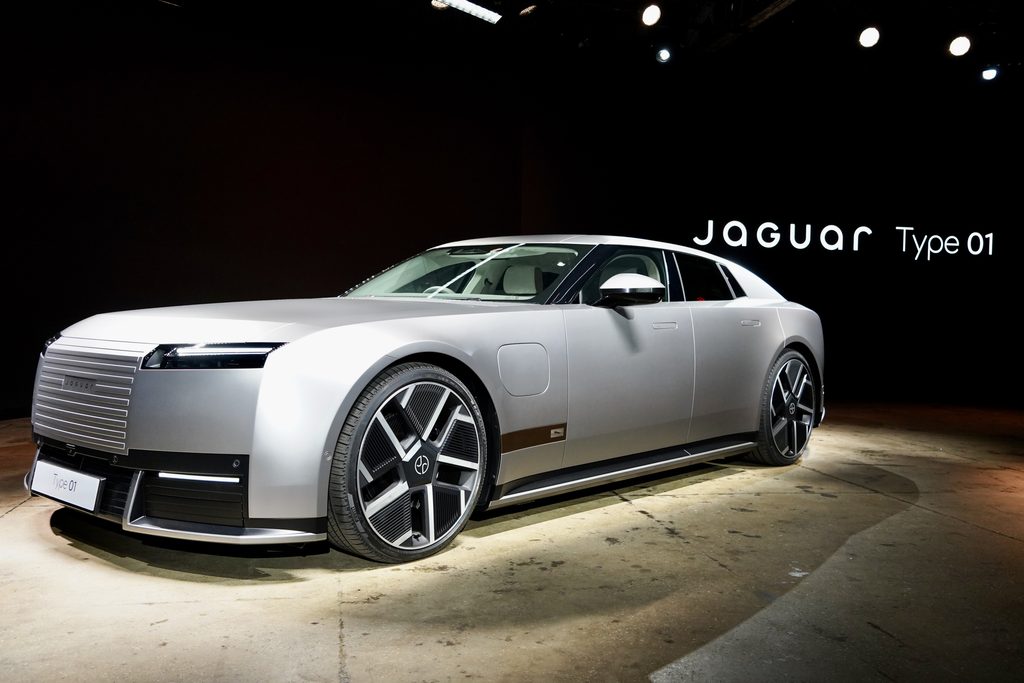
The car has gobs of presence. It’s a statement car for people who want to announce their arrival. The design is marked by a low roofline, long bonnet, extended rear overhang, and 23-inch wheels. The dash-to-axle ratio, or distance from the lower edge of the windshield to the front wheels, is extreme. Jaguar calls it the luxury gap because it harkens back to Art Deco luxury design. Despite being an EV, Jaguar dumped traditional EV designs in favor of something more elegant. In doing so, they created the most aerodynamic Jag ever. Its drag coefficient of 0.23 puts it on par with a Tesla Model 3.
Look, the design is polarizing. Some have compared it to a Cybertruck. That’s a valid comparison in that both vehicles make a statement. But the Jag is designed to appeal to a younger, more design-focused group. The Cybertruck? Well, it has its fans, too, and they won’t be buying Jaguars.
While I haven’t driven one yet, they tell me it drives like a Jaguar should. Meaning that the 1000 horsepower isn’t just for drag racing. While it’ll hit 62 mph in 3.2 seconds, it accelerates even more quickly from 60 to 112 mph. That’s what Jaguar means when they say the car has power in reserve. The team also spent time driving Jaguar’s back catalog to make this car drive more like an updated version of Jaguar’s best.
The XJS model was the benchmark. That car was a luxury grand tourer that still looks good today. The owner of this 1980s XJS with a V12 and manual transmission is smitten with her car. She recently purchased it and told me it drives like you’d hope a Jaguar would. More effortlessly than sporty. You can see the similarity in the design of the Type 01, especially in the length of the hood, the luxury gap as Jaguar calls it, and the sloping rear.
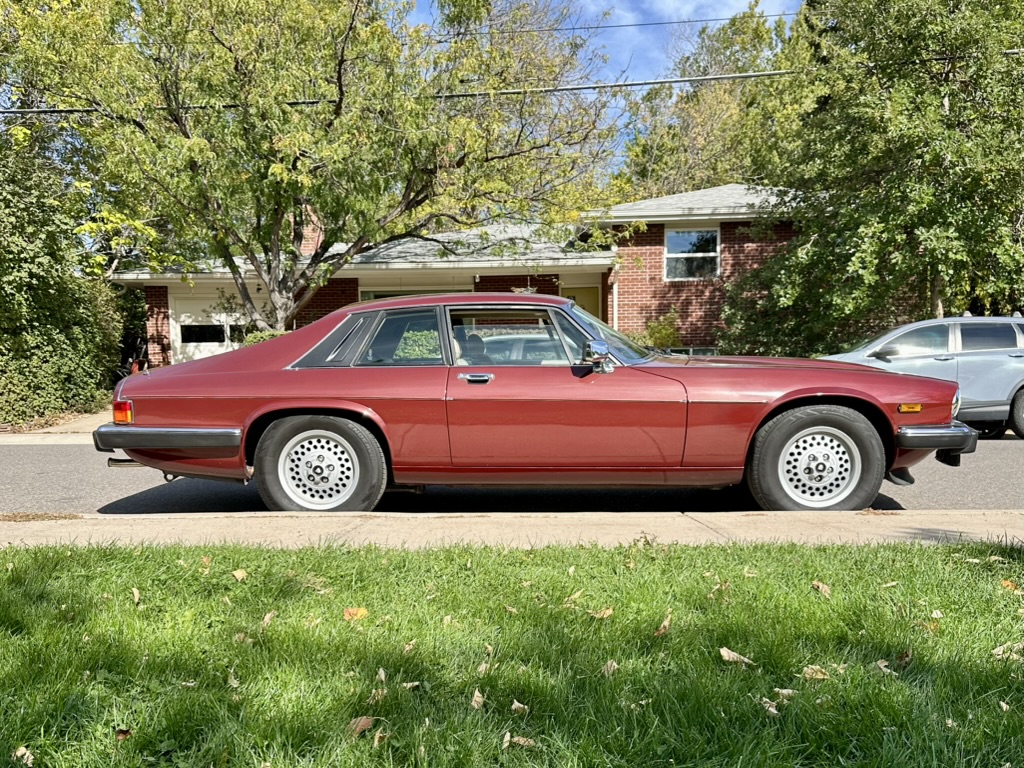
If Jaguar’s new Type 01 can match this car for driving experience and ability to draw envious stares, they’ll have done their job.
The 850-volt architecture combined with a 118 kWh battery means that owners should never have range anxiety. In fact, the Jag will go 450 miles on a full charge, and road trippers can add 200 miles of range in just 13 minutes. It’s also compatible with Tesla Superchargers.
So, this might just be the most engaging and interesting EV yet created. But is there a market for it?
Glover said that Jaguar “chases the white space where they can create their own market.” Like what they did with the Range Rover Evoque and Sport, as well as the Defender.
Glover also emphasized that Jaguar is about value, not volume. In this case, value doesn’t mean cheap. It means offering a luxury package at a price that can bring in aspirational buyers. The 1960s E-Type is a great example. The car offered Ferrari levels of style and performance at a discount. The new Type 01 has no peers. It’ll cost around $130,000 to start, and Glover told me that it’ll come well spec’d, unlike, say, a Porsche Taycan where the options list is a mile long.
I know, $130,000 isn’t a value. But value is relative. Consider the quality of materials and the engineering that’s gone into the Type 01, which are expected to outpace other EVs in that price range. Consider that the Rolls-Royce Spectre EV is that brand’s number 2 seller, despite its $400k price tag. And the Spectre isn’t your father’s Rolls-Royce. The average age of a Spectre owner is 35, according to The Drive. Bentley is getting into the market, too, with its $220,000 Torcal electric SUV. According to Glover, 80% of buyers in this price range are open to an EV.
So, is there a market? Rolls-Royce has shown us that there’s demand in the luxury market for an EV. And the Chinese companies are showing that there’s demand at the low to mid end of the market for EVs. So, yeah, Jaguar is playing in that white space that Glover described. The Type 01 offers the drama of a Rolls-Royce, but at a BMW price. Yes, there’s a market.
How big a market? When asked, Glover wouldn’t give me sales targets. He said Jaguar could be equally happy selling in the 10s of thousands of cars, or fewer cars if buyers chose bespoke options. Can they do it? For comparison, the Porsche Taycan sold over 40k cars in its best year but is well below those levels now. Perhaps Jaguar can be the value and volume player in the luxury EV space.
Competition
Despite what you may have heard, EV sales in the US are not dead. In fact, they’re still pretty healthy, with expectations that 1.3 million units will have been sold by the end of 2026. Yes, tariffs and the expiration of tax credits slowed sales, and the growth trajectory has dropped. But gas prices have helped recharge the EV market, and long-term expectations remain that EVs will overtake gas-powered cars in the decades to come. It’s better to play in a space that’s winning market share, so this is a benefit to Jaguar, even if the road is rocky.
The luxury EV space was created by Tesla, which abandoned the category when it killed off the S and X models. Perhaps they didn’t feel they could compete there anymore. That leaves Jaguar to compete with BMW, Mercedes, Audi, as well as Lucid and Rivian. Porsche’s Taycan falls into this price category, too, and is one of my favorite cars (drive one if you’re a skeptic), but high depreciation and reliability concerns killed sales over the last few years.
None of those cars offer the presence that the Jaguar does. The aforementioned Rolls-Royce Spectre, however, does, and has shown that there’s demand at the ultra-high end, too. A car with the presence of the Rolls at the price of a BMW i7 could be a winner.
At the lower end of the market, the Chinese are gaining market share globally. Someday, they’ll be able to take on the luxury car market, but that day isn’t today. If we look at the rise of Japanese cars in the US, it took more than 20 years before Lexus appeared with a Mercedes S-Class competitor.
Leaving the EV market aside, it’s worth mentioning Porsche’s new strategy. They’re going upmarket, with a plan to sell fewer cars at a higher price point. Sound familiar?
So, this market isn’t a slam dunk. But the Jaguar’s strategy makes sense, and Type 01 appears to fill a niche no other car does.
Final Thoughts
I attended this event for two reasons. First of all, I’m absolutely interested in seeing how well Type 01 does in the marketplace. It really is creating a new niche, and I hope Jaguar is successful. Having met the designers and engineers, an awful lot of thought went into the Type 01’s development. We’re at an inflection point in the automotive space, and I believe that this car will be a bellwether. EVs are the future, and if you think I’ve drunk the Kool-Aid, just know that while my household owns a couple of EVs, we’ve also got sports cars from 1992 and 1959. So, I’m pretty unbiased. But the Chinese are literally taking over the industry, and Jaguar’s $130,000 price point is a niche that they aren’t ready to play in.
Second, there are economic lessons to be learned here. Jaguar is going after the luxury market because they feel that it’s strong enough to provide billions in profits for them. More importantly, they were losing by playing the mass market game. And with Chinese EVs on the rise, they had little hope of competing. So, they found a market that was underserved, which just happened to be where Jaguar has always found the most success.
This is relevant for all car manufacturers. Can Ford (F) and GM (GM) compete against the Chinese? They can’t, which is why you can’t buy a BYD in the US. But you can in the rest of the world, where US manufacturers also sell cars. Will the Chinese dominate? Jaguar’s Type 01 is a bellwether for the rest of the industry.
In ten years, we might see a bifurcated market where the Chinese dominate sales of EVs below $100k. That’s bad news for Ford and GM and other global manufacturers servicing this market. Elon Musk has talked about a future where Tesla doesn’t sell cars. On the other hand, the luxury end of the market could thrive, and successful competitors will sell cars that are differentiated and technologically sophisticated. That’s good news for Jaguar.
Back to my original questions.
Did Jaguar make the right decision? Yes. Status quo was not an option. The decision to make a drastic change was the right decision.
Is there a market for this car? Absolutely, and it is the right market for Jaguar to compete in. What we don’t yet know is how big a market it will be. Jaguar could sell 1000 Type 01s. Or they could sell 50,000.
What matters most is whether Jaguar will succeed. While we won’t know about that for some time, what we do know is that this was the right move-one that business schools will write case studies about in the future.