Investors Are Out of Position — And That Is Supporting the Indexes
Why being wrong-footed makes for a market that is harder to knock down. Plus, the most underappreciated development this week.
You've reached your free article limit
You've read 0 of 1 free Pro articles.
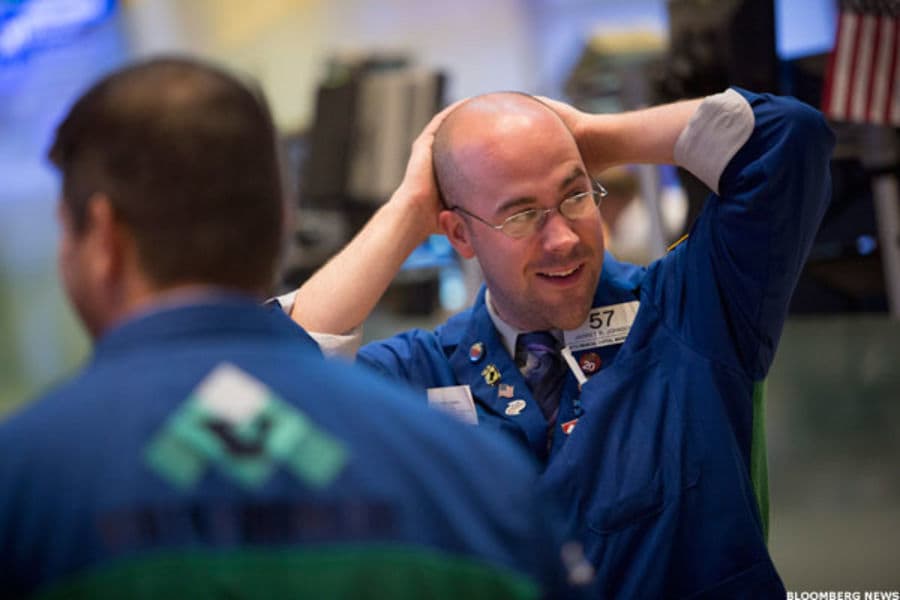
We have mild action to start Friday, with the Mag 7 and the Nasdaq 100 (QQQ) leading, while the Dow and the Russell 2000 (IWM) are slightly lower. Oil is down a little, and interest rates are slightly higher.
Keep in mind that Friday is triple witching, the quarterly expiration of index futures and options. That tends to produce heavy volume and sharp swings, particularly in the final hour. This is mechanical action and should not be confused with a shift in the fundamental view of the market. If the action is volatile into the close, don’t read too much into it.
The Market Is Hard to Knock Down Right Now
The theme I keep coming back to this week is that the market’s response to the Fed has left a lot of people out of position, and that is helping to hold things up while we wait for the next batch of news.
Traders spent weeks bracing for a hawkish Fed and a break through 5% on the 10-year Treasury. They got the hawkish Fed, but yields backed off 5% instead of breaking through, and stocks bounced instead of collapsing.
The folks who were positioned for the worst now have to adjust, and that repositioning creates a bid underneath the market. It is the same dynamic I described in early August when the AI trade came back to life. Being wrong-footed forces buying, and that buying can carry further than the fundamentals justify.
That does not make for a durable trend. It makes it a market that is harder to knock down in the near term than the negatives would suggest, which is a different thing.
The Trump-Warsh Détente Changes the Dynamic
The most underappreciated development this week was political rather than economic. President Trump spent months attacking the Fed for keeping rates too high. The Fed hiked Wednesday, which is the opposite of what he wanted, and instead of attacking Fed Chair Warsh the Wall Street Journal is reporting that he made supportive comments.
Trump cast himself as having approved of the decision. He described a call with Warsh before the meeting where he said “you might as well vote with the board because it’s not going to matter.” He framed Warsh as stuck with a tough board that is opposed to the White House. Whether or not that is how the call actually went, the effect is that Trump is not treating Warsh as an enemy. He is treating him as a hostage of his own committee.
That is a gift to Warsh, and it changes the rate dynamic more than the hike itself did. The market had assumed political pressure would eventually force the Fed toward cuts, because a chair under sustained attack from the president who appointed him has a hard time staying hawkish. Trump just removed that pressure.
By blaming the board rather than the chair, Trump has given Warsh cover to do what he thinks is correct, which is probably something more hawkish. A Fed chair who does not have to worry about a presidential tussle has more freedom to fight inflation aggressively, not less.
Administration officials reportedly were relieved that Trump did not go after Warsh. There was fear of a blowup, and the fact that there wasn’t is one of the more important things that happened this week. It does not change oil prices or the seasonal weakness, but it does mean the hawkish path the Fed signaled has more traction if Trump doesn’t treat Warsh like he did Jerome Powell.
Japan Raised Rates, and the Reaction Was Backwards
The Bank of Japan raised its benchmark rate to a 30-year high overnight, and the reaction was the opposite of what was intended. The yen fell more than 1% against the dollar rather than strengthening, because two board members dissented and signaled doubt about how fast the BOJ will keep tightening. A dollar now buys around 157.8 yen against the month’s low of 153.54.
This matters for two reasons that push in different directions. A higher Japanese rate encourages Japanese capital to come home, which is a headwind for U.S. Treasuries and part of the pressure on our long end. But a weaker yen does the opposite, because it keeps the carry trade alive and Japanese money parked in U.S. assets. The mixed signal from the BOJ produced a mixed outcome, which is why it is not driving the U.S. market hard in either direction Friday morning.
The bigger issue is that September has now seen four major central banks raise rates. The Fed, the ECB, and the BOJ have all moved, and the tightening bias is global. This is a coordinated move and it is the backdrop that keeps the pressure on equities regardless of any one day’s bounce.
The Indexes and the Individual Stocks Still Disagree
Investor’s Business Daily raised its recommended exposure to 60% to 80% on the improved technical picture in the Nasdaq and S&P 500. What is interesting is the disconnect inside their own note. The index level says risk-on, but they admitted the actual buyable setups were thin and didn’t give growth investors a clear direction. The chip and tech breakouts were scattered and not a clear theme.
That is the same gap between the indexes and the individual stocks I have been writing about all year. The index improves, the model raises exposure, and yet a stock picker looking for names to buy finds slim pickings. The index is one thing and what is actually tradeable underneath it is another.
The encouraging part, and this supports what I wrote on Thursday night, is where the setups are showing up. Biotech had a good day, with names such as Cullinan Therapeutics (CGEM), Kymera Therapeutics (KYMR), and Exelixis (EXEL) building or clearing bases.
When specific groups start developing setups while the broad market chops, that is the better stock-picking environment I have been waiting for. Hewlett Packard Enterprise (HPE), which I have been trading, has a strong relative strength line and is eyeing a breakout as well.
Game Plan
My approach does not change on a quiet Friday, especially one with expiration mechanics in play. I am staying selective, watching the charts rather than the indexes, and letting the setups prove themselves before I commit.
The market is holding up because people are out of position, not because the problems are solved. Oil is still near $100, the Fed signaled another hike is likely, and we are in the weakest stretch of the calendar. But if the individual names on my list keep developing while all that is true, that tells me more than any index bounce, and it is what I am watching.
At the time of publication, Rev Shark was long CGEM and HPE.