Hawkish Warsh Tells Wall Street to Beat It
The man was clear. His concern is inflation and Main Street.
You've reached your free article limit
You've read 0 of 1 free Pro articles.
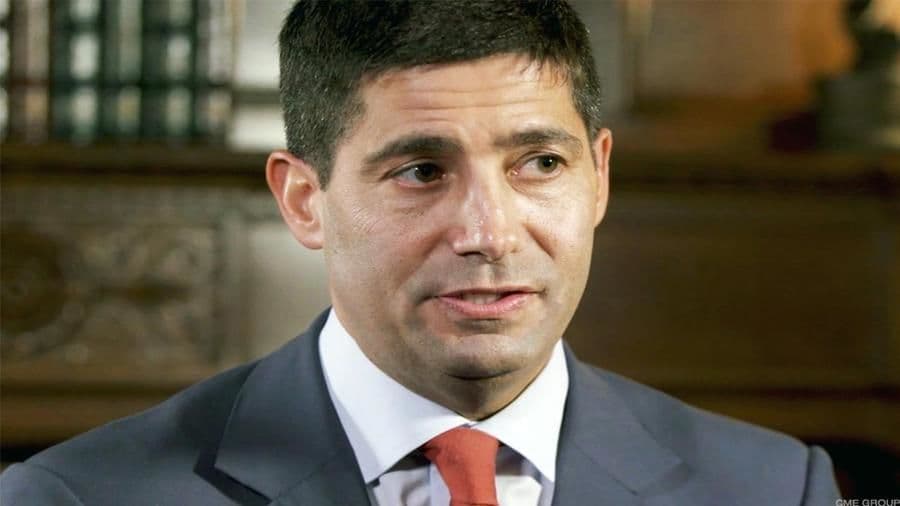
Fed Chair Kevin Warsh made his address from Jackson Hole. On his 100th day in office. He sounded professional. He sounded like he knows what he wants the nation’s central bank to do.
I like him as a leader for the central bank. That’s not to say that I agree with where it appears he is going. I do not, as an economist. That said, as an investor and trader, he did the next best thing.
If Warsh was anything today, he was clear. He sees the economy as rather strong and feels that it is getting stronger. He sees inflation as an ongoing problem and sees nothing that tells him that inflationary trends are easing. Today, Warsh, in my opinion, told us that the FOMC is going to increase short-term interest rates, either on September 16 or if not then, on October 28.
My feeling is that if the Fed does not raise short-term rates soon, then this Fed Chair will lose credibility with markets. The speech was that hawkish. His conviction seemed to be that sincere.
Futures markets trading in Chicago are now pricing in a 56% probability for a 25-basis point rate hike on September 16 and a 68% probability that this hike will happen by October 16 at the latest.
What Warsh Said
“In my term as Chairman, my colleagues and I will endeavor to construct more reliable models and more robust rules to guide policy decisions. We’ll do this knowing that accuracy in economic forecasting is still just an aspiration. With so much changing so fast in geopolitics, global supply chains, and technology, it’s wise to be modest about what we can and cannot know.”
Sarge says: As we already knew, Warsh does not like forward guidance as it has not been a reliable tool in the recent past. He is flat out telling us that he is not likely to guide on rates going forward. This kind of leadership at the Fed, in my opinion, was a long time coming.
“The Fed plays an essential role in the economy and the markets. And our tools are powerful. We determine the path of short-term interest rates. And market participants will always try to anticipate what we will do next. But we should not indulge a regime in which market participants are looking primarily to the Fed for their next trade.”
Sarge says: Warsh told Wall Street to beat it. His concern is Main Street, and his focus is making the right decisions economically.
“We must be confident that underlying inflation is moving to our objective, clearly and at sufficient speed. Otherwise, we have work to do. That’s our job . . . our mandate . . . and our charge to keep.”
Sticking with that thought, Warsh added… “The Fed’s predominant focus right now should be on prices.” He also described the labor market as broadly robust. I may not agree, but at least we know with certainty what he thinks.
Sarge says: Warsh did not scrap the 2% target. He was not vague. He committed to fighting inflation as a priority as he believes in the Fed’s dual mandate — and the one side of that mandate that the central bank has failed on since the pandemic is the inflation side.
What Warsh Did Not Say
The Fed Chair did not mention the recent decision made at the Treasury Department to accelerate buybacks in the name of liquidity. This truly surprised me. I felt that he had to address this.
In Response
The U.S. Dollar Index spiked and gold sold off. Bitcoin didn’t do much. The short end of the yield curve spiked (T-Bills were sold) while the long end came in a bit (they bought the long bond). That’s interesting.
With the Fed likely about to increase short-term rates and the Treasury about to pressure long-term rates, is a flattening of the yield curve what “they” are really after? If “they” are truly concerned about inflation, truly confident in expanding economic activity and worried about federal borrowing costs, that does make sense.
Interestingly, equities haven’t skipped a beat. At least around midday Friday, stocks are hanging in there nicely, even up a little more than they were, at the index level, while the Fed Chair was speaking.
At the time of publication, Guilfoyle had no positions in any securities mentioned.