Don’t Be Fooled by Monday’s Pullback, Treasury Yields Are Headed Higher
Attractive Treasury yields could pull capital away from stocks and into bonds.
You've reached your free article limit
You've read 0 of 1 free Pro articles.
We’re seven months into 2026, and the S&P 500 has gained 10% year-to-date. We could be looking at the fourth consecutive year of double-digit returns for the large-cap index:
2023: 24.23%
2024: 23.31%
2025: 16.39%
Or, we could be headed for the first negative year for the S&P 500 since 2022, when the index fell by 19.44%.
What is one key factor that could determine the market’s direction for the rest of the year?
Bond Yields Won’t Yield
When Treasury yields rise to attractive levels, investment capital is pulled away from stocks and into bonds.
Treasury yields eased up a bit on Monday, on word of a possible peace deal in the Middle East. Last week, the yield on the 30-year Treasury reached its highest level since 2007.
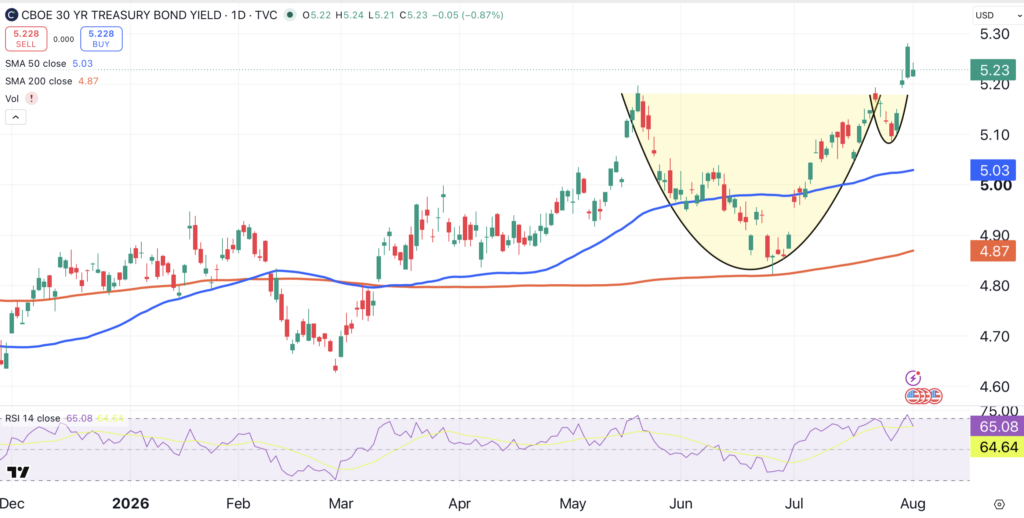
That year, the long bond’s yield peaked at 5.41%. Last week, it climbed as high as 5.28%.
Will that yield continue to climb? According to the charts, it’s likely. That’s because the 30-year yield has just broken out of a cup-and-handle pattern (shaded yellow). That bullish pattern places the 2007 high of 5.41% within reach.
A similarly bullish cup-and-handle can be found on the yield chart of the 10-year Treasury note (shaded yellow).
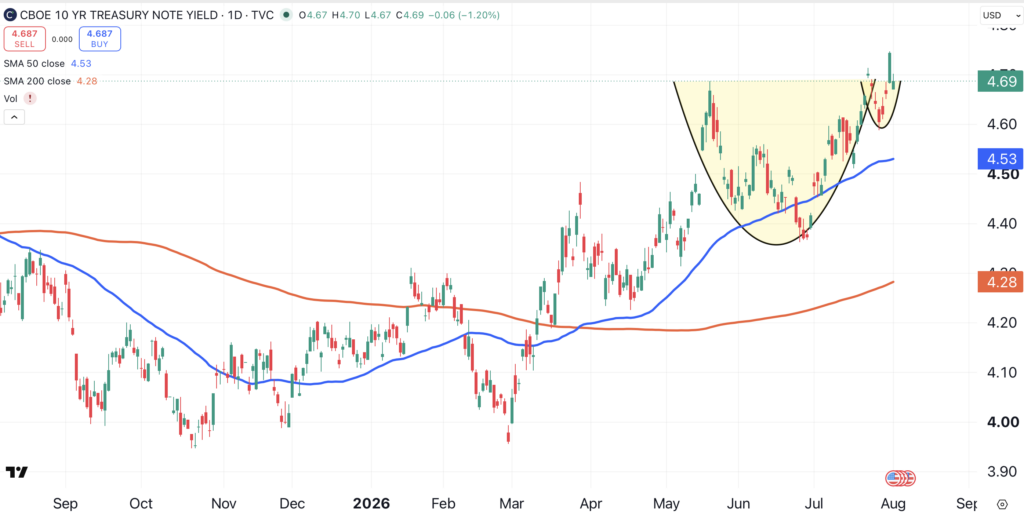
The yield on the 10-year T-note peaked at 5.32% in 2007. As of Monday afternoon, the 10-year’s yield was 64 basis points below the 2007 high. Meanwhile, the 30-year Treasury bond yield was just 18 basis points below its 2007 peak.
Here’s Why Rates are Rising
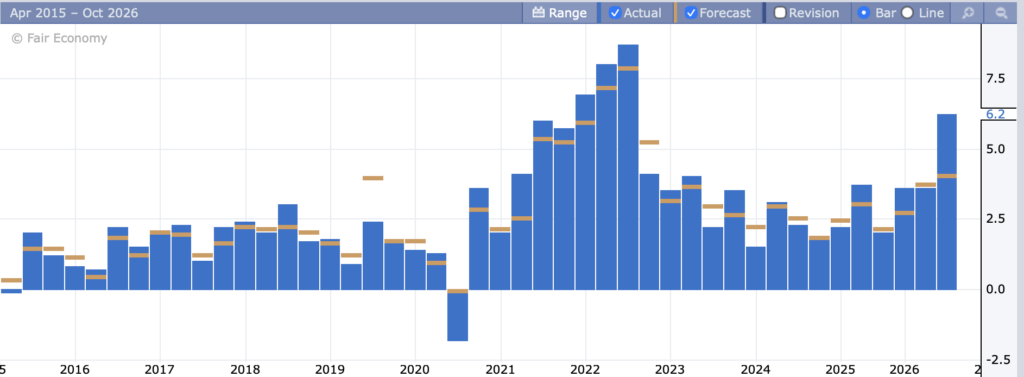
Last week, the advance GDP price index soared by 6.2%, well above the estimate of 4.1%. That’s the highest reading for this inflation indicator since 2022:
According to the consumer price index, annual inflation is rising at 3.5%, well above the Fed’s target rate of 2%.
The war between the U.S. and Iran is a big driver of inflation, with obvious impacts on crude oil and gasoline prices.
Less obvious is the war’s effect on food prices. Much of the world’s fertilizer — about one-third — transits through the Strait of Hormuz. According to a survey by the National Corn Growers Association, nine out of 10 corn farmers faced higher nitrogen costs this year.
The good news is, urea prices peaked in April, and reached a six-month low on Monday.
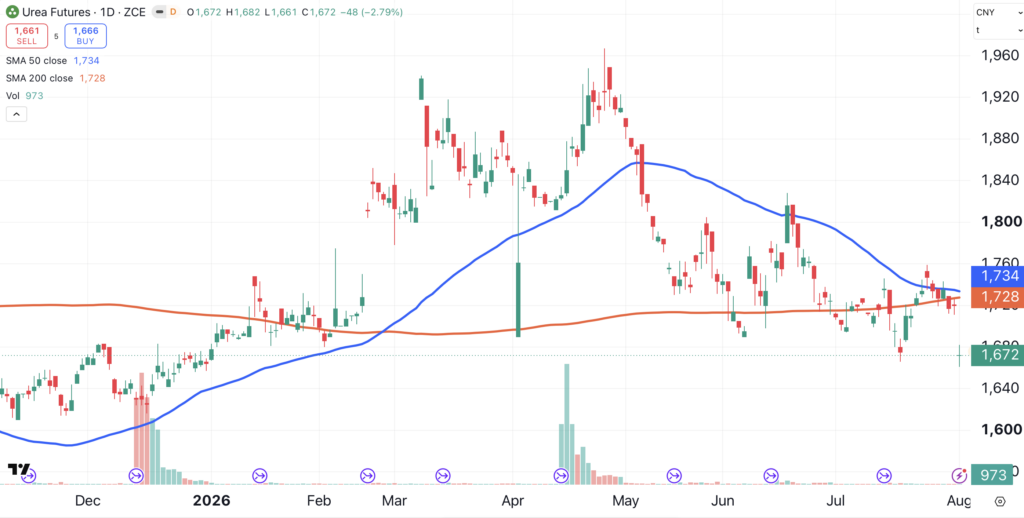
The bad news is, fertilizer prices could be reignited as the war in the Middle East drags on. If we pay attention to the cease-fire/resume fire pattern, it’s only a matter of time until hostilities resume. Peace in the Middle East has always been elusive.
Bottom Line
I’m looking for the 30-year yield to reach its 2007 high, and for the 10-year yield, currently 4.68%, to climb to the 4.85% area. If that happens, it could be enough to attract capital away from stocks and into bonds. As a precaution, we plan to continue easing out of tech positions involving AI infrastructure and raising cash.
At the time of publication, Ponsi had no positions in any securities mentioned.