Boockvar on Earnings, Doing the Opposite of The Economist
The Following Is From Peter Boockvar:
Works every time/Flood of earnings but worth the read
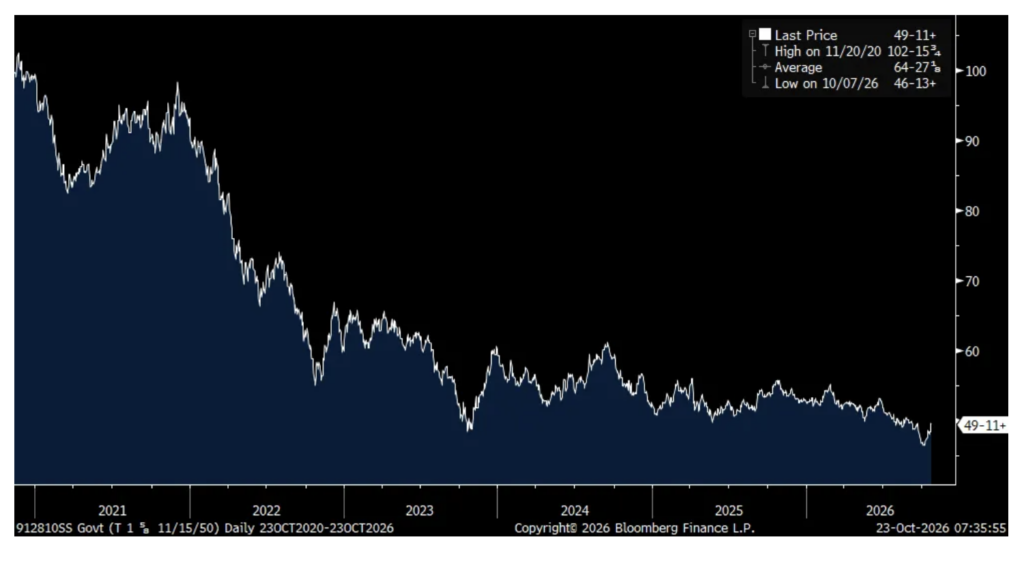
I’ll say quickly on US Treasury yields and the decline over the past two weeks. It really is amazing how effective it is to do the opposite of what the front page of The Economist prints. What they didn’t realize when they printed “Will bonds blow up?” was that many already have. Two weeks ago, a US Treasury bond that was issued on November 15th, 2020 with a maturity in 2050 with a coupon of 1.625% was trading at $.46 on the dollar. Yes, a buy and hold investor will get their full principal back in 2050 but on a mark to market basis, they lost about half their money.
Price of US Treasury maturing in November 2050
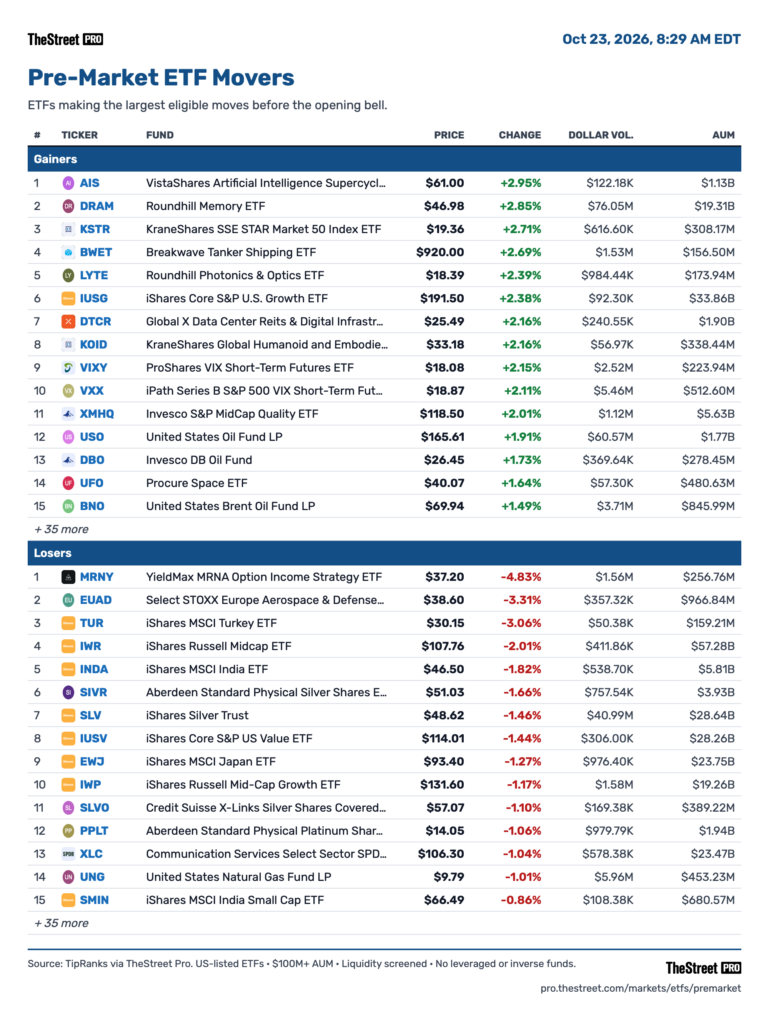
A flood of earnings calls and I do my best to cut to what’s most important.
This was from Robert Half, the staffing company and a go to read on the labor market and whose stock is rising premarket:
“Hiring activity continues to improve, supported by gradually improving market conditions. Demand for risk and compliance consulting services also showed encouraging signs of improvement during the quarter.”
That said, “I’d say so far, it’s still more selective, and the inflation concerns, the geopolitical concerns all add to that. Our clients are grinding their way through those uncertainties, but we haven’t yet had the clearing event you’ve had traditionally at the beginning of up cycles.” They cited for example, “typically the ending of an overall recession is a clearing event.”
“Technology remains the strongest performing practice group within contract talent solutions while finance and accounting also returned to y/o/y revenue growth.”
“Across markets, clients remain focused on securing specialized expertise for high priority initiatives, particularly in the areas such as technology modernization, data, cybersecurity, and IT infrastructure. Small and mid-sized businesses continue to face significant challenges finding the skilled talent they need.”
And what are they seeing in terms of AI impacting the labor market? “AI has increasingly become part of how work gets done across the professions we serve. Rather than broadly displacing specialized roles, these technologies are instead adding to the skills employers value and increasing the importance of professionals who combine strong functional expertise with AI fluency, critical thinking, and sound judgment. The ability to assess and validate AI generated outcomes is becoming an increasingly important part of that skill set.” I bolded to highlight.
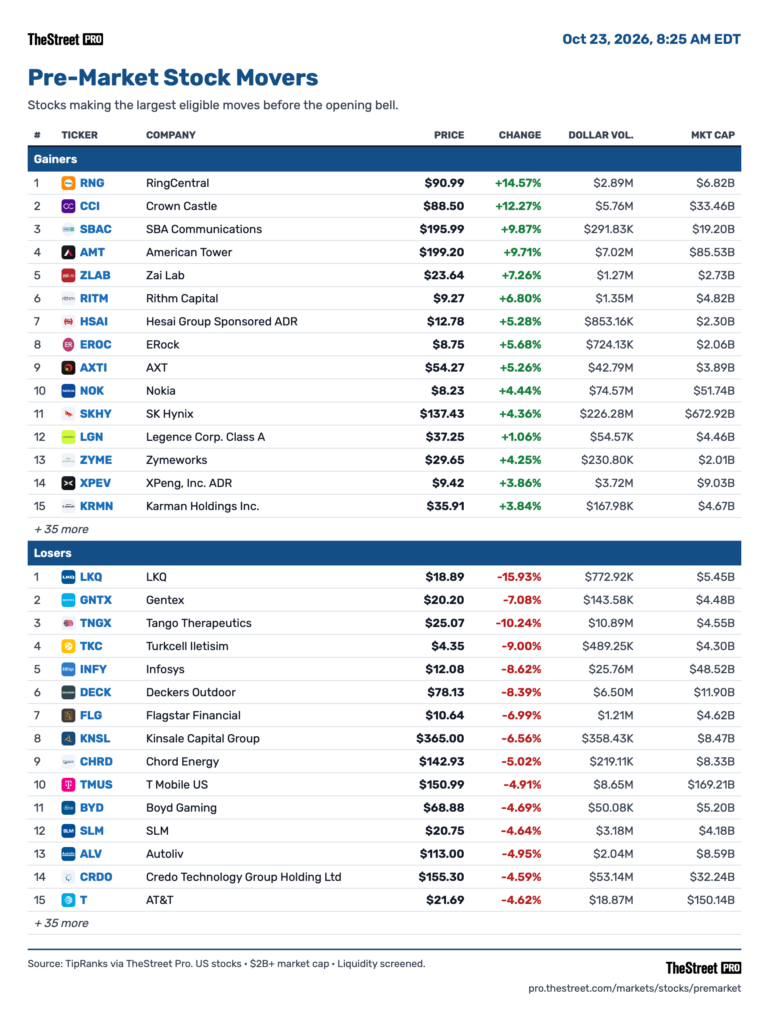
From Nestle, up 3% yesterday as part of a broad rally in consumer staples stocks that I’m very positive on and this is a stock we own:
With about half their business in coffee and pet food, “Emerging markets continued to grow strongly while we saw improving momentum in developed markets.”
“So, the way to think about pricing in Q3 is we had a lot of input cost inflation last year and we took a lot of price. And that input cost inflation in 2026 has actually turned into deflation on coffee and cocoa. So we haven’t been taking very much incremental price in 2026.”
“So as we look forward to 2027, it is an inflationary environment. It’s likely we’ll see more pricing. And while there may be a short-term consumer reaction, because there occasionally is in the quarter that you take price, we’re confident that over the medium term that we can sustain both RIG (Real Internal Growth) and price.”
“And with respect to US freight, oil prices where they are, we’ve got inflationary pressures on freight and distribution across the portfolio. And that’s one of the reasons you heard me saying that we’ll be taking a little bit more price in some places in the fourth quarter. It’s a factor for everybody.”
They have a big pet food business and they said “underlying the trends in cat are very favorable. Cat adoption is still up while dog remains flattish, but is slightly improving.”
From Proctor & Gamble, up almost 6% yesterday:
“Bottom line results reflect the strength of the top line progress and productivity to offset the higher costs from raw materials, energy and increasing freight costs, primarily in North America. We expect these headwinds to increase in the next few quarters taken together.”
Higher commodity costs this year are going to cost them an incremental $1.4 billion. And partly in response, “So we will price, and we will price with innovation, not jeopardizing the top-line momentum.”
“We delivered broad based growth across the business…Growth was also broad based geographically with each of our six regions growing organic sales.”
Particularly in North America, “volume was up 3 pts driven by continued improvement in consumption across categories…In aggregate, the consumer is resilient.” But, “there’s clearly pressure on the consumer in the short-term. And so far the consumer has held up. We don’t know if that’s going to continue. There’s a bull case to be made, but there’s a bear case to be made here, so we want to be straight in the middle.” They expect 3% growth from here.
From Hermes on the luxury side of the economy, down 5% yesterday and 3% today:
“The Americas, Japan and Europe, excluding France, achieved particularly dynamic growth…In spite of macroeconomic and geopolitical difficulties, all regions posted growth, with the exception of the Middle East.” Also, “Greater China was stable across the period, which is very positive given the backdrop.”
Not all fine with the Chinese consumer though as “it’s worth reminding you that the macroeconomic context is not favorable because real estate is down. Consumer trust in China is still quite low with a very high savings rate and consumption which remains unchanged.” And they are seeing declines there in fashion accessories, watches and shoes.
With France, sales there still grew 4% with “a lot of momentum on the French Riviera. So, Monaco, Cannes. But it was a bit slower in Paris, especially during the summer, with a drop in footfall, which we believe is linked to the heat wave.”
With the riots in France, “it’s too early right now to gauge the impact on our stores, and even less so on tourism. We haven’t noticed anything different over the last couple of days. It’s mainly our store in Marseille that was attacked, which will not be reopening anytime soon. But otherwise, we have very few damages. It’s Nantes, Lyon and the George V display windows that were broken, but nobody broke into these stores.”
From Kering, down 13% today and in the same luxury space as the owner of Gucci among other things:
Sales fell 1% on a comparable basis as “Traffic remains the main constraint across the group.”
With Gucci, sales fell 6% as its “performance in Q3 is impacted by the fitting effect of our collections and before benefiting from the ramping up of our ongoing work on products.”
Strength was seen elsewhere in “Saint Laurent, Bottega Veneta, and Brioni as well as Kering eyewear and Kering jewelry, which continue to extent their strong trajectory.”
With their China business, “Mainland China is our major headwind as consumer confidence stays subdued and customers are increasingly selective while South Korea continued to grow.”
From Deckers Outdoors, the maker of UGGs and Hoka and trading down premarket:
“In the US, we saw promotional activity increase throughout the quarter, particularly in athletic footwear, which weighed on our US e-commerce performance as we maintained full price discipline. We also observed two shifts in consumer behavior, consumers increasingly seeking discounts, concentrating traffic around promotional events and consumers becoming more purposeful in their spending and prioritizing products with immediate relevance and utility.” I bolded to highlight.
“As consumers face increasing economic pressure, our updated fiscal outlook reflects a more measured framework.”
From PulteGroup who rallied 6% yesterday with the drop in interest rates:
“consistent with all the reporting and commentary swirling around the current state of the US housing industry, we experienced a notable slowdown in homebuying demand as we moved through the third quarter and interest rates surged higher.”
“Buyers are spending more time getting comfortable with the higher monthly payments, interest rates, and financing options before moving forward. The need to sell an existing home remains one of the most significant conversion barriers.”
“Prospective buyers continue to have concerns about stretched affordability, high monthly payments, and home sale contingencies…What changed in the quarter, and most notably in September, is that the big move higher in interest rates, along with inflation, global tensions, and waning confidence, reached the point where more consumers simply put their search on pause.”
Finally of note, “In the 3rd quarter, our customer conversion rates were relatively stable, but traffic to our communities was down 14% from the prior year and on a sequential basis, down 11% from Q2. These conditions have continued through the first few weeks of October. As you would expect, most of the missing traffic were first time buyers, as this group remains the most impacted by higher interest rates.”
MSC Industrial Direct is a go to read for me on the state of the industrial and manufacturing world because it’s a distributor of so much stuff that gets sold to these end markets. Their stock got hit by 15% yesterday off a 52 week high because of lighter gross margins and they said this of note:
“we continue to see increasing evidence of an industrial recovery taking hold with positive IP (industrial production) readings across all of our top manufacturing end-markets.”
“average daily sales outpaced the IP index for the 5th consecutive quarter and was above the target of 400 bps again this quarter. While this continues to be largely price driven, our improving volume trends signals that our initiatives are taking hold.”
“from a price cost perspective, we’re in a highly inflationary time. We’re putting through that price with our contract customers and that takes time in negotiations.” And the inflation is not just on the material side, “the other factors I wanted to talk about also was on freight, we’re seeing inflation there. And then on employee related expenses as well and the biggest one being medical expense.”
From United Rentals and whose stock has rallied this week:
“we saw projects kick off in the third quarter across numerous end markets, including energy, manufacturing, infrastructure, and data centers.”
From Union Pacific, saying something similar to CSX this week, in how they are taking share from the trucking market and also benefiting from the intermodal business:
“when you think about our fuel conservation efforts and really the fact that rails are so much more fuel efficient than truck, that’s actually enabling us to win even more business and bring it onto the railroad.”
From Blackstone, chiming in on the AI data center buildout debate as they are now a big financing player in it:
“On the one hand, the AI revolution is powering robust growth in many areas, while on the other hand, a higher cost of capital has negatively impacted investor sentiment and transaction activity and triggered significant volatility in the markets.”
“Demand for compute is accelerating and we see no signs of that slowing down as AI use cases ramp for both businesses and consumers and the world increasingly engages with the vast potential of this technology. At the same, there’s a critical scarcity of supply that is only intensifying…Current public attitudes towards data centers will likely only amplify this scarcity.”
“In AI infrastructure our data center portfolio is built on durable, long-term contracts with highly credit worthy counterparties. Overall, we keep coming back to the fundamental supply demand imbalance, which supports our conviction that this is the right place to invest significant capital.”
Fyi, data centers and logistics are about half their global real estate portfolio.
To some overseas data of importance.
In Japan, September CPI ex food and energy rose 2.4% y/o/y, up from 1.9% in August and one tenth above the estimate. While the BoJ won’t hike at their next meeting ‘according to people familiar’, they will most likely hike again in December.
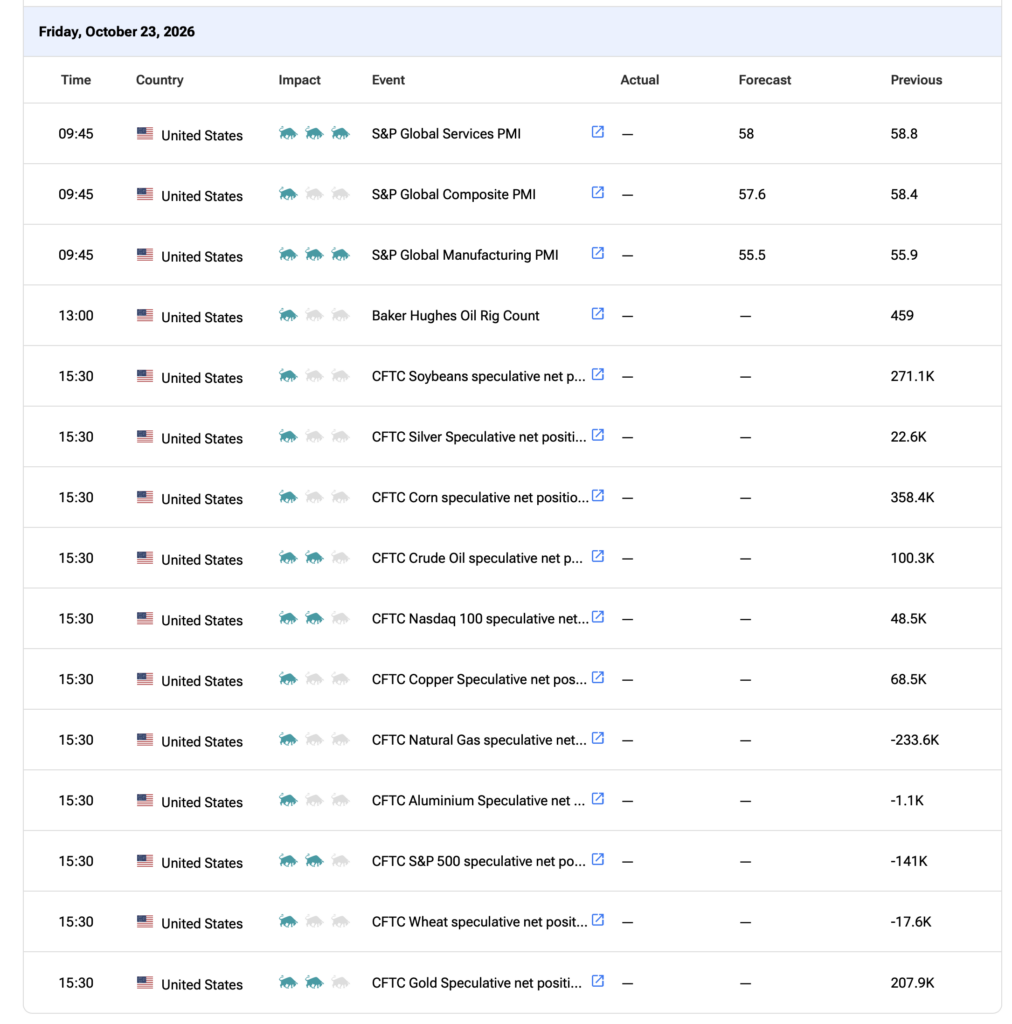
With its PMI for October, services rose to 52 from 51.3 while manufacturing slipped a touch to 53.3 from 54.1, though remaining above 50.
In Australia, its PMI is below 50 for both manufacturing and services.
In India, strength remains with manufacturing at 54.9 vs 55.1 and services at 56.2 vs 55.2.
The October PMI in the Eurozone fell with manufacturing at 52.4 vs 52.9 last month. Services declined to 51.7 from 53. France was a drag, offset by better reads in Germany. S&P Global said, “A key drag on growth was a renewed drop in business activity in the French services sector. While some of the weakness in France may be linked to strikes and unrest having disrupted some local economies, growth has also edged lower in the rest of the eurozone, both in terms of manufacturing and services activity. Hiring has meanwhile come close to stalling as new order inflows cooled to show only meagre growth.”
And of note, “Key to the broader slowdown is the further escalation of inflationary pressures seen during the month. Input costs are rising sharply again, the rate of increase surging in manufacturing on the back of higher energy prices, causing firms to push selling prices higher in order to protect margins.”
This too, “Higher interest rates are also starting to take a toll, dampening demand.”
In the UK, its PMI improved in October with manufacturing up to 52.8 from 51.9 and services higher at 53.1 vs 52.1. From S&P Global, “This encouraging sign of economic resilience is underscored by firms taking on additional workers for the first time since hiring was hit by the 2024 Autumn Budget.”
Cost pressures though remain evident, “October data indicated another steep increase in input prices across the private sector economy. The overall rate of cost inflation was the strongest since June, led by a marked acceleration in inflationary pressures across the manufacturing sector.”
Nothing market moving from these reports. Bond yields in Europe are mixed after falling in Asia. The US dollar is up vs the euro and pound while stocks are in the red.
BY Doug Kass · Oct 23, 2026, 10:10 AM EDT