– wouldn't buy long bonds or SP500 here – "risks are bigger than people think" – "I want @AndyBurnham to succeed", but Banks Levy is "wrong" – Leadership masterclass – breaking bureaucracy; overcoming insecurity; loneliness at top… pic.twitter.com/FUuobP9Clp
A Russian-speaking threat actor known as “Trim” has spent the better part of 2026 systematically dismantling the guardrails on publicly available frontier AI models and rebuilding them as offensive tools. What started in March as a knowledge-sharing post on a Russian cybercrime forum detailing how to break Claude Opus into writing malware, had evolved by June into a fully productized, commercially marketed AI-powered penetration testing platform.Trim didn’t need a vulnerability to exploit. He didn’t need to build a novel AI, steal model weights, or compromise a datacenter. He simply picked powerful models off the shelf, figured out how to talk to them in the right way, and turned them into weapons. His story is not just one threat actor’s journey, it is a blueprint that the entire criminal underground is beginning to follow, and in his latest post he shares he is also utilizing a modified system prompt leaked from Fable! (Source: catonetworks.com)
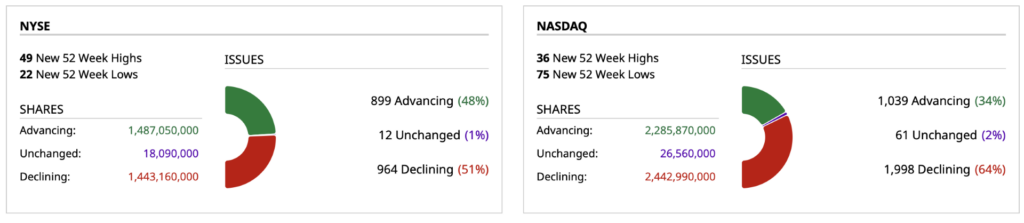
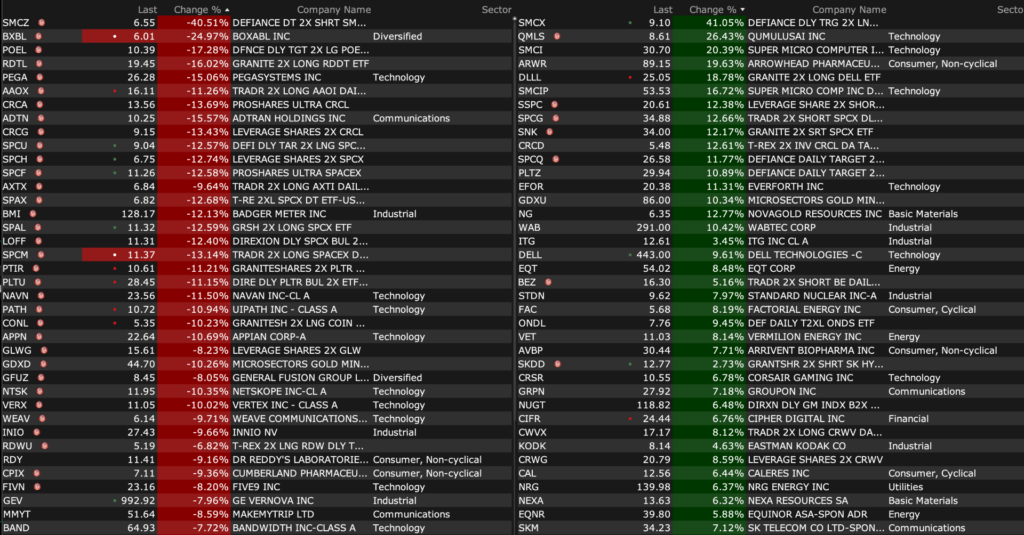
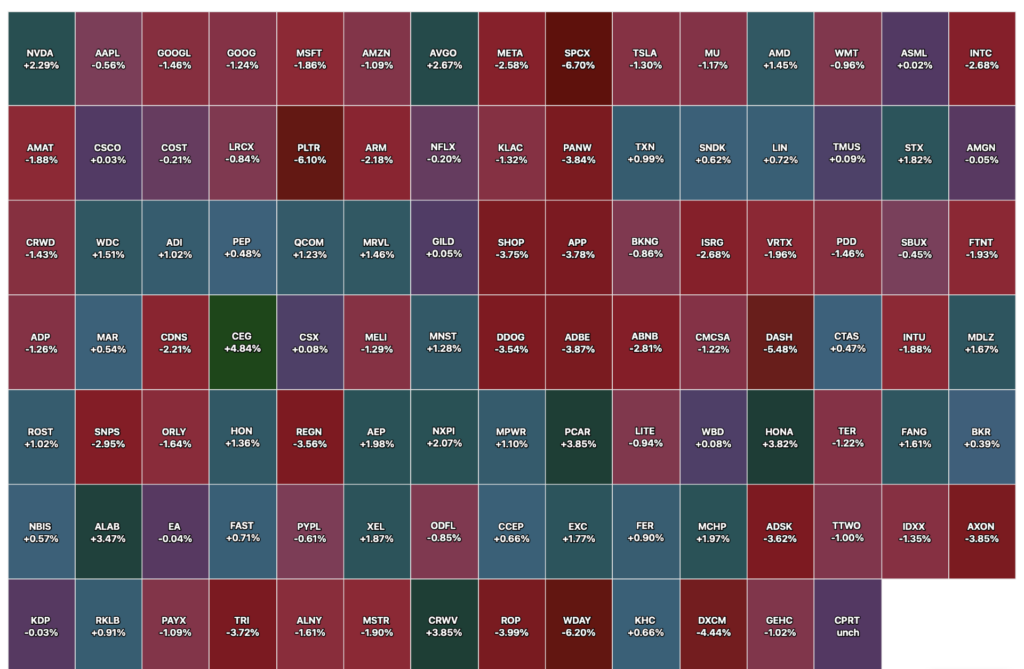
Consider the plethora of talking heads in the business media who encouraged the purchase of SpaceX (SPCX) (which is -$5 to $118 and at a new low) at materially higher prices.
And then ask yourself…. “Self, why do I even listen to these imbeciles?”
Wally Deemer Responds to My ‘Cash on the Sidelines’ Post
Back in our Putnam days, Fidelity created a new money market fund: the Fidelity Daily Income Trust. But this one was different from the others: you could write checks against it.
We all walked down the street and opened a FDIT account. Our checking accounts now paid interest.
A very, very significant chunk of that cash on the sidelines is interest-paying checking accounts. It’s waiting to pay our medical bills, tax bills, etc., etc.
But it definitely ain’t waiting to be put into the stock market.
As you know and remember, before Reg D there was a normal distribution of sell side analysts. Best ones asked the best questions of management in private and issued more informative research. Now homogenized. Low signal to noise. Mgmt free to promote.
Nothing angers a populace more than this/Earnings comments of note/Bond yields, again
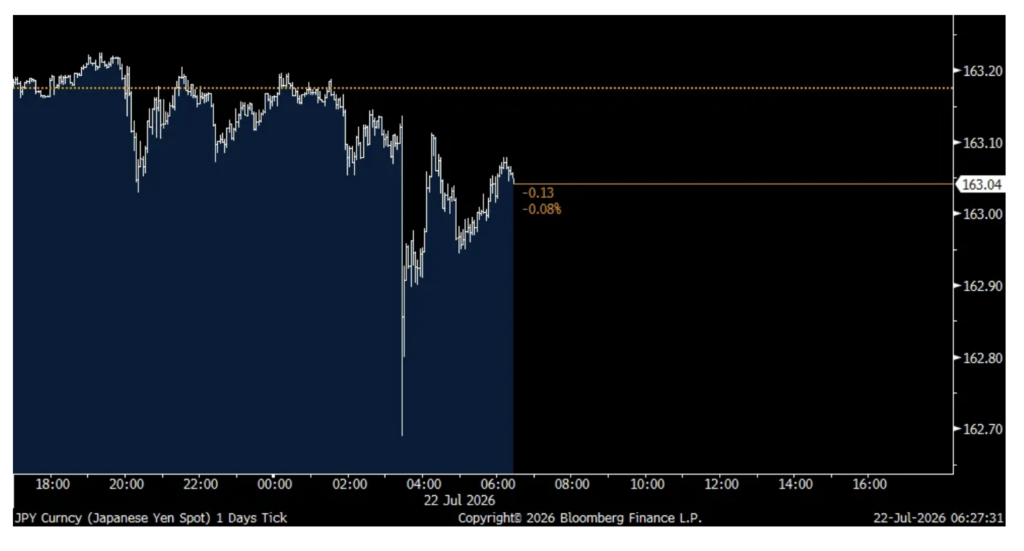
Nothing angers a populace like a deterioration in the purchasing power of one’s currency and the coincident inflation running above the growth in one’s wages. A fresh 40 yr low in the value of the yen relative to the US dollar and the action proving yet again that FX intervention never works on a sustainable basis, Bloomberg News is reporting “Bank of Japan officials are open to raising interest rates at a faster pace than the consensus among economists, as the yen’s continued weakness adds to upside inflation risks, according to people familiar with the matter.”
They meet again next week and even though their overnight rate is only at 1%, no hike is expected and the next hike is not anticipated until December. This major foot dragging is why the yen is at a 40 yr low and why the long end of the JGB curve keeps seeing higher yields.
Here is the reason cited on why members of the BoJ are looking to move, “Officials see growing evidence that companies are passing higher costs on to customers more quickly than in the past, reflecting changes in pricing behavior since the outbreak of the Iran conflict. Against that backdrop, the yen’s renewed decline could provide another incentive for firms to raise prices, according to the people.”
One last thing on the yen, as still a major energy importer (they import about 95% of their crude oil needs), a continued rise in oil prices at the same time the yen is weak makes it hugely expensive for them.
As market participants will only believe it when they see it with regards to a quicker pace of rate hikes, the yen is barely rallying on the story. You can see below the intraday move that saw a quick pop but it’s almost back to unchanged on the day.
I’ll keep talking about the yen and JGB’s because it has major global flow implications.
Yen Intraday Move
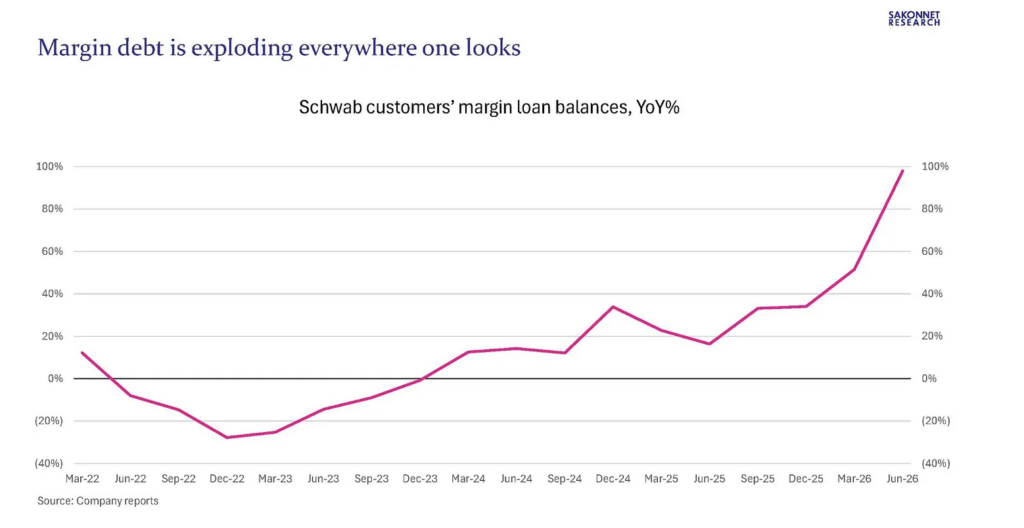
As shown yesterday in a chart, we have margin debt as a percent of GDP at a record high at 4.5%. We heard Wells Fargo last week highlighting a notable rise in its securities based lending business and this is what Charles Schwab had to say on their earnings call:
“Demand for our secured lending solutions remained strong. Total margin balances ended the quarter at $165.1 billion, including continued growth in long/short related activity.” That’s up 30% from Q1 and it’s double the Q2 2025 level of $83.4 billion. I believe the ‘long/short related activity’ includes the new tax deferral products from the likes of AQR and if the case, some of the margin debt numbers aren’t as worrisome as the headline seems, though still very high.
Also, “Led by new pledged asset line originations, total bank loan balances grew by $67 billion, up 33% from 2Q ‘25 and 16% versus the prior year end.” That’s a similar growth rate that Wells reported.
Trading activity was robust in the quarter and “We believe that the trading engagement you’ve seen is sustainable and it’s supported by broad client participation. We’ve really seen growth in young investors. I think part of that was started with the removal of commissions, which brought more people into the market that had less money. We’ve also seen growth and comfort with options trading as people have become more familiar with that as a way to add income or hedge portfolios. I think there’s been a structural shift in the amount of options trading that we’ll see.”
Credit to my friend Adam Josephson for this chart on the growth rate of Schwab’s margin debt book:
From Capital One:
On their consumer, “So, the US consumer and the overall economy remain resilient, resilient despite the high energy prices and everything. When you pick up the news every day, one would think the world’s falling apart, but actually the consumer continues to perform remarkably well. The unemployment rate in June was lower than in February before the Iran conflict began. Jobless claims remain low. Job creation has rebounded over the past few months. Consumer spending remains strong.”
More, “Now as a result of inflation, real wage growth turned negative in April and May on a y/o/y basis. But it was back in positive territory ever so slightly in June as inflation ticked back down. When we look at bank balances and debt servicing burdens of our customers, these look a bit stronger than a year ago across income levels. And our domestic card business, our credit metrics, continued to improve on a y/o/y basis in the quarter.”
“the strong credit performance we also saw on the auto side. Auto credit metrics are strong as well.”
“we see real strength in the consumer and strength across our business performance in card and in auto. And that’s why while we keep a very wary eye on the economy and international developments, we are leaning in with a lot of positivity into our growth strategies.”
Speaking of auto loans, this was from Ally Financial yesterday and whose stock traded down by 2.4%:
“Consumers remained resilient, and we are encouraged by the credit performance across our portfolio. At the same time, we are mindful of the cumulative headwinds from ongoing inflationary pressures and evolving macro backdrop.”
“Within retail auto, net charge-offs of 157 bps were down 40 bps q/o/q and down 18 bps compared to a year ago, marking a 6th consecutive quarter of y/o/y improvement.”
But, “delinquencies have remained stubbornly high. Clearly, we’re dealing with a consumer that is dealing with affordability. Gas price is also an issue. Overall, I’d say we still see this macro as dynamic and obviously taking a measured posture in response to that.”
“Portfolio performance has been solid year-to-date, but the macro backdrop remains dynamic and while delinquency rates are down y/o/y, they remain a watch item along with used values and flow-to-loss rates.”
MMM had good earnings and its stock jumped 7.3% yesterday as they mostly benefited on the industrial side and not from their consumer products business.
“In an unchanged macro environment, the organic sales growth of 5.4% was driven by successful execution of our commercial excellence initiatives and increasing contribution from new product launches supported by a strong operating tempo.”
Strong performance was seen in “adhesives, abrasives, aerospace, electrical markets, and safety.” More, “Semiconductor, aerospace and data center business segments, comprising approximately 20% of sales, grew double digits.”
“the macro on the industrial side looks pretty good, but there are some headwinds in the marketplace.”
“We continue to see a couple of places with pressure including consumer electronics, auto and auto aftermarket and US consumer spending.”
More on consumer electronics, “The market data indicates a deteriorating production volume of devices, PCs, tablets in the back half of the year, expected to be down high teens.”
From DR Horton on the housing market and whose stock closed at the lowest since May:
“Affordability constraints and cautious consumer sentiment continue to impact new home demand, and we expect sales incentives to remain elevated during the fourth quarter, with incentive levels dependent on demand, mortgage rates and other market conditions.”
“our sales were relatively in line with normal seasonality. They were a little softer post our call in April and still see plenty of buyers out there in our sales offices as we travel and in front of people, it’s just needing to see them be a little more confident in the overall economy and their ability to move forward with a purchase today.”
With respect to weekly mortgage apps, mortgage rates continued to rise, coincident with the increase in bond yields but purchase apps rebounded by 5.5% w/o/w after dropping by 7.3% in the week before. Refi’s were down by 2.4% w/o/w.
From GM and whose stock rallied by 5%:
“The business continues to perform very well. Customer demand in North America remains steady, including for our pickups and SUVs, and pricing is consistent.”
“We also maintained our pricing discipline with incentives as a percentage of MSRP running 1.5 points to 2 points below the industry average, helping to improve total company margin by 1.8 points y/o/y in the first half alone. In addition, fleet sales have been strong, with our best first half in more than five years, including our highest government sales since 2009 and record full size pickup sales driven by strong commercial demand.”
“We continue to expect gross tariff costs of $2.5 billion to $3.5 billion for the full year, which is largely flat y/o/y. Through the first half, we incurred approximately $1.3 billion net of the $500 million in IEEPA benefit recognized in the first quarter.”
“Let’s now turn to the headwinds. We continue to expect commodity inflation, logistics, and higher DRAM costs to be a headwind of $1.5 billion to $2 billion for the full year.”
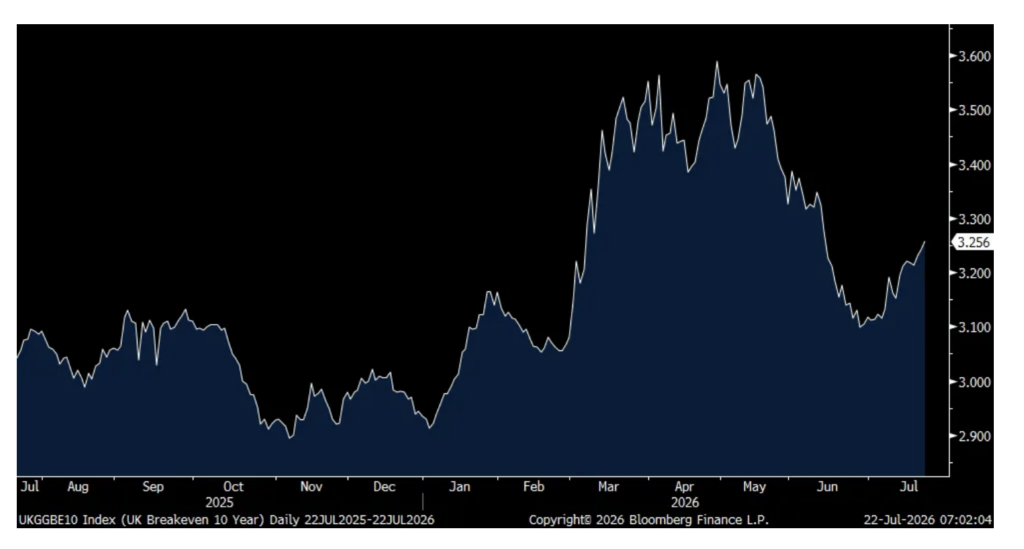
UK gilt yields are slightly higher as while the headline June CPI at 2.6% was one tenth below the estimate, the core rate of 2.6% was one tenth above with services inflation running at 3.6% y/o/y, also one tenth higher than expected. The 10 yr inflation breakeven in response is up by 1.7 bps to 3.26% which is the highest since mid June but below the one year peak of almost 3.60%.
With energy price now reversing higher, the June inflation stats are old news I’d add.
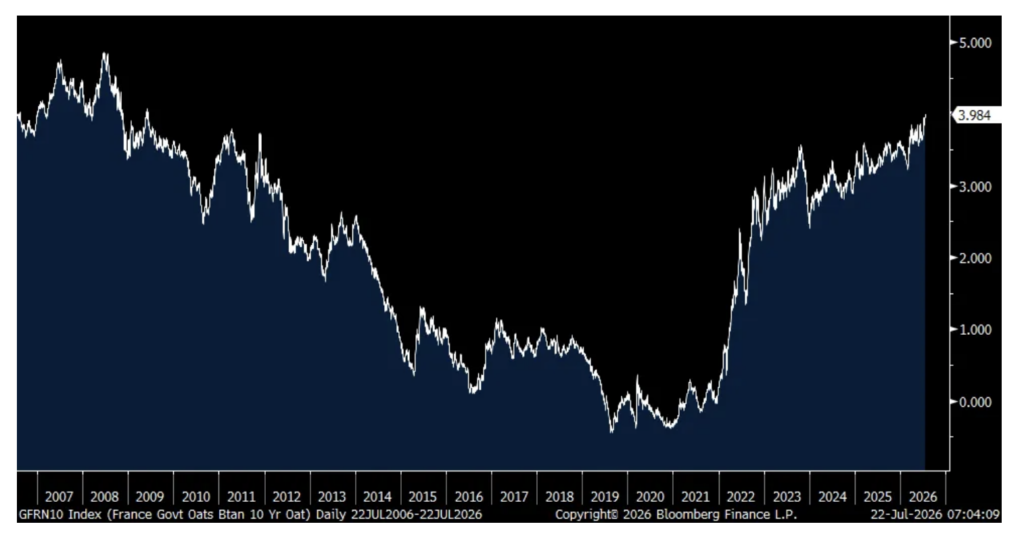
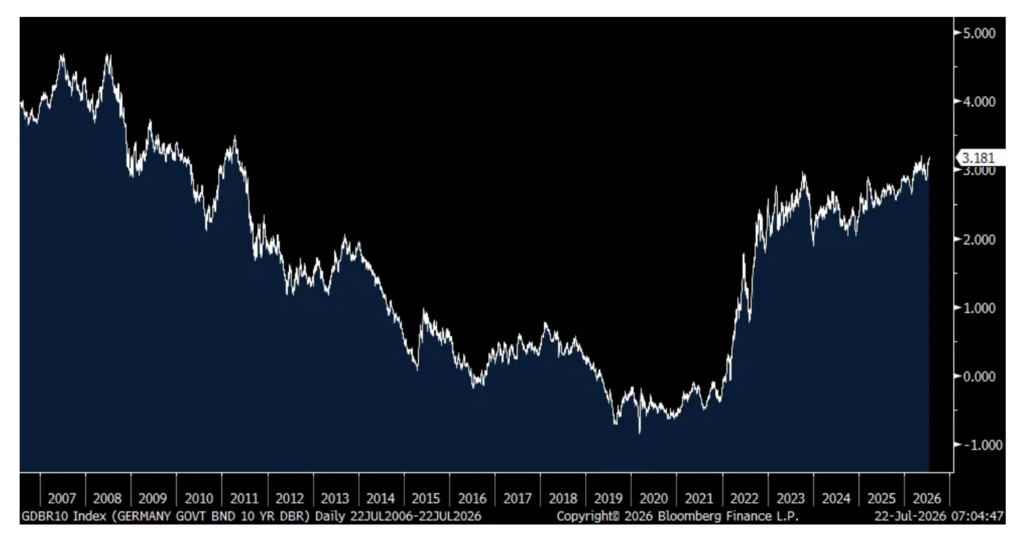
On the continued bond yield watch, the French 10 yr today, up another 2 bps to 3.98% is at a fresh 17 year high. The German 10 yr yield is one bp from matching a 15 year high.
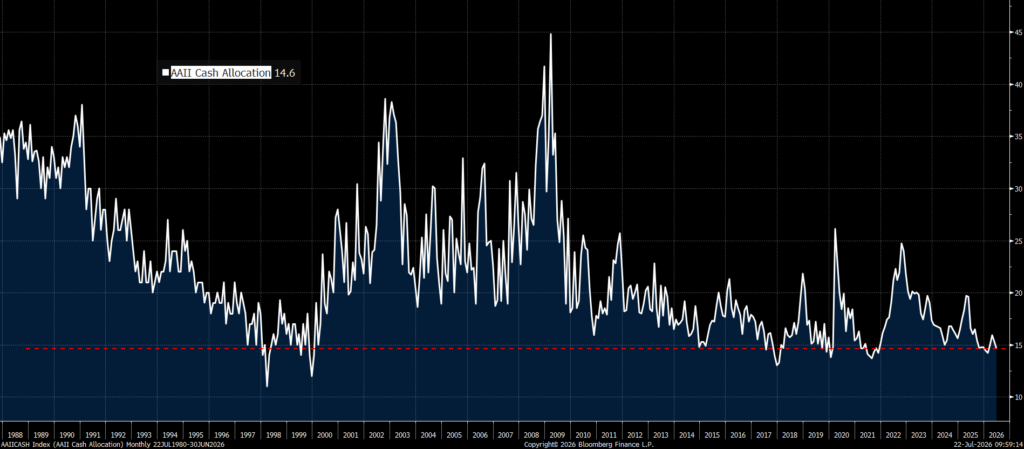
There is lots of cash in an absolute sense, but from an asset allocation perspective cash allocations are remarkably low. Merrill Lynch data from Harnett I think shows the cash allocation at an all-time low.
OpenAI and Anthropic have a good probability of never being profitable in the age of much cheaper AI models coming available from China as well as META and GOOG. The hyperscalers have seen their free cash flow plunge as their capex budgets soar as they build compute capacity. Over half of which is for OpenAI and Anthropic. Their debt and equity issuance has spiked as a result and ORCL’s debt just got downgraded earlier this month to one notch above junk status. Meanwhile, most of the software industry is getting IBM’d.
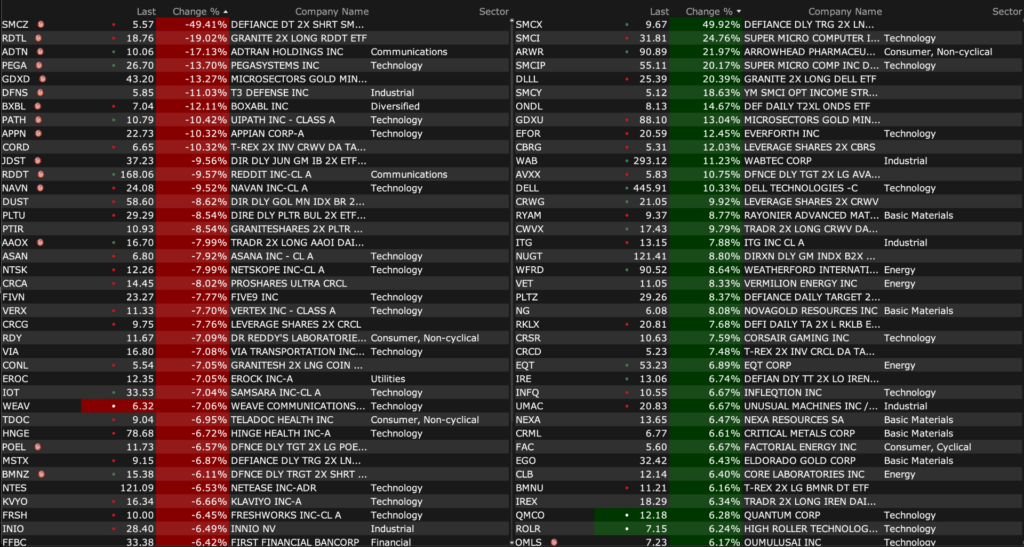
‘Pegasystems (PEGA) plunged more than 15% during pre-market trading on Wednesday following second quarter 2026 results that missed the mark due to “unprecedented changes in the AI market (that) caused clients to delay their purchasing decisions.”
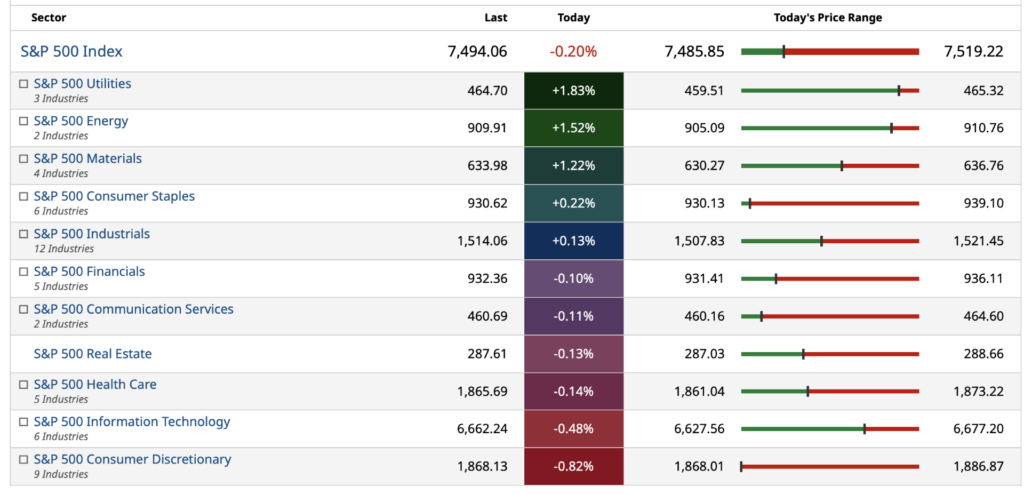
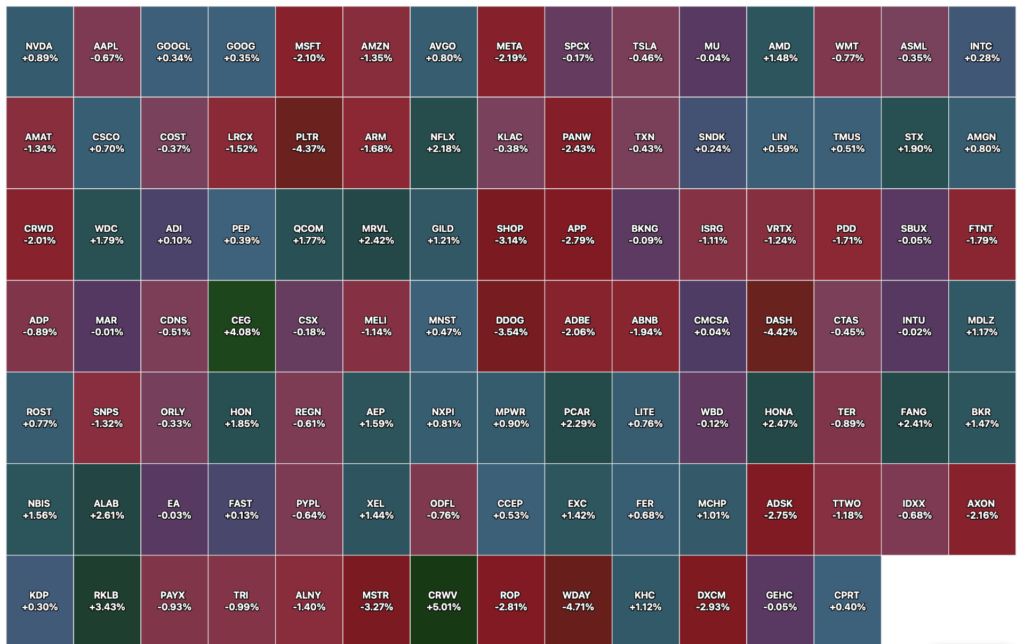
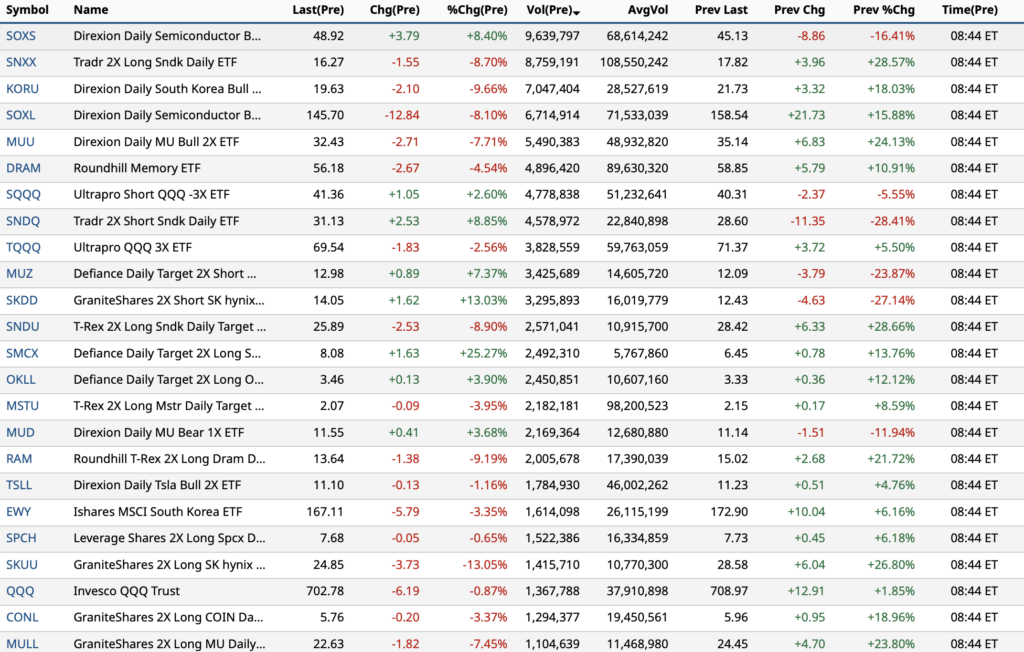
The only ones that seem to be making the AI Revolution profitable are the semiconductors, which are now at record 20% of overall market cap and trading volume. At the same time inflation, energy, and interest rates are all moving higher. What possibly could go wrong?
Tracking the level of earnings beats is of interest. Tracking the price reactions to those beats is a more important exercise. It measures the expectation function more precisely. https://t.co/OBHiH2Y7Pw
Subject: Company Cheerleading I am listening to T Chairman's cheerleading following the company's quarterly EPS release. He sounds like T is setting the world on fire. (again!) The shares have been stuck in the mud for years. The interview is another reminder that there are no…
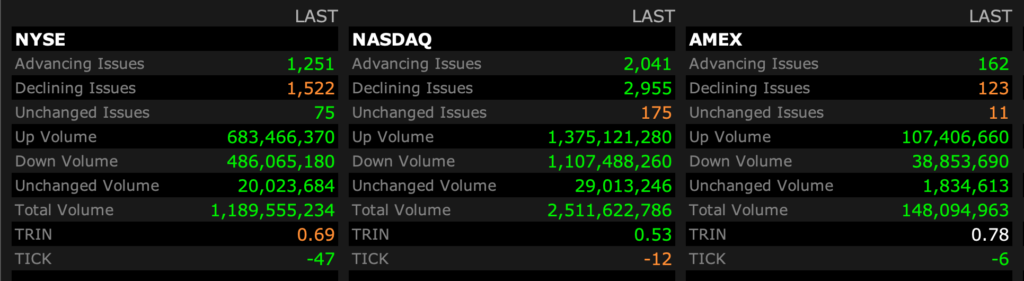
Market structure, gamification and systemic leverage risks are rarely discussed in the business media — yet, like October 1987, it might represent the market’s greatest vulnerability:
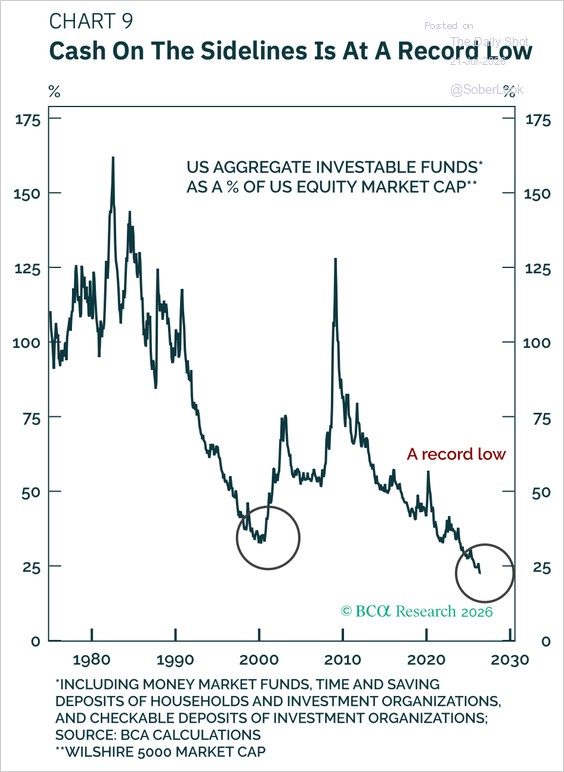
I Continue to Call B.S. to the ‘Cash on the Sidelines’ Argument
When the legions of perma bulls talk about “cash on the sidelines” as a market catalyst (typically voiced in the later stage of a bull market cycle!), show them this chart (which takes cash and divides by equity market cap):
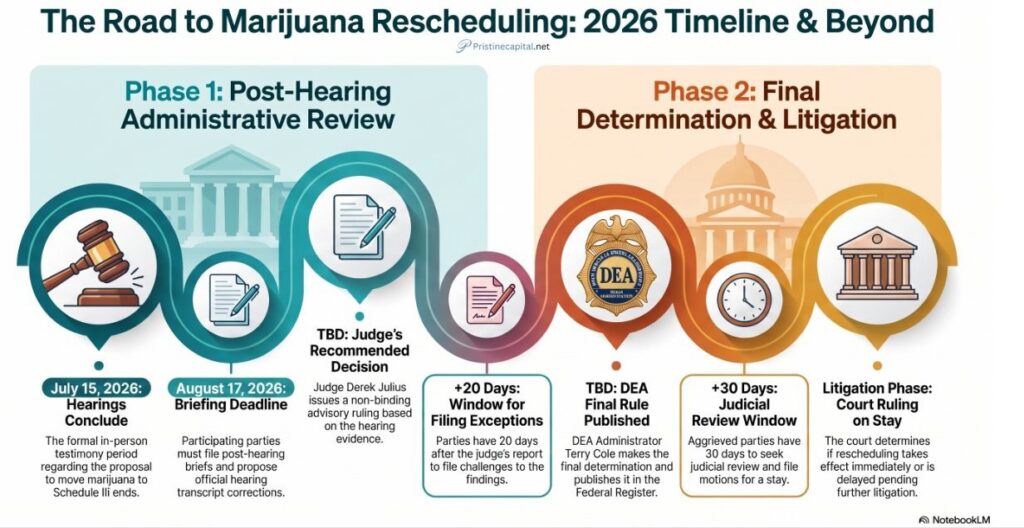
Nearly 100 members of the U.S. House and Senate are sponsoring legislation that would deschedule cannabis nationwide. Here's the full list. https://t.co/SxNmrSmK7o
Congress Should 'Stop Dicking Around' And Legalize Marijuana, Fetterman Says: "I’ve always been very pro-weed… I think your path to wellness should be without judgement or punishment—legal, safe, and regulated."https://t.co/4TorUt81bj
Congress Should 'Stop Dicking Around' And Legalize Marijuana, Fetterman Says: "I’ve always been very pro-weed... I think your path to wellness should be without judgement or punishment—legal, safe, and regulated."
marijuanamoment.net/congress-shoul…
Cathie Wood's Ark Innovation ETF $ARKK is now underperforming the Nasdaq 100 $QQQ by 138 percentage points over the last 5 years 🚨🚨 Absolutely horrendous 🤦♂️
🚨NEW EPISODE🚨
60 minutes with JAMIE DIMON
- wouldn't buy long bonds or SP500 here
- "risks are bigger than people think"
- "I want @AndyBurnham to succeed", but Banks Levy is "wrong"
- Leadership masterclass - breaking bureaucracy; overcoming insecurity; loneliness at top
@Barchart
Cathie Wood's Ark Innovation ETF is headed for its 2nd-worst July in history 🚨 $ARKK has also had a red August in each of the last 4 years 👀 Will history repeat in 2026? For bearish exposure, consider the Tradr 1X Short Innovation Daily ETF $SARK from @TradrETFs
Subject: Company Cheerleading
I am listening to $T Chairman's cheerleading following the company's quarterly EPS release.
He sounds like T is setting the world on fire. (again!)
The shares have been stuck in the mud for years.
The interview is another reminder that there are noShow more
Tracking the level of earnings beats is of interest. Tracking the price reactions to those beats is a more important exercise. It measures the expectation function more precisely.
Neil Sethi NEW account
@neilsethinew
BofA: Following the first week of earnings season, 50 S&P 500 companies (20% of index earnings) have reported.
88% beat EPS expectations, the strongest Week 1 beat rate in more than three years and 20ppt above the historical avg. of 68%, while 76% beat both EPS and revenues
We are witnessing the unwinding of the biggest bubble in financial history.
Every crash I lived through started the same way:
A genuinely good idea captures the imagination, then it gets carried to an absurd extreme.
As Buffett put it, what the wise man does in the beginning,Show more
As you know and remember, before Reg D there was a normal distribution of sell side analysts. Best ones asked the best questions of management in private and issued more informative research. Now homogenized. Low signal to noise. Mgmt free to promote.
Nearly 100 members of the U.S. House and Senate are sponsoring legislation that would deschedule cannabis nationwide. Here's the full list. themarijuanaherald.com/2026/07/every-…